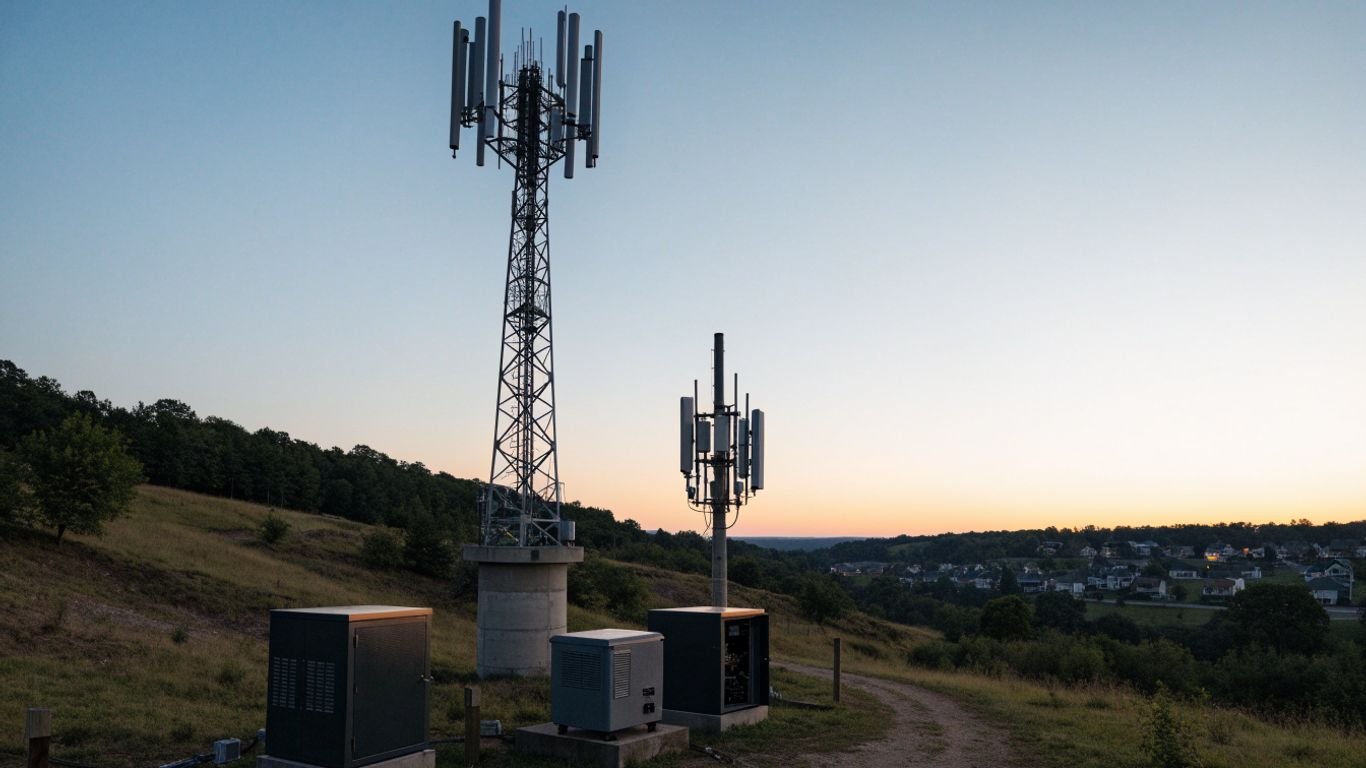
Backup Power Options for 5G Towers and Small Cells
Key Takeaways
A reliable 5G tower backup power plan starts with the site’s actual electrical load and the outage window it needs to cover. The right mix of batteries, generators, and supplemental sources depends on location, access, equipment, and service priorities.
- Measure the complete site load, including radios, baseband equipment, cooling, and conversion losses.
- Choose battery chemistry and capacity to suit the site’s space, temperature, and maintenance constraints.
- Consider generators or supplemental generation when outages may outlast battery autonomy.
- Plan for installation limits, safe operation, and practical access for maintenance and refueling.
- Monitor, inspect, and test the system so its real condition is known before an outage.
Why 5G sites need backup power
A grid failure can interrupt the power that keeps radio and network equipment operating, leaving a site unable to provide its normal service. Backup power buys time, but how much time—and what equipment should remain on—varies from site to site. A useful plan treats location, load, outage duration, and network priorities as connected decisions rather than choosing equipment in isolation.
How power interruptions affect coverage and network availability
When a site loses utility power, batteries or another backup source may keep equipment running for a limited period. If backup capacity is exhausted, service from that site can be disrupted, and neighboring sites may not fully replace its coverage or capacity. The effects depend on network design, traffic, and which equipment remains available; there is no single outage outcome for every location. For a broader overview of cell-tower backup power, see how batteries, generators, and sometimes solar can play different roles during an outage.
Differences between macro towers, rooftop sites, and small cells
A macro tower may have room for cabinets or a generator, but its equipment load and site access can make backup planning substantial. Rooftop installations must account for building rules, available floor area, structural capacity, and how equipment can be moved to the roof. Small cells are often distributed across many locations, so a compact system and straightforward service access may matter more than a large on-site fuel supply. Each form factor changes the balance between capacity, footprint, and maintenance effort.
How site location and outage duration shape backup needs
An urban rooftop may have easier access to replacement equipment but tighter space and building constraints; a remote tower may have room for equipment yet be difficult to reach during severe weather. Expected restoration time matters as well: a short ride-through period calls for a different plan than an outage that could continue for many hours. Operators can use the tower backup planning guide to consider load analysis, batteries, generators, and maintenance together. The aim is to plan for plausible local conditions, not to assume every site faces the same interruption.
Resilience requirements for emergency communications
Sites that support critical communications may need more deliberate outage objectives, including which functions must remain available and for how long. Those objectives should be coordinated with network operations and emergency plans rather than inferred from battery capacity alone. Other preparedness topics also depend on planning ahead: for example, travel vaccination guidance describes preparing for a trip, while communications planners must define their own service priorities and backup procedures. The connection is advance preparation, not a shared technical solution.
Battery backup options for 5G sites
Batteries are commonly used to bridge an interruption and can also work alongside generators. Selecting a system involves more than comparing nameplate capacity: usable energy, operating conditions, enclosure space, and the maintenance plan all matter. A site-specific comparison is more useful than assuming one chemistry suits every tower and small cell.
Valve-regulated lead-acid batteries for established installations
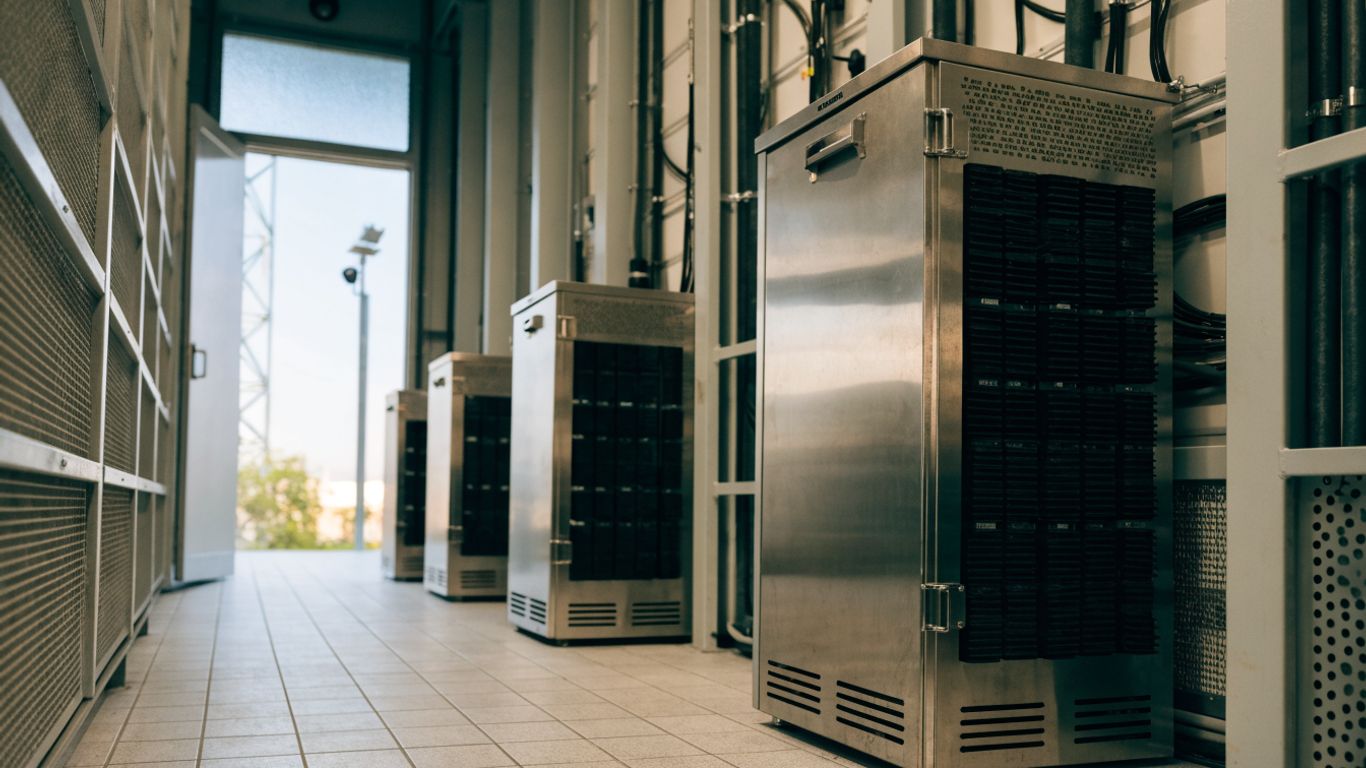
Valve-regulated lead-acid (VRLA) batteries are a familiar option in many established backup installations. Their suitability depends on the capacity required, the environment in which they will operate, and whether the site can accommodate their footprint and weight. Temperature and charging conditions can affect battery performance and service life, so the equipment needs to be installed and maintained within its specified operating limits. Existing infrastructure may make VRLA worth evaluating, but familiarity alone is not a reason to choose it.
Lithium-ion batteries for compact, high-density deployments
Lithium-ion batteries can be considered where available space and weight are important design constraints. The specific system still needs to match the required load and runtime, with appropriate charging, protection, and environmental controls. A guide to lithium-ion backup for 5G small cells discusses the appeal of compact storage in decentralized deployments; actual performance depends on the selected equipment and site conditions. Compactness does not remove the need for careful sizing or safe installation.
Comparing battery lifespan, usable capacity, and temperature performance
Battery comparisons should reflect the capacity that can actually be used for the intended backup window, not just the number on a product label. Service life and performance are also affected by operating temperature, cycling, charging practice, and maintenance. For perspective, stairlift battery backups are also assessed in relation to outage duration and safe use, though a telecom site has different loads and requirements. Comparing systems on the same practical criteria makes trade-offs easier to see.
| Consideration | What to check | Why it matters |
|---|---|---|
| Usable capacity | Energy available within operating limits | Determines how much load can be supported |
| Temperature | Expected site conditions and equipment limits | Can affect available capacity and service life |
| Footprint and weight | Cabinet area, floor loading, and mounting | Helps establish whether the system fits the site |
| Maintenance | Inspection, monitoring, and replacement needs | Shapes ongoing service requirements |
These comparisons are starting points, not substitutes for the manufacturer’s specifications or an engineering review. Evaluate each option against the same site load, environment, and runtime target before making a selection.
Choosing battery chemistry for a tower or small cell
The decision should account for the installation as a whole: available space, structural limits, local temperatures, service access, and the expected role of the battery. A compact small-cell enclosure may favor a different arrangement than an established tower cabinet with room for existing equipment. Solar and storage planning for other kinds of buildings, such as portable building solar and battery systems, likewise depends on sizing and intended use, though the design conditions are not the same as a telecom site.
A short review of practical constraints can keep the choice grounded:
- Confirm the required load and backup duration.
- Check enclosure space, weight limits, and environmental conditions.
- Review charging, monitoring, safety, and service requirements.
- Compare lifecycle and replacement considerations, not only purchase cost.
With those points established, the chemistry choice becomes a fit question rather than a general claim that one battery type is always superior. Validate the final configuration with equipment specifications and site requirements.
Generators and alternative backup sources
For outages that may continue beyond a battery’s intended autonomy, a generator or another supplemental source may extend the available backup period. That does not make a generator suitable everywhere: fuel, emissions, noise, permits, and access can constrain the design. Some sites may also consider solar as an additional input, but it must be evaluated against local conditions and the actual load.
Diesel and natural gas generators for longer outages
Generators can supply power for longer periods when their fuel source and operating arrangements support the expected outage. Diesel systems require fuel storage and replenishment planning, while natural gas availability depends on the local supply and its reliability during the event. Generator output must be compatible with the site’s electrical equipment and loads, including the conditions during startup and operation. A generator is only a dependable part of the plan when it can be operated, maintained, and supplied as intended.
Fuel storage, delivery, and refueling constraints
On-site fuel can help a generator operate through an interruption, but storage capacity is not the same as guaranteed runtime. Consumption varies with the generator and load, and fuel can be difficult to deliver when roads, weather, or competing demand disrupt access. Planners should identify who checks the supply, who can reach the site, and how replenishment will work if an outage persists. A realistic fuel plan includes the people and logistics as well as the tank.
Solar power and other supplemental sources
Solar can contribute to a backup design where sunlight, panel placement, and available area make it practical. Output changes with weather, season, shading, and time of day, so planners must not treat it as a constant source. A telecom-specific solar and battery sizing guide covers estimating loads, assessing solar resources, and setting battery autonomy. Those factors should be checked for the actual site before solar is counted toward a backup objective.
The right question is whether a supplemental source can reliably support the system under the conditions that matter. That can include checking its compatibility with batteries, charging equipment, and controls, as well as deciding how the site behaves when generation falls short.
When a generator-and-battery hybrid makes sense
A hybrid arrangement can use batteries to carry the immediate load and a generator to support longer operation, if the equipment and controls are designed to work together. Whether this makes sense depends on outage duration, load, site access, and the time and effort required to maintain the generator. A remote location with difficult refueling may call for a different balance than an accessible site with dependable fuel logistics. The system should be assessed as a coordinated whole, including how it transfers between sources.
The value of a hybrid is not simply having more equipment on site. It comes from matching each source to the period it can serve and confirming that the transition between them is reliable.
How to size 5G tower backup power
Sizing begins with a clear backup objective: what must stay powered, and for how long? The answer requires measured or documented loads, a decision about which equipment is essential, and allowances for losses and changing conditions. Use site data wherever possible; estimates can help scope the work but should not replace a validated design.
Estimating site load from radios, baseband equipment, and cooling
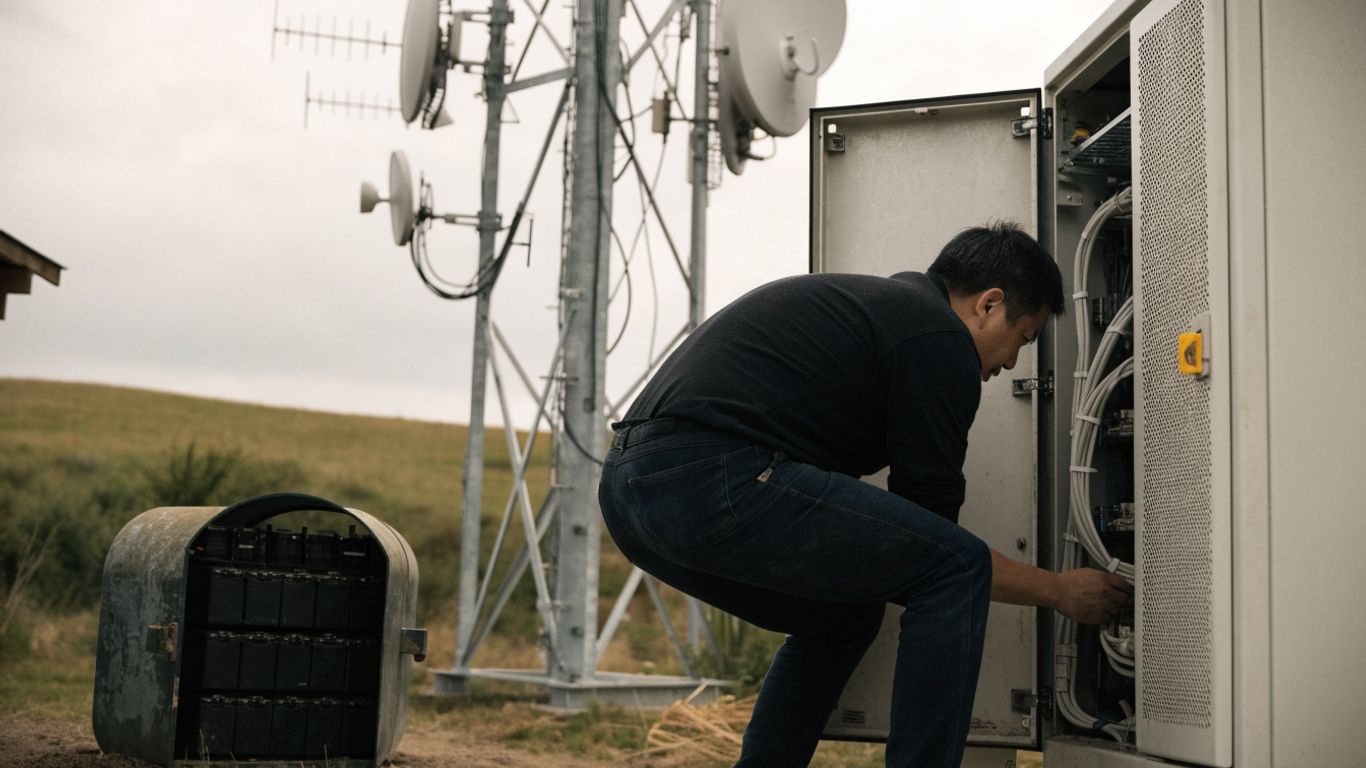
List the equipment that needs backup, including radios, baseband equipment, control systems, and any cooling required to keep equipment within its operating range. Check actual power demand using available measurements and equipment specifications, accounting for differences between normal and peak operating conditions. 5G configurations vary, so there is no universal load value that can be safely applied to every site. A discussion of 5G network power demand also notes that factors such as radio configuration affect consumption estimates.
Keep essential loads distinct from equipment that can be shed during an outage. This makes it easier to size the system for a defined service objective instead of treating every connected device as equally critical. The resulting load inventory should be reviewed with both power and network personnel.
Calculating runtime for the required outage window
Once the backed-up load is known, define the number of hours the system should support it and calculate the energy needed over that period. The calculation must use available, usable capacity and account for the conversion path between storage and the equipment. The table below offers a simple way to organize planning assumptions; it is not a substitute for a site calculation or equipment data.
| Planning input | Example of what to record | Use in the estimate |
|---|---|---|
| Critical load | Measured or specified power demand | Establishes the rate of energy use |
| Runtime target | Required hours of supported operation | Defines the outage window |
| Usable battery energy | Capacity available within operating limits | Indicates energy that can be drawn |
| System losses | Conversion and distribution losses | Adjusts for energy not reaching the load |
Use the same units throughout and check whether the runtime target includes time for equipment startup or source transfer. A documented calculation makes it easier to review assumptions and revise them when site needs change.
Accounting for battery aging, temperature, and conversion losses
A newly installed battery may not represent the capacity available later in its service life. Temperature, charging behavior, and the condition of the battery can also affect what energy is available when an outage occurs. Conversion and distribution losses reduce the energy delivered to the site equipment, so planners should include them rather than treating stored energy and usable output as identical. Design allowances should follow the battery and power-system specifications, not an invented universal margin.
Planning for added equipment and future network upgrades
A design that meets today’s load can become inadequate after new radios, additional sectors, or other equipment are installed. Document the assumptions behind the original sizing, then establish a review point whenever the site configuration or service objective changes. Allowing for realistic growth can prevent an expensive redesign, but oversized equipment can bring its own costs and space demands. Revisit the calculation with updated load data as the network evolves.
Deploying backup power at towers and small cells
A good design still has to fit the physical site and work safely in its operating environment. Installation planning should cover structural limits, equipment access, electrical interfaces, protection from weather, and coordination with the network team. These details can be especially consequential when a site is on a roof, in a restricted facility, or far from routine service routes.
Working within space, weight, and structural limits
Before selecting cabinets or batteries, confirm the usable area and the weight the supporting structure can carry. Rooftop and pole-mounted equipment can require engineering review, while ground-level tower sites may still have limited enclosure space or restricted setbacks. Allow room for installation, inspection, and eventual replacement; a system that fits only on paper may be difficult to service. Include cable routes and clearances in the layout rather than considering the battery enclosure alone.
Addressing ventilation, weather protection, and site security
Backup equipment needs an enclosure and installation conditions appropriate to its electrical and environmental specifications. Depending on the equipment, planning may include ventilation, temperature control, water protection, corrosion considerations, and physical security. Site access should be controlled without making urgent inspection or service impractical. Confirm the required conditions in the manufacturer documentation and local codes before installation.
Coordinating installation with utility and network equipment
Power equipment must connect properly to both the utility supply and the telecommunications load, with safe isolation and clear operating procedures. Coordinate outages, switching, and commissioning with the personnel responsible for the electrical service and network equipment. Complex installations also benefit from clear interface documentation: a Spring Modulith migration is an example of organizing tightly coupled software components, a separate discipline that illustrates why interfaces and dependencies should be made explicit. It is an analogy for documentation, not a method for designing telecom power.
Considering access challenges at remote and urban locations
Remote sites can be difficult to reach during bad weather, while urban sites may require building access, permits, or coordination with property managers. Either setting can delay repairs or refueling if access arrangements are left until an outage. Identify who holds keys, who is authorized to enter, and what equipment or transport may be needed. Those practical details help turn a backup design into a serviceable installation.
Maintaining and selecting a backup power system
Backup capacity only helps if the system is ready when utility power fails. Selection should therefore include monitoring, inspection, testing, and a plan for replacing components before they can no longer meet the required objective. A system’s operating cost and maintenance burden matter alongside its initial purchase price.
Monitoring battery health, fuel levels, and system alarms
Monitoring can help operators spot changes in battery condition, fuel availability, or system status before an outage exposes a problem. Decide which alarms require immediate action, who receives them, and how the reported condition will be verified. Monitoring is useful only when it leads to a clear response process. Keep records of alerts and corrective work so recurring issues are easier to identify.
Scheduling inspections and load testing
Inspections can reveal corrosion, damaged connections, blocked ventilation, leaks, or other visible problems that remote monitoring may not detect. Load testing can help verify that equipment performs under a defined demand, when conducted safely and in line with applicable procedures. Set schedules based on equipment guidance, site conditions, and operational requirements, then record results and follow-up actions. Testing should not create an avoidable risk to live network service.
Comparing upfront costs with service life and operating expenses
The initial equipment price is only one part of the cost. Installation, space, inspection, replacement, fuel, and the labor needed to maintain the system can affect the total over its service life. Review supplier documentation and contractual details carefully; for comparison, website terms and conditions can include pricing, shipping, returns, and copyright, while tower projects should examine their own equipment, installation, and service terms. Use consistent assumptions when comparing alternatives.
Matching backup capacity to site criticality and reliability goals
Not every site has the same role in the network or the same acceptable period of reduced service. Set a clear objective for each location, identify the loads that support it, and choose capacity that meets that objective under realistic operating conditions. Reassess the plan when traffic, equipment, local risks, or restoration expectations change. A documented review helps keep backup power aligned with the service the site is meant to sustain.
Conclusion
Choosing backup power for 5G towers and small cells is a site-specific exercise in matching loads, runtime goals, equipment, and real-world constraints. Measure what the site needs, select a practical mix of batteries and other sources, and keep the system monitored and tested so its capability is understood before the grid goes down.
Frequently Asked Questions
How long can a 5G tower run on backup power?
There is no universal runtime. It depends on the site’s load, usable battery capacity, generator or other fuel supply, operating conditions, and the way the system is configured.
Do small cells need backup batteries?
Whether a small cell needs backup depends on its role, outage objectives, available space, and network design. Where backup is required, the system must be sized for the equipment and runtime target.
Are lithium-ion batteries better than lead-acid batteries for 5G sites?
Neither chemistry is best for every installation. Compare usable capacity, temperature limits, space and weight, maintenance, expected service life, and the requirements of the specific equipment.
Can solar power a telecom tower during an outage?
Solar may contribute to a backup system, but output varies with weather, season, shading, and daylight. Its role should be assessed alongside storage, load, and the required autonomy period.
When should a site use a generator as well as batteries?
A generator may be useful when expected outages could outlast the battery autonomy and when fuel, access, operating, and maintenance arrangements are practical. The combined system must be designed to transfer between sources safely.
What equipment should be included when sizing backup power?
Include every load intended to remain operational, such as radios, baseband equipment, control systems, and necessary cooling. Use measured or specified demand and account for conversion losses and operating conditions.
How often should tower backup systems be tested?
Testing frequency depends on the equipment, site conditions, applicable requirements, and operating procedures. Follow manufacturer guidance and organizational policy, and document inspections, tests, alarms, and corrective actions.