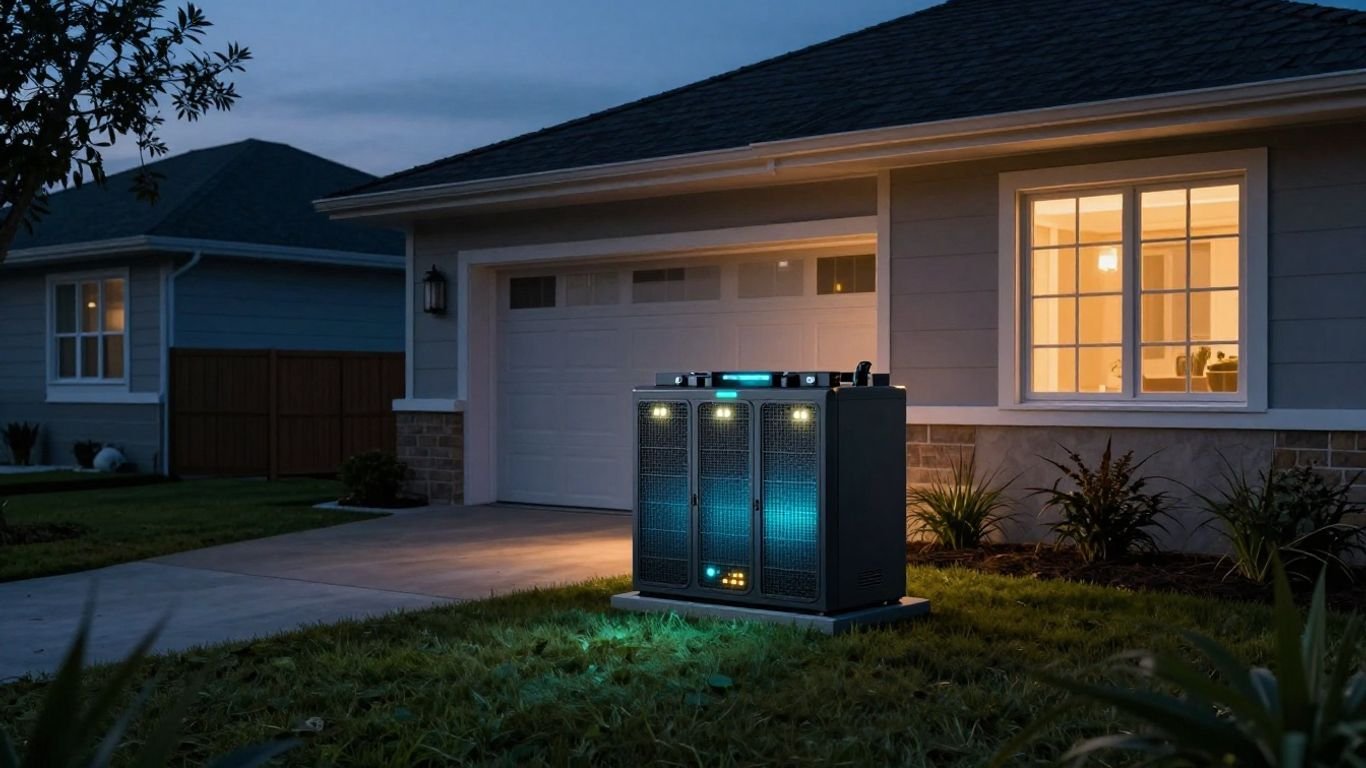
Home Battery Power: How Long Will It Last?
Imagine your power goes out. Suddenly, everything stops – the fridge, the lights, your internet. A home battery backup can keep things running, but how long will it actually last? It’s not a simple answer. Lots of things play a role, from how big your battery is to what you decide to power. We’ll break down what you need to know so you can figure out how long can a home battery power a house for your specific situation.
Key Takeaways
- A home battery’s runtime depends on its storage size (kWh) and what appliances you’re running. A 10 kWh battery might power essentials for about a day.
- High-demand items like air conditioners or electric dryers drain batteries much faster than smaller loads like lights or a fridge.
- Solar panels can significantly extend backup duration by recharging the battery during daylight hours, offering continuous power.
- Managing which appliances you use during an outage is key. Prioritizing essentials over comfort items will make your battery last much longer.
- Battery lifespan, measured in years or cycles, is affected by its type (lithium is generally better), how deeply it’s discharged, and environmental conditions like temperature.
Understanding Your Home Battery’s Power Capacity
So, you’re thinking about getting a home battery, huh? It’s a smart move, especially with how unpredictable the power grid can be these days. But before you buy, you need to get a handle on what "capacity" actually means. It’s not just a number; it tells you how many hours can a battery run a house when the lights go out.
Kilowatt-Hours: The Measure of Stored Energy
Think of kilowatt-hours (kWh) as the size of the gas tank for your battery. A bigger kWh number means more stored energy. For example, a 10 kWh battery can store a good amount of electricity. Most home batteries fall somewhere between 5 kWh and 15 kWh, but you can often link them together to get even more storage if you need it. It’s important to remember that you usually can’t use all the stored energy. Most manufacturers recommend keeping a small reserve, maybe 5-10%, to keep the battery healthy and ready to start up again when the sun comes out if you have solar. So, if you have a 10 kWh battery, you might realistically have about 9 kWh to use.
Appliance Wattage: What’s Drawing Power?
Now, what are you going to power with that stored energy? That’s where wattage comes in. Every appliance or device in your home uses a certain amount of power, measured in watts (W). Some things sip power, while others guzzle it. For instance:
- Refrigerator: Around 150-200W (but can surge higher when the compressor kicks on)
- LED Lights (a few bulbs): About 50W total
- Internet Router: Roughly 10W
- Heat Pump (for heating/cooling): This is a big one, often 1,000-3,000W or more!
Knowing the wattage of the things you really need during an outage is key to figuring out how long your battery will last. You can usually find this info on a sticker on the appliance itself or in its manual.
Calculating Runtime: A Practical Example
Let’s put it all together. Imagine you have a 10 kWh battery (which is 10,000 watt-hours). You want to power just the essentials: your fridge (let’s say 150W average), your internet router (10W), and some LED lights (50W). That’s a total of 210 watts.
Here’s a simple calculation:
10,000 watt-hours / 210 watts ≈ 47.6 hours
So, theoretically, your battery could power these items for almost two days! But wait, there’s more. Inverters, which change the battery’s power to what your home uses, aren’t perfectly efficient. They lose a bit of energy, usually around 5-10%. So, you might realistically get closer to 40-45 hours. If you wanted to run something like a heat pump, that 210W load would jump to thousands of watts, and your runtime would drop dramatically, maybe to just a few hours. This is where understanding your residential battery capacity for outages really matters.
When you’re planning for outages, it’s easy to get caught up in the maximum potential runtime. However, it’s more practical to think about the average load you’ll be running. Prioritizing essential devices and understanding their combined wattage is the best way to get a realistic idea of how long your battery will keep things going. This is especially true when you’re thinking about powering a home with solar batteries, as you’ll want to manage that stored energy wisely until the sun can recharge it.
Factors Influencing Backup Duration
So, you’ve got a home battery system, and you’re wondering how long it’ll actually keep the lights on when the power goes out. It’s not just about the battery’s size, though that’s a big part of it. Several things play a role in determining your actual home battery backup duration.
Battery Size and Storage
This is pretty straightforward. The bigger the battery, the more energy it can hold, measured in kilowatt-hours (kWh). Think of it like a gas tank for your house. A 10 kWh battery can store more energy than a 5 kWh one. So, if you have a lot of appliances you want to run, you’ll need a larger capacity battery to keep them going for a decent amount of time. It’s about matching the stored energy to your household’s needs.
Household Energy Consumption
This is where things get a bit more detailed. What are you actually trying to power? Running just your internet router and a few LED lights uses way less energy than trying to keep a refrigerator, a heat pump, and your TV running. A fridge might sip around 150 watts, while a heat pump can easily pull over 2,000 watts. If you’re powering a lot of high-demand items, your battery will drain much faster. It’s a good idea to figure out the wattage of your most important appliances. For example, powering a fridge, some lights, and your internet might look something like this:
| Appliance | Average Wattage | Runtime (approx. for 10 kWh battery) |
|---|---|---|
| Refrigerator | 150 W | ~66 hours |
| LED Lights (5) | 50 W | ~200 hours |
| Internet Router | 10 W | ~1000 hours |
| Total | 210 W | ~57 hours |
This is a simplified look, of course. Real-world usage can be less. If you add something like a heat pump (2000W+), that 10 kWh battery might only last a few hours. Understanding your home’s energy use is key to predicting your home battery backup duration.
Inverter Efficiency Losses
Your battery stores power as DC (direct current), but your home appliances use AC (alternating current). The inverter is the component that makes this conversion. No inverter is 100% perfect; some energy is lost during this conversion process, usually around 5% to 10%. So, if you have a 10 kWh battery, you might only be able to use about 9 to 9.5 kWh of that stored energy. It’s a small factor, but it adds up over time, especially during long outages.
It’s important to remember that these calculations are often best-case scenarios. Factors like the battery’s age, temperature, and how often it’s been used can all affect its actual performance during an outage. Planning for a bit of buffer is always a smart move when preparing for grid-down situations [d247].
The Impact of Solar Integration on Runtime
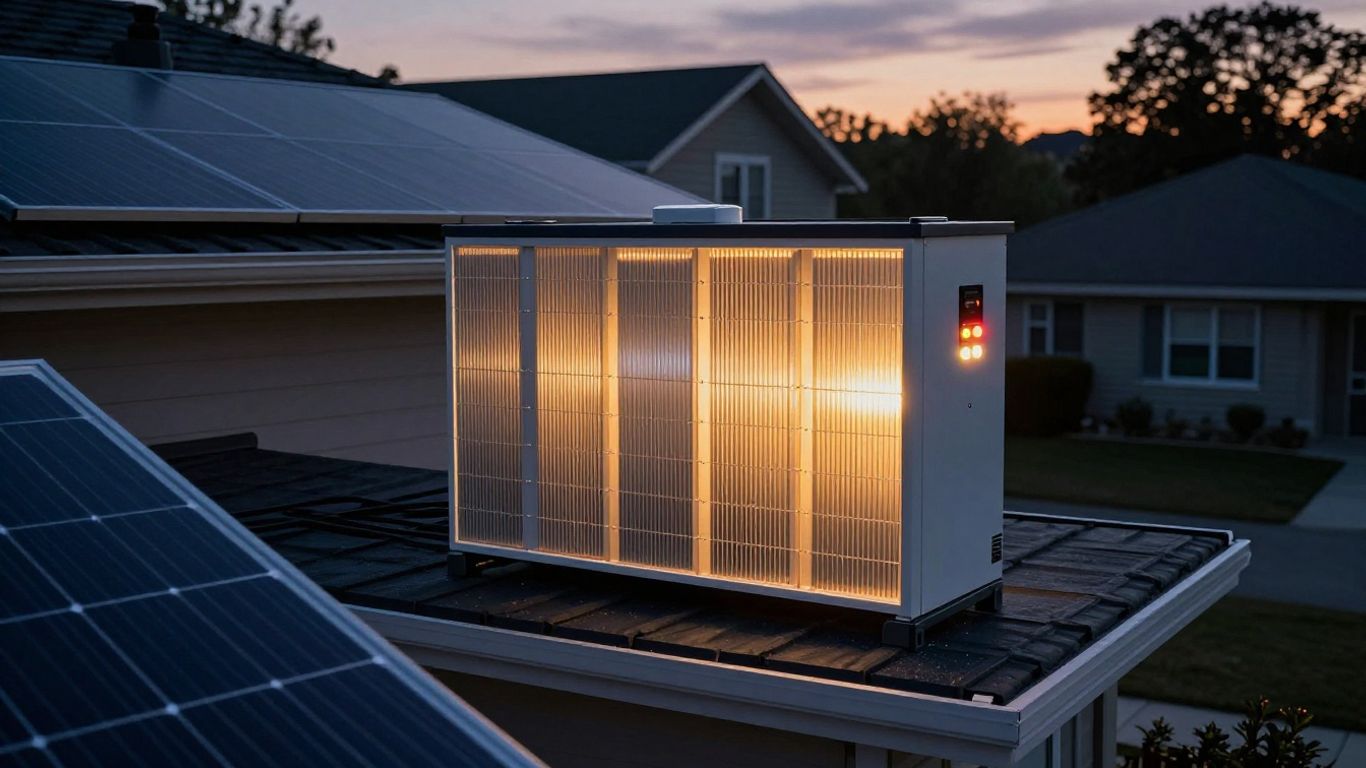
So, you’ve got a home battery, which is great for keeping the lights on when the grid goes down. But what happens when the power outage drags on longer than your initial charge? This is where pairing your battery with a solar panel system really changes the game. It’s the difference between rationing power and having a continuous energy source.
Continuous Power with Solar Recharging
When you have solar panels, they’re not just for when the sun is shining and the grid is up. During daylight hours, your panels generate electricity. If you have a battery system connected, this solar power can do two things at once: it can power your home in real-time, and any excess energy can be used to recharge your battery. Think of it like this: your solar panels are constantly topping off your battery throughout the day. So, when evening comes and the panels stop producing, your battery is already full, ready for its nighttime duties. This cycle means you’re not just relying on the initial charge you had when the power went out.
Extended Backup Beyond a Single Charge
Without solar, once your battery is drained, you’re out of luck until the grid returns. But with solar integration, you’re no longer limited to that single charge. Your solar system acts like a personal power plant. Even if you have a few cloudy days where solar production is lower, as soon as the sun comes out again, your panels start generating power and recharging the battery. This ability to continuously replenish the battery means your backup power can last for days, weeks, or even longer, depending on sunlight and your home’s energy use. It really shifts the perspective from counting down to zero to managing daily energy cycles. This is a big deal for genuine energy independence.
Solar’s Role in Energy Independence
Pairing solar with battery storage creates a robust system that can operate independently from the utility grid. This is particularly valuable during extended outages, as your solar system can continue to function and power your home, a process known as "islanding." For example, a 5 kW solar system, assuming average sunlight and a performance rating, might produce around 16.875 kWh per day. This daily generation can be enough to power essential appliances and recharge a 10 kWh battery for overnight use. The amount of power your system can provide depends heavily on your home’s specific needs and the size of your solar array. It’s about having control over your power, regardless of what’s happening with the main grid. This setup offers a level of reliability that’s hard to match, especially in areas prone to frequent or long-lasting power disruptions, making it a smart choice compared to relying solely on standby generators for extended outages.
Strategic Load Management for Extended Power
Okay, so you’ve got your home battery system, and you’re wondering how to make that stored power last as long as possible, especially when the grid decides to take a break. It’s not just about having a big battery; it’s about being smart with the energy you have. Thinking strategically about what you power can make a huge difference in how long your backup lasts.
Prioritizing Essential Appliances
When the lights go out, not everything in your house needs to run at full blast. Trying to power everything at once is a surefire way to drain your battery way faster than you’d like. Instead, focus on what’s truly important. This means identifying your critical loads. Think about things like:
- Your refrigerator and freezer to keep food from spoiling.
- Your internet router and modem so you can stay connected.
- A few essential lights for visibility.
- Medical equipment if anyone in the household needs it.
- Phone chargers to keep communication devices alive.
By creating a dedicated backup circuit for these items, you’re essentially telling your battery, ‘Hey, just keep these running.’ This simple step can dramatically extend your runtime. For example, running just a fridge (around 150 watts), your internet (10 watts), and a few LED lights (50 watts) uses about 210 watts. A 10 kWh battery could theoretically power this for nearly 48 hours, compared to maybe 20-27 hours if you added a TV and laptop charging.
Avoiding High-Demand Systems
Some appliances are real energy hogs. Things like central air conditioning units, electric water heaters, or even clothes dryers can pull thousands of watts. If your goal is to maximize backup duration, you’ll likely need to avoid running these during an outage. It’s a trade-off, for sure. You might have to skip the central AC and opt for fans, or perhaps delay laundry until the power is back. It’s about making conscious choices to conserve energy. For instance, a heat pump might draw 2,000 watts or more, while your fridge might only need 150 watts. That’s a massive difference in consumption.
Balancing Comfort and Runtime
Ultimately, it’s about finding that sweet spot between staying comfortable and making your battery power stretch. You don’t want to be sitting in the dark and heat if you don’t have to, but you also don’t want to run out of power when you still need it. Smart management means understanding your home’s energy use and adjusting accordingly. Maybe you can run your fridge and lights, but you’ll hold off on the big TV or the electric kettle. It’s a bit of an art, really. Many modern battery systems allow you to monitor your usage in real-time through an app, which helps a lot in making these decisions. This kind of monitoring is key to understanding your home’s energy needs and how your battery can meet them, especially when you’re looking at extended power outages. Pairing your battery with solar panels can also significantly change the game, allowing for continuous recharging and much longer backup periods, which is a big deal for energy independence [f48c].
When the grid goes down, your home battery becomes your personal power plant. But like any power source, its output is finite. The trick to making it last isn’t just having a large capacity, but using that capacity wisely. Prioritizing what gets power, avoiding the biggest energy drains, and understanding your own comfort needs are all part of a smart energy strategy. It’s about being prepared and making informed decisions when it matters most.
Here’s a quick look at how different loads impact runtime on a hypothetical 10 kWh battery:
| Appliance/Load | Typical Wattage | Runtime (Approx. Hours) |
|---|---|---|
| Fridge | 150 W | ~67 hours |
| Internet Router | 10 W | ~1000 hours |
| 5 LED Lights | 50 W | ~200 hours |
| Heat Pump (average) | 2000 W | ~5 hours |
| Fridge + Internet + Lights | 210 W | ~48 hours |
| Fridge + Internet + Lights + TV | 310 W | ~32 hours |
Remember, these are estimates. Actual runtime can be affected by inverter efficiency and battery health. For extended backup, focusing on lower-wattage devices is key, and understanding how to manage your energy consumption is vital for maximizing your battery’s potential [4b31].
Battery Lifespan: Longevity and Durability
So, how long can you actually expect your home battery to keep going? It’s not just about how long it powers your fridge during an outage, but also about its overall lifespan – how many years it’ll be useful before it starts to fade. Several things really affect how long these batteries last.
Battery Chemistry: Lithium vs. Lead-Acid
Think of battery chemistry like the engine type in a car. Some are built for the long haul, others not so much. You’ve got your traditional lead-acid batteries, which have been around for ages. They’re usually cheaper upfront, but they don’t last as long and can be pretty sensitive to how you use them. Then there are lithium-ion batteries, especially the lithium iron phosphate (LiFePO4) kind. These are the newer, more robust option. They generally last much longer, handle more charge cycles, and are less fussy about temperature. While they might cost more initially, their extended household energy storage lifespan often makes them a better deal over time.
Depth of Discharge and Cycle Life
This is a big one. Every time you use your battery – from powering your lights to keeping your internet router online – it goes through a ‘cycle’. The more cycles a battery goes through, the more it degrades. The ‘depth of discharge’ (DoD) is basically how much of the battery’s stored energy you use before recharging. If you consistently drain your battery almost completely (high DoD), you’re putting more stress on it, and it won’t last as many cycles. On the flip side, shallower discharges mean less wear and tear. Most manufacturers recommend staying within a certain DoD percentage to maximize the battery’s life. It’s like not redlining your car’s engine all the time; you want to keep it in a good operating range.
Here’s a general idea:
- Lithium-ion (LiFePO4): Typically rated for 3,000 to 6,000+ cycles. This can translate to 10-15 years or more, depending on usage.
- Lead-Acid: Often rated for 500 to 1,000 cycles. This usually means a lifespan of 3-7 years.
Environmental Factors: Temperature and Maintenance
Batteries, like most electronics, don’t love extreme temperatures. Keeping your battery in a place that gets super hot or freezing cold can really shorten its life. High temperatures speed up the chemical reactions inside, causing faster degradation. Extreme cold slows things down, reducing performance and potentially causing damage. Ideally, you want to keep your battery in a relatively stable, temperate environment, like a garage or basement, rather than out in direct sun or an uninsulated shed. While many modern lithium batteries have built-in thermal management, a good location still helps. As for maintenance, most lithium systems are pretty hands-off, but it’s still wise to follow the manufacturer’s advice, keep software updated, and monitor its performance through an app if available. For older lead-acid types, you might need to check water levels, but that’s less common with newer tech.
The way you use your battery directly impacts how long it will last. Think about whether you need it for daily energy savings or just for emergencies. Using it constantly for grid-tied savings will put more cycles on it than using it only when the power goes out. This is why understanding your usage pattern is key to predicting its lifespan and getting the most out of your investment.
Daily Use Versus Emergency Backup
So, you’ve got this home battery, right? It’s pretty cool. But how you decide to use it makes a big difference in how long it actually lasts, both in terms of powering your house during an outage and its overall lifespan. It’s not just a one-size-fits-all situation.
Impact of Frequent Cycling on Lifespan
Think of your battery like your phone. If you’re constantly plugging it in and unplugging it, using it heavily all day, every day, the battery won’t last as many years as one that just sits on the charger overnight. The same idea applies to your home battery. When you use it daily to shave off peak electricity costs or to use your stored solar power at night, you’re putting it through its paces. This is called daily cycling. It means the battery is charged and discharged pretty often. While this can save you money and reduce your reliance on the grid, it does wear down the battery components faster. Modern lithium-ion batteries are tough, but even they have a limit to how many times they can go through a full charge and discharge cycle before their capacity starts to drop.
Benefits of Emergency-Only Usage
Now, if you decide to use your battery only for emergencies, like during a power outage, it’s a whole different story. In this mode, the battery usually stays pretty full, and you only tap into it when the grid goes down. Since these discharges are infrequent and often not to zero, the battery experiences much less stress. This means it can potentially last a lot longer, often well over a decade, before needing replacement. It’s like keeping a car in the garage most of the time – it just doesn’t rack up as many miles or wear and tear. This approach is great if your main goal is peace of mind during blackouts, rather than daily energy savings. A mid-range battery might give you 12 to 24 hours of backup power for essentials like your fridge, lights, and internet router, depending on how much you’re running. This page has some good examples of runtime.
Hybrid Approaches for Balanced Performance
What if you want a bit of both? Some people opt for a hybrid strategy. They might use a portion of their battery’s capacity for daily energy management but reserve a significant chunk specifically for backup power. Many advanced battery systems allow you to set this up. It’s a way to get some daily savings and still have a solid reserve when the lights go out. It’s a compromise, sure, but it can be a really smart way to balance your needs. You get some of the benefits of daily use without completely sacrificing the longevity you’d get from emergency-only use. It’s all about figuring out what matters most to you and setting up your system accordingly.
The way you use your home battery system directly impacts both how long it will power your home during an outage and how many years it will last overall. Daily, frequent use means shorter backup times per outage and a shorter total lifespan, while emergency-only use means longer backup times and a longer overall lifespan. A balanced, hybrid approach can offer a middle ground.
Here’s a quick look at how different loads might affect runtime on a hypothetical 10 kWh battery:
| Appliance | Typical Wattage | Runtime (Approximate Hours) |
|---|---|---|
| Fridge | 150 W (running) | 60+ |
| LED Lights (x5) | 50 W total | 200+ |
| Internet Router | 20 W | 500+ |
| Heat Pump (small) | 1500 W | 6.5 |
| Phone Charging | 10 W per phone | Varies greatly |
So, How Long Will It Last?
Alright, so we’ve talked a lot about how long these home batteries can keep your lights on. The short answer is, it really depends on what you’re running and how big your battery is. For most folks just trying to keep the essentials going – like the fridge, some lights, and your internet – you’re probably looking at about a day, maybe a bit more if you’re careful. But if you start powering up the big stuff, that time shrinks fast. Now, if you’ve got solar panels hooked up, that’s a whole different ballgame. Suddenly, you’re not just limited to one charge; the sun can keep topping you up. It’s the difference between having a temporary fix and having power for as long as you need it. Ultimately, figuring out what you need your battery to do is the first step to getting the right one and knowing what to expect when the power goes out.
Frequently Asked Questions
How long can a home battery power my house?
The time a home battery can power your house depends on its size (how much energy it stores, measured in kilowatt-hours or kWh) and how much power your appliances use. A typical 10-20 kWh battery might keep essential things like your fridge, lights, and internet running for about a day. But if you try to run bigger things like an air conditioner, it will drain much faster.
What’s the difference between daily use and emergency backup for a battery?
Using your battery every day to save money or use solar power means it gets charged and used a lot. This is called daily cycling. Emergency backup is when you only use the battery when the power goes out. Using it less often, like for emergencies only, helps the battery last longer over its total lifespan.
Can solar panels help my battery last longer during an outage?
Yes, absolutely! If you have solar panels, they can generate electricity during the day to power your home and recharge your battery at the same time. This means you’re not limited to just one battery charge. As long as the sun is shining, your battery can keep getting topped up, allowing for much longer backup power, even for days or weeks.
What are kilowatt-hours (kWh)?
Kilowatt-hours (kWh) is how we measure the total amount of energy a battery can store. Think of it like the size of a gas tank in a car. A bigger kWh number means the battery can hold more energy and power your home for a longer time.
How can I make my battery backup last longer during an outage?
To make your battery last longer, focus on using only essential appliances. Avoid running high-power items like electric heaters, clothes dryers, or central air conditioning. Prioritizing what you need to run helps stretch the stored power for a more extended period.
How long do home batteries typically last in terms of years?
Most modern home batteries, especially those using lithium iron phosphate (LiFePO4) technology, can last for about 10 to 15 years. This lifespan depends on factors like how often they are used (their ‘cycle life’), how deeply they are discharged, and if they are kept in good temperature conditions.