Fridge on the Go: Power Up Your Cooler Anywhere!
So, you’re planning an adventure and want to keep your food and drinks perfectly chilled without the hassle of ice? That’s where a portable power station for your refrigerator comes in. Forget those bulky, melt-prone coolers. We’re talking about real refrigeration, powered up and ready to go wherever you are. This guide will walk you through what you need to know to pick the right setup and keep things cool on your next trip.
Key Takeaways
- Electric coolers offer a convenient way to keep food cold without ice, saving space and mess.
- Portable power stations are key to running these coolers anywhere, providing a reliable energy source.
- Understanding battery capacity and runtime is important for knowing how long your cooler will stay cold.
- Features like precise temperature control and energy efficiency make a big difference in performance.
- Consider solar charging options for extended trips to keep your power station topped up off-grid.
Understanding Portable Power Stations for Refrigerators
The Convenience of Electric Coolers
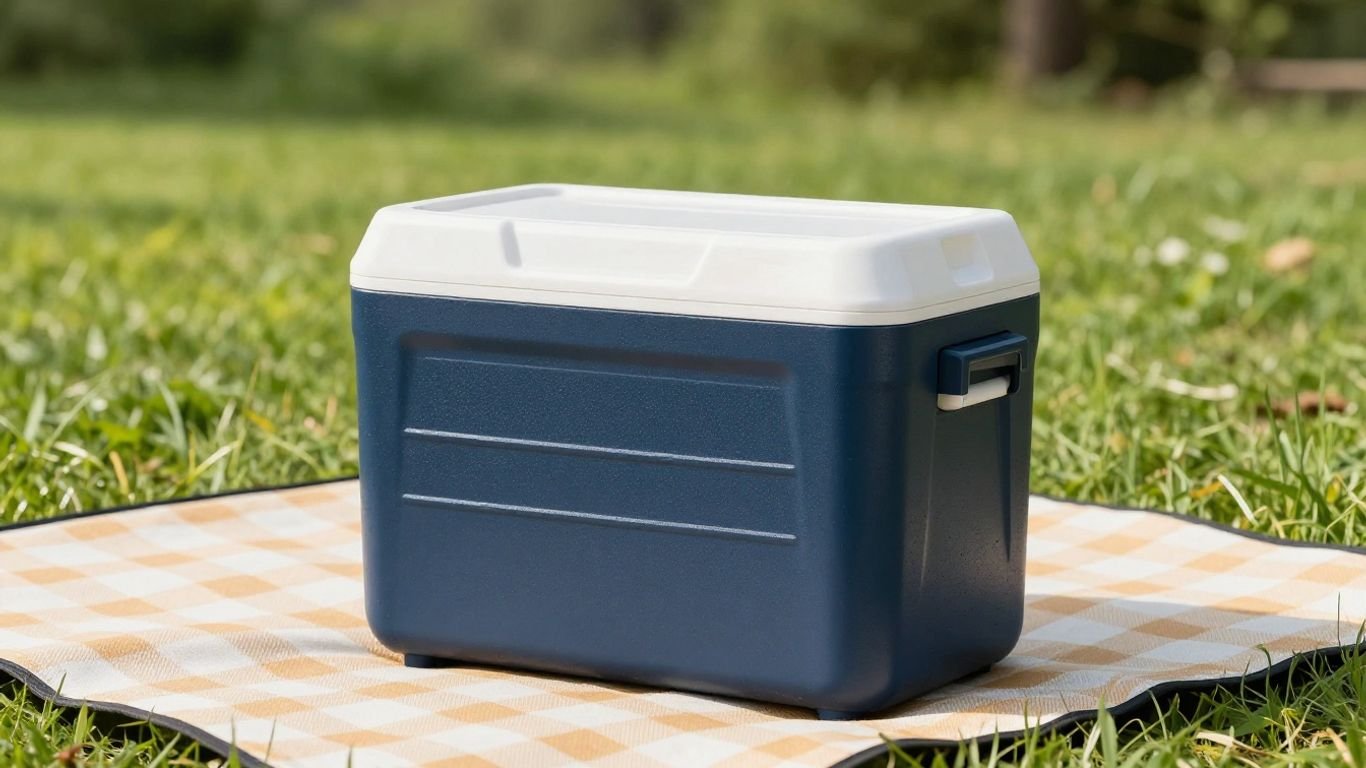
Forget about melting ice and soggy sandwiches. Electric coolers, often called portable refrigerators or fridge-freezers, are a game-changer for anyone who spends time outdoors. They offer consistent, reliable cooling, turning your cooler into a mini-fridge on wheels. This means you can keep drinks frosty and food fresh for days, not just hours. Whether you’re planning a weekend camping trip or a long road adventure, having a battery powered fridge solution that doesn’t rely on ice is incredibly convenient. It frees up space, reduces mess, and ensures your perishables stay safe to eat.
Key Features of a Portable Power Station
So, how do you power these amazing coolers? That’s where portable power stations come in. Think of them as big rechargeable batteries with multiple outlets. They typically have AC outlets (like your wall sockets), DC outlets (for car-style plugs), and USB ports. This versatility means you can power your fridge, charge your phone, run lights, and more, all from one unit. When looking for a refrigerator power supply for camping, you’ll want to check the output wattage to make sure it can handle your cooler’s needs, especially during startup. Some units also have built-in inverters, which convert the battery’s DC power to AC power.
Choosing the Right Capacity for Your Needs
This is where things can get a little technical, but it’s important. Power stations are rated in Watt-hours (Wh), which tells you how much energy they can store. A higher Wh number means more power and longer runtimes. To figure out what you need, you have to do a little math. First, find out how many watts your portable refrigerator uses. This is usually listed on the fridge itself or in its manual. Then, multiply that wattage by the number of hours you want it to run. For example, a fridge that uses 50 watts and needs to run for 24 hours would need 1200 Wh (50W * 24h). However, it’s wise to get a power station with a larger capacity than your calculation, maybe 1.5 to 2 times as much. This accounts for inefficiencies and ensures you have extra power. For example, if you need 1200 Wh, a 2000 Wh power station would give you a good buffer. This is especially important if you’re looking for emergency fridge backup power or planning to use it as an how to power a fridge outdoors solution for extended periods. Remember, the actual runtime can vary based on the ambient temperature, how often you open the fridge, and the specific model of your portable refrigerator.
Calculating your power needs accurately is key to avoiding disappointment. A power station that’s too small will leave you with a warm fridge, while one that’s too large might be unnecessarily heavy and expensive. Always err on the side of having a bit more capacity than you think you’ll need.
Here’s a quick look at how battery size impacts runtime:
| Power Station Capacity (Wh) | Estimated Runtime for a 50W Fridge | Notes |
|---|---|---|
| 500 Wh | ~10 hours | Good for short trips or overnight |
| 1000 Wh | ~20 hours | Suitable for a full weekend |
| 1500 Wh | ~30 hours | Extended trips, less worry about power |
| 2000+ Wh | 40+ hours | Long-term off-grid use, multiple devices |
Keep in mind these are estimates. Factors like the fridge’s efficiency and external temperature play a big role. For instance, a highly efficient fridge like the Alta 50 might run longer on the same power station compared to a less efficient model. Similarly, if you’re using a solar generator for your CPAP, you’ll want to consider its capacity for extended outages [8c4c].
Powering Your Cooler On The Go
So, you’ve got this awesome portable fridge, but how do you keep it running when you’re miles from an outlet? That’s where the power station comes in. Think of it as a giant battery pack, but way more capable. It’s the key to keeping your food and drinks cold on those extended camping trips or long drives.
Multiple Charging Options Explained
Most portable power stations are pretty flexible when it comes to juice. You can usually charge them up at home using a standard wall outlet before you leave. Then, on the road, you can often plug them into your car’s 12V socket. Some even have solar panel inputs, which is a game-changer for off-grid adventures. This means you can top up your power station using the sun, giving you virtually unlimited cooling time if you’ve got good weather. It’s like having your own little power grid.
Understanding Runtime Calculations
Figuring out how long your cooler will run is a bit of a math problem, but it’s not too scary. You need to know two main things: the capacity of your power station (usually measured in Watt-hours, or Wh) and how much power your cooler uses (in Watts, W). The basic idea is: Runtime (hours) = Power Station Capacity (Wh) / Cooler Power Draw (W).
Let’s say your power station has 500Wh and your cooler draws 50W. That gives you a theoretical runtime of 10 hours (500Wh / 50W = 10h). But, and this is a big ‘but’, that’s under ideal conditions. Real-world use is usually less. Things like how often you open the lid, the outside temperature, and how full the cooler is all play a part. It’s always better to overestimate your needs.
Here’s a quick look at how different cooler sizes might stack up:
| Cooler Size (approx.) | Typical Power Draw (W) | Runtime on 500Wh Station (hours) |
|---|---|---|
| Small (20-30L) | 30-45W | 11-16 hours |
| Medium (40-50L) | 45-60W | 8-11 hours |
| Large (60L+) | 60-80W | 6-8 hours |
Remember, these are just estimates. A good rule of thumb is to aim for a power station that can run your cooler for at least 24 hours, especially if you’re going to be away from charging sources for a while. This is where looking for the best portable generator for cooler becomes important, as some are designed for this specific purpose.
Battery Size and Its Impact on Cooling
The battery size, or capacity, of your power station is directly linked to how long it can keep your cooler running. A bigger battery means more Watt-hours, which translates to longer cooling times. For example, a 299Wh battery might keep a medium-sized cooler running for about 8-10 hours, while a larger 1500Wh unit could potentially power it for days, depending on the cooler’s efficiency and usage.
Don’t just look at the total capacity; consider the type of battery too. Lithium-ion batteries are generally lighter and last longer than older lead-acid types. Also, check if the battery is integrated or detachable. A detachable battery, like the one on the Anker EverFrost, can be a real advantage, allowing you to swap it out or charge it separately.
When you’re choosing a power station, think about your typical trip length and how often you’ll have access to charging. For weekend trips, a smaller unit might suffice. But for longer expeditions, investing in a larger capacity power station is definitely the way to go. It’s better to have a little extra power than to run out of cold drinks on day two of your adventure.
Advanced Features for Optimal Cooling
Temperature Control and Precision
Forget about guessing if your food is cold enough. Modern portable refrigerators offer precise temperature control, letting you dial in the exact degree you need. This isn’t just about keeping drinks frosty; it’s about food safety. For instance, some units allow you to set specific zones, one for freezing and another for chilling, giving you dual functionality. This level of control means you can pack meats for freezing and vegetables for crisping, all in the same unit. The best models use digital thermostats that are easy to read and adjust, often with a range from well below freezing up to a cool 50°F. This precision is key to preserving perishables on longer trips.
Energy Efficiency and Low Power Draw
When you’re off-grid, every watt counts. That’s why energy efficiency is a big deal. Look for refrigerators that use high-performance compressors, like those found in the Blizzard Box, and good insulation. Some units even have special modes designed to minimize power consumption. These modes might slightly reduce cooling speed but significantly extend how long the fridge can run on battery power. It’s a trade-off that’s often worth it, especially if you’re not planning on frequent recharges. Understanding the power draw in watts (W) and comparing it to your power station’s output is a smart move.
Integrated App Control for Remote Monitoring
Imagine being able to check your cooler’s temperature from your tent or even while you’re hiking. That’s where app control comes in. Many newer portable fridges connect to your smartphone via Bluetooth or Wi-Fi. This lets you monitor the temperature, adjust settings, and even get alerts if the temperature goes out of your desired range, all without having to get up. It’s a neat feature that adds a layer of convenience and peace of mind, especially when your fridge is buried deep in the back of your vehicle. This kind of remote access is becoming a standard feature on higher-end models.
Maximizing Your Cooler’s Performance
So, you’ve got your portable power station and your electric cooler all set up. Awesome! But how do you make sure it runs as long as possible, especially when you’re out in the middle of nowhere? It’s not just about having a big battery; it’s about being smart with how you use it. Let’s talk about a few things that can really make a difference.
The Role of Insulated Covers
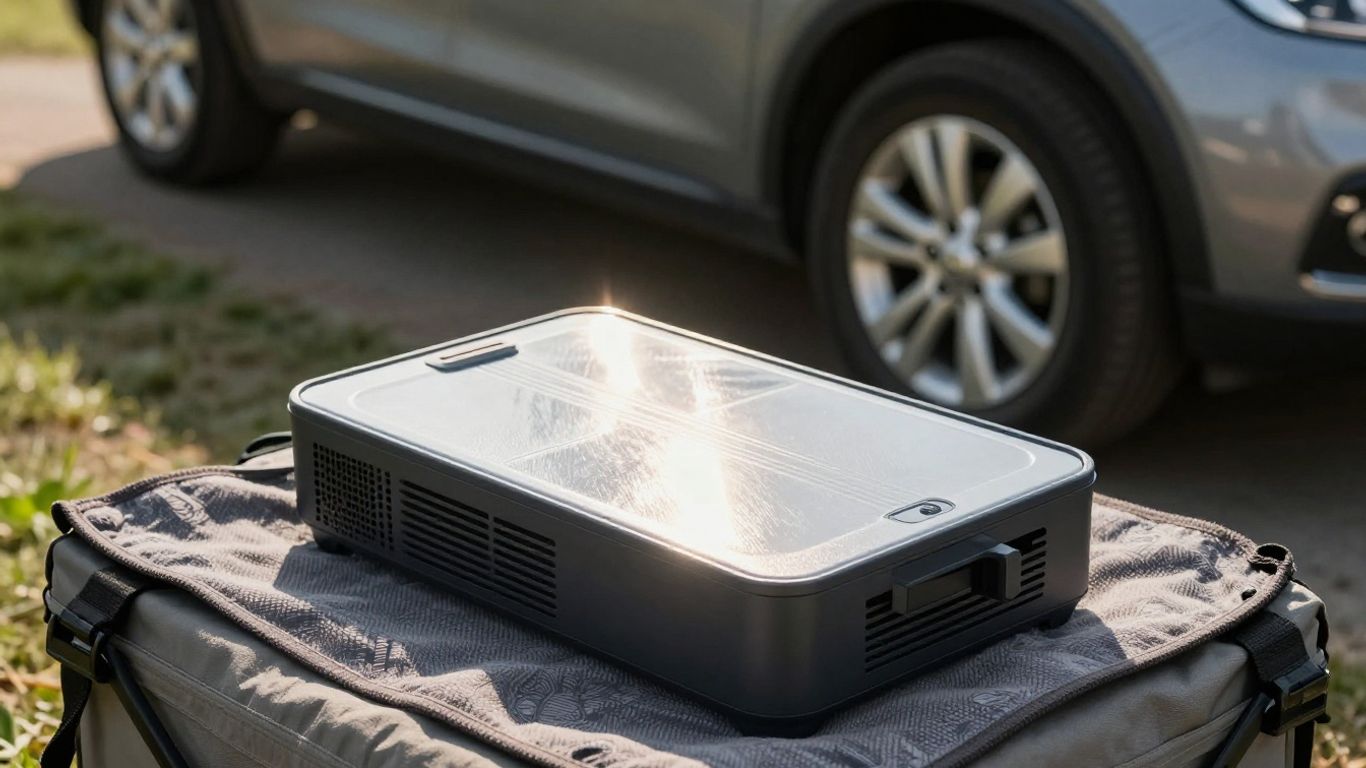
Think of an insulated cover as a cozy blanket for your cooler. It’s not just for looks, though some do look pretty sharp. This extra layer helps keep the cold air in and the warm air out. This means your cooler’s compressor doesn’t have to work as hard to maintain the set temperature. Less work for the compressor means less power drawn from your battery. Some covers even have handy pockets for storing cords or other small items. It’s a simple addition that pays off in longer runtimes, especially on hot days. It also adds a bit of protection against bumps and scrapes, which is always a plus when you’re adventuring.
Pre-Cooling Strategies for Efficiency
This is a big one, and honestly, it’s super easy to forget when you’re excited to pack up. Before you load your food and drinks, give your cooler a head start. Plug it into a wall outlet at home and let it get nice and cold before you put anything inside. This way, the cooler is already at its target temperature, and it won’t have to work overtime trying to cool down a bunch of room-temperature items. It’s like giving your fridge a warm-up before a big workout. For example, the Alta 50 suggests doing this before you pack it up. This initial chill means the battery will last longer once you disconnect from the wall power.
Maintaining Optimal Temperatures Off-Grid
Keeping things cool when you’re away from power outlets is the whole point, right? Here are a few tips to help you out:
- Minimize Door Openings: Every time you open the lid, cold air escapes and warm air rushes in. Try to plan your access – grab everything you need at once rather than opening it multiple times for single items.
- Use Block Ice (if applicable): While electric coolers don’t need ice, if you’re using a hybrid approach or have a separate ice chest, block ice melts much slower than cubed ice. This can help keep the ambient temperature down inside your electric cooler if you’re in a pinch or want extra thermal mass. Keeping the cooler closed is key here.
- Consider Ambient Temperature: If your cooler is sitting in direct sunlight, it’s going to work much harder. Try to keep it in the shade whenever possible. Even a simple tarp can make a big difference.
- Pack Smart: Don’t overstuff the cooler, but also don’t leave too much empty space. Air pockets can make temperature regulation harder. Fill any gaps with towels or blankets if needed.
When you’re calculating how long your power station will last, remember that the cooler’s power draw isn’t constant. It cycles on and off. A cooler’s battery size, measured in Watt-hours (Wh), is the total energy it can store. To figure out runtime, you divide the battery’s Wh by the cooler’s average power draw in Watts. For instance, a 299Wh battery powering a 50W cooler would theoretically last about 6 hours (299Wh / 50W = 5.98 hours). However, this is a simplified calculation. Real-world use, especially frequent door openings and high ambient temperatures, will reduce this time. It’s always better to overestimate your power needs.
- Monitor Your Power: Keep an eye on your power station’s display. Most will show you the remaining battery percentage and estimated runtime. This helps you adjust your usage before you’re left with a warm cooler.
Seamless Integration with Your Adventures
Powering Your Fridge in Various Settings
Taking your portable fridge out and about means you’ll need to think about how to keep it powered up, no matter where you are. Most of these coolers run on 12V DC power, which is perfect for your car, RV, or boat. You can plug them right into the cigarette lighter socket. This makes them super convenient for road trips or camping.
But what about when you’re not near a vehicle? That’s where portable power stations come in. These battery packs can store a lot of energy and provide a steady AC or DC output to run your fridge for extended periods. Think of them as a portable wall outlet for your cooler. When choosing a power station, look at its capacity in watt-hours (Wh) and its output wattage. A fridge might draw around 50-100 watts, so you’ll need to match that with your power station’s capabilities.
Vehicle Battery Protection Systems
One common worry when running a fridge off your car’s battery is draining it completely, leaving you stranded. Thankfully, most portable fridges and power stations have built-in safeguards. Many 12V fridges have a low-voltage cutoff. This feature monitors your vehicle’s battery level and shuts off the fridge if the voltage drops too low, preventing a dead battery. It’s a pretty smart system that stops your fridge before it causes a problem.
Power stations also offer protection. They usually have their own battery management systems that prevent over-discharge. If you’re using a power station to run your fridge while camping, it’s not directly connected to your car’s battery, so you don’t have that specific concern. However, you still need to keep an eye on the power station’s remaining charge to know when it’s time to recharge it.
Solar Charging for Extended Use
For longer trips or off-grid adventures, solar charging is a game-changer. You can connect portable solar panels directly to many power stations. This allows you to recharge your power station using sunlight, effectively extending the runtime of your fridge indefinitely, as long as you have enough sun. It’s a fantastic way to stay powered up without needing to find an electrical outlet or run your car’s engine.
When setting up solar, consider the panel’s wattage and the amount of direct sunlight you’ll get. A larger panel will charge faster. You’ll want to position the panels to face the sun for the best results. This setup is ideal for extended camping trips or situations where you’ll be far from any power sources. It really opens up possibilities for keeping your food and drinks cold for days on end. You can find some great portable solar panels that work well with most power stations.
Exploring Top Portable Refrigerator Models
Introducing the Alta 50
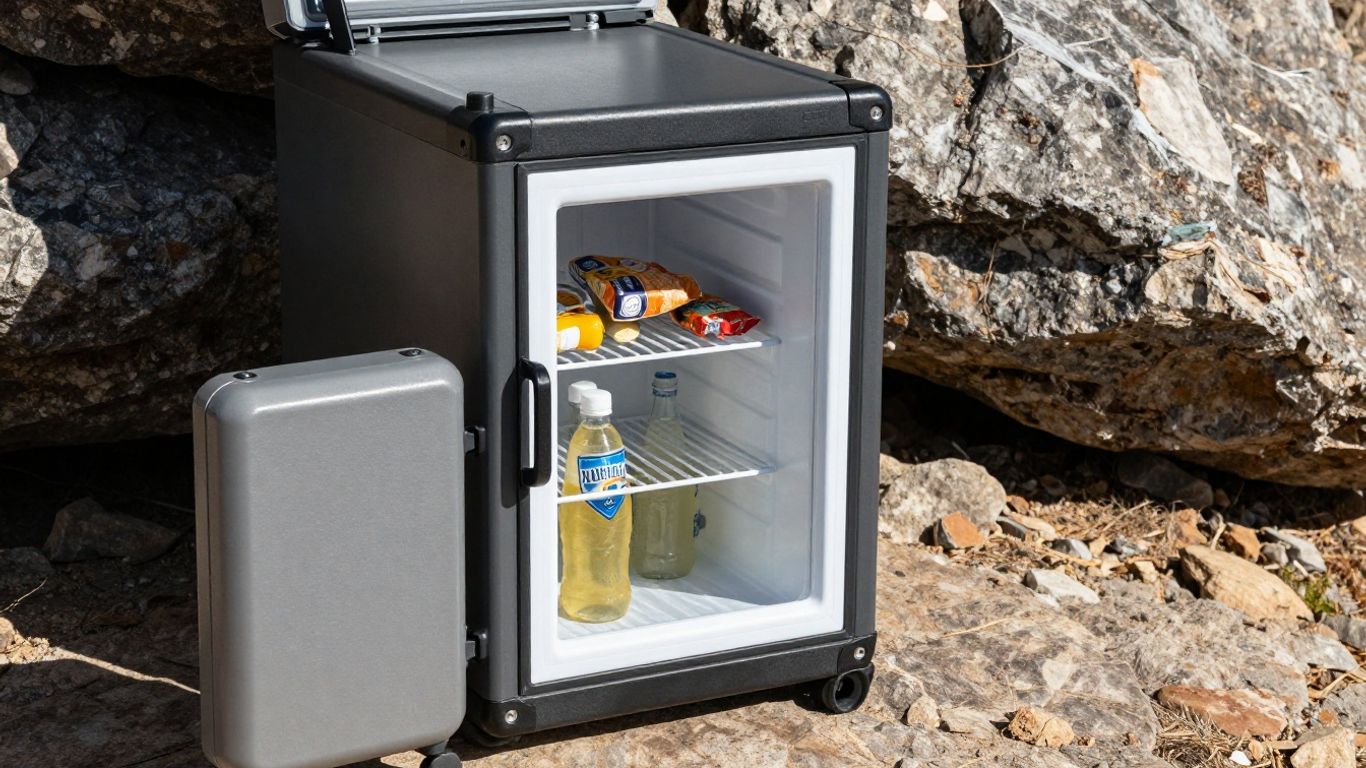
The Alta 50 electric cooler is designed for those who want serious cooling power without the hassle of ice. It uses an LG compressor, which is known for being really energy efficient. This means it draws less power, which is great when you’re running it off a battery. It can even go down to -4°F, so you can use it as a freezer if you need to. Plus, it comes with a cover that helps it run even better and keeps it safe from bumps and scratches. You can power it up using a wall outlet, a power station like the Yeti, or even your car’s 12V outlet. It’s pretty quiet too, around 45dB, so it won’t disturb your campsite.
- Capacity: 52.6L (holds about 75 cans)
- Temperature Range: -4°F to 68°F
- Power Draw: Around 8 Watts at 35°F
- Features: Bluetooth connectivity, LED interior light, removable bins
Pre-cooling is a smart move. Plug the Alta 50 into a wall outlet and get it nice and cold before you load it up with your food and drinks. This saves a lot of energy in the long run.
Discovering the Blizzard Box
Blizzard Box is another solid option for keeping things cool on your adventures. It uses a SECOP compressor and a digital thermostat, letting you set the temperature anywhere between 0°F and 50°F. The walls are foam-injected, which adds to its insulation. It’s built tough and works well for road trips, camping, or even just tailgating. The 41QT model can hold up to 64 cans. What’s neat is its flexibility with power – it comes with cords for both 12V DC and 110V AC. It also has a system that watches your car’s battery and shuts off if the voltage gets too low, so you don’t have to worry about getting stranded.
- Compressor: SECOP
- Insulation: Foam-injected walls
- Power Options: 12V DC and 110V AC adapter included
- Safety: Low-voltage cutoff for vehicle batteries
Anker EverFrost: Extended Cooling Capabilities
While specific details on the Anker EverFrost weren’t provided in the scraped text, models like it often focus on long-lasting cooling and smart features. Typically, these coolers aim for extended runtimes, sometimes boasting multiple days of cooling on a single charge when paired with a suitable power station. They often integrate with companion apps for remote temperature monitoring and control, allowing you to check and adjust settings from your phone. The real advantage of these advanced units lies in their ability to maintain consistent temperatures for longer periods, reducing the need for frequent recharging or worrying about your food spoiling. If you’re planning extended trips where power access is limited, looking into models with larger battery capacities and efficient compressors is key. For example, a cooler that draws 50W and runs for 8 hours needs 400Wh of power. If your power station is 1000Wh, you’d theoretically get about two full cycles, but real-world use, including ambient temperature and how often the lid is opened, will affect this. Always check the manufacturer’s runtime estimates for specific scenarios.
So, Ready to Chill?
Alright, so we’ve talked about how these portable electric coolers can really change the game for your trips. No more melting ice, no more soggy sandwiches, and you can actually keep things cold for days. Whether you’re hitting the road, camping out, or just heading to a picnic, having a powered cooler means less hassle and more enjoyment. Think about it – cold drinks ready whenever you are, fresh food for longer. It’s a pretty sweet upgrade from the old ice chest. So yeah, if you’re looking to make your adventures a bit cooler, literally, one of these might just be worth checking out.
Frequently Asked Questions
How long can I expect my portable fridge to run on a power station?
The running time really depends on a few things, like how big the battery is on your power station and what temperature you set your fridge to. Some can run for many hours, or even a couple of days, especially if you have a larger battery or use solar power to keep it charged.
Do I need to buy a special cover for my portable fridge?
Good news! Most portable fridges, like the Alta 50, actually come with an insulated cover. This cover helps keep your food colder for longer and also protects the fridge from bumps and scratches. It’s a nice bonus that helps the fridge work better.
Can I use my portable fridge as both a fridge and a freezer?
Absolutely! Many of these portable coolers are designed to do both. You can set them to be a regular fridge to keep drinks and snacks cool, or turn them into a freezer to store ice cream or frozen meats. They can get really cold, sometimes down to -4°F.
How do I figure out what size power station I need for my cooler?
To figure this out, you’ll want to look at how much power your fridge uses (often listed in watts) and how long you want it to run. You can then calculate the total power needed. It’s usually better to get a power station with a bit more capacity than you think you’ll need, just to be safe.
What are the different ways I can charge my portable fridge?
You’ve got options! Most portable fridges can be plugged into a regular wall outlet at home. When you’re out and about, you can often charge them using your car’s 12V socket, or connect them to a portable power station. Some even support charging with solar panels, which is great for long trips off the grid.
Is it okay if my portable fridge is tilted a bit?
While it works best when sitting flat, most portable fridges can handle being tilted a little, usually up to about a 45-degree angle. Just make sure it’s not leaning too much, as that could affect how well it cools or even cause issues.