
Private LTE Networks for Mines, Farms and Remote Worksites
Key Takeaways
A private LTE network can give a remote operation a dedicated wireless layer, but its usefulness depends on careful planning rather than the label alone. Start with the work people and machines need to do, then design coverage, backhaul, security and operations around it.
- Private LTE uses dedicated network resources for a site, with performance shaped by spectrum, radio placement and the network core.
- Mines, farms, construction sites and utilities may use private LTE to connect mobile equipment, sensors and operational systems.
- Terrain, changing work areas, device counts and application needs should guide coverage and capacity planning.
- Spectrum access, core-network arrangements, rugged equipment and dependable backhaul are decisions to make before deployment.
- Security and ongoing operations require clear access controls, traffic separation, monitoring and backup plans.
What a private LTE network offers remote sites
A private LTE network remote sites can use is a cellular network planned for a particular organization or location, rather than a public service shared with general subscribers. Its value depends on the needs of the operation: where people work, what devices must connect, and which applications need dependable access. Private LTE is not a shortcut around site design, spectrum rules or backhaul limitations. It is one possible way to build a managed wireless layer for a remote operation.
How private LTE differs from public cellular service
Public cellular service is built to serve subscribers across a broader area, while a private network is configured for a defined organization or site. That difference can give an operator more control over device access and the way local traffic is handled, though actual performance still depends on the design and available spectrum. For example, Speedcast CELLULAR Private LTE is described as a secure, low-latency private network for remote sites, offshore platforms and vessels, built for critical operations, IoT and automation. Those are capabilities of that named offering, not a guarantee that every private LTE deployment will behave the same way.
Core components: spectrum, radios and network core
A working LTE system brings together access to spectrum, radio equipment that sends and receives signals, and a network core that manages connections and traffic. Backhaul then connects the site network to other locations, applications or services as the design requires. These pieces have to work as a system: a suitable radio cannot compensate for an unavailable band, and a well-placed antenna cannot resolve a bottleneck farther upstream. A site-specific spectrum licensing plan can help teams compare access options and the local rules that apply.
Where LTE fits alongside Wi-Fi, 5G and satellite
Private LTE can be considered alongside Wi-Fi, 5G and satellite rather than as a universal replacement for them. A site may use different technologies for different spaces, devices or links, depending on coverage, mobility, available infrastructure and the application. Satellite can be relevant where terrestrial connectivity is limited, while Wi-Fi may suit localized access; the right mix is determined by the operation. Speedcast CELLULAR Private LTE is also described as supporting remote locations beyond traditional terrestrial networks, but the available backhaul still needs to be planned for the site.
What to expect from coverage, capacity and latency
Coverage, capacity and latency are related but distinct planning questions. Coverage asks where a usable signal reaches; capacity concerns the traffic the system can carry; latency concerns the time data takes to travel. Terrain, structures, radio placement, the number of active devices and the route to applications can all affect what users experience. Treating measured site conditions as more important than a generic performance expectation helps set realistic targets and identify where a trial is needed.
Where private LTE delivers value across industries
Remote industries often have a mix of moving assets, fixed equipment and workers spread across a large area. A private LTE network may provide a managed way to connect some of those devices, provided coverage and application needs have been validated. The practical use case differs from one site to another; a mine, farm and utility do not share the same operating conditions. Speedcast CELLULAR Private LTE is described as optimized for critical operations and as supporting IoT and automation, a scope that fits those kinds of connectivity needs without making every deployment identical.

Connecting vehicles, sensors and control systems in mines
A mine may need communication across vehicle routes, work areas and fixed operational equipment. Planning should account for where vehicles travel and where sensors or control systems need to exchange information, not just where buildings stand. Camp and office facilities are part of the wider site plan too; portable mining dongas can provide adaptable accommodation, site offices and essential facilities. Their placement may influence where staff need connectivity, but they are not a substitute for a radio survey.
Supporting precision agriculture and equipment across farms
On a farm, connected equipment may move between fields, yards and service buildings, while sensors or operational devices remain in fixed locations. A network plan should follow those patterns and account for seasonal changes in the work. It is also worth separating the question of wireless access from that of internet availability: a local private network does not by itself determine how a remote site reaches off-site services. The mix of local coverage and external connectivity should reflect actual farm operations.
Improving safety and communications at construction sites
Construction sites change as work progresses: machinery moves, structures rise and temporary work zones shift. A radio plan that reflects only the initial layout may become less useful as the site changes, so teams should revisit coverage after major phases or relocations. Worker wellbeing is a separate part of site safety, and an outdoor crew’s resource list may include sun damage care guidance alongside communications procedures. That skincare resource does not define network requirements, but it can be relevant to the broader needs of people working outdoors.
Extending reliable connectivity to utilities and energy operations
Utility and energy operations may span substations, field crews, generation sites and remote equipment. The network design should distinguish between routine data, operational traffic and communications needed during an incident. Power resilience matters as well: radios, core systems and backhaul equipment all need an operating-power plan suited to the location. In a remote mine or energy site, network planning can also be coordinated with a remote mining microgrid assessment so communications loads are considered alongside other critical equipment.
How to plan coverage for a remote site
Coverage planning starts with the work, not a map of radio equipment. A useful plan identifies where people and devices need service, which applications matter, and what conditions could change the signal or the traffic load. It should include a way to check assumptions in the field before the installation is treated as complete. A clear record of those decisions also makes later expansion easier to evaluate.
Map terrain, buildings, work zones and mobile routes
Begin with the site’s physical shape: elevation, ridgelines, pits, structures, roads and areas where work takes place. Add routes for vehicles and people, because a network that reaches fixed equipment may still leave mobile teams with gaps. Mark locations where construction, excavation or seasonal activity could change the landscape. The map should be specific enough to guide a radio survey, not merely a broad site overview.
Estimate users, devices, traffic and application requirements
Counting devices is only a starting point. A sensor sending occasional readings places different demands on a network than a video stream, voice call or operational application used by several people at once. A planning inventory should capture the type of device, its expected activity, where it will be used and what happens if connectivity is interrupted. That distinction helps avoid designing only for a peak device count while overlooking the nature of the traffic.
Choose radio sites, antennas and backhaul options
Radio locations should be selected against the coverage map and then checked in the field. Antenna height, orientation, obstructions and mounting constraints can all affect the result, while backhaul determines how the site connects beyond the local network. For a remote operation, teams may need to compare available links and define what will happen if the preferred path fails. If power is a limiting factor at network sites, a separate backup-power plan can help clarify equipment loads and practical runtime targets.
Account for changing operations and future expansion
Plans need room for change. A new work area, added vehicles or a change in how an application is used can alter both coverage and capacity needs. Before choosing equipment, document which parts of the design can expand and what approvals, spectrum access or backhaul changes that expansion might require. A short list of operational assumptions can keep future changes from being mistaken for a failure of the original design.
- Mark areas where workers and mobile equipment need service.
- Record application needs, device counts and interruption tolerance.
- Note structures, terrain and planned changes that could affect radio paths.
- Identify the external connection and the backup approach for a disruption.
After the list is complete, compare it with the site map and revise any assumptions that are not supported by actual work patterns. A coverage plan is most useful when operations staff can recognize their day-to-day routes and critical locations in it.
How to choose spectrum and network architecture
Spectrum and architecture choices shape what a private LTE system can do and how it will be managed. The options available depend on local rules, equipment support and the site’s operating needs, so a decision made for one country or site may not transfer to another. Teams should compare the cost and control of each approach with the skills and support they can maintain. These choices are best made before final equipment selection.
Compare licensed, shared and unlicensed spectrum
Licensed, shared and unlicensed spectrum come with different access conditions and constraints. A team should verify what applies in its jurisdiction, whether the intended equipment supports the band, and how the choice affects deployment and future changes. Shared access may have specific coordination requirements, while unlicensed use comes with its own operating conditions; the practical details depend on local regulation. A comparison can keep the decision grounded in factors that can be checked:
| Spectrum approach | Planning question | Site-level consideration |
|---|---|---|
| Licensed | What authorization is available? | Check permitted use, cost and coverage conditions. |
| Shared | What coordination or access rules apply? | Confirm local availability and equipment support. |
| Unlicensed | What technical and operating limits apply? | Consider how those limits fit the intended use. |
No row is automatically the right answer for every remote site. Validate the specific band and access arrangement with the relevant authority and qualified network professionals before committing to radios.
Decide between a standalone private core and hosted services
A standalone core and a hosted service differ in where network functions are run and who is responsible for day-to-day management. The decision should account for local skills, service requirements, resilience needs and the way data must move between the site and other systems. Keeping more functions on-site may suit some operational priorities, while a hosted arrangement may reduce the systems the site team operates directly. Spell out ownership, support boundaries and what happens when the backhaul is unavailable.
Select rugged LTE equipment for harsh environments
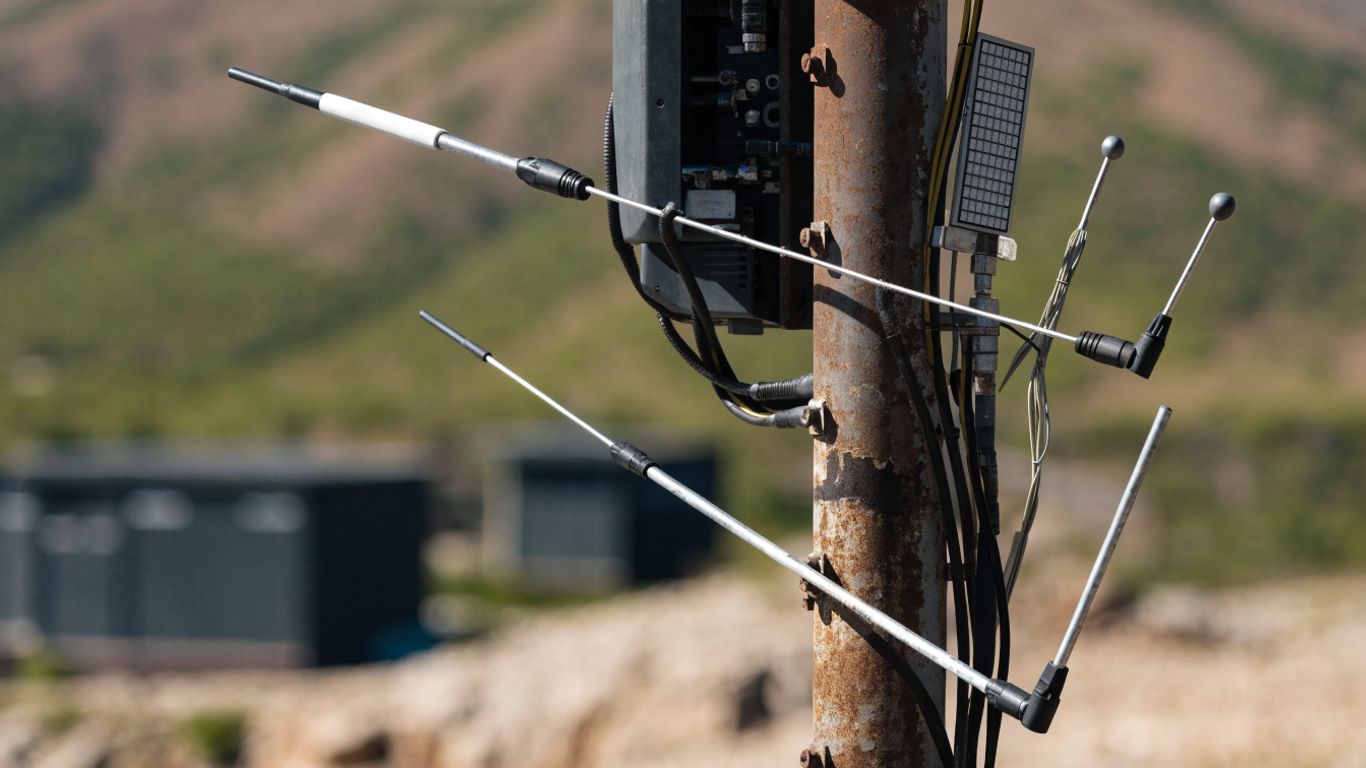
Equipment should suit the physical conditions at the site, including exposure, mounting locations and access for maintenance. Check the specifications for the actual environment rather than relying on a general description such as “industrial.” The practical choice also depends on the required radio band, antenna arrangement, power supply and how replacements can be obtained. A field review with operations and maintenance staff can surface constraints that are easy to miss in a desk-based design.
Plan for backhaul resilience where fiber is unavailable
A local LTE network and its connection to off-site systems are separate parts of the design. Where fiber is not available, the team should compare feasible backhaul options, identify their dependencies and establish what local services must continue during an interruption. Satellite may be one option, but performance and availability depend on the selected service and location. A broader private LTE and satellite comparison can help frame the trade-offs without assuming either connection is right for every site.
How to deploy and integrate the network
Deployment turns the design into something workers can use, so field validation and coordination matter as much as the equipment list. The project should include operations, IT, safety and maintenance staff early enough to catch practical issues. It also needs a clear handover: who manages devices, who responds to faults, and how changes are recorded. That groundwork can keep an installation from becoming an isolated technical project.
Survey the site and validate radio coverage
A survey should test the design against actual terrain, structures and work routes. Radio measurements can reveal gaps or interference that were not apparent from a map, and a representative trial can help confirm whether priority applications work where they are needed. Test in relevant conditions where possible, including locations that are difficult to reach or that change as work progresses. Record the results so later adjustments can be compared with the original plan.
Install and configure radios, core systems and SIMs
Installation brings together radio equipment, the core system, device credentials and backhaul. SIM-based access requires a process for issuing, tracking, replacing and revoking SIMs as devices or staff change. Configuration should follow an agreed record of network settings and approved devices, with a recovery procedure available if a change goes wrong. For project administration beyond the network itself, teams using Azure DevOps may use ADO Time Tracker to log work-item hours and manage timesheets; that is project tracking, not a network function.
Connect operational technology and existing IT systems
Connecting operational technology to existing IT systems requires clear agreement on what data should move, between which systems, and under whose authority. Identify dependencies before enabling traffic, and test integrations in a controlled way before relying on them in live operations. Staff responsible for local operations should be able to explain which services depend on the network and what workarounds exist. For teams coordinating across borders, practical professional networking in Portugal advice may help with relationship-building, though it does not replace technical integration planning.
Test performance, roaming and emergency communications
Testing should reflect the movement and tasks users will actually perform. Check signal and application behavior along vehicle routes, between relevant areas and at handoff points, then confirm that emergency communication procedures work as intended. A successful connection at one stationary test point is not enough to establish site-wide readiness. Keep the results and unresolved issues visible until the responsible teams agree that the network meets its operational requirements.
How to secure and operate private LTE
A private network still needs routine security and operational care. Devices must be known and authorized, traffic should follow clear boundaries, and teams need a way to spot failures before they become prolonged outages. These practices work best when responsibilities are agreed between network operators and the people who run the site. The operating plan should also account for what happens when a radio, core component or backhaul connection is unavailable.
Control device access with SIM-based authentication
SIM-based authentication can help restrict network access to devices with approved credentials. A sound process covers how credentials are issued, stored, replaced and revoked, including what happens when equipment is lost or reassigned. Keep an accurate device inventory and review it when the operation changes. Separately, organizations should explain how they handle data collected by their own systems; the Natural Escort privacy notice, for example, describes the website’s collection and processing of personal data, but it is not guidance for an LTE network.
Segment business, operational and guest traffic
Traffic segmentation separates different types of network use so that business, operational and guest devices do not all share the same access by default. Define which systems need to communicate, which should remain separate and who approves exceptions. Test the arrangement with the applications and devices it is meant to support, since a policy that blocks required traffic can disrupt work just as surely as a network fault. Document the intended boundaries so they remain understandable to the people maintaining them.
Monitor coverage, congestion and equipment health
Monitoring should help staff distinguish a coverage gap from congestion, a device issue or a problem with backhaul. Set a routine for reviewing network status, equipment health and reported trouble spots, and give workers a straightforward way to report changes in service. Patterns matter: recurring issues in one area may point to changing site conditions rather than a one-off fault. Use those reports to decide when a field check or design adjustment is warranted.
Prepare maintenance, incident response and backup plans
Maintenance and incident plans should name responsible people, escalation steps and the services that must be restored first. Include spare-equipment decisions, access arrangements for remote sites and procedures for operating when connectivity is reduced. Backups also depend on power and external links, so coordination with the site’s broader continuity plan is useful. Review the plan after significant operational changes and make sure staff know where to find it.
Conclusion
Private LTE can be a useful part of connectivity planning for mines, farms, construction sites and other remote operations, but the outcome depends on fitting the network to the work. Map actual routes and applications, confirm spectrum and backhaul options, validate coverage in the field, and give security and maintenance the same attention as installation. A practical design is one the site can operate, adapt and recover when conditions change.
Frequently Asked Questions
What is a private LTE network?
It is an LTE network set up for a defined organization or site, with its own deployment and access arrangements. Its design, coverage and performance depend on spectrum, equipment, site conditions and backhaul.
How is private LTE different from public cellular service?
Public cellular service is intended to serve subscribers across a broader area, while a private network is configured for a particular organization or site. The degree of control and the resulting service depend on the specific deployment.
Can private LTE work in a remote location?
It can be deployed at remote sites if suitable spectrum, equipment, power and backhaul are available. A site survey and review of local requirements are essential before deciding whether it fits.
What information is needed to plan coverage?
Start with terrain, buildings, work zones, mobile routes, device counts and application needs. Include likely changes to the site and identify where users need service most.
Does a private LTE network replace satellite connectivity?
Not necessarily. LTE can provide local wireless coverage, while satellite may provide a connection beyond the site; they can serve different roles in a wider design.
What affects private LTE performance?
Radio placement, terrain, structures, spectrum, traffic demand and backhaul can all affect service. Testing at representative locations is a better basis for planning than relying on generic expectations.
How should a private LTE network be secured?
Use an approved-device process, manage SIM credentials, separate traffic according to operational needs and monitor network health. Assign clear responsibility for updates, incidents and recovery procedures.