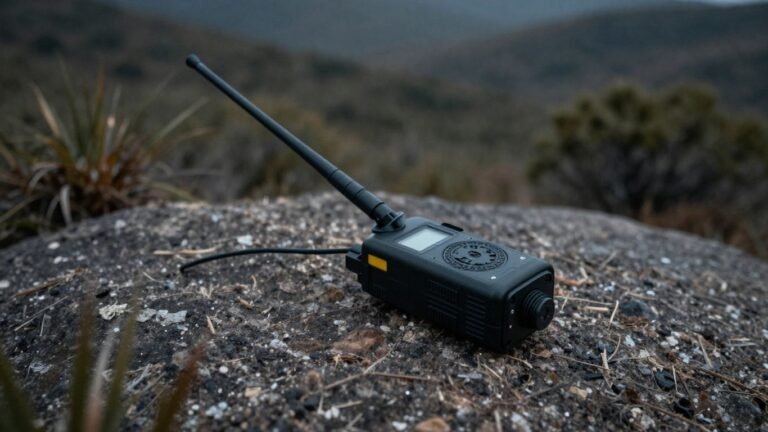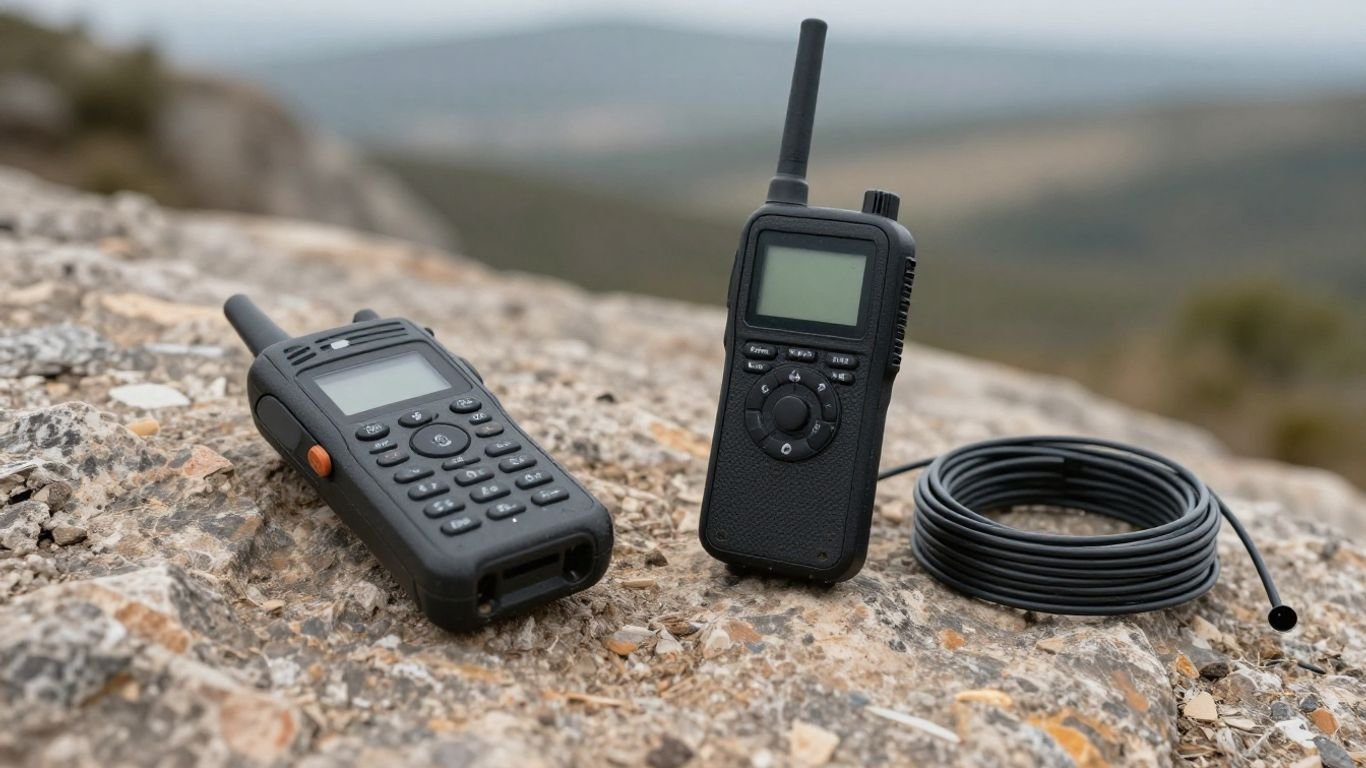
Sat Phone vs. Ham Radio: What’s Your Go-To?
Heading out into the wild, far from the usual cell towers, means you need a way to stay in touch. But what’s the best tool for the job? It often comes down to a choice between a satellite communicator and a ham radio. Both have their upsides and downsides, and figuring out which one fits your needs can feel like a puzzle. Let’s break down the satellite communicator vs ham radio debate to help you decide.
Key Takeaways
- Satellite phones offer direct voice and text communication to standard phone numbers, making them easy to use for reaching anyone, but they often come with higher ongoing costs for service and minutes.
- Ham radios are generally more affordable upfront and offer a wide range of communication possibilities, including connecting with a large community of users, but require a license and have a steeper learning curve.
- When cell networks fail, both satellite communicators and ham radios provide vital links, but satellite phones are often simpler for emergency SOS messages and direct contact, while ham radios excel in community building and long-distance, low-cost communication.
- Security differs significantly: satellite phones offer more private, end-to-end encrypted communication, while ham radio transmissions are open and can be intercepted, though they offer greater anonymity by not leaving a digital trail.
- Reliability for both depends on clear line of sight – to a satellite for sat phones or to another radio for ham – and can be affected by terrain and obstructions, though ham radios might be slightly more forgiving in areas with partial blockages.
Understanding Off-Grid Communication Needs
Why You Need Off-Grid Communications
Let’s face it, we rely on our phones for pretty much everything these days. But what happens when you’re out hiking, camping, or just in an area with no signal? Or worse, what if a natural disaster knocks out the cell towers? That’s where off-grid communication devices come in. They’re your lifeline when the usual networks go dark. Whether you’re planning a remote adventure or just want to be prepared for the unexpected, having a way to communicate outside of the standard cell grid is pretty smart.
When Cell Networks Fail
We’ve all been there: stuck in a dead zone, unable to send a text or make a call. It’s frustrating, but it can also be dangerous. During emergencies, cell networks often get overloaded or damaged, leaving people stranded and unable to reach help or loved ones. This is where having a backup plan becomes really important. Thinking about the best personal locator beacon for off-grid use or other communication tools can make a huge difference when you can’t rely on your regular phone. It’s about having options when the worst happens.
- Overloaded Towers: During major events, everyone tries to use their phones at once, jamming the system.
- Infrastructure Damage: Earthquakes, floods, or storms can physically destroy cell towers and the lines connecting them.
- Power Outages: Cell towers need power, and if the grid goes down, they go down too.
When cell service disappears, especially during a crisis, the ability to send a simple message or make a call can be the difference between getting help quickly or being left isolated. It’s not just about convenience; it’s about safety and peace of mind.
Staying Connected Away From Civilization
Getting away from it all is great, but it doesn’t mean you have to be completely cut off. Whether you’re deep in the backcountry or just in a remote cabin, staying connected can be important for safety and coordination. You might want to check in with family, let someone know you’ve arrived safely, or coordinate with a group. Comparing different [off-grid communication devices compared] helps you figure out what fits your needs best. It’s about choosing the right tool for your specific adventures and peace of mind.
- Remote Recreation: Hiking, climbing, or boating in areas without cell service.
- Rural Living: Properties far from urban centers with spotty or non-existent cell coverage.
- Emergency Preparedness: Ensuring you have a communication fallback for natural disasters or other unforeseen events.
- Professional Use: Fieldwork, research, or expeditions in isolated locations.
Key Factors in Satellite Communicator vs Ham Radio
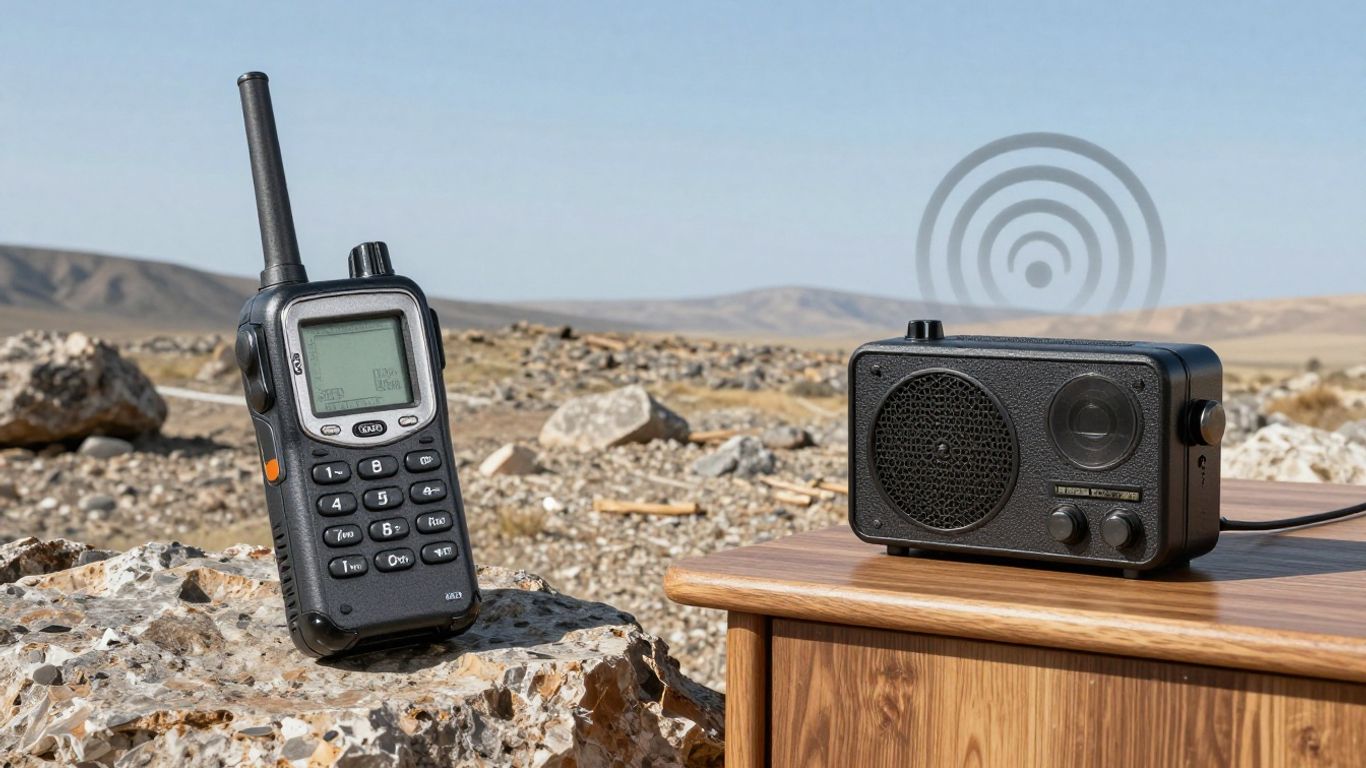
When you’re out in the sticks, away from cell towers, thinking about how you’ll talk to people is pretty important. It’s not just about chatting; it’s about safety. Let’s break down some of the big things to consider when you’re weighing a satellite communicator against a ham radio.
Cost Considerations
Okay, let’s talk money. Ham radios can be really affordable to get started with, especially if you’re looking at basic handheld models. You can find some decent ones for under a hundred bucks. Satellite communicators, on the other hand, usually have a higher upfront cost. Plus, most of them require a monthly or annual subscription to actually send messages. So, while a ham radio might seem cheaper initially, you might end up spending more over time with a satellite device, depending on how much you use it.
Range and Versatility
This is where things get interesting. Ham radios, depending on the frequency and power, can reach pretty far, sometimes across continents if you have the right setup and conditions. They’re super versatile for talking to other hobbyists or for emergency nets. Satellite communicators, by definition, use satellites, so they can reach pretty much anywhere on Earth that has a clear view of the sky. This makes them ideal for remote areas where no other communication is possible. For emergency messaging when cell networks fail, a satellite messenger is often the go-to when you need a simple, direct way to signal for help.
Reliability in Various Environments
Both devices have their quirks. Ham radios need line of sight, but buildings might just block or weaken the signal, not completely stop it. You can often still get a signal out, even if it’s not as strong. Satellite communicators need a clear view of the sky to connect with a satellite. If you’re in a deep canyon or a dense forest, you might have trouble getting a signal. However, for truly remote areas far from any infrastructure, a satellite device is often the only reliable option. If you’re thinking about disaster preparedness, having a system like Meshtastic, which creates its own off-grid network, could be a smart addition.
Security and Anonymity: A Critical Comparison
This is a big one, especially if you’re transmitting sensitive info. Satellite phones generally offer more secure, end-to-end communication. Your messages are usually encrypted and harder for others to intercept. However, they can leave a digital trail. Ham radios, on the other hand, offer a higher degree of anonymity. Your transmissions are broadcast openly, and while this means they can be intercepted, there’s no central record linking you directly to the message. It’s a trade-off: privacy versus a traceable record.
Functionality: Beyond Basic Communication
Sure, both can send messages, but what else? Satellite phones are getting pretty good at offering text and even some basic internet access, which can be a lifesaver for sending updates or checking weather. Ham radios can also do text and email, but it’s a bit more involved, often requiring extra gear like a sound card and specific software to connect to services like WinLink. It’s not as straightforward as a satellite phone’s data capabilities.
Ease of Use and Network Reach
Getting started with a satellite messenger is usually pretty simple. You turn it on, and if you have a signal, you’re good to go. Learning to use a ham radio can take a bit more effort, including getting a license in many places. However, the ham radio community is huge and welcoming, offering a way to connect with people all over the world. Satellite communicators are more about point-to-point or group communication within your own circle.
Device Reliability and Expandability
When it comes to reliability, both need a clear path. For ham radios, this means line of sight to another radio or repeater. For satellite devices, it’s a clear view of the sky for the satellite. Expandability is also a factor. With ham radios, you can often upgrade antennas or battery packs. Some base stations are designed for easy component upgrades. Satellite devices are generally less upgradable, but they are built to be robust and last. Battery life is also a key consideration for both; you’ll want something that can last as long as you need it to.
Making Your Choice: Satellite Communicator vs Ham Radio
So, when do you pick which? You might choose a satellite communicator over a ham radio when you need a simple, reliable way to send an SOS or check-in message from a truly remote location with no other communication options. They are great for solo adventurers or small groups who prioritize ease of use and direct emergency signaling. Ham radios shine when you’re looking for a more versatile, potentially longer-range communication tool, enjoy the hobby aspect, or want to build a communication network with a larger group of people. For some, integrating both offers the best of both worlds: the broad reach and community of ham radio, combined with the direct emergency signaling of a satellite device.
Security and Anonymity: A Critical Comparison
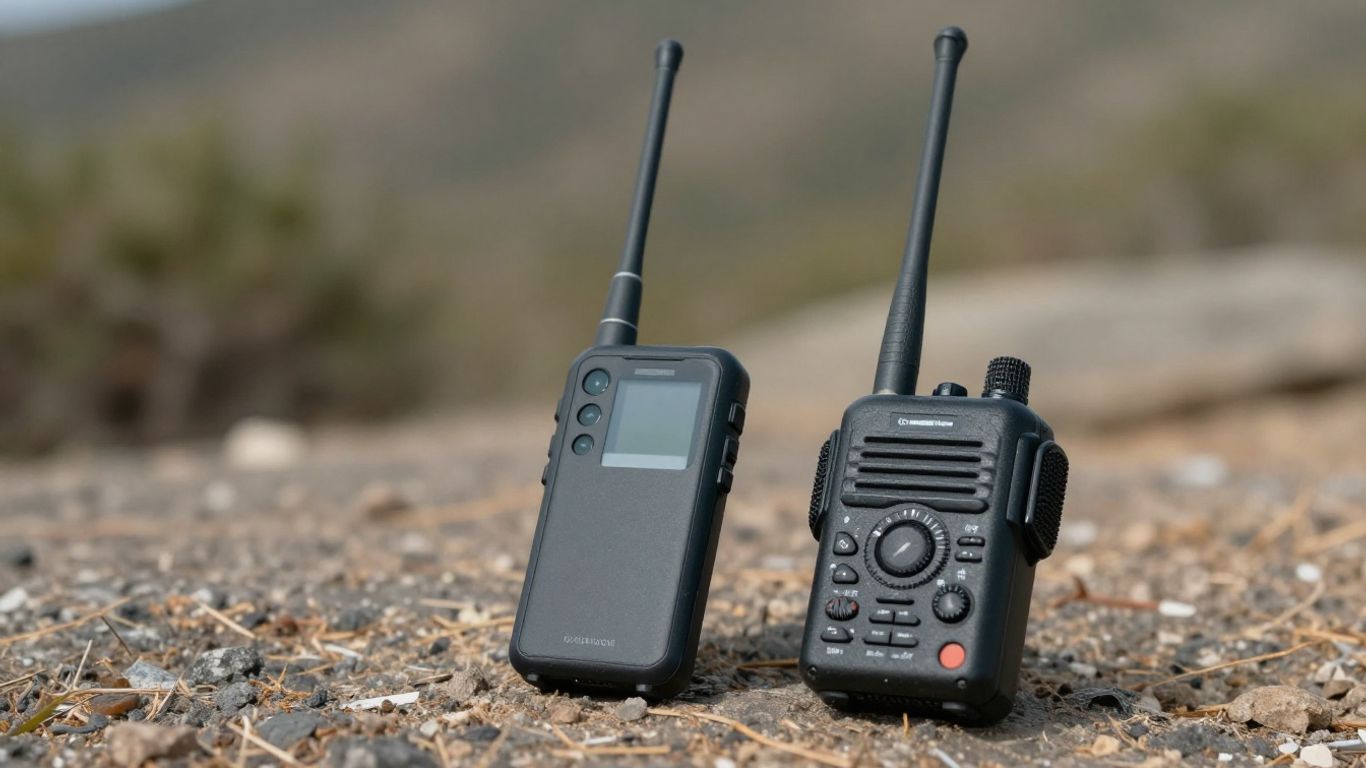
When you’re out in the sticks, and the cell towers are just a distant memory, how you communicate can be a big deal. It’s not just about talking; it’s about who might be listening or, more importantly, who knows you’re talking.
Satellite Phone Security Features
Satellite phones are pretty good at keeping your conversations private. When you make a call, it’s a direct, encrypted signal between your phone and the satellite. Think of it like a private line. This means someone can’t just easily tap into your chat. However, these calls aren’t anonymous. Your provider keeps a record of who you called and when, much like your regular cell phone. So, while the content of your conversation is safe from eavesdroppers, your activity is logged. This creates a digital trail, which could potentially link you to others if that’s a concern. For sensitive information, this direct, logged connection is often preferred because it’s harder to intercept than an open broadcast. If you need to stay connected anywhere on Earth, bypassing traditional cell towers, satellite phones are a solid choice staying connected anywhere on Earth.
Ham Radio Anonymity Benefits
Ham radios work differently. They broadcast signals over specific frequencies. This means anyone with a receiver tuned to that frequency can potentially hear your transmission. It’s like talking on a public channel. The upside? This open nature offers a good degree of anonymity. Your transmissions aren’t tied to a specific user account in the same way a satellite call is. It’s harder to trace a broadcast back to a specific individual, especially if you’re just sending out general updates. This can be a real plus if you value privacy or need to operate without leaving a clear record of your communications. However, this also means your transmissions are more vulnerable to interception. It really depends on what you’re saying and who might be listening.
Vulnerabilities and Risks
Both systems have their weak spots. With satellite phones, the main risk is that your communication activity is recorded. While the call itself is secure, the metadata exists. For ham radio, the primary risk is interception. Anyone with the right equipment can listen in. There’s also the potential for triangulation attacks with ham radios, though this is usually in specific, less common scenarios. It’s not something that affects most users day-to-day. For both devices, a clear line of sight is needed, either to a satellite or another radio operator. Dense buildings or terrain can block signals, making either device unreliable in certain spots. It’s a trade-off: satellite phones offer more private calls but leave a record, while ham radios offer anonymity but are more open to interception. Choosing the right one really comes down to what kind of communication you need and what risks you’re willing to accept.
Functionality: Beyond Basic Communication
When you’re out in the sticks, or when the usual cell towers decide to take a nap, just being able to talk isn’t always enough. We need to think about how we get information back and forth, and that’s where things get interesting between satellite communicators and ham radios.
Two-Way Voice Capabilities
Both satellite phones and ham radios are built with talking to each other as their main job. Satellite phones work a lot like your regular cell phone. You can call other satellite phones, regular cell numbers, and even landlines. It’s a pretty direct connection, almost like you’re still in town. Ham radios, on the other hand, broadcast over frequencies. This means you can talk to anyone else tuned into that same frequency, which is great for reaching a lot of people, but it’s not a private line between just two devices. It’s more like a public announcement system.
Text and Email Access
This is where satellite phones really shine. Most ham radios don’t do text messages natively, which is a bummer because texts are so quick for sharing info. Satellite phones, though, often let you send and receive SMS messages just like you would with your cell phone, no matter where you are. Some simpler satellite devices even let you send pre-programmed messages or SOS alerts with your location, which is a lifesaver in a pinch. For email, ham radios can do it, but it’s a bit more involved. You usually need a computer and some special software to send your message through a ham radio to a server that then forwards it as an email. Satellite phones, however, can often connect directly to the internet, making sending emails much more straightforward.
Internet Connectivity Options
While you’re not going to be streaming movies on either of these devices, they can offer some basic internet access. Ham radios can be rigged up to send and receive emails using systems like WinLink, which is pretty neat if you need to get a message out digitally. It’s a bit of a workaround, though. Satellite phones, when they have internet capabilities, are generally much more robust. You can often connect your phone to a computer and get actual internet access, letting you send reports, check basic information, or send emails more easily. It’s a big difference if you need more than just a quick text or voice call. For emergency messaging when cell networks fail, the ability to send texts or pre-programmed alerts via a satellite device is often more immediate than the setup required for ham radio email.
When you’re comparing these two, think about what kind of information you need to send and how quickly. Voice is great, but sometimes a text or an email is what’s really needed to get the job done, especially when you’re relying on off-grid comms.
Here’s a quick look at how they stack up for messaging:
| Feature | Satellite Communicator | Ham Radio |
|---|---|---|
| Text Messaging | Yes (SMS, often two-way) | Generally No (requires workarounds for email) |
| Yes (often direct internet connection) | Yes (requires computer, software, and server connection like WinLink) | |
| SOS/Pre-set Msg | Yes (common on simpler devices) | No (requires manual voice or text transmission) |
| Internet Access | More robust, direct connection possible | Limited, primarily for email via specific setups |
| Ease of Use | Generally simpler for messaging | Can be complex for digital messaging |
Ease of Use and Network Reach
Connecting with Existing Networks
When you’re out in the sticks, the usual cell towers are just a distant memory. That’s where satellite phones and ham radios step in, offering a lifeline when the grid goes down. Satellite phones have a bit of an edge here because they can directly call regular cell numbers. This means you can reach out to pretty much anyone without them needing special gear. It’s a big plus if you just need to let your family know you’re okay or coordinate with someone who only has a cell phone. Ham radios, on the other hand, are more about connecting with other licensed operators. While you can’t just dial a cell number, there are ways to bridge that gap, often through specific gateways or by reaching out to other ham operators who can relay messages. It takes a bit more effort, but it’s definitely doable.
Learning Curve for New Users
Let’s be real, nobody wants to fiddle with complicated tech when they’re stressed or in a hurry. Satellite phones are generally pretty straightforward. You power it on, point it at the sky, and make your call or send your text. Some models even have simple SOS buttons for emergencies. It’s designed for quick, easy communication. Ham radios, though, have a steeper learning curve. You need a license, which involves studying and passing a test. Then there’s learning the etiquette, understanding frequencies, and operating the equipment itself. It’s not rocket science, but it does require a commitment to learn. For quick, basic messages in a pinch, a satellite phone is often simpler to pick up and use right away.
Building and Reaching Communities
This is where ham radio really shines. While satellite phones are great for point-to-point communication, ham radio is all about community. It’s a global network of enthusiasts who often band together for events, practice emergency communications, and share knowledge. Joining local ham radio clubs is a fantastic way to meet people and learn the ropes. You can find operators almost anywhere, and there’s a strong culture of helping each other out. It’s a different kind of connection than just calling your cousin. If you’re looking to be part of a larger, active group, especially for preparedness or just the hobby aspect, ham radio offers that in spades. You can even use it to send emails via services like WinLink, which is pretty neat for off-grid messaging Learn how to effectively use ham radio for emergency communication.
When you’re thinking about off-grid communication, it’s not just about having a device; it’s about how easily you can connect with the people you need to, and how much effort that takes. Satellite phones offer a more direct route to standard communication networks, while ham radio builds its own interconnected world.
Device Reliability and Expandability
Line of Sight Requirements
Both satellite phones and ham radios need a clear path to function. For satellite phones, this means an unobstructed view of the sky so the device can connect with a satellite overhead. If you’re in a deep canyon or surrounded by tall buildings, you might have trouble getting a signal. Ham radios also need line of sight, but it’s a bit different. They need to ‘see’ the other radio or the repeater they’re trying to reach. Thick forests or urban landscapes can block or weaken the signal, limiting how far you can talk. Moving to higher ground or an open area usually fixes these connection issues. It’s not usually a deal-breaker, but it’s something to remember when you’re planning your communication strategy.
Upgradability and Longevity
When you buy a device, you want it to last, right? With handheld ham radios and satellite phones, upgrades are pretty limited. You can usually swap out antennas for better reception, add bigger battery packs for longer use, or get better earpieces. Real upgrades, like swapping out a whole component, are more common with base station ham radio setups. These are built more like modular systems, so you can fix or improve parts without replacing the whole thing. Satellite phone tech hasn’t changed much over the years, which means even older models are still pretty useful. They’re built to be reliable for a long time without needing constant updates.
Battery Life and Durability
Think about where you’ll be using your device. If you’re out in the wilderness for days, battery life is a big deal. Many satellite phones and ham radios have decent battery life, but it’s always good to have a backup power source, like a portable charger or extra batteries. Durability is also key. You don’t want a device that breaks if you drop it or if it gets a little wet. Most modern devices are built pretty tough, but it’s worth checking reviews or specs to see how they hold up in rough conditions. For emergency messaging when cell networks fail, having a device that’s both long-lasting and tough is a big plus. It means you can count on it when you really need it, even if you’re far from any power outlets. This is where devices like the Iridium ZOLEO can be a good middle ground, though they add more potential failure points compared to a dedicated sat phone.
When the grid goes down, reliable communication is crucial. A layered approach using various radio types ensures redundancy. Short-range FRS radios are license-free for local use, while GMRS radios offer extended range with a license. Ham radio provides long-range, infrastructure-independent communication but requires a license and learning. For remote areas or global reach, satellite communicators are essential. Mesh radios create localized networks, and satellite internet can restore broadband access. Remember that a reliable power source is vital for all communication devices.
Making Your Choice: Satellite Communicator vs Ham Radio
When to Choose a Satellite Communicator
If you’re looking for reliable emergency messaging in places where cell networks are totally gone, a satellite communicator can be a straightforward pick. With satellite phones, you can call or text almost anyone—even regular cell phones—so long as you have a clear view of the sky. This is one area where the satellite phone vs ham radio for emergencies argument leans in favor of sat devices.
- Instant reach to emergency services and your loved ones, no matter if they’re using a cell phone or landline.
- Security features: Most modern satellite communicators offer decent encryption. This means what you say is more private than ham radio transmissions.
- Simplicity: Easy to use. Minimal setup. Power it on and start messaging.
But you should know, satellite communicators often come with higher upfront costs and monthly fees.
Here’s a quick look at some differences:
| Satellite Communicator | Ham Radio | |
|---|---|---|
| Direct 911 | Yes | Not usually |
| Cost | High + monthly fees | Low (no fees) |
| Privacy | Strong | Weak |
| License Needed | No | Yes (for transmitting) |
If quick access to emergency help and privacy are your main priorities, satellite can be a solid choice, even if it’s more expensive.
For a broader look at options, you can check out different off-grid communication options like explore off-grid communication options.
When to Choose a Ham Radio
Ham radios are old school, but they hold some big advantages for the right person. If you want to:
- Talk with other radio users nearby without relying on satellites.
- Avoid monthly fees and keep your equipment costs down.
- Build redundancy—hand out several radios to your team, family, or friends.
Ham radios do need you to learn the ropes, pass a test, and get licensed for most transmissions. Their main weakness is that everyone can listen in, so privacy is just about zero. But if your group all has radios, ham shines for flexible, team-based messaging when cell service disappears.
A few cases where amateur radio really wins:
- Staying in touch across short to medium distances where repeaters or radio nets exist.
- Expanding your setup: More radios are cheap to buy and hand out.
- Building a local network—connecting with other radio operators is straightforward.
Integrating Both for Comprehensive Coverage
Sometimes, the smart option is not "satellite messenger vs amateur radio"—it’s both. Here’s why it might make sense:
- Redundancy: If one system fails, the other can fill the gap.
- Flexible communication: Use satellite to call the outside world, and ham radio for group/team coordination.
- Coverage: Weather or geography sometimes blocks one method but not the other.
For most people, pairing both offers peace of mind, more ways to connect, and a backup if one system falters.
Remember, your off-grid setup isn’t just about gadgets—it’s about picking tools your group can actually use when it counts.
Wrapping It Up
So, when it comes down to it, both satellite phones and ham radios are solid choices for staying connected when you’re off the grid. For most folks just looking to keep in touch with their crew or family, a ham radio is probably going to do the trick and can even be pretty useful for digging up info from afar. But if you really want to broaden your communication options and link up with regular cell phones, a satellite phone really shines with its security and power. No matter which gadget you pick, the main thing is to have a solid plan for how you’ll use it, and make sure everyone in your group knows how it works. Being prepared means knowing your gear inside and out before you actually need it.
Frequently Asked Questions
Why would I need a satellite phone or ham radio if I have a cell phone?
Cell phones rely on cell towers to work. If you’re in an area without towers, like deep in the woods or during a natural disaster when towers are down, your cell phone won’t connect. Satellite phones and ham radios use different systems (satellites or radio waves) that don’t depend on local cell towers, keeping you connected even when regular phone service is gone.
Are satellite phones and ham radios hard to use?
Satellite phones are generally easier to use, kind of like a regular phone. You just dial a number and call. Ham radios can have a steeper learning curve because you need to learn about frequencies, licenses, and how to operate the equipment properly. However, many beginner ham radios are designed to be quite user-friendly.
Can I talk to anyone with a satellite phone or ham radio?
With a satellite phone, you can usually call any regular phone number, including cell phones and landlines, as long as you have a signal. Ham radios connect you to other ham radio operators. It might take a little searching to find someone to talk to, but there are many active users, especially if you join local groups.
Are satellite phones and ham radios secure?
Satellite phones offer good security because your calls are usually private between you and the person you’re talking to, like a direct call. Ham radio signals can sometimes be picked up by others, so while you can be anonymous, the content of your message might not be private unless you take extra steps. For very sensitive information, satellite phones are generally considered more secure.
What’s the difference in cost between a satellite phone and a ham radio?
Generally, ham radios can be more affordable upfront, especially basic models. Satellite phones often have a lower initial cost for the device itself, but you’ll pay more for monthly service plans and minutes. Over the long run, the costs can balance out depending on how much you use them.
Can I send texts or emails with these devices?
Yes, both satellite phones and ham radios can often send and receive text messages and emails. Satellite phones usually offer more ways to access the internet for sending emails or even browsing basic information. Ham radios can also send emails through special systems, though it might be a bit more technical.