Turning Flare Gas into Electricity for Oilfield Microgrids
Key Takeaways
A flare gas to power microgrid can turn an inconsistent by-product into useful electricity, but success depends on careful gas testing, treatment, generation sizing, and operations planning.
- Measure gas volume and composition over time before selecting equipment.
- Treat liquids, sulfur compounds, particulates, and pressure variation as design inputs.
- Match generator technology to load behavior, gas quality, and required operating hours.
- Combine generation with controls, storage, renewables, and backup capacity where practical.
- Compare fuel, maintenance, emissions, permitting, and reliability costs over the full project life.
How flare gas to power microgrids work
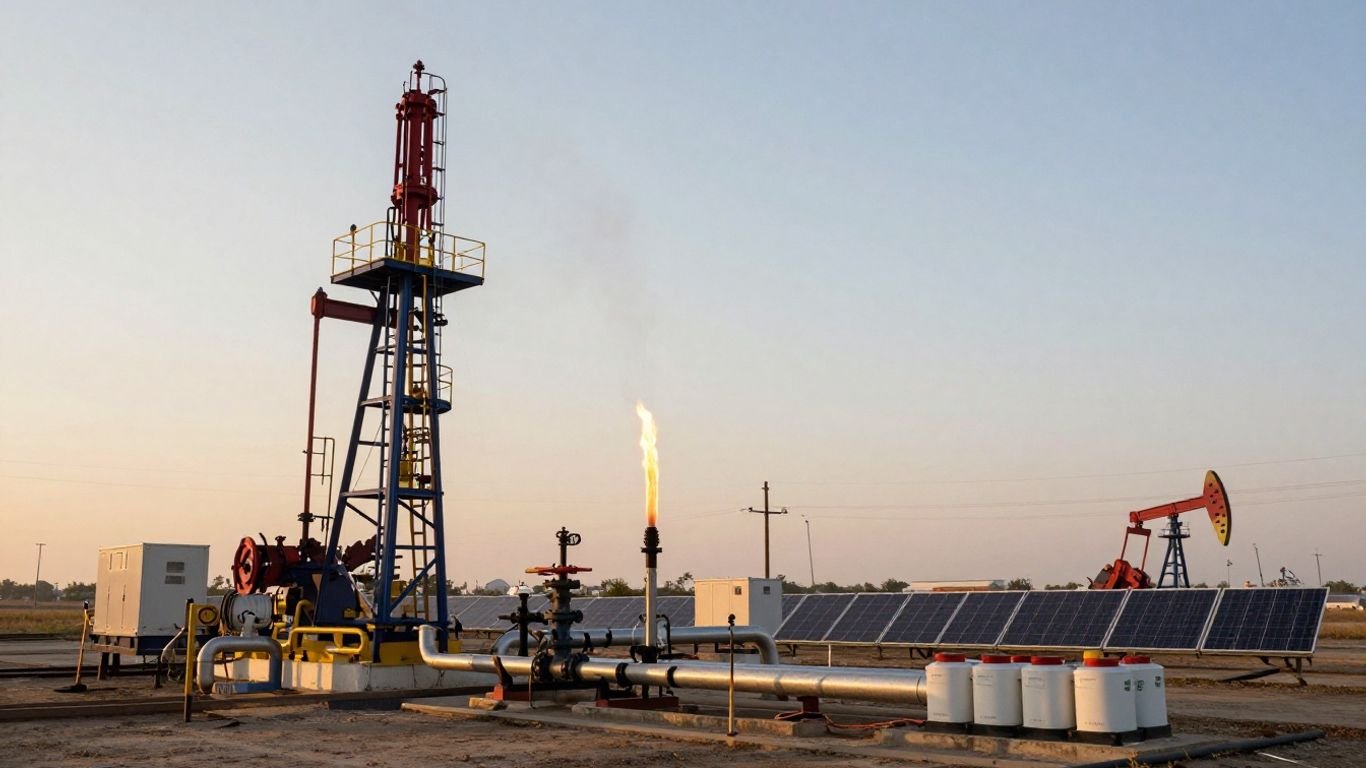
Oil production often brings associated gas to the surface along with crude oil. When there is no nearby pipeline, processing plant, or economic customer, operators may burn that gas in a flare for safety and disposal. A microgrid creates another option: condition the gas and use it to produce electricity close to the wells and facilities that need it. The idea is straightforward, but the engineering depends heavily on the gas stream and the site load.
What flare gas is and why oilfields burn it
Flare gas is generally associated petroleum gas released during oil production, separation, or processing. Its flow can rise and fall as wells change output, equipment is brought online, or pressure conditions shift. Flaring can be used when gas must be safely managed and there is no practical route to market, though it also wastes usable fuel and creates combustion emissions.
The presence of a flare does not automatically mean enough gas is available for power generation. Some streams are too small, too intermittent, too contaminated, or too difficult to collect economically. A feasibility review should therefore begin with measurements rather than an assumption that the visible flame equals a dependable fuel supply.
How associated gas becomes usable electricity
The gas first passes through collection and conditioning equipment. Separators and scrubbers remove liquids and solids, while additional treatment may reduce corrosive or combustion-disrupting compounds. A gas engine or turbine then converts the fuel’s chemical energy into mechanical shaft power, which drives an electrical generator.
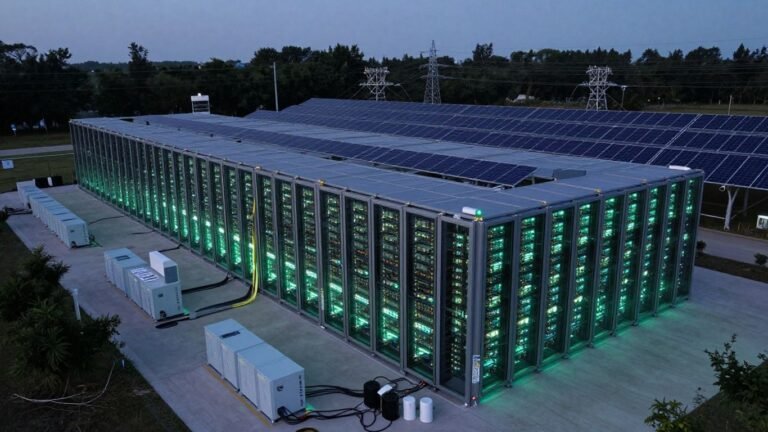
That generator connects to a site distribution system through switchgear, transformers, protection equipment, and a control system. The microgrid can prioritize essential loads, synchronize multiple generators, and operate alongside batteries or renewable resources. A flare gas case study illustrates the broader engineering pattern: gas sampling, filtration, gas-train design, generator selection, and synchronization must be considered together rather than as separate purchases.
Where microgrids fit into oilfield operations
Oilfield microgrids sit between the fuel source and a group of local electrical loads. Those loads may include artificial-lift equipment, pumps, compressors, water systems, controls, communications, workshops, and accommodation camps. In remote areas, a local network can avoid long feeder extensions and reduce dependence on fuel deliveries.
The architecture also gives operators a way to separate critical and noncritical demand. If gas production dips, the controller can preserve safety systems, control rooms, communications, and selected production equipment while reducing discretionary loads. Guidance on remote drilling microgrids offers a useful parallel for thinking about distributed generation, renewable sources, battery storage, and coordinated control in isolated field conditions.
When flare gas power is preferable to diesel generation
Flare gas power is most attractive when a site has a sustained gas stream, significant electrical demand, and costly or difficult diesel logistics. Replacing some diesel generation can reduce tanker movements, storage requirements, and exposure to delivered-fuel price swings. It can also put an existing waste stream to productive use.
Diesel may still be needed for starting, emergency backup, or periods when gas quality falls outside the generator’s operating range. The practical choice is often a layered system rather than a total substitution. Reliability comes from designing around the worst credible gas and load conditions, not the best day’s production.
Assessing flare gas availability and quality
Gas assessment is the foundation of a workable project. A generator rated for pipeline-quality fuel may perform poorly when fed a wet, sulfur-bearing, variable stream. Operators need enough data to understand both the average condition and the uncomfortable exceptions. That usually means sampling over representative operating periods and relating gas behavior to oil production.
Measuring flow rates and production variability
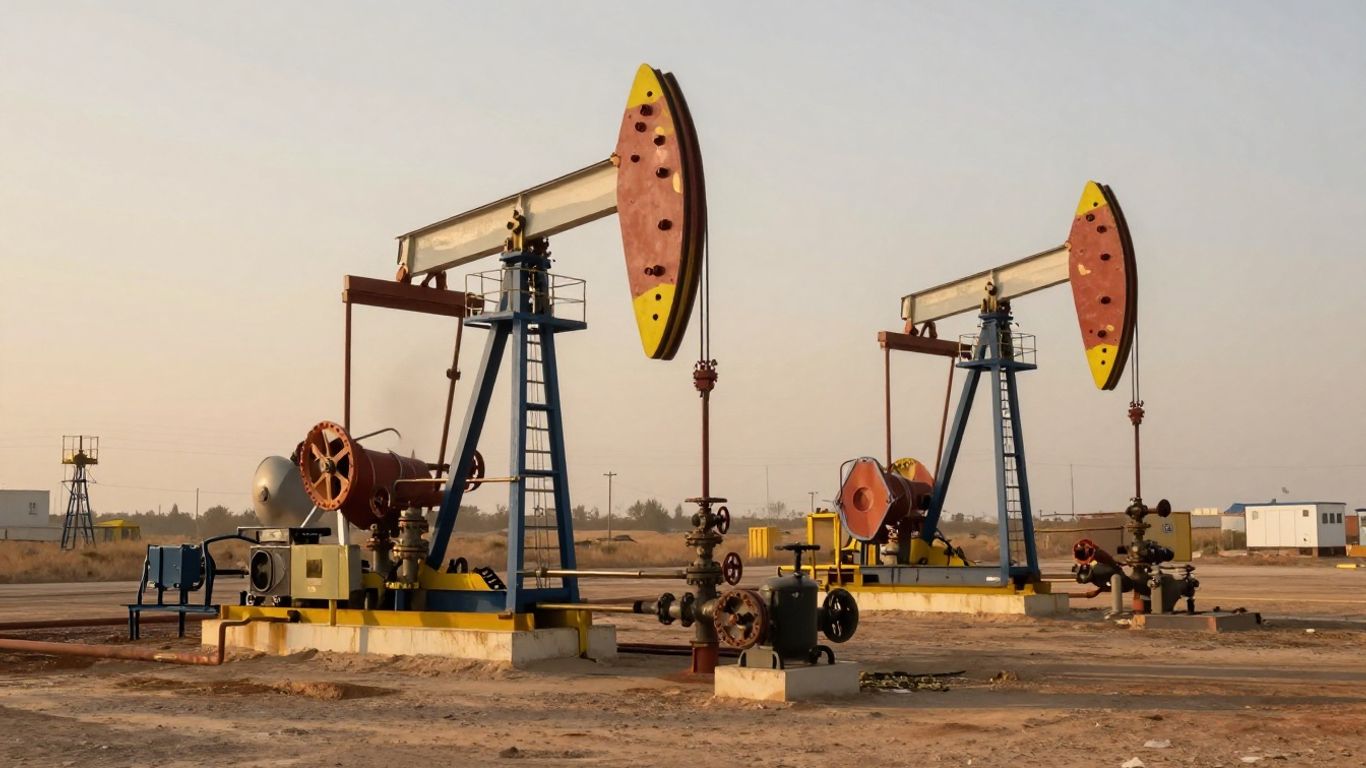
Flow measurement should capture minimum, average, maximum, and rapidly changing rates. Short snapshots can miss the decline of a well, periodic separator blowdown, or a production cycle that leaves the generator starved for fuel. Measurements should also show pressure and temperature at the proposed collection point.
The usable fuel volume is not always the same as the volume seen at the flare header. Some gas may be required for process needs, pressure control, or safety operations. After those constraints are mapped, engineers can estimate how much gas can be diverted without compromising the oilfield’s normal operating envelope.
Analyzing methane content, heating value, and contaminants
Composition testing should identify methane and heavier hydrocarbons, inert gases, hydrogen sulfide, water, and other compounds relevant to combustion and equipment life. Heating value matters because two gas streams with the same volumetric flow can deliver very different amounts of energy. The methane number or related combustion measure may also affect knock resistance and allowable engine loading.
Testing should be repeated when wells, separators, or treatment equipment change. A single laboratory result can support preliminary equipment screening, but it is a weak basis for a long-term fuel guarantee. The design should include an operating range and a response plan for gas outside that range.
Managing hydrogen sulfide, water, and heavy hydrocarbons
Hydrogen sulfide creates personnel hazards and can corrode equipment, while water can cause hydrate formation, corrosion, or unstable combustion. Heavy hydrocarbons may condense as the gas cools and can damage valves, regulators, and engines if they reach the fuel system as liquid. These risks are managed through separation, heating or cooling control, filtration, and, where required, dedicated gas treatment.
Treatment equipment needs its own monitoring and maintenance plan. A blocked filter or saturated coalescer can become a power-availability problem, not merely a process nuisance. The gas train should make abnormal conditions visible to operators and provide safe isolation before contaminated fuel reaches the generator.
Evaluating seasonal and long-term gas supply risks
A project model should account for declining well output, planned shutdowns, workovers, weather-related access problems, and changes in field operating strategy. It should also distinguish routine variability from a complete loss of gas. That distinction determines whether the site needs diesel backup, battery capacity, spare generation, or a contractual fuel source.
A conservative assessment may use several supply cases instead of one forecast. The resulting design can then preserve critical loads during low-gas periods while using available fuel efficiently during normal production. This is more credible than sizing solely from a peak flare rate.
Choosing the right power generation technology
Generator selection should follow the gas and the load, not the other way around. Reciprocating engines, turbines, dual-fuel units, and heat-recovery systems each solve different operating problems. The decision also includes altitude, ambient temperature, maintenance access, emissions limits, required ramping speed, and the availability of trained personnel.
Reciprocating gas engines for flexible oilfield loads
Reciprocating engines are often suited to sites with modular demand and changing production schedules. Multiple units can be staged so that one engine operates efficiently at lower demand while others start as the load increases. This arrangement can provide useful redundancy without requiring one very large machine.
Engine performance depends on fuel quality, inlet conditions, and maintenance discipline. Knock control, lubrication, ignition components, and cylinder balance deserve attention when the gas composition changes. Operators should evaluate net electrical output after derating and auxiliary consumption rather than relying only on the nameplate rating.
Gas turbines for high-volume and continuous generation
Gas turbines can suit larger, steady loads where a compact high-power package and continuous operation are priorities. Their performance is affected by ambient temperature, inlet air quality, elevation, and fuel conditions. They may be especially relevant where the site can use exhaust heat or where a common generation block simplifies distribution.
Technology comparisons should include the full fuel system and balance of plant. A turbine’s attractive power density does not remove the need for liquid separation, pressure control, filtration, protection, and a realistic maintenance plan. Broader background on gas turbine generator technology can help frame questions about fuel flexibility, battery integration, and decentralized generation.
Dual-fuel generators for uncertain gas conditions
Dual-fuel equipment can preserve continuity when associated gas is intermittent or temporarily unsuitable. The system may operate on gas during normal conditions and switch to a liquid fuel when pressure, composition, or flow falls outside the acceptable range. That flexibility has value, but it adds fuel-system complexity and requires regular testing of both operating modes.
The backup fuel should not be treated as an afterthought. Storage, turnover, filtration, fire protection, emissions, and delivery logistics all affect whether the fallback mode will work during a real gas interruption. Automatic changeover settings should be verified during commissioning and periodic drills.
Waste heat recovery and combined heat and power options
Engine jacket water and exhaust can provide useful heat for water treatment, buildings, process heating, or other field services. Recovering that heat may improve total fuel utilization when a steady thermal demand exists near the generator. Without a dependable heat customer, however, recovery equipment can add cost and maintenance without delivering its expected value.
The thermal profile should be measured just as carefully as the electrical profile. Designers need to know when heat is required, at what temperature, and whether the demand continues during low-load or backup operation. A simple electrical system may be the better choice if the heat cannot be used consistently.
Designing the oilfield microgrid
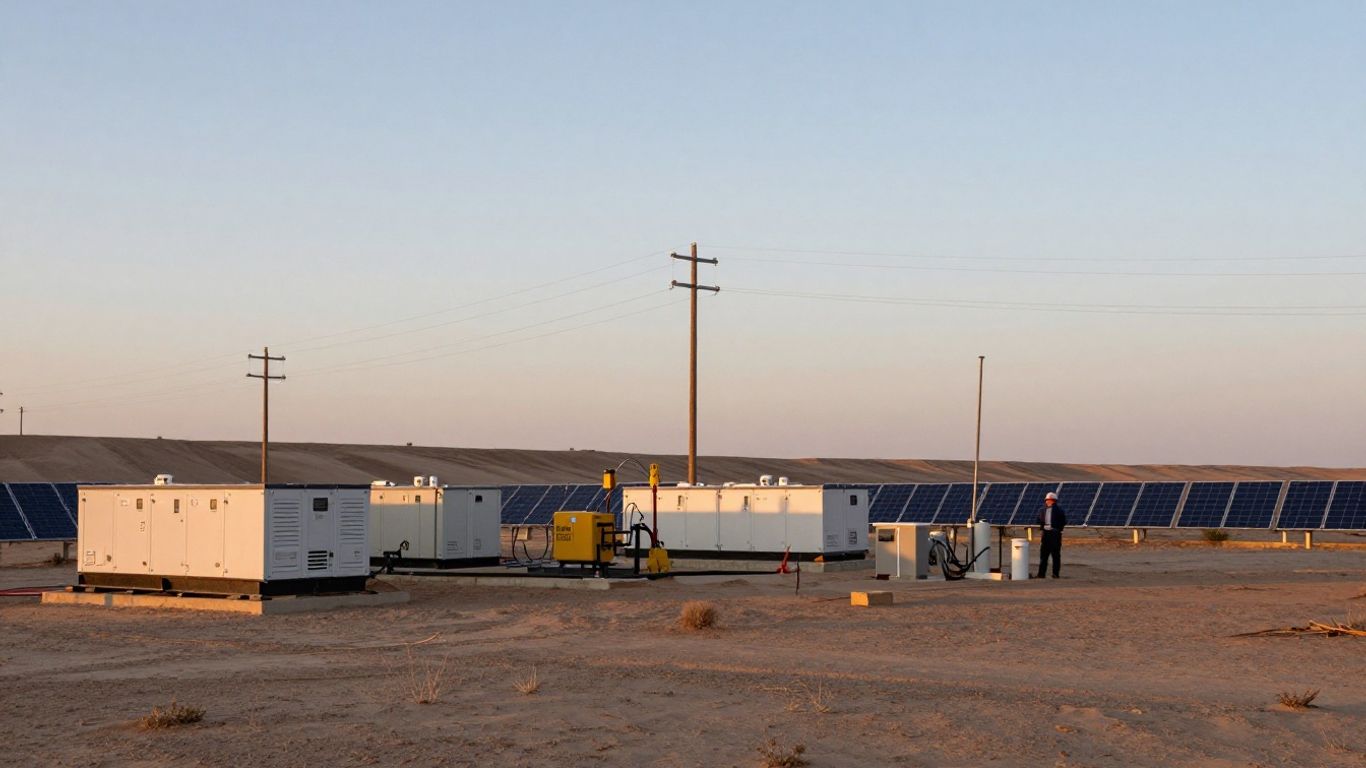
The microgrid is more than a generator placed beside a flare. It includes the electrical network, protection scheme, controller, communications, operating modes, and load priorities. Remote sites also need equipment that can tolerate dust, heat, vibration, limited staffing, and long response times. A clear operating philosophy keeps those pieces aligned.
Sizing generation for critical and variable loads
Begin with a measured load inventory rather than an estimate based on connected equipment. Record normal demand, motor-starting currents, compressor cycles, production peaks, and the loads that must remain energized during an upset. Then define whether the system needs firm capacity for every load or only for a critical subset.
Redundancy can be achieved through several smaller units, spare capacity, or a combination of generation and storage. The right approach depends on the consequence of interruption and the time required to repair equipment. A microgrid feasibility study is useful here because it connects load data, site readiness, financial assumptions, and regulatory requirements before detailed procurement.
Integrating batteries, solar, and backup generators
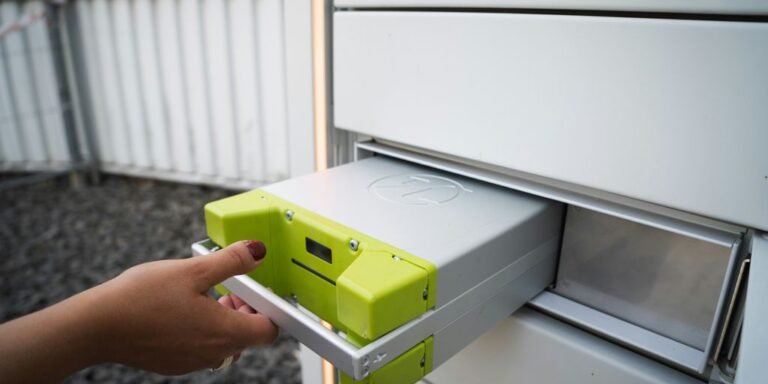
Batteries can absorb short fluctuations, support motor starts, smooth generator loading, and provide a bridge while another unit starts. Solar can reduce fuel use during daylight, although its output must be managed around changing oilfield loads and available land. Backup generators provide a separate source when flare gas is unavailable.
The combination should be selected for a specific operating purpose. A battery sized for seconds of power support is not the same as one intended to carry critical loads for hours. Likewise, solar may lower average fuel consumption without replacing the need for dispatchable capacity at night or during poor weather.
Coordinating power controls and load management
The controller should know generator status, gas pressure, fuel quality alarms, battery state of charge, renewable output, and load priority. It can then dispatch units, prevent unstable parallel operation, and shed noncritical demand when available power falls. Protection settings must coordinate across generators, feeders, transformers, and motor loads.
A practical load-management sequence might include these steps:
- Maintain safety, communications, control, and emergency systems.
- Reduce discretionary pumps, heating, or workshop loads when capacity tightens.
- Start or synchronize standby generation before shedding production-critical equipment.
- Restore lower-priority loads gradually after gas flow and electrical frequency stabilize.
This sequence should be tested under realistic conditions. A controller that works in a software demonstration may behave differently when motors start together, gas pressure oscillates, or communications are temporarily lost.
Connecting remote wells, processing equipment, and camps
Distribution design must account for distance, voltage drop, fault levels, lightning exposure, and access for inspection. Remote well pads may need local protection and communications so that a fault does not disconnect the entire field. Processing equipment can have demanding motor loads, while camps and control buildings often require clean, stable power.
The network should allow safe isolation for maintenance and a controlled restart after an outage. Feeder grouping, sectionalizing, and critical-load panels can make restoration more orderly. The physical layout also matters: electrical equipment should be separated from hazardous areas according to applicable codes and site classification.
Preparing flare gas for reliable generation
Fuel conditioning is where many projects succeed or fail. Associated gas may arrive hot, wet, low-pressure, or chemically aggressive, and those conditions can change quickly. The treatment train should be designed from test data and connected to alarms, shutdowns, drains, and safe venting arrangements.
Separating liquids and removing particulates
A separator or knockout vessel removes free liquids before gas reaches fine filters and engine equipment. Coalescing filters can capture smaller droplets, while particulate filters protect regulators, valves, and combustion components. Drain systems must prevent collected liquids from simply backing up into the fuel line.
Sizing should reflect worst-case liquid carryover and expected slugging, not only average conditions. Operators also need differential-pressure indicators and an inspection routine. Clean fuel delivery supports stable combustion and reduces avoidable wear throughout the gas train.
Treating sour gas and corrosive compounds
Sour gas requires a combined process-safety and materials approach. Hydrogen sulfide detection, personnel procedures, ventilation, emergency shutdowns, and compatible materials are essential around collection and treatment equipment. Depending on concentration and project objectives, treatment may involve removal or controlled management of sulfur-bearing compounds.
The treatment choice affects cost, waste handling, pressure drop, and maintenance. It should be matched to the generator’s stated fuel limits and the site’s emissions requirements. No treatment system removes the need for continuous gas monitoring and disciplined response to alarms.
Controlling pressure, temperature, and gas flow
Generators need fuel within a defined pressure and temperature range. Regulators, heaters, coolers, control valves, and pressure-relief devices help keep the gas stable as upstream conditions change. Too much pressure can damage downstream equipment, while too little can cause misfire, derating, or a trip.
The gas train should include isolation points and a controlled startup sequence. Temperature control is particularly important when heavy hydrocarbons or water may condense as pressure falls. Good instrumentation allows operators to distinguish a fuel problem from an electrical or mechanical fault.
Handling low-pressure or intermittent flare streams
Low-pressure gas may need compression before it can be used, but compression adds electrical demand, heat, maintenance, and another potential failure point. Intermittent streams may be better handled with storage, a buffer vessel, a dual-fuel arrangement, or a smaller generator fleet that can follow the available fuel.
The system should define what happens when gas briefly disappears. A fast battery response can cover a short gap, while a standby generator may be needed for a longer interruption. The objective is not to force every molecule of flare gas into a generator; it is to use the recoverable stream without compromising safe and stable operations.
Evaluating project economics and emissions
A sound business case compares the proposed system with the site’s real alternatives. Those may include delivered diesel, a utility connection, continued flaring with separate power generation, or a hybrid arrangement. The analysis should use net electricity delivered to the loads and include periods when the flare stream is unavailable.
Comparing flare gas power with diesel and grid electricity
Delivered diesel cost includes transport, storage losses, handling, taxes, and the cost of maintaining fuel logistics. Grid electricity may appear cheaper at the meter but require a costly connection, long feeder, or capacity upgrade. Flare gas power has its own costs for collection, treatment, compression, generation, and electrical distribution.
Sensitivity analysis is useful because fuel flow, diesel price, runtime, and equipment availability are uncertain. Compare several cases rather than presenting one attractive payback period. Reliability value should be stated separately from direct energy savings so the financial story remains transparent.
Accounting for equipment, fuel treatment, and maintenance costs
Capital costs may include generators, gas trains, separators, compressors, switchgear, transformers, protection, civil works, controls, communications, and backup fuel systems. Operating costs include consumables, filter replacement, laboratory testing, scheduled overhauls, remote support, and treatment-media disposal. These items can materially change the lifetime result.
A lifecycle model should also allow for derating and declining gas supply. Planned maintenance may require spare capacity or temporary generation, and a remote site may pay more for specialist labor and transport. The most useful estimate is the one that exposes these practical costs early.
Calculating avoided flaring and greenhouse gas reductions
Emissions accounting should distinguish gas that would otherwise have been flared from gas that would have been vented, reinjected, sold, or used in another process. The analysis can include changes in carbon dioxide, methane, diesel consumption, generator efficiency, and treatment energy. Measurement boundaries need to be defined before claims are made.
Avoided emissions are not automatically equal to zero emissions. Combusting associated gas still produces carbon dioxide, and incomplete combustion can create additional pollutants. A credible project measures fuel input and power output, documents flare displacement, and applies the relevant regulatory or reporting methodology.
Assessing carbon credits, regulations, and permitting requirements
Potential carbon revenue depends on eligibility, baseline conditions, verification, ownership of environmental attributes, and the durability of monitoring records. It should be treated as a possible value stream rather than guaranteed income. Permitting may cover flaring changes, air emissions, hazardous gas handling, electrical installation, noise, water, and waste.
Engage regulators and internal safety teams before equipment selection is final. The project may need updated operating procedures, hazardous-area reviews, emergency plans, and community communication. Early diligence prevents a technically sound generator package from being delayed by an overlooked approval.
Implementing and operating a flare gas microgrid
Implementation should proceed in controlled stages, with clear hold points between measurement, design, construction, and operation. Remote oilfields benefit from modular equipment and repeatable commissioning procedures, but temporary simplicity should not replace proper testing. The operating team needs ownership of alarms, maintenance, fuel quality, and electrical controls from the beginning.
Planning a phased deployment and commissioning process
A sensible sequence starts with gas and load characterization, followed by front-end design, permitting, detailed engineering, procurement, construction, and commissioning. Temporary metering or a pilot generator can reduce uncertainty before a larger build. Factory testing should be followed by site testing with representative gas and actual load behavior.
Commissioning should verify protection, synchronization, shutdowns, gas detection, fuel changeover, black-start procedures, and load-shedding logic. Operators should receive practical training using normal, degraded, and emergency scenarios. The handover package should include drawings, settings, manuals, inspection records, and a clear spares list.
Monitoring engine performance, gas quality, and emissions
Useful monitoring combines electrical output with fuel pressure, temperature, flow, composition indicators, filter condition, exhaust data, vibration, and lubricant condition. Trends often reveal a problem before a trip occurs. A falling output at the same gas flow, for example, may point to fuel quality, fouling, or mechanical deterioration.
Data should be reviewed at a frequency that matches operating risk. Remote visibility helps specialists support the site, but local personnel still need clear alarm priorities and authority to make the equipment safe. Emissions records should be retained in the format required for permits and reporting.
Maintaining generators and gas treatment equipment
Maintenance intervals should reflect runtime, gas contaminants, starts and stops, ambient conditions, and manufacturer requirements. Filters, separators, drains, regulators, valves, ignition components, lubricants, and cooling systems all need planned attention. Treatment equipment can be neglected because it sits upstream, even though its condition directly affects generator reliability.
Keep critical spares on site when delivery times are long. Maintenance planning should include safe isolation, gas-freeing, electrical lockout, and restart checks. A written record of gas quality and failure history can improve future intervals and reveal recurring upstream problems.
Managing safety, cybersecurity, and remote operations
Safety planning covers sour gas exposure, fire and explosion hazards, rotating equipment, electrical faults, hot surfaces, stored energy, and unexpected startup. Emergency shutdowns should be accessible, tested, and connected to the site’s broader incident response system. Personnel need drills that reflect the actual layout and likely failure modes.
Remote connectivity should be segmented and protected, with controlled access, strong authentication, backups, and a recovery plan for lost communications. Cybersecurity cannot replace local safe-state logic; the microgrid must continue to protect people and equipment if the network link fails. That combination of local safeguards and remote oversight makes the system more dependable in everyday operation.
Conclusion
Turning associated gas into electricity can make an oilfield microgrid more self-sufficient while reducing wasted fuel and diesel dependence. The strongest projects begin with honest measurements, design for changing gas conditions, size around critical loads, and treat safety, maintenance, emissions, and permitting as core engineering work. When those pieces are planned together, flare gas becomes a practical part of a resilient field power system rather than a promise based on a single favorable sample.
Frequently Asked Questions
What is a flare gas to power microgrid?
It is a local electrical system that uses recovered flare or associated gas as fuel for generators serving nearby oilfield loads. It may also include batteries, solar generation, backup fuel, switchgear, and coordinated controls.
Can every oilfield flare be used for power generation?
No. The gas must be available in sufficient volume and within manageable limits for pressure, heating value, liquids, sulfur compounds, and other contaminants. Some streams are too intermittent or uneconomic to collect and treat.
How much gas is needed to generate electricity?
The amount depends on gas heating value, generator efficiency, electrical output, operating hours, and auxiliary equipment such as compressors and treatment systems. A site-specific gas analysis and load study are required for a useful estimate.
Why is gas treatment necessary before generation?
Treatment protects generators from liquids, particulates, water, heavy hydrocarbons, and corrosive compounds. It also helps keep fuel pressure and temperature within the operating range needed for stable combustion.
Can a microgrid continue operating if flare gas falls away?
It can if the design includes suitable alternatives, such as stored liquid fuel, a second gas source, battery storage, or load shedding. The appropriate backup depends on the duration and consequence of a gas interruption.
Does using flare gas eliminate greenhouse gas emissions?
No. Combustion still produces carbon dioxide, and the overall result depends on what would otherwise have happened to the gas, the generator’s efficiency, methane slip, and the emissions from treatment and backup systems.
What should operators study before building the system?
They should study gas flow and composition, electrical load behavior, collection and treatment requirements, generator options, distribution, safety, permitting, maintenance access, emissions accounting, and the project’s lifecycle economics.