Your Home Microgrid: Getting the Size Just Right
Thinking about setting up a home microgrid? It’s a smart move for reliable power, especially when the main grid goes down. But getting the size just right is key. You don’t want a system that’s too small and can’t handle your needs, or one that’s way too big and costs a fortune. This guide will walk you through how to size a microgrid for a home, making sure you get the most bang for your buck and the backup power you actually need.
Key Takeaways
- Figure out exactly what you need powered during an outage – think fridge, lights, internet, maybe a well pump. This helps define your critical loads.
- Calculate your peak power needs (the most electricity you’ll use at once) and your daily energy use (total electricity over 24 hours) to guide sizing.
- Choose the right hybrid inverter that can manage solar, batteries, and safely disconnect from the grid when needed.
- Select appropriate battery storage, like LiFePO4, and size it based on how long you want backup power, considering your daily energy needs.
- Determine the right size for your solar array to recharge batteries and power loads, and consider a generator for extended outages or cloudy days.
Understanding Your Home Microgrid Needs
Before you start picking out shiny new equipment, the first step to building a reliable home microgrid is figuring out exactly what you need it to do. This isn’t just about having power; it’s about having the right power, when you need it most. Thinking about calculating residential microgrid capacity starts with understanding your home’s energy habits.
Defining Critical Loads and Energy Requirements
What absolutely has to stay on during an outage? For most people, this means the fridge, some lights, your internet router, and maybe a medical device or sump pump. It’s not about powering everything, but identifying those non-negotiables. This helps focus your sizing efforts and keeps costs in check. You’re essentially creating a list of "must-haves" versus "nice-to-haves" when the grid goes down.
Assessing Peak Power and Daily Energy Consumption
This is where we get a bit more technical. You need to know how much power your critical loads draw at any given moment (peak power) and how much energy they use over a full day. This involves looking at the wattage of your appliances and how long they run. A simple way to start is by listing your critical items and their power draw. For a more detailed approach, you can use a home energy monitor or check your utility bills for historical usage patterns. This assessment is key for choosing the right microgrid components for a house.
Here’s a basic way to start thinking about it:
- Refrigerator: Runs intermittently, typically 100-200 watts when the compressor is on.
- Lights (LED): Around 10-20 watts per bulb.
- Wi-Fi Router: Usually a constant 10-20 watts.
- Sump Pump: Can draw a lot, 750-1500 watts, but only runs when needed.
Evaluating Existing Power Usage Patterns
Take a look at your past electricity bills. They can tell you a lot about your typical energy use throughout the year. Are there certain months where you use significantly more power? This helps in understanding seasonal variations and how your microgrid might need to adapt. It’s also a good time to think about any major changes coming up, like adding an electric vehicle charger or a new appliance. This kind of planning is part of any off-grid home power system calculation.
Building a microgrid isn’t just about buying batteries and solar panels. It’s about understanding your specific needs and designing a system that meets them reliably. A well-sized system provides peace of mind and genuine energy independence.
By understanding these core needs, you’re setting yourself up for success when it comes to selecting the right components and sizing your system effectively. This foundational work prevents overspending or ending up with a system that can’t handle your essential power needs during an outage. You can find more information on microgrid basics at microgrid technology.
Key Components for a Resilient Microgrid
So, you’re thinking about building your own little power station at home, huh? It sounds fancy, but it’s really about getting the right pieces in place so you don’t get left in the dark when the grid goes down. Think of it like building a sturdy house – you need a solid foundation and the right materials.
Selecting the Right Hybrid Inverter
This is kind of the brain of your microgrid. A hybrid inverter does a few jobs: it takes the DC power from your solar panels and turns it into AC power for your house, it manages charging and discharging your batteries, and importantly, it can disconnect from the main utility grid and create its own stable power source – that’s the ‘islanding’ part. You want one that’s good at switching over quickly when the power goes out, often within milliseconds, so you barely notice. It also needs to be smart enough to manage how much power your solar panels are making versus what your house needs, especially to avoid overcharging the batteries on a sunny day when you’re not home.
Choosing Appropriate Battery Storage Technology
When it comes to storing that solar energy for later, batteries are key. For home use, lithium iron phosphate (LiFePO4) batteries are a popular choice. They’re known for being pretty safe, lasting a long time through many charge and discharge cycles, and they handle heat pretty well. A lot of systems now come as an integrated package – the batteries, the inverter, and the controls all bundled together. This makes installation simpler and can improve overall safety and efficiency. It’s like getting a pre-assembled kit instead of buying all the parts separately.
Integrating a Critical Loads Subpanel
Not everything in your house needs to run during an outage. You probably don’t need the electric oven or the garage door opener. A critical loads subpanel is a separate breaker box that only powers the absolute essentials. We’re talking about your refrigerator, some lights, your internet router, maybe a medical device, or your well pump if you have one. The hybrid inverter, or a separate automatic transfer switch, will connect this subpanel to your microgrid when the main power fails, keeping those vital things running.
Ensuring Protection and Compliance Standards
This part is super important for safety and making sure your system plays nice with the existing electrical grid. There are rules and standards, like those from IEEE and UL, that cover things like preventing your system from sending power back to the grid when it’s down (anti-islanding), making sure it can handle grid fluctuations, and having safety features like rapid shutdown and arc-fault detection. Getting this right means your system is safe for your family and your neighbors, and it meets all the legal requirements. It’s about building something reliable and safe, not just functional. Understanding microgrid components helps ensure you’re selecting the right parts for your specific needs.
Building a home microgrid involves selecting specific components that work together. The hybrid inverter acts as the central controller, managing power flow from solar panels and batteries, and enabling islanding. Battery technology, particularly LiFePO4, provides safe and long-lasting energy storage. A dedicated critical loads subpanel ensures essential appliances remain powered during outages. Adhering to safety and compliance standards is non-negotiable for a reliable and legal installation.
Sizing Your Microgrid for Reliable Backup
Okay, so you’ve figured out what you absolutely need to keep running when the power goes out. Now comes the part where we actually size the system to make that happen. This is where determining home backup power needs really comes into play. It’s not just about having some power, but having enough power for the things that matter most, for as long as you might need it.
Step-by-Step Load Sizing Process
This is the foundation. You can’t size a system without knowing what it needs to power. Here’s a straightforward way to approach it:
- List Your Critical Loads: Go back to that list you made earlier. What absolutely has to stay on? Think refrigerators, freezers, essential medical equipment, sump pumps, your internet router, maybe a few lights and outlets for basic living.
- Estimate Wattage for Each Load: For each item, find its running wattage. You can usually find this on a sticker on the appliance itself or by looking up the model online. For things like lights, a standard LED bulb might be 10 watts, while a refrigerator could be 150-200 watts running.
- Calculate Peak Demand: Add up the wattage of all the items that could be running at the exact same time. This gives you your peak power requirement. For example, if your fridge (200W), router (20W), and a couple of lights (20W) are all on, that’s 240W. But what if the AC kicks on? That’s a big jump! You need to account for the highest possible simultaneous draw.
- Determine Daily Energy Consumption: Now, think about how long each item runs per day. A refrigerator runs intermittently, maybe 8 hours total. Lights might be on for 4 hours. Multiply the wattage of each item by its daily run time (in hours) to get watt-hours (Wh). Add these up for your total daily energy need in Wh. Divide by 1000 to get kilowatt-hours (kWh).
Determining Battery Capacity Needs
This is all about how long you want your backup to last. The battery is your stored energy.
- Duration: How many hours or days do you want to be able to run your critical loads without any solar input or generator? This is the biggest factor.
- Depth of Discharge (DoD): Batteries don’t like being run completely empty. Most lithium-ion batteries, especially LiFePO4, can be discharged to 80-90% regularly without significant wear. So, if you need 10 kWh of usable energy, you’ll need a battery with a higher total capacity.
- Weather and Sun: Consider your local climate. If you get a lot of cloudy days, you might want more battery storage to get you through longer periods without solar charging.
A common setup for many homes is a 10-20 kWh battery system, aiming for multi-hour to multi-day backup, depending on how carefully you manage your loads. This is a good starting point for home energy storage system sizing.
Calculating Solar Array Size Requirements
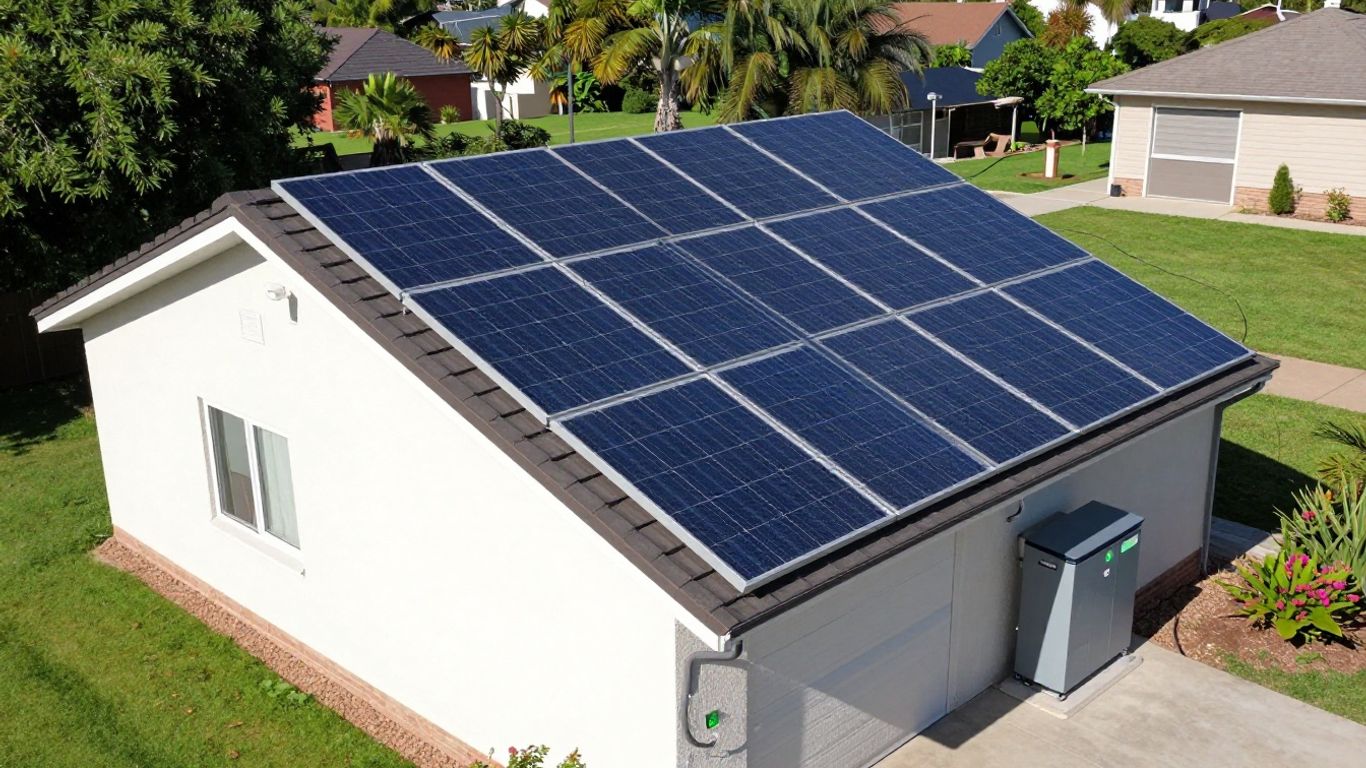
Your solar panels are key to recharging your battery and keeping things running long-term, especially during extended outages. The goal is to size the solar array so it can replenish the energy used by your critical loads and recharge the battery during average daylight hours.
- Match to Daily Energy Needs: A general rule of thumb is to size your solar array to produce at least your daily critical energy consumption, ideally more to account for charging the battery.
- Consider Sun Hours: This isn’t just about the size of the panels (kW), but how much energy they actually produce (kWh) based on your location’s average daily sun hours. Cloudy regions will need larger arrays.
- Recharge Rate: Think about how quickly you need the battery to recharge. A larger array will charge the battery faster.
Generator Sizing Considerations
While solar and batteries are great, a generator can be a reliable backup for heavy loads or very long outages.
- Peak Load Support: Generators are good at handling high startup surges, like an AC unit kicking in.
- Fuel Availability: You need a fuel source (propane, natural gas, diesel) and a way to store or access it.
- Integration: How will it connect to your microgrid? It needs to work with your inverter and transfer switch.
Sizing correctly means balancing your immediate needs with the potential for longer-term power interruptions. It’s about making sure your system can handle the worst-case scenario you’re planning for, without being so oversized that it’s unnecessarily expensive. Think of it as getting just the right amount of insurance for your home’s power. This approach is a key part of determining home backup power needs effectively.
Optimizing Microgrid Performance
So, you’ve got your microgrid components picked out and sized. That’s a big step! But just having the gear isn’t the whole story. To really get the most out of your home energy setup, you need to think about how everything works together. It’s all about making sure your solar panels, batteries, and any other power sources are playing nice with your home’s energy demands, especially when the grid goes down.
Balancing PV Production and Load Demand
This is where the smarts of your microgrid really shine. Your solar panels produce power when the sun’s out, but your appliances use power all the time, and not always when the sun is shining brightest. The goal is to match what your panels are making with what your house needs, moment by moment. If you’re making more power than you’re using, that extra energy can go into your batteries for later. If you need more power than your panels are currently producing, the system will pull from the batteries. The trick is to keep these two in sync as much as possible. This helps avoid unnecessary battery cycling and makes sure you’re using your solar power efficiently. It’s a bit like juggling, but your inverter is the skilled juggler.
Managing Battery Charge and Discharge Cycles
Batteries are the heart of your backup power, but they aren’t invincible. How you use them matters. You want to avoid draining them completely too often, as this can shorten their lifespan. Likewise, constantly topping them off with small charges isn’t always ideal. A good microgrid system will manage these cycles intelligently. It will prioritize using solar power directly when available, then charge the batteries with excess solar, and only discharge them when needed to meet your home’s demand. This careful management means your batteries last longer and perform better when you really need them. Think of it as giving your batteries a balanced diet instead of junk food.
Ensuring Safe Islanding Operations
When the utility grid goes down, your microgrid needs to safely disconnect itself – this is called ‘islanding’. It’s like your house becoming its own little power island. The system has to detect the outage, then quickly and cleanly break away from the grid. Once it’s islanded, it needs to maintain a stable voltage and frequency for your critical loads. This process needs to be quick and reliable so your lights don’t flicker or your sensitive electronics don’t get damaged. The inverter plays a key role here, creating that stable waveform for your home. It’s a critical safety feature that separates a microgrid from a simple backup generator setup.
Strategies for Self-Consumption Optimization
Self-consumption is all about using the solar power you generate right there at your home, rather than sending it back to the grid (if your system even allows that). The more you can use your own solar power, the more you save on electricity bills. Optimization strategies involve timing your high-energy-use activities, like running the dishwasher or charging an electric car, for times when your solar production is high. Some advanced systems can even learn your patterns and automatically shift loads to maximize self-consumption. This is a key benefit of a well-managed microgrid, turning your solar investment into daily savings and greater energy independence. It’s about making your solar panels work harder for you, even when the sun isn’t directly shining on them. For more on how microgrids differ from simple backup generators, you might find it helpful to understand microgrids and backup generators.
The goal of optimization is to create a system that’s not just reliable during outages, but also economical and efficient on a daily basis. It’s about making sure your energy assets are working together harmoniously to meet your needs.
The Value of Microgrid Resilience
So, why bother with a microgrid? It really comes down to peace of mind and practical benefits when the lights go out. We’ve all been there, right? A storm rolls in, the power flickers, and suddenly your fridge is useless, your internet is down, and maybe your sump pump isn’t running. For a few hours, it’s an inconvenience. But if it lasts longer, things can get expensive and downright stressful. A home microgrid acts as your personal backup system, keeping the essentials running when the main grid can’t.
Understanding Outage Impacts on Home Systems
Think about what really stops working when the power goes out. It’s not just the TV. We’re talking about:
- Refrigeration: Spoiled food can be a big loss.
- Communication: No internet or landline means you can’t check on family or get updates.
- Heating/Cooling: Depending on the season, this can quickly become a health hazard.
- Medical Equipment: For some, power is a lifeline.
- Sump Pumps: Basement flooding is a real risk in many areas.
Even short outages can add up. A microgrid is designed to handle these critical loads, giving you a buffer against these disruptions. It’s about maintaining a level of normalcy and safety.
Benefits of Reduced Fuel Dependence
Many backup power solutions rely on generators that need fuel. That means storing gasoline or propane, which can be a hassle and, let’s be honest, a bit smelly. Plus, during a widespread outage, fuel itself can become scarce. A solar-powered microgrid, especially one with battery storage, significantly cuts down on this reliance. You’re using the sun’s energy and what you’ve stored, not a fossil fuel that might not be available when you need it most. This makes your backup power more sustainable and reliable in the long run. It’s a smart investment for energy independence [6127].
Building a microgrid isn’t just about having power during an outage; it’s about creating a more stable and predictable energy future for your home. It’s a step towards greater self-sufficiency and a way to insulate yourself from the unpredictable nature of the larger utility grid.
Policy and Market Trends Supporting Microgrids
It’s not just homeowners seeing the value. There’s a growing trend towards microgrids and distributed energy resources. Governments and organizations are recognizing the importance of grid resilience. This means policies are often being developed to support these kinds of systems, making them more accessible and practical. You’ll find that solar-plus-storage is increasingly seen as a practical way to keep critical systems running during outages [78ad]. The technology is improving, and more people are looking for ways to have reliable power, especially as we see more extreme weather events. This momentum suggests that microgrids are becoming a more mainstream part of our energy landscape.
Future-Proofing Your Energy System
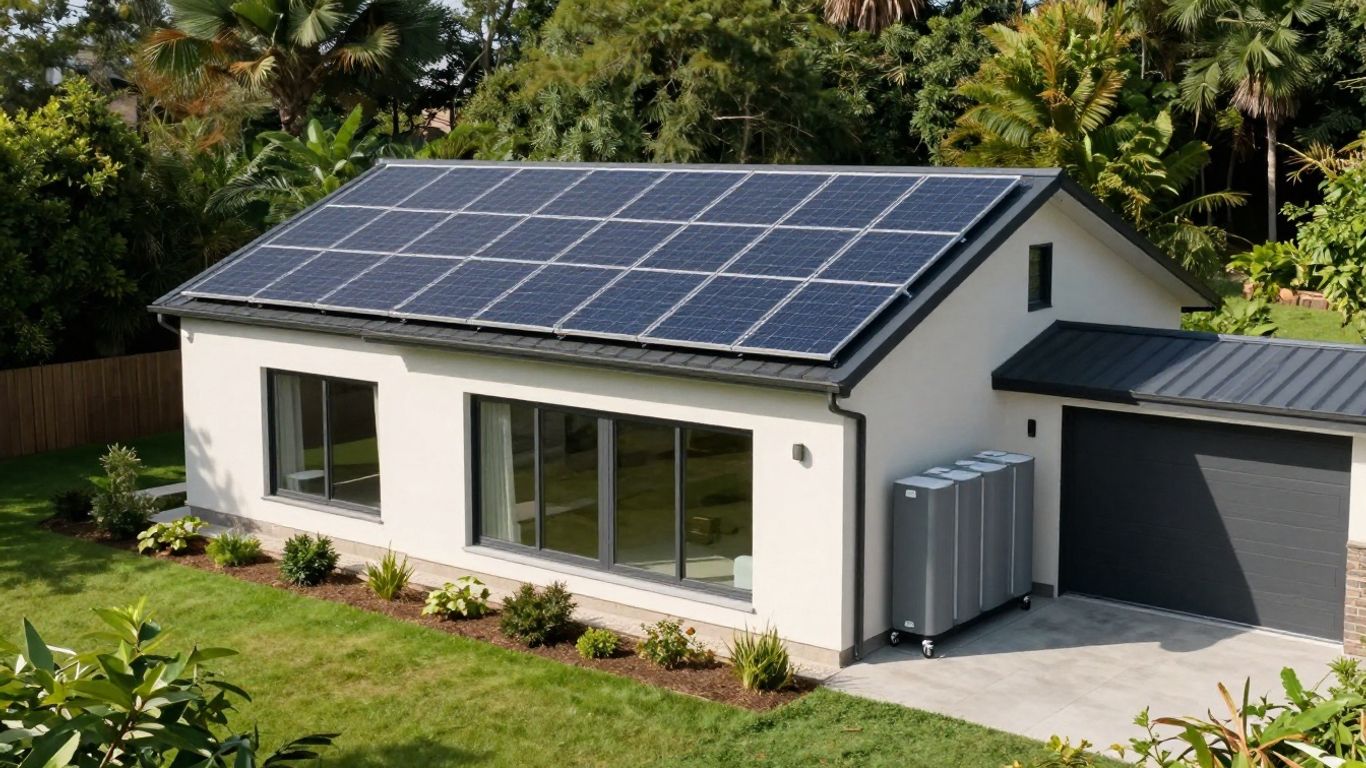
Thinking about your home microgrid isn’t just about getting through the next power outage. It’s also about making sure your investment makes sense for years to come. This means looking at how your system can grow and adapt as your needs change and as technology moves forward.
Scalability for Growing Energy Needs
Your energy use today might be different from what it will be in five or ten years. Maybe you’re planning to add an electric vehicle, a hot tub, or even an accessory dwelling unit. Your microgrid should be able to keep up. Look for systems that are designed with modularity in mind. This means you can add more battery storage capacity or expand your solar array without needing to replace your entire setup. It’s like building with LEGOs – you can add more pieces as you go. This approach, often seen in modular AC combiner strategies for scaling microgrids [ef2c], helps ensure your system remains adequate for your evolving lifestyle.
Adapting to Evolving Grid Technologies
The utility grid itself is changing. Utilities are looking at ways to manage power flow differently, especially with more renewable energy sources coming online. Your microgrid needs to be able to work with these changes. This includes being able to communicate with the grid when it’s connected and to safely disconnect and operate on its own when needed. The goal is to have a system that’s flexible enough to handle different grid scenarios, whether that’s providing support to the grid or simply operating independently during an outage. Mobile microgrids, for instance, show how flexible power solutions can be [958a].
Leveraging Advanced Inverter Capabilities
Your hybrid inverter is the brain of your microgrid. As technology advances, so do the capabilities of these inverters. Newer models can offer more sophisticated energy management features. They can optimize battery charging and discharging based on weather forecasts and electricity prices, and they can provide more detailed data about your system’s performance. Choosing an inverter with advanced features now means you’re better prepared for future energy management strategies and potential grid services. Think about inverters that support smart home integration or have the processing power to handle complex energy flows. This foresight helps ensure your microgrid remains a smart, efficient part of your home for the long haul.
Wrapping It Up
So, getting your home microgrid sized right is a big deal. It’s not just about having power when the lights go out, but having enough power for what you actually need. Too small, and you’re still in the dark on important stuff. Too big, and you’ve spent way more than you needed to. By carefully looking at your home’s power use and picking the right gear, you can build a system that gives you peace of mind and energy independence without breaking the bank. It’s about smart planning for a more reliable future.
Frequently Asked Questions
What exactly is a home microgrid?
Think of a home microgrid as your own mini power system. It can work with the main power grid, but it can also run on its own, like an island, if the main grid goes down. It’s usually made up of solar panels, batteries for storing energy, and a special inverter that manages everything.
Why would I want a home microgrid?
The main reason is reliability. If there’s a power outage, your microgrid can keep your essential things running, like your fridge, lights, and internet. It gives you more energy independence and can reduce how much you rely on things like gas generators.
How do I figure out what size microgrid I need?
You need to know what you absolutely can’t live without during an outage. Make a list of those devices, how much power they use (in watts), and how long you’d need them to run each day. This helps determine how much power (peak load) and how much total energy (daily usage) your microgrid needs to provide.
What are the most important parts of a home microgrid?
Key players are a hybrid inverter that can manage solar, batteries, and switch to island mode, batteries (like the safe LiFePO4 type) to store energy, and a separate electrical panel for your most important appliances. Making sure everything is safe and follows rules is also super important.
Can a microgrid grow with my needs?
Yes, many systems are designed to be expandable. You can often add more batteries later if you need more storage or if your energy use goes up. This means your microgrid can keep up as your needs change over time.
Is a microgrid complicated to operate?
Modern microgrids are pretty smart. The inverter usually handles most of the work automatically. It detects when the grid is down, switches over to battery and solar power, and manages energy flow. The goal is to provide seamless backup power without you having to do much.