EMP Proof Power: Your Backup Game Plan
Key Takeaways
Securing your energy infrastructure requires a multi-tiered approach that addresses both immediate high-voltage surges and sustained disruptive signals from electromagnetic pulses. By combining shielding, surge shunting, and rigorous maintenance, you can fortify your equipment against long-term grid instabilities.
- Prioritize the hardening of critical control circuits using high-speed shunt devices.
- Use certified military-grade enclosures for sensitive, non-connected electronics during storage.
- Establish a layered defensive strategy that includes both external line protection and internal electronic isolation.
- Perform regular inspections to ensure that shielding integrity remains uncompromised by wear or physical damage.
- Maintain cold spares for secondary components to ensure total system restoration after a significant surge event.
The threat of electromagnetic pulses to power systems
An electromagnetic pulse represents a rapid, intense burst of energy capable of overloading sensitive electronic circuits. This energy, whether originating from a solar storm or a manufactured event, disrupts the normal function of the post-event electrical grid by inducing unwanted electrical currents in conductive materials. Understanding these physical phenomena is the first step toward effective mitigation and long-term hardware survival.
Differentiating between E1, E2, and E3 impacts
The E1 component is a near-instantaneous pulse that hits in nanoseconds, potentially frying microelectronics before standard breakers even detect a problem. E2 follows, resembling lightning-induced surges, while the E3 component occurs over minutes, affecting long power lines. This trio presents a significant challenge for survivability power solutions because each phase requires a different defensive reaction time.
Why sensitive electronics are the primary failure point
Modern electronics utilize microscopic components operating on extremely low voltages, making them highly susceptible to any sudden potential increase. When a large field permeates your equipment cabinet, these components cannot dissipate the heat fast enough, leading to permanent hardware failure.
The role of cable length in induced voltage surges
Longer cables naturally function as antennas for pulse radiation, capturing more electromagnetic energy than shorter, shielded runs. If you have extensive wiring, minimizing the exposed length is one way to improve your overall resilient energy sources footprint. Consider the relative vulnerability levels in the following summary of potential infrastructure damage:
| System Component | Vulnerability Level | Primary Mitigation |
|---|---|---|
| Control Boards | High | Transient Suppression |
| External Data Lines | Severe | Fiber Optic Isolation |
| Power Cabling | Moderate | Surge Shunting |
By managing these cable configurations, you reduce the surface area available for pulse induction.
Faraday cage enclosures for portable equipment
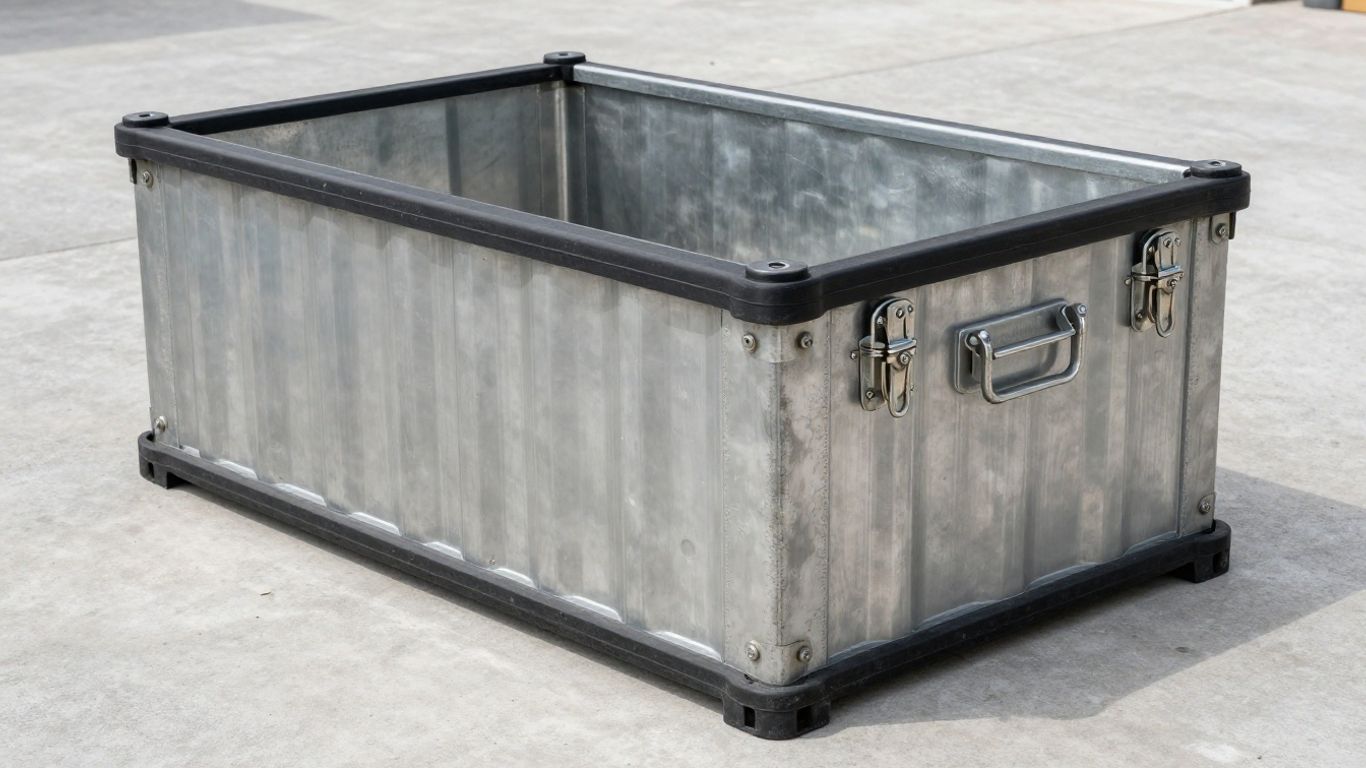
Conductive enclosures serve as the ultimate defense for hardware that is not inherently connected to an external power grid. By creating a physical barrier that prevents field penetration, you effectively isolate your tools from high-frequency interference. Selecting the right barrier requires careful attention to material density and seam seal quality.
Material requirements for effective radio frequency attenuation
Effective shielding materials must provide a continuous conductive path to dissipate induced currents away from the interior. Thinner foils often lack the robustness needed for heavy-duty protection, whereas metallic enclosures or high-mesh fabrics tuned for the target frequency range work significantly better. When you keep electronics in these environments, they remain protected from the external energy influx.
Using commercial Faraday bags versus DIY containers
Commercial options provide tested, reliable performance, often meeting specific industry standards that a homemade solution might miss. If you decide to construct your own, you must ensure electrical continuity across all joints and closure points to prevent gaps that act as entry points for high-frequency noise. Ensuring a tight radio seal is essential for maintaining complete enclosure effectiveness against incoming pulses.
Avoiding the "antenna effect" for external power cables
If you run cables out of a shielded bag, the bag itself becomes compromised because the cable transports energy directly inside. Always store devices in a powered-off state without any attached peripherals or leads to keep the internal cavity clean of external induction hazards.
Transient protection for generators and inverters
Protection for active power systems like off-grid emergency power units involves shunting energy before it can damage internal logic boards. Integrating robust shunt mechanisms ensures your equipment can withstand nearby electrical strikes, even when the system is actively generating or inverting power for use.
How surge protection devices shunt excess energy
These devices act as an electrical pressure relief valve, triggering in picoseconds to divert overvoltage to the neutral-ground path. This prevents the voltage spike from reaching sensitive internal components like charge controllers. For example, using a T.R.A.P.™-AC provides a crucial line of defense by shunting energy directly at the point of connection, protecting the connected circuitry from rapid transients.
Installing transient reducing auxiliary plugs at point of connection
Placing these protective plugs at every available outlet increases your defense coverage. Since pulses propagate through every conductive path, blocking them at the source prevents common-mode interference from traveling between interconnected devices, strengthening your overall EMP proof backup power strategy.
Limitations of off-the-shelf lightning protection devices
Standard surge protectors found at retail stores typically react too slowly for a high-altitude pulse or a specialized directed signal. Their design intent is usually to catch long-duration spikes rather than the extremely sharp, high-amplitude bursts associated with pulse weaponry, meaning they are frequently insufficient for hardened military-grade requirements.
Hardening solar and wind energy systems
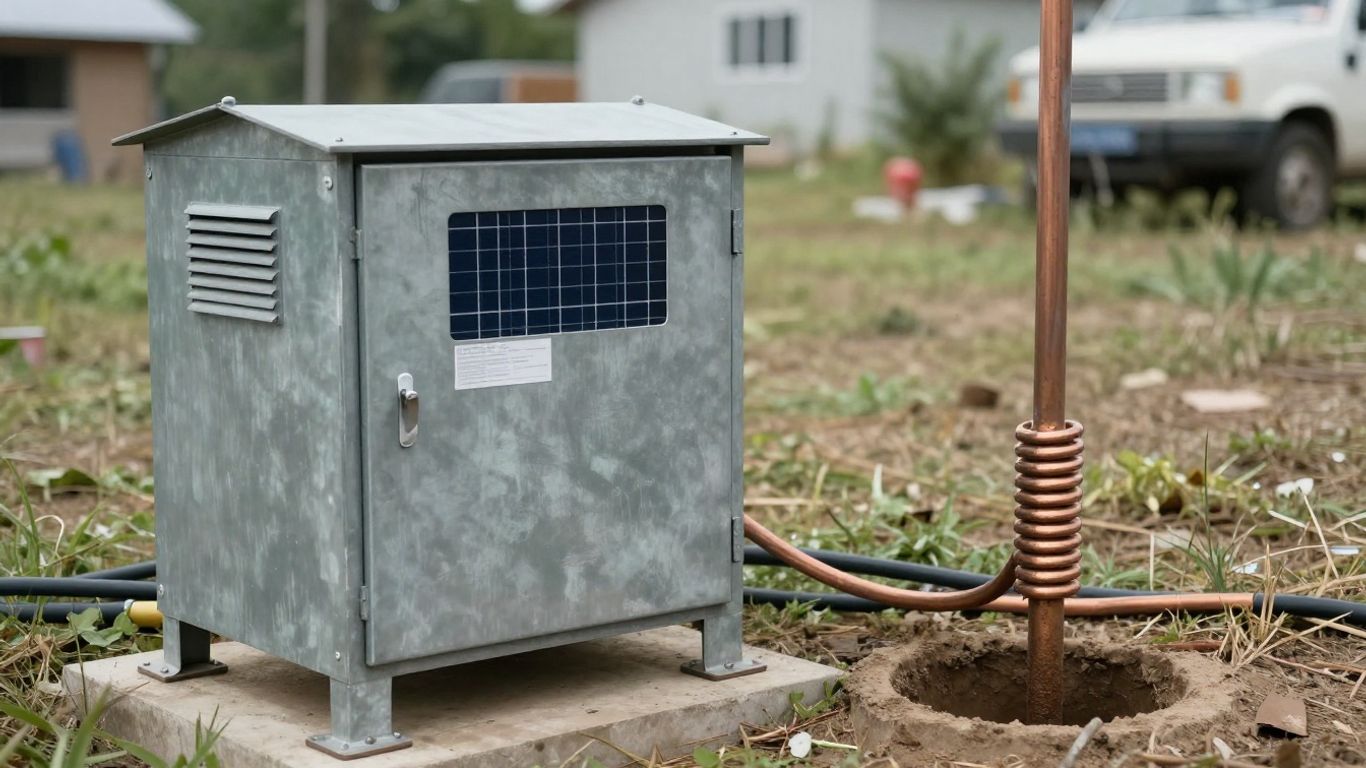
Solar and wind infrastructure is uniquely vulnerable because these systems are widely dispersed and often rely on long DC lines. These wires can accumulate massive amounts of induced energy during a pulse event. The goal is to isolate the generation equipment from your indoor storage or load-handling cabinets.
Protecting DC power lines with specialized shielding devices
DC lines require specialized EMP Shield devices to clamp voltage spikes that would otherwise track back to your battery bank. By installing these at the entry point of your building, you create a gate that only allows steady-state electricity to pass through, effectively safeguarding your EMP hardened generators and storage components.
The necessity of robust grounding and bonding systems
Without a low-impedance ground path, shunted energy has nowhere to go but into your equipment or out through nearby wiring. You must bond your equipment frames to the same grounding system to equalize potential difference during a transient event, which prevents damaging arcing between different metal surfaces.
Isolating charge controllers and battery management systems
Most modern battery management systems are highly sensitive to surge feedback. Using heavy-duty relays to disconnect these circuits during high-risk scenarios adds an extra layer of protection, keeping your critical management logic isolated until the event window passes.
Identifying reliable protection equipment and standards
Navigating the market for hardening gear requires looking for verified technical specifications rather than marketing fluff. Validated performance, backed by rigorous bench testing, is the only way to ensure your hardware will operate as intended in a worst-case scenario.
Understanding high-altitude military standards like MIL-STD-188-125
These standards define the specific pulse parameters, rise times, and current amplitudes that equipment must withstand to maintain operation. Devices tested against these criteria undergo severe exposure in controlled environments mimicking a high-altitude nuclear detonation. When a manufacturer claims compliance here, they are confirming that their hardware handles genuine extreme-threat profiles.
Evaluating laboratory certification and third-party compliance testing
Compliance testing should occur in accredited, independent laboratories with established reputations in electromagnetic analysis. Documentation from these facilities provides a neutral record of how devices behave under pressure, preventing bias in the survival data.
Why nanosecond-speed reaction times are critical for defense
In the context of pulse mitigation, every nanosecond saved is a component saved. Since standard electronics fail near-instantaneously when subjected to high-energy fields, your defensive shunt devices must trigger faster than the destruction threshold of your hardware.
Practical deployment and maintenance strategies
A defense-in-depth approach assumes that one protective measure may eventually fail, necessitating further layers of security. Maintenance is not just about keeping the power on, but ensuring the hardware stays in its operational state for years after deployment.
Creating a layered defense perimeter for your backup hardware
Organizing your hardware protection involves moving from the perimeter inward until you reach your primary storage. This phased approach addresses several potential vectors at once:
- Install primary surge arrestors at the grid service entry or generator source.
- Apply localized transient shunts at equipment power inputs.
- Utilize Faraday-shielded storage containers for all non-essential spares.
- Designate a "cold stack" area for long-term critical components.
Following this protocol helps isolate risks at each stage of your energy distribution chain.
Periodic inspection of enclosure seals and electrical connections
Over time, gaskets on protective boxes can dry out, and wiring connections can loosen due to vibration or thermal expansion. Regularly verify that your Faraday seals are clean and that ground connections remain low-resistance.
Maintaining cold spares of vital electronic components in deep storage
Even with the best protection, some components may fail. Storing a dedicated set of essential controllers inside a Revelation EMP Shield in a remote location ensures you can replace broken electronics after the event.
Conclusion
Building an infrastructure capable of surviving an electromagnetic pulse requires a shift in how you think about energy resilience. By treating your system as a collection of vulnerable nodes that require both physical shielding and high-speed electrical protection, you successfully mitigate the risks of modern surge events. Reliability in a post-event environment depends largely on the foresight applied during the design and installation stages today.
Frequently Asked Questions
Will my car stop running if an EMP occurs?
It depends heavily on the model’s age and level of computerization, as older vehicles with mechanical ignitions are likely to remain operational while modern systems with extensive electronic sensors may fail.
Are solar panels themselves vulnerable to pulse damage?
Solar panels are relatively resistant to pulses compared to the electronics they connect to, but the associated inverters and charge controllers are highly sensitive and require specific surge protection.
Can a simple microwave oven act as a Faraday cage?
While the metal shell is conductive, a consumer microwave is not designed for permanent signal exclusion, and the door seals lack the necessary contact points to provide a proper professional-grade seal.
How do I know if my surge protector is military-grade?
Check for documentation that specifically cites compliance with standards such as MIL-STD-188-125 rather than just vague advertisements about general surge protection or lightning shielding.
Should I disconnect my home from the main grid?
physically isolating your home from power lines is a very effective way to stop incoming grid-born surges, though this requires a reliable, locally managed power source to keep electrical systems operational.
Does distance from the pulse site influence damage outcomes?
The intensity of the pulse field generally decreases with distance, but high-altitude effects can cover vast regions, potentially affecting electronics across an entire continent simultaneously.
Is it worth shielding equipment that stays powered off?
Absolutely, because dormant electronics are just as susceptible to the induced electromagnetic energy as active devices, especially if they have any conductive cabling attached to them.