Microreactor cost per kWh: what drives the price and how it compares
Key Takeaways
A microreactor’s cost per kilowatt-hour is not a single fixed price. The result depends on the project’s scope, financing, operating assumptions, and the power system it would replace.
- Levelized cost estimates spread lifetime project costs over expected electricity generation.
- Early projections are not the same as costs measured during commercial operation.
- Construction, fuel, staffing, financing, and site conditions all affect the result.
- Comparisons should include the full cost of reliable power, not just generation.
- A credible cost claim makes its assumptions and boundaries clear.
What cost per kWh means for a microreactor
The phrase “cost per kWh” can refer to several different things, so it helps to ask what price is being described. A project estimate may cover the reactor’s generation alone, while a customer’s bill also reflects delivery, taxes, and other charges. For a microreactor, the number is meaningful only when its accounting boundary and assumptions are visible.
How levelized cost of energy is calculated
Levelized cost of energy, or LCOE, is a way to express the cost of building and operating a generating asset as an average cost per unit of electricity over its assumed life. In simplified terms, it divides the present value of lifetime costs by the present value of the electricity expected to be produced. The calculation typically considers construction, operations, fuel, financing, and decommissioning, though the precise inclusions vary.
These categories show why two LCOE figures can tell different stories even when both are labelled dollars per kilowatt-hour.
| Cost or assumption | Why it matters to the estimate |
|---|---|
| Construction and equipment | Sets much of the upfront investment to be recovered |
| Fuel and operations | Adds recurring costs over the operating period |
| Financing and schedule | Changes interest costs and when revenue can begin |
| Electricity generation | Determines how many kWh share the lifetime costs |
Read the result as a model output, not a guaranteed sale price. A change in construction schedule, utilization, or financing can shift the estimate substantially.
Why a quoted price may differ from a customer’s electricity bill
A generator’s estimated cost is not necessarily the price a customer pays for delivered electricity. The customer may also need transmission or distribution, interconnection equipment, local power-system upgrades, taxes, and commercial services. If a project is remote, transporting equipment and maintaining access can add costs that a generation-only figure does not capture.
The distinction matters when comparing a proposed reactor with a utility tariff. One figure may represent modeled generation over decades; the other may represent a current retail rate that includes delivery and other charges. A fair comparison identifies both boundaries before drawing conclusions.
Which assumptions can make estimates hard to compare
Cost estimates are difficult to compare if they use different timelines, financing terms, capacity factors, or definitions of what the project includes. One projection may assume repeated factory production, while another may model an initial unit built before a supply chain is established. Even apparently similar figures can differ in whether they include fuel-cycle services, waste management, decommissioning, or backup capacity.
For a broader look at the variables behind distributed-energy project budgets, readers can review microgrid cost drivers. The same basic discipline applies here: compare estimates only after checking what each one counts and what it leaves outside the boundary.
What microreactor cost estimates show
Public cost figures for microreactors are best treated as projections unless they are tied to a defined project with documented operating results. Designs, sites, licensing pathways, and commercial arrangements may differ, so a headline number rarely transfers neatly from one proposal to another. The most useful estimates explain their scope and uncertainty instead of presenting a single figure as universal.

How early-stage estimates differ from operating costs
An early estimate may be developed before a final design, supplier contracts, site plan, or construction schedule is settled. It can help screen a concept, but it depends on assumptions that may change as engineering and permitting progress. Operating costs, by contrast, are based on actual staffing, maintenance, fuel, and performance over time, although a new facility may not yet have a long record to draw on.
That gap is especially relevant for emerging reactor concepts. A description of small modular reactor designs can help clarify the role of factory fabrication and serial production in the broader technology discussion, but proposed manufacturing benefits should not be mistaken for demonstrated cost reductions at a particular microreactor project.
Why first-of-a-kind projects may cost more
An initial project may face costs that later installations could avoid or reduce, such as one-time engineering, establishing manufacturing processes, and developing site-specific procedures. It may also encounter schedule risk while regulators, suppliers, construction teams, and operators work through a new design. These are reasons to scrutinize first-project projections, not proof that every later project will be inexpensive.
The financing impact can be substantial: delays may extend the period before a plant earns revenue while increasing the amount of capital tied up in construction. A projection should therefore distinguish the first unit from any assumed future series and explain what learning or repeat production is expected to change.
What to look for in published cost projections
A useful projection states its date, currency, price basis, project size, development stage, and the costs it includes. It also explains the operating life and utilization assumptions used to estimate generation. Without those details, readers cannot tell whether a low figure reflects a genuinely lower-cost design or simply a narrower accounting boundary.
Check the estimate for four basic disclosures before relying on it:
- Whether it covers generation only or the wider delivered-power system.
- Whether construction, financing, fuel, operations, and decommissioning are included.
- Which capacity factor, operating life, and construction schedule are assumed.
- Whether the number describes a first unit or a projected repeat-build program.
Together, these details make the estimate easier to compare and its limitations easier to see. If a projection offers one precise number but leaves these assumptions unstated, treat it as incomplete rather than as a dependable benchmark.
The main factors that shape microreactor costs
A microreactor’s economics are shaped by the full project, not just the reactor vessel or its rated output. Design choices affect manufacturing and construction, while operating arrangements shape recurring expenses. Financing and project risk then determine how those costs are carried over time.
Reactor design, manufacturing, and construction
A compact design does not automatically mean a low total project cost. Specialized components, quality requirements, site preparation, security provisions, transport, installation, and commissioning all contribute to what it takes to bring a facility into service. Factory fabrication may change where work is performed and how it is organized, but the cost outcome depends on the design, production volume, and site logistics.
The project scope also matters. A cost estimate may include only the reactor facility, or it may include supporting buildings, electrical systems, connections to a local network, and other site infrastructure. Before comparing two proposals, check whether they are pricing the same physical and operational scope.
Fuel, operations, maintenance, and staffing
Fuel costs are only one part of the recurring expense of producing electricity. Operations, inspections, maintenance, security, training, replacement components, and specialist support also need to be accounted for over the operating life. Their scale and organization depend on the licensed design and the arrangements for operating the facility.
A small electrical output does not by itself establish how many staff or what level of support a plant will require. Nor does a projected long interval between refuelling, if proposed, remove the need to account for fuel services and eventual handling. Cost models should show these assumptions rather than treating them as negligible.
Financing, project risk, and cost of capital
Nuclear construction requires capital before a facility can produce revenue, so financing terms and schedule assumptions influence the eventual cost per kWh. A higher cost of capital increases the amount that must be recovered; a longer construction period can add financing costs and postpone sales. Contract structure and allocation of delay or cost-overrun risk can also affect how a project is priced.
For that reason, two estimates with similar engineering costs may produce different LCOE results. Look for the assumed financing rate, construction timeline, contingency, and treatment of risk. Those factors are not peripheral bookkeeping; they can change the modeled economics materially.
How microreactors compare with other power sources
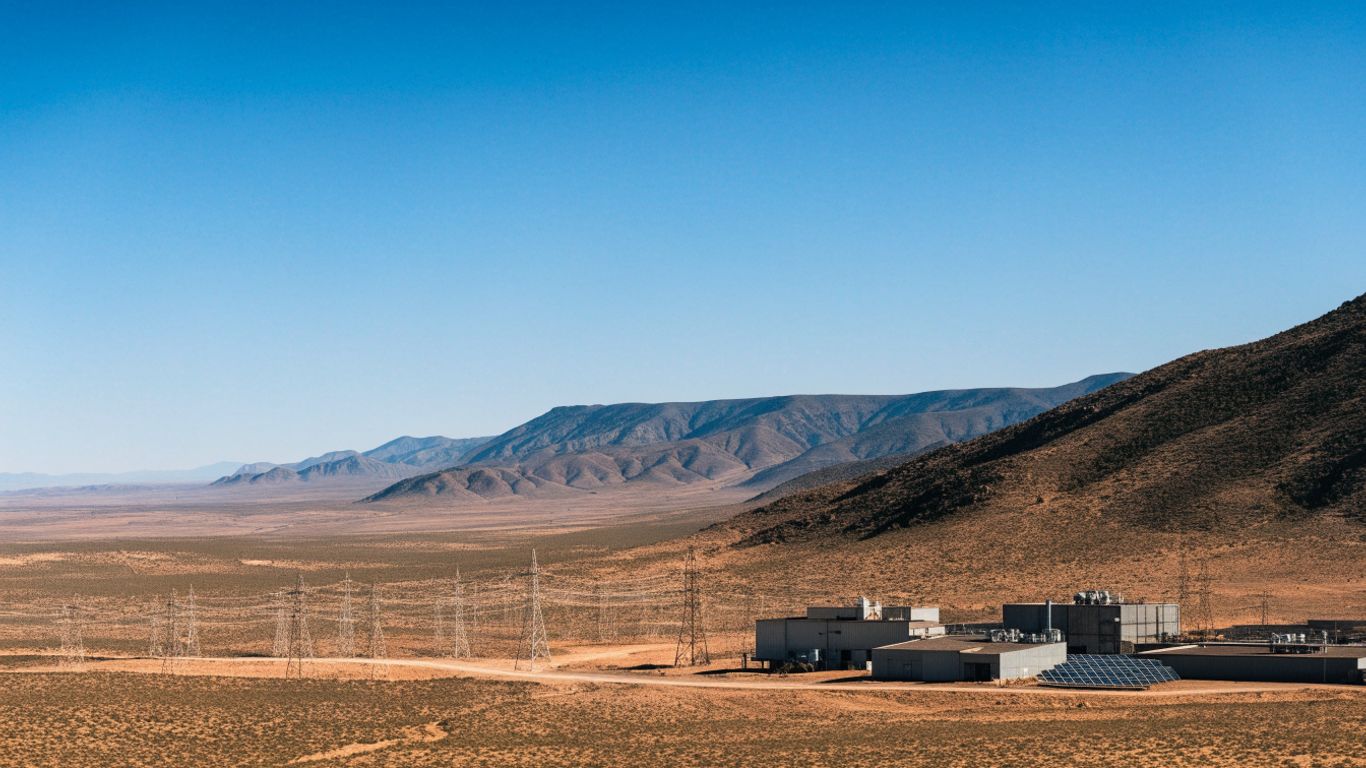
There is no useful universal comparison between a microreactor and grid electricity, diesel, or a renewable-and-storage system. Each option has different cost boundaries and operates under different conditions. The relevant question is what combination can meet a particular site’s demand with an acceptable level of reliability and total cost.
Comparing costs with grid electricity and diesel generation
At a grid-connected site, the reference point may be the delivered tariff, including demand charges and other bill components, rather than a wholesale generation cost. At an isolated location, diesel generation may involve fuel purchase and delivery, storage, maintenance, and generator replacement. A microreactor comparison should use the same service requirement and account for each option’s supporting infrastructure.
For example, a remote site with costly fuel logistics may face a different baseline from a facility with reliable grid access. The comparison should not assume either that grid power is always available at the stated tariff or that delivered fuel costs are the same across locations. Site-specific data are essential.
Accounting for renewables, storage, and backup power
A system comparison may need to consider a portfolio rather than one generator at a time. Solar or wind generation can be paired with batteries and backup generation, while a microreactor proposal may also rely on grid connections or other equipment for outages and maintenance. The costs of storage, controls, backup, and fuel logistics belong in the comparison when those components are needed to deliver the required service.
A microgrid feasibility study can help structure that broader analysis; this microgrid feasibility study guide outlines the kinds of site and reliability questions that inform project assessment. The aim is not to assume that a microgrid is the right answer, but to compare complete systems on a consistent basis.
Why location and reliability change the comparison
The same technology can have different economics at different sites because access, climate, local infrastructure, demand patterns, and construction logistics vary. Reliability requirements matter too: a facility that must maintain critical loads through outages may need redundant equipment or stored energy, regardless of its primary power source. Those provisions add cost but can also provide value that a simple energy-only price misses.
This is why location-specific analysis is central to evaluating a microreactor cost per kWh. A model for a remote installation should account for the actual alternatives available there, not a convenient national average or a retail rate from a different kind of customer.
When a microreactor may make economic sense
A microreactor may be worth evaluating where power demand, site conditions, and reliability needs make conventional options costly or difficult to use. That is not the same as concluding that it will be the least-cost option. A project needs a credible design, a defined site, a viable regulatory and fuel pathway, and a comparison against realistic alternatives.
Remote communities and off-grid sites
Remote locations can face high costs for fuel delivery, grid extension, or maintaining conventional generation. A compact, steady source of power could be relevant to some such settings, but transport, installation, operating support, and local requirements still shape the project economics. Community needs, workforce arrangements, emergency planning, and long-term governance also belong in the assessment.
The potential case is strongest when a project can identify a durable demand profile and compare all-in costs with a realistic off-grid system. If demand is seasonal or modest, the cost of a large fixed asset may be difficult to justify even when alternatives have their own limitations.
Industrial facilities with steady energy demand
A facility with sustained electricity use may be able to use a generating asset more consistently than a site with highly variable demand. That can affect the amount of electricity over which fixed costs are spread. But the case still depends on the load profile, planned operating life, connection to the grid, power quality needs, and the cost of other available supply options.
Industrial analysis should also consider interruptions, scheduled maintenance, expansion plans, and the consequences of a plant operating below its expected output. A high utilization assumption can make a projection look more favorable, so it should be supported by the facility’s actual or forecast demand rather than selected to improve the result.
Projects that value resilience or heat as well as electricity
Some projects may value dependable power, reduced exposure to fuel delivery disruptions, or useful heat alongside electricity. Those benefits can matter to a decision-maker, but they should be described separately from electricity cost rather than folded into an unexplained discount. A clear model identifies who receives the benefit, how it is valued, and whether the same benefit could be obtained with another system.
Resilience is also a system-level outcome. A project still needs plans for outages, maintenance periods, and the equipment that supports essential loads. Evaluating the full arrangement helps distinguish a genuine reliability benefit from a claim based on the reactor alone.
How to evaluate a microreactor cost-per-kWh claim
A cost claim is only as useful as the assumptions behind it. Start by checking the project boundary and the date of the estimate, then examine what is included in the lifetime costs and what generation is assumed. Finally, compare it with alternatives that serve the same site and reliability needs.
Check the project scope, timeline, and capacity factor
Confirm whether the estimate covers a complete operating facility or only a reactor concept, and note the project’s development stage. The timeline should distinguish design, licensing, construction, commissioning, and operation; changes in any of these stages can affect financing and cost. Capacity factor—the share of potential output produced over time—also needs a clear basis, since expected generation is the denominator in an LCOE calculation.
Check that the project’s assumed output is plausible for its intended use and that scheduled maintenance or interruptions are reflected appropriately. If the estimate assumes a high capacity factor, ask what evidence supports it and how a lower operating level would change the result.
Review fuel, decommissioning, and waste assumptions
Read the cost boundary closely for fuel procurement and services, operating expenses, end-of-life work, and waste management. These items may be handled differently across estimates, and an omitted cost does not disappear simply because it sits outside a quoted figure. The project should clarify who is responsible for each item and when the associated expense is expected to occur.
It is also useful to check whether the model explains how future costs are treated in present-value terms. A projection that includes a category but does not disclose its timing or calculation may still be difficult to compare with another estimate.
Compare total system costs against realistic alternatives
The final comparison should use the same time period, demand, and reliability standard for each option. Include the equipment and services needed to deliver power at the site, not just the cost of generating electricity. For a microreactor, that may mean examining connections and supporting systems; for alternatives, it may mean accounting for storage, backup, grid upgrades, or fuel delivery.
A practical comparison should be able to answer these questions:
- What power service and reliability level must each option provide?
- Which capital and recurring costs are included for each system?
- How do schedule delays, lower utilization, or changing demand affect costs?
- Which benefits are valued separately from the electricity price?
When those answers are documented, a decision-maker can see what drives the result and where uncertainty remains. Cost-per-kWh figures are useful for screening, but a site-specific lifecycle assessment is needed before committing capital.
Conclusion
Microreactor cost per kWh is an outcome of project scope, construction, operations, financing, and expected generation—not a universal price attached to a reactor design. Early estimates can inform planning, but they should be treated cautiously until their assumptions and boundaries are clear. The soundest comparison evaluates complete power systems at the intended site, with reliability needs and uncertainty made explicit.
Frequently Asked Questions
What is the cost per kWh of a microreactor?
There is no single cost that applies to every microreactor. Estimates depend on design, project maturity, construction costs, financing, operating assumptions, and what expenses are included.
How is microreactor LCOE calculated?
LCOE generally expresses the present value of lifetime project costs divided by the present value of expected electricity generation. Methods differ, so the cost categories, discount rate, and operating assumptions should be disclosed.
Is a projected cost the same as an operating cost?
No. A projection uses assumptions about future construction and operation, while operating costs draw on actual experience. Early projects may have limited operating data, and projections can change as designs and schedules develop.
Why can two microreactor estimates differ so much?
They may use different project boundaries, financing terms, construction schedules, capacity factors, or assumptions about fuel and end-of-life costs. Different development stages can also make estimates difficult to compare directly.
Should microreactor costs be compared with a utility bill?
Only after checking that the figures cover comparable services. A generation estimate may exclude delivery and customer charges that appear in a retail bill, while a bill may not show the cost of a site’s backup requirements.
Could a microreactor be economical at a remote site?
It may merit evaluation where grid access or fuel logistics are challenging, but the answer depends on local demand, infrastructure, project costs, reliability needs, and available alternatives. Site-specific analysis is necessary.
What should a cost-per-kWh estimate disclose?
It should identify the project scope, estimate date, currency basis, financing and schedule assumptions, expected generation, operating life, and included cost categories. Clear disclosures make it possible to assess uncertainty and compare alternatives fairly.