Solar and Battery Power for Remote Border Surveillance Systems
Key Takeaways
A dependable remote surveillance site starts with an honest energy audit, not a panel purchase. Solar generation, battery storage, communications, and maintenance access must be designed as one system.
- Measure every surveillance and communications load, including startup and seasonal peaks.
- Size panels and batteries for the least favorable useful solar period, not an average day.
- Prefer efficient DC distribution where equipment supports it, while protecting sensitive electronics.
- Build in environmental protection, remote diagnostics, and a practical maintenance plan.
- Treat resilience as a combination of storage, backup power, physical security, and sound operations.
Assessing power requirements in remote border surveillance
A remote site rarely fails because one component was selected in isolation. It fails when the complete load is underestimated, the weather is treated as average, or service access is assumed to be easy. A good assessment turns the proposed border surveillance solar power system into a defined engineering problem with measurable inputs.
Surveillance equipment and communication loads
Begin with an inventory of every device that draws power: fixed and pan-tilt cameras, thermal imagers, radar, lighting, alarms, network switches, recorders, and communications equipment. Record normal consumption, startup demand, heater or cooler operation, and whether each device runs continuously. A camera may be modest on its own, while a group of cameras, a router, and an edge computer can create a substantial overnight load.
Communications deserve the same attention. Cellular modems, radios, satellite terminals, and mesh nodes may draw more during transmission than while idle. If video is sent continuously, calculate the energy cost of that behavior rather than assuming the link is a small accessory. A practical remote surveillance power guide is useful as a starting point for organizing camera, sensor, battery, and generator requirements, but each site still needs its own measurements.
Continuous, seasonal, and peak energy demand
Separate the load into three views: the steady hourly demand, the daily energy total, and the short peaks that affect wiring, converters, and inverters. Night operation can be especially demanding when infrared illumination, heaters, or higher-resolution streams remain active. Seasonal changes also matter; cold weather may increase battery losses while heat can increase cooling demand.
Use measured data where possible, then add a documented allowance for uncertainty. The allowance should not hide poor assumptions. It should cover known variation, such as a radio transmitting during an incident or a camera switching into a different operating mode.
Site access, terrain, and environmental conditions
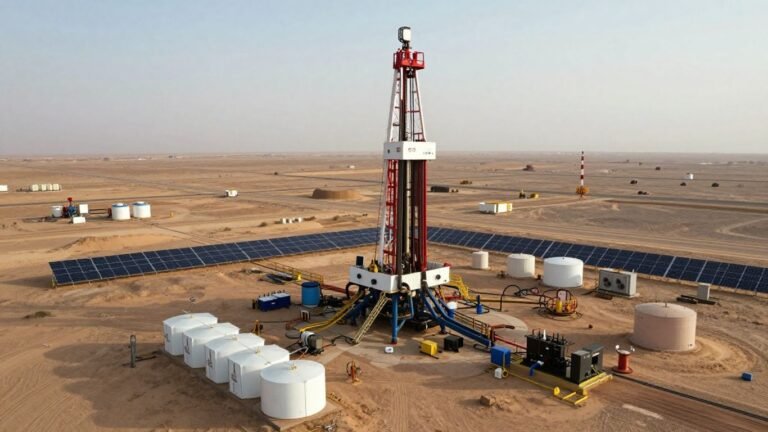
Power design is inseparable from geography. A shaded ravine, exposed ridge, dusty plain, or snow-prone access road changes panel yield, mounting, cable routing, and service frequency. Surveyors should record shading by season, likely snow accumulation, wind exposure, flood risk, soil conditions, and the route used to bring equipment to the site.
Access also affects the economics of reliability. A larger battery or stronger enclosure may cost more initially but reduce emergency trips by helicopter, truck, or specialized crew. The right choice depends on the cost and risk of reaching the site, not only on the price of the component.
Runtime expectations during extended outages
Define what “backup” means before selecting storage. Some sites need to bridge a single night; others must continue operating through several storm days or a blocked access route. Clarify whether all equipment remains online during an energy shortage or whether lower-priority loads can be shed.
A useful operating plan names critical, important, and deferrable loads. Critical detection and communications may stay energized, while nonessential illumination, high-bitrate recording, or auxiliary computing is reduced. This makes the system more honest: autonomy is a controlled operating target rather than a vague promise.
Designing a border surveillance solar power system
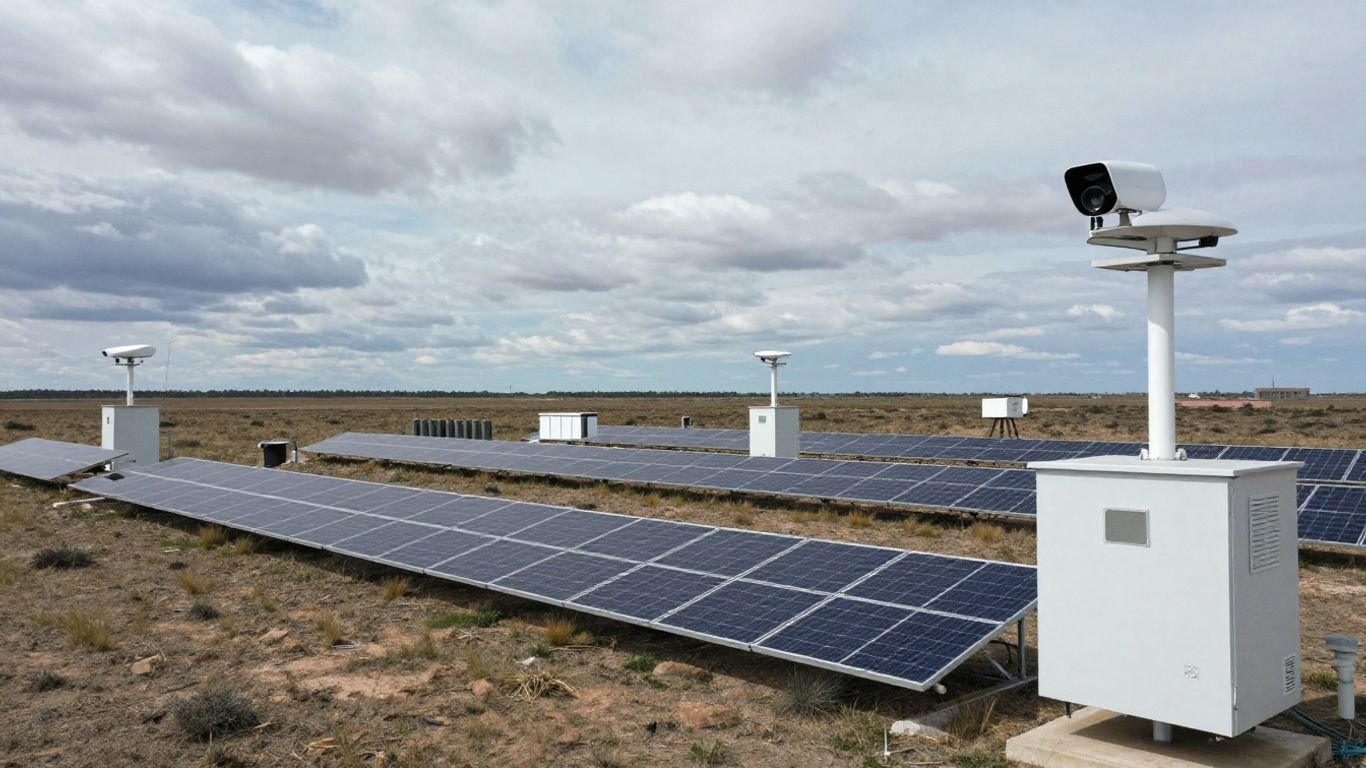
A well-designed system has a clear energy path from sunlight to storage and then to each load. It also has clear boundaries between high-current battery circuits, low-voltage electronics, network equipment, and any AC distribution. Simplicity is valuable at a remote site because every additional conversion stage can add losses and another point of failure.
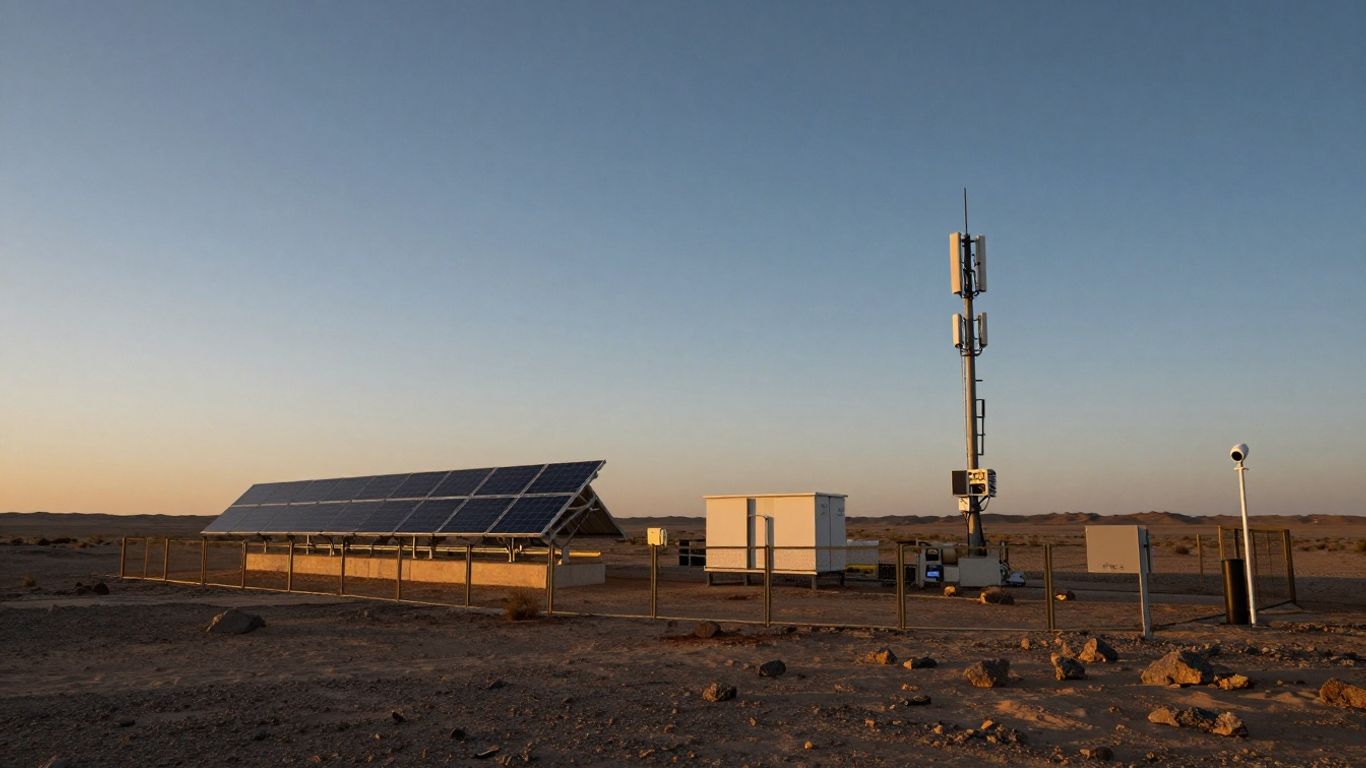
The design should be documented in a one-line diagram and a load schedule before procurement. That documentation helps installers, operators, and future maintainers understand what can be switched off, what must remain protected, and where measurements can be taken.
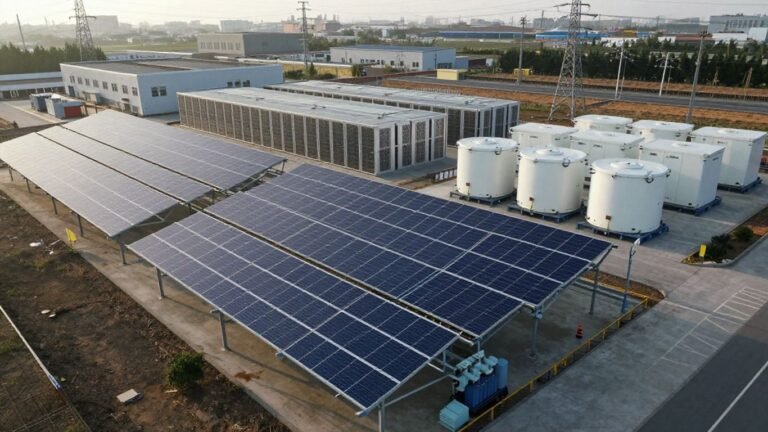
Solar panels, charge controllers, and battery storage
Photovoltaic modules provide energy when conditions allow, while the charge controller regulates how that energy reaches the battery. Storage then carries the site through darkness, clouds, and short interruptions. Panel voltage, controller limits, battery voltage, cable length, and ambient temperature must be considered together rather than chosen from separate catalogs.
A solar charge controller manages solar equipment and battery charging; it does not determine a retail electricity provider or the price of grid electricity. That distinction, explained in this solar hardware and electricity guide, is useful even when a surveillance site is off-grid because it keeps equipment functions separate from energy contracting decisions.
DC and AC power distribution choices
DC distribution can be efficient for cameras, radios, routers, and other native-DC equipment because it avoids unnecessary inversion. It still requires careful voltage-drop calculations, fuse coordination, grounding, and protection against reverse polarity. Long runs may call for a higher distribution voltage followed by local conversion near the load.
AC may be appropriate for standard commercial equipment or longer distribution distances, but it adds inverter losses and can complicate maintenance. Use it deliberately. A mixed architecture can work well when a protected DC bus serves essential electronics and a separate inverter serves selected AC loads.
Power architecture for cameras, radar, and sensors
Different devices have different tolerances for voltage variation, interruption, and electromagnetic noise. Cameras may need clean regulated power, radar may create a larger transient, and sensors may remain idle until an event occurs. Separate circuits and appropriately rated converters make troubleshooting easier and prevent one fault from taking down every function.
Put measurement points at the battery, distribution panel, and major load groups. Operators should be able to see whether a problem comes from low solar input, storage degradation, a communications surge, or a single failed device. Clean power paths matter because recovery at a remote tower is rarely immediate.
Modular systems for fixed and mobile deployments
Fixed sites favor durable foundations, permanent cable routes, and larger arrays sized around known coverage. Mobile deployments need compact packaging, fast connection points, protected transport, and a clear sequence for setup and teardown. The electrical design should reflect those different operating rhythms instead of forcing a permanent-site layout into a trailer or rapidly moved unit.
Modularity also supports staged expansion. A battery cabinet, solar string, communications shelf, or converter can be added without redesigning the entire system if spare capacity and compatible interfaces are planned from the beginning.
Sizing solar generation and battery capacity
Sizing is an exercise in balancing energy, power, weather, and acceptable operational risk. The first calculation should be transparent enough that someone else can reproduce it from the load schedule. Do not size from the panel nameplate alone; usable output depends on orientation, temperature, shading, wiring, controller performance, and storage losses.
Estimating daily energy consumption
For each load, multiply its operating power by its expected hours of operation. Add the resulting watt-hours, then include conversion and distribution losses. For variable equipment, use measured duty cycles or a conservative operating profile rather than the most convenient estimate.
A simple worksheet can include normal, high-use, and emergency scenarios. The normal case helps control cost, while the high-use case reveals whether communications or analytics could exhaust storage. The emergency case shows which loads should be curtailed first.
Accounting for winter, storms, and low-sun periods
Use the site’s solar resource for the design period that matters operationally, not the annual average. Winter sun angles, snow cover, persistent cloud, dust, and storm damage can all reduce harvest. If the system must operate through a defined number of low-sun days, model that sequence explicitly.
The array may need to be larger than the average daily load suggests so it can both operate equipment and restore the battery after poor weather. A generator, portable source, or secondary renewable input may be more economical than adding panels for a rare but severe condition.
Calculating battery autonomy and depth of discharge
Battery capacity should be stated in usable energy, not only nominal kilowatt-hours. Autonomy depends on the critical load, battery temperature, allowable depth of discharge, conversion losses, aging, and the reserve that operators refuse to consume. A battery that appears large on paper may provide much less energy under cold or end-of-life conditions.
The calculation should include a replacement threshold. If the site needs two days of autonomy at the end of the battery’s planned service life, the initial capacity must account for expected degradation. General solar battery storage guidance can help clarify capacity and depth-of-discharge terms, though remote surveillance adds stricter environmental and service constraints.
Planning for future equipment expansion
Reserve space, cable routes, controller capacity, and network ports for likely additions. Expansion might include another camera, a radar unit, a stronger communications link, or more local processing. It is usually cheaper to leave room in a cabinet and a mounting structure than to rebuild an operating site.
The reserve should be explicit. A vague “future-proof” label is not an engineering allowance. Specify spare watts, amp-hours, rack space, and solar input, then review those assumptions whenever the surveillance mission changes.
Choosing components for harsh border environments
Remote border equipment must tolerate the conditions around it, not merely the conditions in a warehouse. Heat, freezing temperatures, windblown dust, salt, vibration, insects, condensation, and lightning all create different failure modes. A reliable design pairs suitable equipment with protection, inspection access, and a replacement strategy.
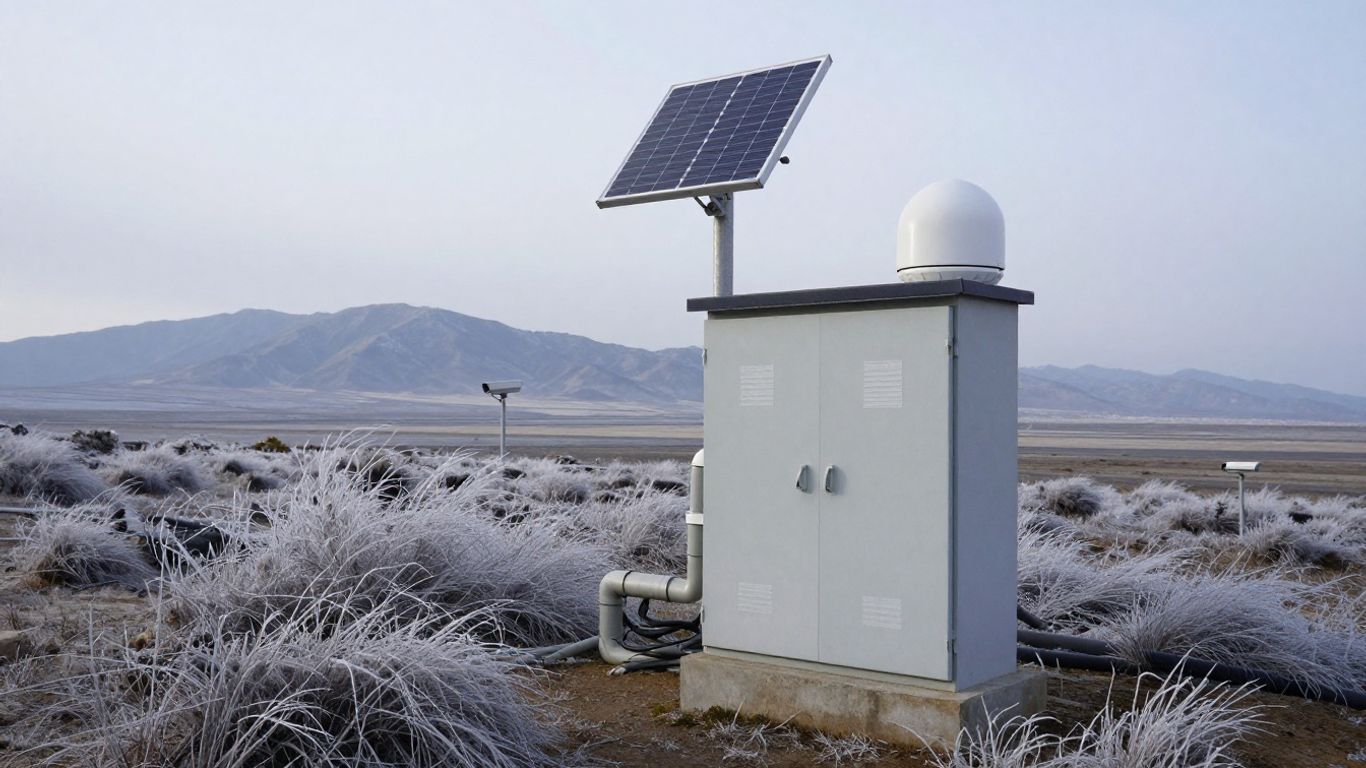
The strongest specification is not always the most complicated one. It is the one that matches the site, gives technicians usable diagnostics, and avoids fragile dependencies that cannot be repaired in the field.
Ruggedized cameras, radar, and detection sensors
Select equipment for its stated environmental ratings, operating temperature, vibration tolerance, and service requirements. Check how the lens, radome, connectors, and moving parts behave after repeated exposure to dust and moisture. A sensor that performs well in a test enclosure may still fail if its cable glands or mounting hardware are poorly protected.
Detection range and image quality must also be considered alongside energy use. Higher performance can increase processing, transmission, or heating requirements. The best combination is the one that meets the detection task while remaining supportable with the available power budget.
Battery chemistries for extreme temperatures
Battery chemistry affects usable capacity, charging behavior, weight, service life, and safety controls. Low temperatures can reduce available energy and restrict charging, while high temperatures accelerate aging. The battery management system, thermal controls, ventilation, and enclosure design therefore matter as much as the chemistry label.
Specify operating and charging limits for the actual site climate. If heating is needed, include its energy in the load model. If cooling is needed, consider whether passive shading, insulation, ventilation, or a larger enclosure can reduce that parasitic demand.
Enclosures, mounting structures, and weather protection
Enclosures should protect against water, dust, insects, tampering, and condensation while still allowing heat to escape. Cable entries need strain relief and sealed glands, and doors need service clearance. Mounts must account for wind loading, corrosion, foundation movement, and the weight of panels, batteries, and communications equipment.
Avoid placing batteries where floodwater, drifting snow, or falling debris can reach them. Keep inspection points visible and leave enough room to replace a component without dismantling the whole site. These practical decisions often determine whether a maintenance visit takes hours or a full day.
Lightning, surge, and electromagnetic protection
Remote towers are exposed conductors, so grounding and bonding require a site-specific plan. Protect solar inputs, battery circuits, communications lines, and equipment power feeds with appropriately selected surge protection. Keep signal and power routing organized to reduce unwanted coupling and make fault paths understandable.
Protection is not a substitute for safe separation and good installation. Verify continuity, inspect connections after severe storms, and document the grounding arrangement for future crews. A protection system that is never tested is only an assumption.
Integrating surveillance, communications, and power
The energy system supports a chain of detection, processing, transmission, and response. If communications consume the reserve needed by the sensors, or if edge processing causes repeated battery collapse, the site is not integrated effectively. Power and network engineers should review the same operating scenarios.
Supporting cellular, radio, satellite, and mesh links
Choose communications according to terrain, coverage, bandwidth, latency, and energy demand. Cellular may be practical where service is available, while radio, satellite, or mesh links may be needed in isolated areas. Antenna height, cable loss, transmission schedules, and weather exposure all affect the result.
Design for degraded connectivity. Local recording or event summaries can preserve useful information when a link is unavailable, while scheduled uploads may reduce energy use. The link budget and power budget should be reviewed together, especially when a terminal transmits at higher power during poor conditions.
Managing power for edge computing and video analytics
Local processing can reduce the amount of video sent over a constrained link, but computers and accelerators draw energy and produce heat. Define which tasks must run continuously and which can run on motion, schedule, or event. Thermal management belongs in the same design discussion because cooling loads can quietly erase the expected savings.
A useful operating policy may lower frame rate, resolution, or analytics frequency when the battery reaches a reserve threshold. Those changes should be tested in advance so operators know what information is lost and what remains available.
Using remote monitoring and intelligent load control
Remote telemetry should report battery state, solar input, load current, enclosure temperature, communications status, and alarms. Trends are more valuable than isolated readings: a slowly declining overnight voltage or rising enclosure temperature can reveal trouble before an outage.
Load control should be staged and predictable. A system might first pause nonessential analytics, then reduce recording, then place selected sensors into a lower-power mode while protecting core detection and communications. Operators need clear alerts when those stages activate and when normal operation returns.
Connecting solar power to existing security infrastructure
Integration begins with electrical compatibility, network addressing, grounding, alarm signaling, and authority to change existing equipment. Confirm whether the new supply can support legacy cameras, switches, recorders, and access-control hardware without introducing voltage or timing problems.
Test failure modes as well as normal operation. Disconnect the array, simulate a low battery, interrupt communications, and restore power in stages. The commissioning record should show what operators will see and which alarms require a field visit.
A short technical demonstration can help teams visualize these sequences, but video should support—not replace—the site-specific drawings, test results, and operating procedures.
Deploying and maintaining remote solar surveillance sites
A strong design can still perform poorly if it is installed in shade, commissioned hastily, or left without a service route. Deployment planning should begin with the survey and continue through acceptance testing. The people who will maintain the site should have a voice before equipment is packed.
Site surveys, orientation, and equipment placement
Survey the solar window throughout the day and consider seasonal shadows from ridges, towers, vegetation, and snow banks. Confirm azimuth, tilt, wind exposure, drainage, and the physical relationship between panels, batteries, communications equipment, and surveillance sensors.
Placement also affects detection. Panels should not create glare or obstruct a camera’s field of view, while antennas need suitable clearance and cable runs should be short where practical. Record coordinates, photographs, measurements, and marked-up drawings for the installation crew.
Transport, installation, and commissioning considerations
Remote transport may involve narrow roads, boats, aircraft, or manual handling. Package batteries and sensitive electronics for vibration and temperature exposure, and verify lifting points before arrival. The installation plan should identify tools, spares, weather limits, security arrangements, and a safe staging area.
Commissioning should proceed in steps: inspect mechanical work, verify polarity and grounding, test charging, connect loads one group at a time, confirm communications, and observe the system under realistic conditions. Record baseline readings so future technicians can distinguish normal variation from deterioration.
Preventive maintenance and battery replacement schedules
Maintenance intervals should reflect dust, salt, snow, vegetation, wildlife, and storm exposure. Typical tasks include cleaning or inspecting panels, checking fasteners and cable glands, reviewing alarms, verifying surge protection, and testing communications. Battery inspections should follow the manufacturer’s requirements and the site’s measured performance.
Replacement planning should include transport, lifting, disposal or recycling, temporary power, and configuration backups. Waiting for a battery failure can turn a planned service into an expensive emergency, especially when the site supports a critical coverage area.
Remote diagnostics and service access planning
Remote diagnostics reduce unnecessary travel only when sensors are accurate and access is secure. Establish thresholds for low state of charge, abnormal temperature, repeated reboots, communications loss, and unexpected load changes. Every alert should have an owner and an escalation path.
Keep local service information available: wiring diagrams, firmware versions, spare-part numbers, battery dates, and safe shutdown instructions. The remote property security reference also illustrates why sensors, cameras, lighting, and alarm functions should be considered as part of a wider perimeter system rather than as isolated devices.
Improving resilience, security, and lifecycle value
Resilience is the ability to continue the required mission through predictable failures and difficult conditions. It comes from layered choices: enough generation, usable storage, controlled loads, alternate power, protected hardware, secure software, and a service model that can actually reach the site. The cheapest initial system may not be the least expensive system to operate.
Backup generators and secondary power options
A generator can provide a useful recovery path during prolonged low-sun periods, major equipment faults, or urgent battery replacement. It also introduces fuel storage, starting reliability, noise, emissions, maintenance, and resupply requirements. Size it around critical loads and recovery charging rather than automatically connecting every possible load.
Other options may include a portable battery, a second solar array, wind generation where the resource is dependable, or a nearby secured power source. A phased hybrid approach can be sensible when access is difficult and the cost of losing coverage is high.
Physical protection against theft and tampering
Panels, batteries, cables, and antennas should be protected against theft without making routine service hazardous. Use tamper detection, locked enclosures, concealed or protected cabling, strong fasteners, and sensible equipment placement. Physical security should not block ventilation or prevent technicians from inspecting critical parts.
Alarm events need a response plan. A door-open alert with no available response is not the same as a protected site. Coordinate surveillance, power alarms, and access records so operators can distinguish weather damage, maintenance activity, and deliberate tampering.
Cybersecurity for connected power and surveillance systems
Change default credentials, limit administrative access, segment power controls from general networks, and keep firmware and software under configuration control. Remote access should use strong authentication, encrypted connections, and logged actions. Disable services that are not required for the mission.
Cybersecurity also includes recovery. Maintain offline copies of configurations, document safe reset procedures, and test how the site behaves if communications are compromised. A power controller or camera should never become an unmonitored doorway into a wider security network.
Measuring uptime, energy performance, and operating costs
Track uptime by function, not only by whether the site has any power. Record camera availability, detection availability, communications availability, battery reserve events, generator hours, service visits, and lost coverage. Energy data should show solar production, load consumption, battery cycling, and curtailment.
A simple operating review can use the following measures to connect engineering performance with lifecycle value:
| Measure | What it reveals | Useful review question |
|---|---|---|
| Critical-load uptime | Whether the mission stayed available | Which interruptions caused lost coverage? |
| Solar-to-load ratio | How well generation matches demand | Is excess energy being wasted or curtailed? |
| Battery reserve events | How often autonomy is threatened | Are load controls activating early enough? |
| Service cost per site | The practical burden of remoteness | Would a design change reduce travel? |
These figures become meaningful when compared across seasons and operating modes. They can justify a larger array, a different maintenance interval, or a targeted equipment replacement instead of a blanket upgrade.
Conclusion
A dependable border surveillance solar power system is built around the mission, the site, and the people who must keep it running. Careful load measurement, conservative weather modeling, protected components, intelligent controls, and planned service access turn solar and batteries into a practical remote-power platform rather than a collection of equipment.
Frequently Asked Questions
How much solar power does a remote surveillance site need?
It depends on the combined daily energy use of cameras, sensors, communications, processing, and power-conversion losses, plus the local solar resource and required reserve. A measured load profile is more reliable than a rule of thumb.
How many days of battery autonomy are typical?
The target depends on weather, access, mission criticality, and backup options. Some sites may bridge one night, while isolated critical sites may need several low-sun days of usable storage.
Should surveillance equipment use DC or AC power?
Native-DC equipment can often avoid inverter losses, while AC may suit standard commercial devices or longer distribution runs. The choice should follow voltage-drop, compatibility, protection, and maintenance requirements.
Can solar power operate cameras during winter?
Yes, if the array, battery, thermal design, and operating strategy are sized for winter conditions. Snow, low sun angles, cold charging limits, and extended cloud must be included in the design.
Are generators necessary for off-grid surveillance?
Not always, but a generator or other secondary source can improve recovery during prolonged storms, equipment faults, or battery replacement. Its fuel, maintenance, noise, and security requirements must be planned.
How can battery life be protected at a remote site?
Use suitable temperature management, avoid unnecessary deep discharge, monitor state of charge and temperature, and plan replacement before capacity falls below the mission requirement. Correct charging limits are also essential.
What should remote monitoring report?
At minimum, it should report solar input, battery condition, load current, temperature, communications status, major alarms, and changes in operating mode. Trends and actionable alerts are more useful than raw data alone.