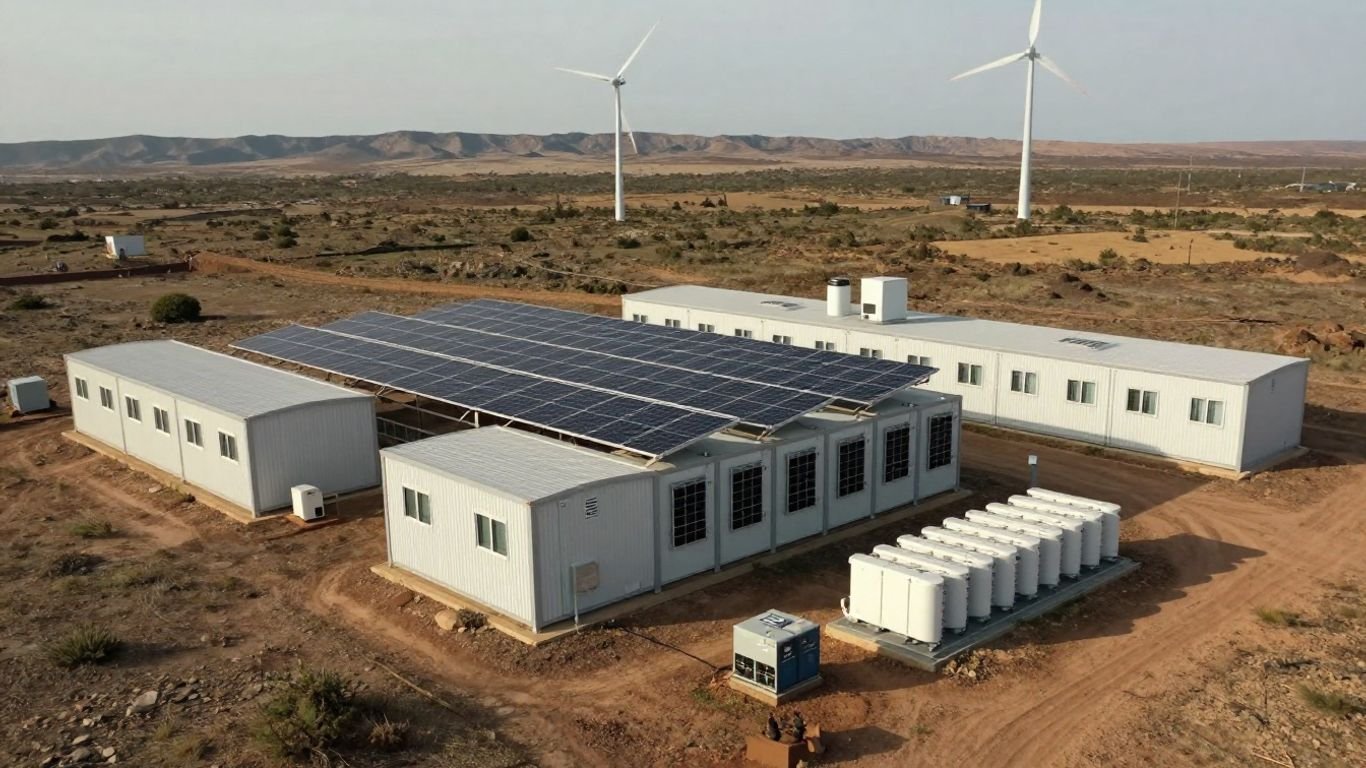
How to Power and Cool an Off-Grid Edge Data Center
Key Takeaways
An off-grid edge data center succeeds when its power, cooling, workload, and maintenance plans are designed as one system.
- Begin with measured IT demand, rack density, climate data, and realistic growth assumptions.
- Combine renewable generation, storage, and dispatchable backup instead of depending on one source.
- Treat cooling as a major electrical load, not a secondary facility detail.
- Use controls that can prioritize workloads and protect critical equipment during shortages.
- Test islanding, autonomy, maintenance access, and end-of-life plans before commissioning.
Define the site, workload, and environmental requirements
An off-grid edge data center has little room for vague assumptions. The site may be remote, the service window may be short, and a small design error can become a long and expensive truck roll. Start by describing what the facility must process, where it will operate, and how much independence it truly needs. A useful edge power planning guide can help frame the early questions around density, redundancy, cooling, and backup power.
Estimate IT load, rack density, and growth
Measure the expected steady, peak, and minimum IT loads rather than sizing from nameplate ratings alone. Include servers, storage, networking, security equipment, and any local processing hardware, then add a growth path for new racks or denser accelerators. Rack-level power and heat estimates should be tied to actual workloads, because a short burst from compute equipment can affect inverters, batteries, and cooling controls.
Account for climate, altitude, dust, and water availability
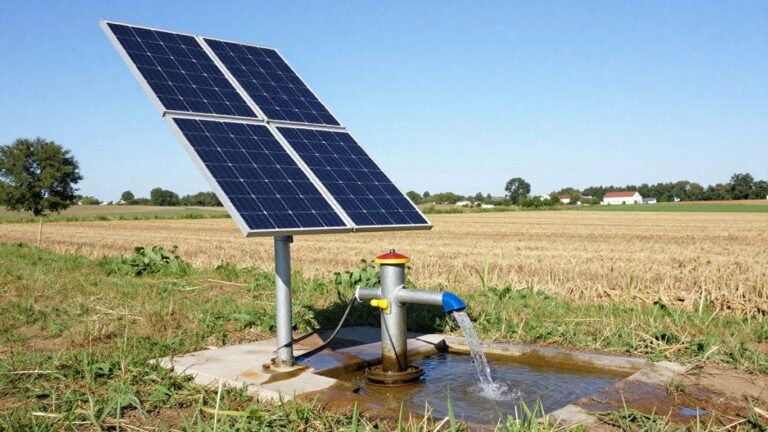
Weather data belongs in the engineering model from the start. Solar output changes with season and cloud cover, wind conditions vary by terrain, and altitude can reduce generator performance while increasing cooling challenges. Dust affects filters and heat exchangers, while scarce water may rule out evaporative systems; a closed-loop approach is often simpler to operate in an isolated location.
Set uptime, latency, and autonomy targets
Define the service promise in operational terms: acceptable interruption, maximum recovery time, network latency, and hours or days of autonomous operation. A facility serving local safety systems may need a different design from one handling batch analytics. Autonomy is a design choice, not a vague synonym for reliability, so connect it to the critical load and the weather patterns that can limit renewable production.
Identify local regulations, permits, and safety constraints
Permits may cover fuel storage, emissions, fire protection, electrical work, water use, noise, and construction. The site may also have rules for land access, hazardous materials, and emergency response. Keep an approvals register with responsible owners and dates; even a technically sound microgrid can be delayed if its generator, battery enclosure, or communications mast was never permitted.
Design the off-grid power architecture
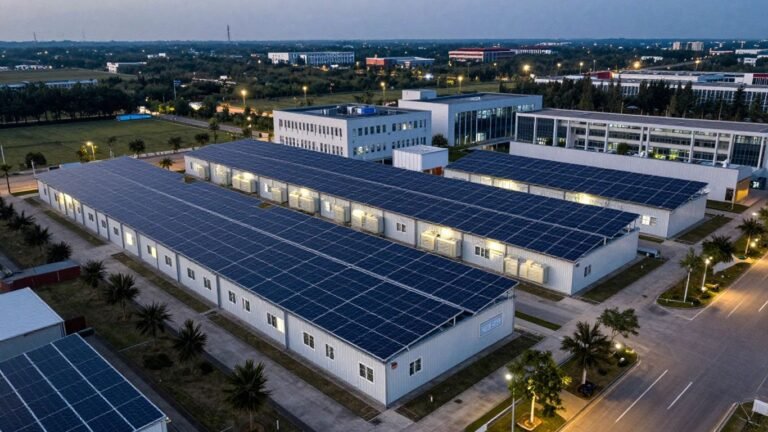
Power architecture should be planned as a coordinated microgrid, not as a collection of independent boxes. Solar and wind can reduce fuel use, batteries can absorb short fluctuations, and dispatchable generation can cover prolonged renewable shortfalls. The design should also allow safe islanded operation, staged expansion, and isolation of a failed component.
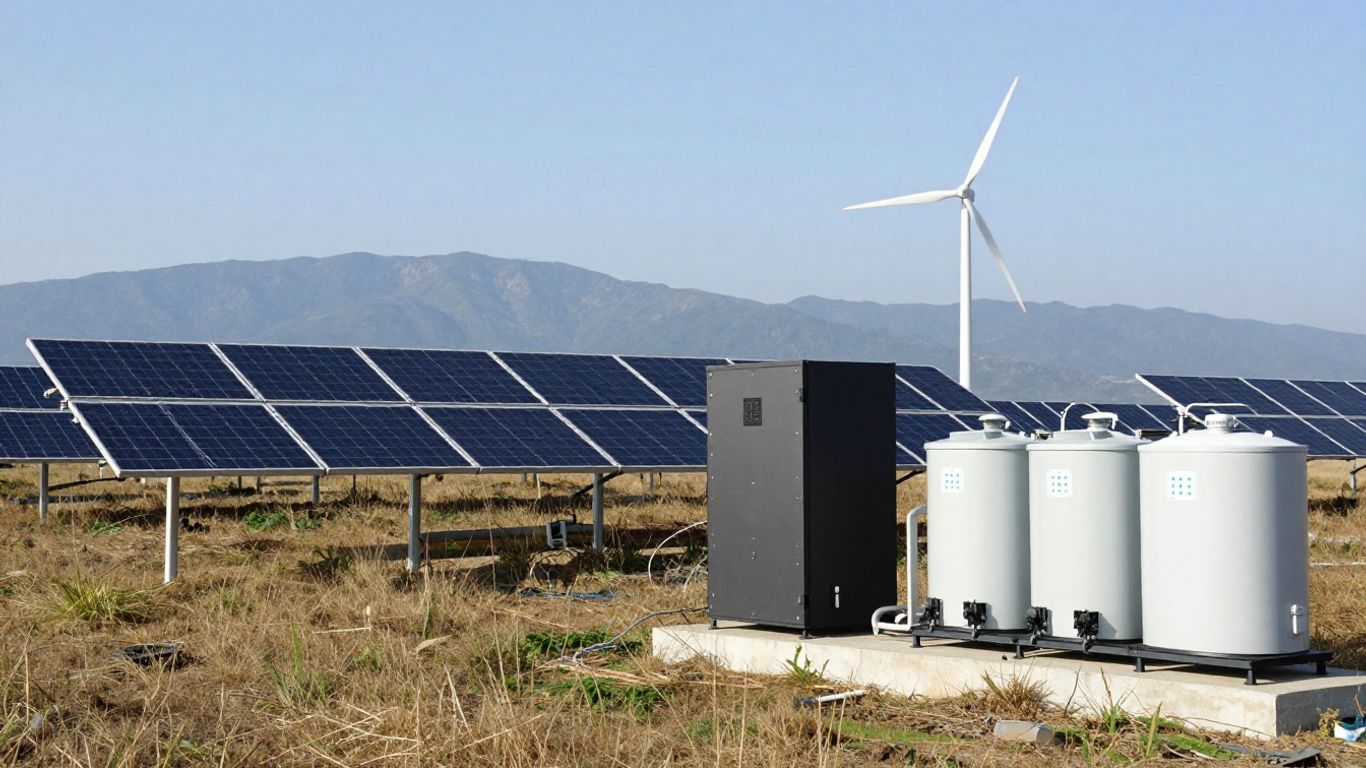
Combine solar, wind, fuel-based generation, and other sources
Use a resource assessment to determine which sources can carry the annual energy burden and which are only supplements. Solar often provides a predictable daytime contribution, while wind may complement it during different seasons. Fuel-based generation, fuel cells, or other dispatchable sources can supply firm power, but fuel availability, emissions, maintenance, and black-start behavior must be included in the comparison. ECL describes a flex-grid modular solution with power from natural gas to hydrogen and on-site power generation; those documented capabilities illustrate why the fuel pathway must be evaluated against the site rather than assumed.
Size the distribution system for edge workloads
Choose voltage levels, transformers, switchgear, cabling, and conversion equipment around both present demand and planned expansion. Account for power factor, harmonic currents, inrush, fault current, and the distance between generation, storage, cooling, and IT rooms. The design principles in this 5 MW data center microgrid guide are useful when thinking through critical loads, islanded modes, and medium- and low-voltage distribution, even when the actual edge site is much smaller.
Separate critical, noncritical, and startup loads
A load schedule should show what must remain powered, what can pause, and what should start only after the electrical system is stable. IT, controls, networking, fire systems, and communications may sit in the critical group, while workshops, convenience outlets, or nonessential lighting can be curtailed. Startup loads deserve their own review because a generator or inverter may need to energize cooling pumps and fans before the full IT load is admitted.
Plan for redundancy, power quality, and fault isolation
Redundancy is valuable only when the failure boundary is clear. Consider N+1 or 2N arrangements for converters, switchboards, generators, and control paths, then verify that a fault in one section cannot collapse the rest. Voltage and frequency disturbances can be especially damaging to sensitive equipment, so the power quality protection approach offers a helpful lens for islanding, electrical boundaries, and fault isolation.
Size energy storage and backup generation
Storage connects intermittent generation with a continuous digital service, but its size should follow an outage objective rather than a round number. Separate ride-through needs from long-duration autonomy, and model the energy required by IT, cooling, controls, lighting, and conversion losses. The battery storage sizing method is a practical reference for usable state of charge, aging, temperature, reserve, and inverter efficiency.
Calculate battery capacity and required autonomy
Start with the critical load profile and multiply it by the required duration, then adjust for inverter efficiency, battery operating limits, temperature, aging, and reserve. Peak power and stored energy are different constraints: a battery may contain enough kilowatt-hours but still lack the power rating needed to start a chiller or ride through a transient. Recalculate the result for expansion, degraded capacity, and the worst credible renewable period.
Compare lithium-ion, alternative battery, and thermal storage options
Lithium-ion systems offer high energy density and mature controls, but safety systems, temperature management, and replacement planning remain essential. Flow batteries or other chemistries may suit longer discharge periods where space is available. Thermal storage can reduce electrical cooling peaks, although it does not replace electrical storage for IT loads; compare each option by usable energy, power, cycle life, footprint, safety, and serviceability.
Integrate generators for extended low-renewable periods
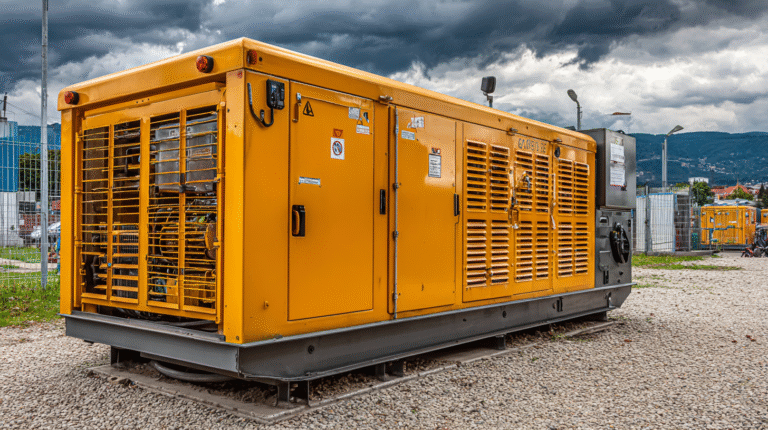
Generators should be scheduled by operating strategy, not left as a last-minute emergency device. They may recharge batteries, support a steady critical load, or start only when state of charge and weather forecasts cross defined thresholds. Natural-gas systems can be considered where supply is dependable, while fuel cells require a site-specific review of fuel, controls, uptime, and maintenance; the fuel cell microgrid guide outlines those trade-offs without making them universal.
A generator plan also needs black-start sequencing, minimum loading, fuel polishing or storage maintenance, exhaust routing, and safe refueling procedures. These details determine whether backup generation is genuinely available when the renewable resource falls short.
Manage battery degradation, fuel logistics, and replacement cycles
Record temperature, depth of discharge, charge rate, and calendar age so that capacity loss can be forecast instead of discovered during an outage. Keep fuel quality checks, delivery lead times, and secure storage in the same lifecycle plan. Remote sites should also define how batteries, filters, lubricants, and electronic modules will be transported and recycled when they reach the end of service.
Choose an efficient cooling strategy
Cooling can consume a large share of a remote facility’s power, especially when high-density compute is packed into a small footprint. The right choice depends on rack heat flux, outdoor conditions, water availability, service skills, and the consequences of a cooling failure. ECL documents advanced cooling systems and support for up to 150 kW per rack, a capability that is relevant when evaluating high-density designs, but it does not remove the need for site-specific thermal engineering.
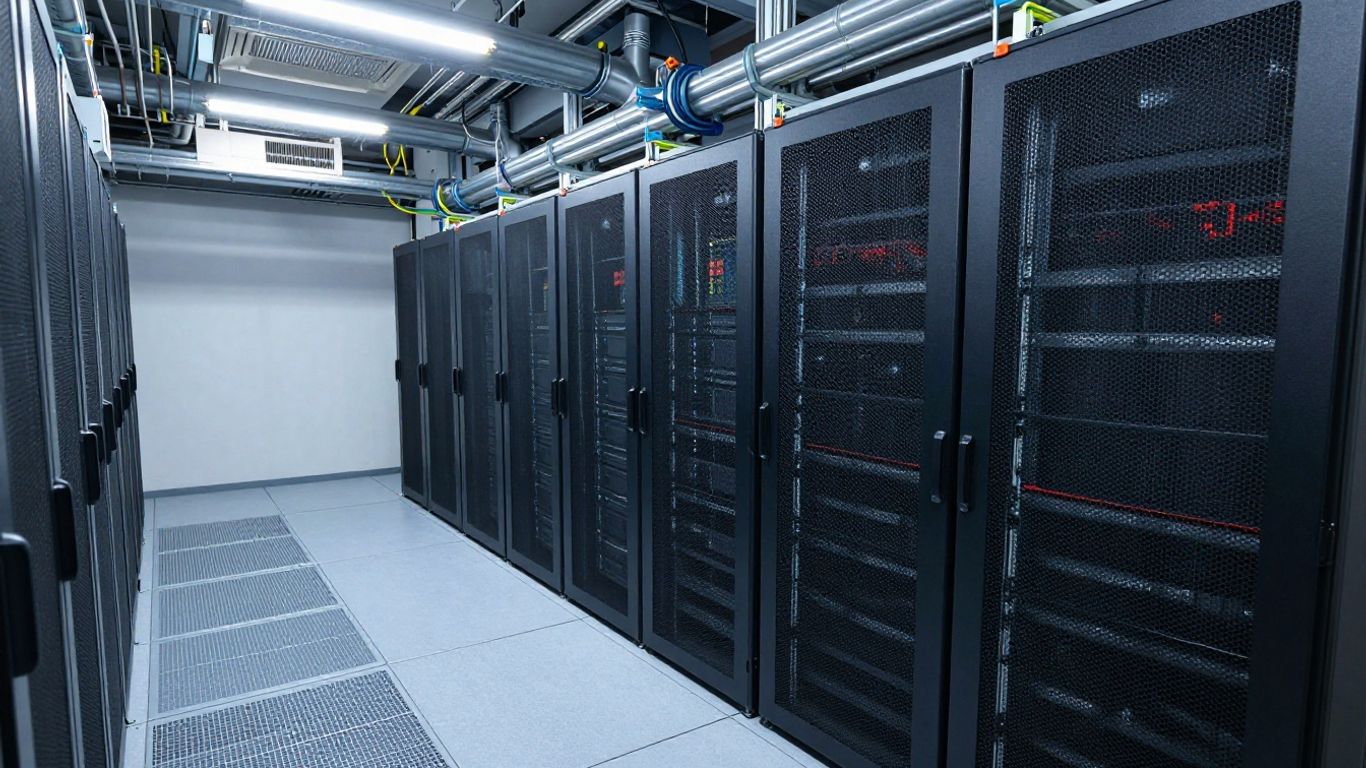
Match cooling technology to rack density and climate
Begin with the heat that must be rejected, not with a preferred equipment category. Moderate-density racks may work with well-filtered air systems, while dense accelerators can require liquid delivery close to the heat source. Outdoor temperature, solar gain, dust, altitude, and maintenance access all affect the choice; a system that performs well in a cool dry climate may be unsuitable in a hot, dusty enclosure.
Compare air cooling, direct liquid cooling, and immersion cooling
Air cooling is familiar and relatively easy to service, but it can require substantial fan power and airflow management at high density. Direct liquid cooling moves heat more efficiently from selected components, though it adds pumps, manifolds, leak detection, and fluid maintenance. Immersion cooling can handle dense equipment with a different service model and fluid requirement. Compare total system energy, compatibility, technician training, containment, and recovery procedures rather than comparing headline efficiency alone.
Use free cooling, economizers, and thermal storage where practical
When outdoor conditions permit, economizers can reduce compressor operation, while thermal storage can shift cooling work away from periods of scarce electricity. Free cooling must be controlled carefully in dusty or humid locations, with dampers, filtration, and bypass logic designed for real weather. The control sequence should protect the IT load first and use stored thermal capacity as a bridge, not as an excuse to undersize heat rejection.
Control humidity, filtration, condensation, and heat rejection
Remote equipment needs a clean, stable air or fluid environment. Specify filtration stages, pressure monitoring, coil protection, drain paths, insulation, and dew-point controls, then inspect them on a schedule that reflects local dust. Heat rejection equipment must also be separated from combustible materials and positioned so exhaust heat does not recirculate into the intake.
Build an integrated power and thermal control system
An off-grid edge data center becomes easier to operate when generation, storage, cooling, and IT demand share a common operating picture. Controls should know which loads are available, how much energy remains, and what the thermal system can safely deliver. They should also fail in a predictable way when communications are lost.
Coordinate generation, batteries, IT loads, and cooling equipment
Use clear priorities and interlocks for normal operation, renewable surplus, low state of charge, generator start, and emergency shutdown. Battery charging should not compete blindly with cooling or critical computing. The control design should stage loads gradually, prevent rapid cycling, and preserve enough reserve for a safe transition between operating modes.
Use energy management and data center infrastructure management software
Energy management software can coordinate sources and storage, while data center infrastructure management tools can expose rack power, temperature, capacity, and alarms. Keep control authority clearly separated: automated routines may optimize normal operation, but safety systems must be independent and able to trip equipment. ECL’s documented built-to-order approach allows specifications such as rack criteria, power requirements, and redundancy modes to be defined for a site; those are design inputs, not a substitute for commissioning.
Apply workload scheduling and load shedding during shortages
Software workloads can become an energy resource when the application permits delay, migration, or reduced performance. Define the shedding order in advance so operators are not forced to improvise during a battery shortage:
- Pause deferrable batch jobs and nonurgent analytics.
- Reduce computing frequency or replica counts where service rules allow.
- Curtail noncritical building and auxiliary loads.
- Preserve networking, controls, safety systems, and priority applications.
After a shedding event, restore loads in stages and watch battery recovery, generator loading, and equipment temperatures. That sequence avoids replacing one emergency with a second electrical peak.
Monitor temperature, power quality, capacity, and equipment health
Collect time-series data from meters, battery systems, generators, switchgear, cooling equipment, and environmental sensors. Trend voltage, frequency, harmonics, state of charge, filter pressure, fluid temperature, and alarms rather than relying on a single dashboard snapshot. The result should support both immediate alarms and longer-term decisions about capacity, maintenance, and expansion.
Engineer resilience for remote operation
Remote operation changes the meaning of resilience. The facility must tolerate weather and physical risks, but it must also remain understandable to an operator who may be hundreds of miles away. Design for safe defaults, limited site visits, and a clear path from alarm to diagnosis to repair.
Protect equipment against weather, fire, dust, and physical threats
Use enclosures, drainage, anchoring, lightning protection, fire detection, suppression, and access controls suited to the location. Elevate vulnerable equipment where flooding is possible and separate fuel, batteries, and heat sources according to applicable safety rules. Cameras and sensors can extend visibility, but they need their own protected power and communications path.
Design redundant cooling paths and emergency shutdowns
Cooling redundancy should include the electrical path, controls, pumps, fans, valves, and heat rejection equipment. Emergency shutdowns must be labeled, reachable, tested, and coordinated so they isolate hazards without creating an unnecessary wider outage. Define the conditions for automatic IT shutdown, generator trip, battery isolation, and controlled restart.
Provide remote monitoring, alerts, and secure access
Use authenticated access, role-based permissions, encrypted communications, and separate management networks. Alerts should be prioritized by consequence, with escalation rules for battery faults, abnormal temperature, fuel level, loss of communications, and power-quality events. A guide to remote infrastructure resilience reinforces the value of modular equipment, local supply chains, intelligent storage, and remote visibility in isolated environments.
Stock critical spares and plan technician interventions
A spare-parts list should reflect failure impact and delivery time, not simply the equipment catalog. Stock sensors, filters, contactors, fuses, network components, pumps, and control modules where a replacement delay could threaten service. Document safe work procedures, lifting requirements, access routes, vendor contacts, and the skills needed for each intervention.
Validate performance and manage the lifecycle
Commissioning is where the design meets weather, real loads, imperfect communications, and human behavior. Build a digital model before construction, then validate it with measured operating data. Lifecycle planning should begin before the first battery or generator is installed, because replacement access and recycling can shape the physical layout.
Model seasonal energy production and cooling demand
Run hourly or subhourly simulations using local solar, wind, temperature, humidity, and dust assumptions. Include generator efficiency at partial load, battery losses, cooling parasitics, maintenance outages, and the expected workload profile. Test adverse combinations, such as a heat wave during a low-renewable period, rather than relying on annual averages that hide difficult days.
Test startup, islanding, failover, and prolonged autonomy
A proper test sequence should include black start, source transitions, battery discharge, generator start, cooling failure, communications loss, and restoration. Exercise the facility at realistic load levels and verify that protection settings do not trip unnecessarily. Prolonged autonomy tests should confirm fuel delivery, operator alerts, battery reserve, and the ability to maintain safe temperatures over time.
Track power usage effectiveness and renewable energy utilization
Measure total facility energy against IT energy, but interpret the result alongside climate, density, and operating mode. Track renewable generation used directly, stored, curtailed, or replaced by fuel, as well as battery cycling and generator runtime. These figures reveal whether a system is genuinely using its resources efficiently or merely carrying oversized equipment.
Plan maintenance, component replacement, and end-of-life recycling
Create maintenance intervals for filters, pumps, inverters, switchgear, generators, batteries, fire systems, and sensors. Design replacement routes before equipment is boxed in by later expansion. Circular planning matters too: the principles behind recycled Kia parts, although drawn from vehicle repair, offer a useful reminder that material recovery and reduced waste should be considered before components become waste.
For other unrelated procurement or compliance research, keep the boundary clear: SwappaHome concerns home exchange markets, offshore company formation concerns UAE company setup, sustainable fashion concerns clothing systems, and cochlear implant doctors concerns medical care. None should be treated as technical guidance for data-center engineering, but linking sources accurately is still better than implying that every reference serves the same purpose.
Conclusion
Powering and cooling an off-grid edge data center is an exercise in balance: measured demand, diverse generation, properly sized storage, efficient heat rejection, and disciplined remote operations must work together. When the design is modeled across difficult seasons and tested under real failure conditions, independence becomes a manageable engineering objective rather than a slogan.
Frequently Asked Questions
What is an off-grid edge data center?
It is a small or distributed computing facility designed to operate without continuous dependence on a utility grid, usually near the users or equipment it serves. It combines local generation, storage, controls, networking, IT equipment, and cooling.
How much battery storage does an off-grid edge data center need?
The answer depends on critical load, required autonomy, renewable variability, generator availability, conversion losses, temperature, aging, and reserve. Size usable energy and peak power separately, then validate both against the worst operating case.
Can solar power run an edge data center continuously?
Solar can contribute substantially, but continuous operation generally requires storage, load management, and another source for prolonged cloudy or high-demand periods. The correct mix depends on the site resource and uptime target.
Are generators still needed in an off-grid design?
They may be needed when renewable resources and batteries cannot cover extended low-production periods. Their role should be defined through fuel logistics, emissions rules, maintenance plans, black-start testing, and the required autonomy window.
Which cooling method is best for a remote facility?
There is no universal choice. Air, direct liquid, immersion, economizer, and thermal-storage systems should be compared using rack density, climate, water availability, service skills, heat rejection, safety, and failure consequences.
How can operators manage a power shortage?
They can pause deferrable workloads, reduce computing demand, shed noncritical facility loads, adjust cooling setpoints within safe limits, and start dispatchable generation according to a tested priority sequence. Critical IT, safety, and control systems should remain protected.
What should be tested before the site goes live?
Test startup, black start, islanding, source transitions, generator operation, battery discharge, cooling failures, communications loss, emergency shutdowns, workload shedding, alarms, and prolonged autonomy. Repeat key tests after major equipment or software changes.