How Microgrids Protect Data Centers from Voltage and Frequency Problems
Key Takeaways
Data centers need more than backup generation. They need a coordinated electrical system that can manage disturbances before they reach sensitive equipment.
- Voltage and frequency disturbances can interrupt computing, cooling, networking, and storage systems.
- A microgrid combines local generation, storage, controls, and defined critical loads.
- Inverters and automatic controls can respond quickly to voltage and frequency changes.
- Islanding allows a facility to separate from a failing utility supply and continue serving priority loads.
- Good design depends on measured load data, clear performance targets, and realistic testing.
Why data centers are vulnerable to power quality problems
Data centers operate continuously and depend on tightly coordinated electrical and cooling systems. A brief disturbance may not look dramatic at the utility connection, yet it can still trigger protective devices, transfer events, or equipment alarms inside the facility. The goal of data center microgrid power quality planning is therefore not simply to keep the lights on, but to keep electrical conditions within ranges that critical systems can tolerate.
How voltage sags, swells, and interruptions affect critical IT loads
A voltage sag can occur when a fault, motor start, transformer event, or sudden load change temporarily pulls the supply below its expected level. A swell has the opposite effect, while an interruption removes the supply altogether. UPS equipment may bridge some events, but repeated disturbances can stress rectifiers, trigger transfers, or create instability in downstream power distribution. Servers, switches, storage arrays, and cooling controls may respond differently, which makes the overall event harder to predict.
Why frequency deviations can disrupt generators, UPS systems, and servers
Frequency reflects the balance between electrical supply and demand. When generation suddenly falls short, frequency declines; when supply exceeds demand, it rises. Generators, UPS systems, protection equipment, and inverter controls may each have their own response thresholds, so a deviation can cause poorly coordinated reactions. Even when servers do not shut down immediately, frequency events can expose weaknesses in synchronization and standby-power controls.
The operational and financial costs of power quality events
Power quality problems can lead to interrupted workloads, corrupted data, emergency maintenance, and lost confidence from customers. They may also shorten the useful life of UPS modules, switchgear, generators, and cooling equipment. The cost is not limited to an outage: investigations, recovery procedures, service-level penalties, and delayed deployments can all follow a short electrical event. Small disturbances can become expensive when a facility has little tolerance for interruption.
Why rising data center loads increase grid-related risks
High-density computing, accelerated servers, and expanded cooling systems increase both total demand and the speed at which demand can change. Large new connections may also introduce more complex interconnection studies, protection settings, and utility coordination requirements. As a result, operators must consider normal load growth alongside fault response, startup sequences, and the effect of large step changes. A design that worked for yesterday’s rack profile may not be suitable for a more dynamic facility.
How microgrids improve data center power quality
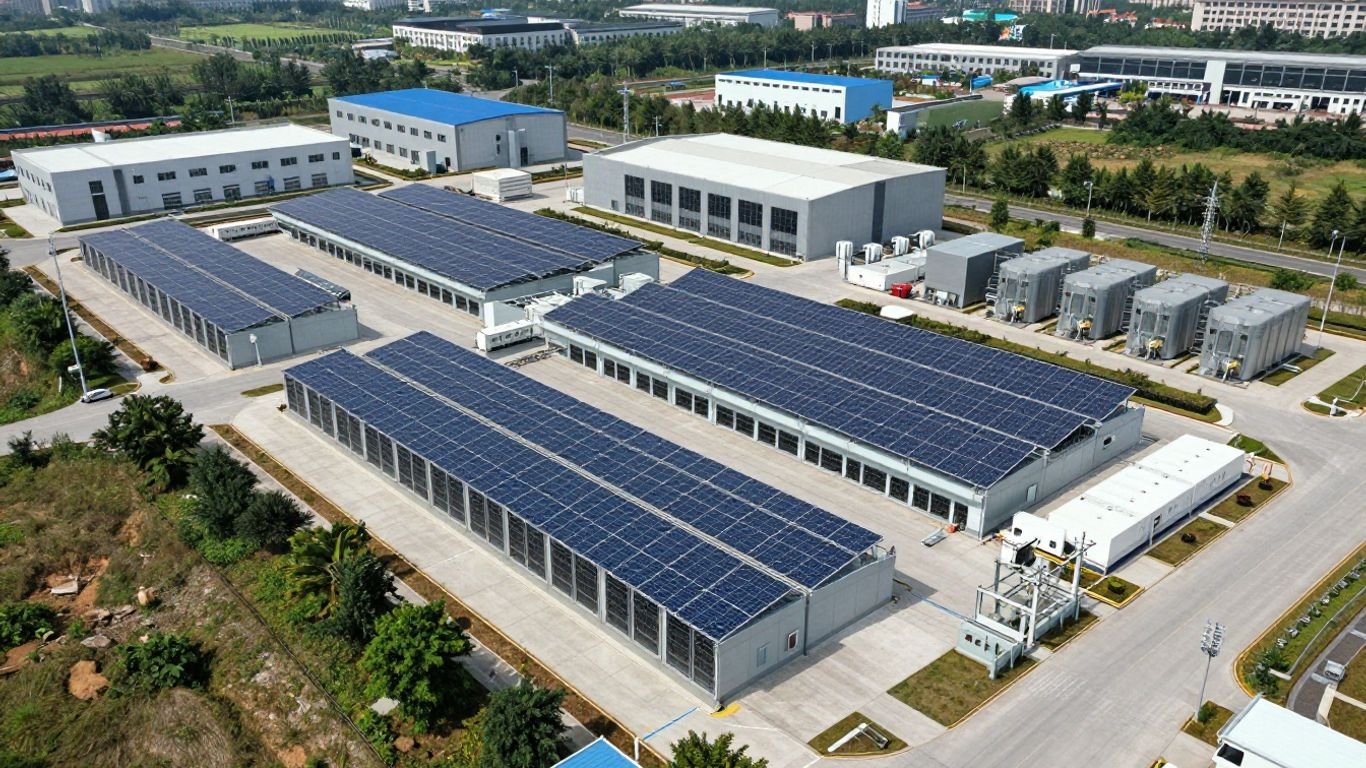
A microgrid creates an organized electrical boundary around selected generation, storage, controls, and loads. It can operate while connected to the utility and, when designed and approved for it, continue in an islanded mode during an external problem. That flexibility helps operators manage both everyday power conditions and unusual grid events. The data center microgrid guide provides a useful overview of storage, renewable integration, and intelligent control considerations.
The role of on-site generation and distributed energy resources
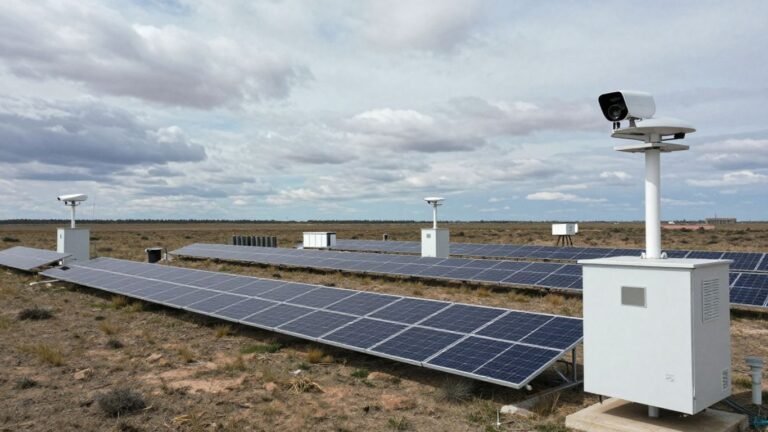
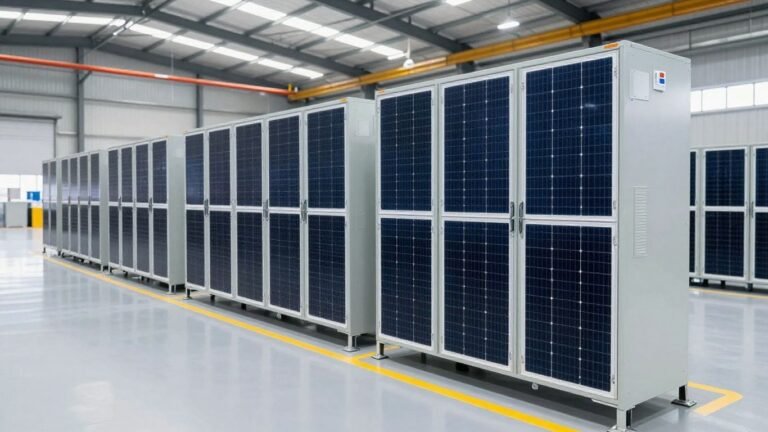
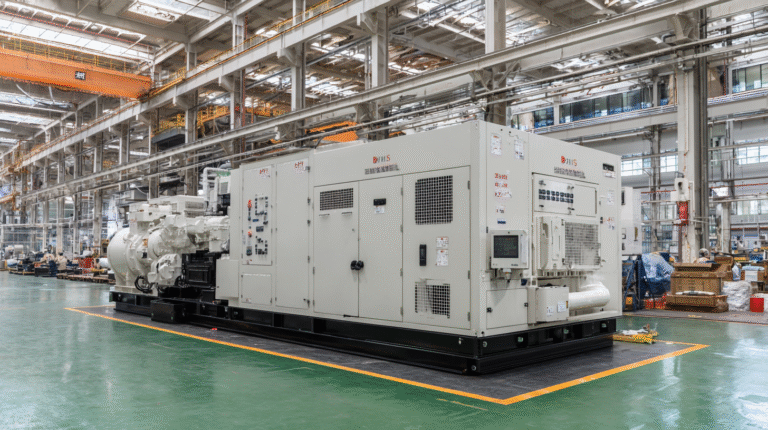
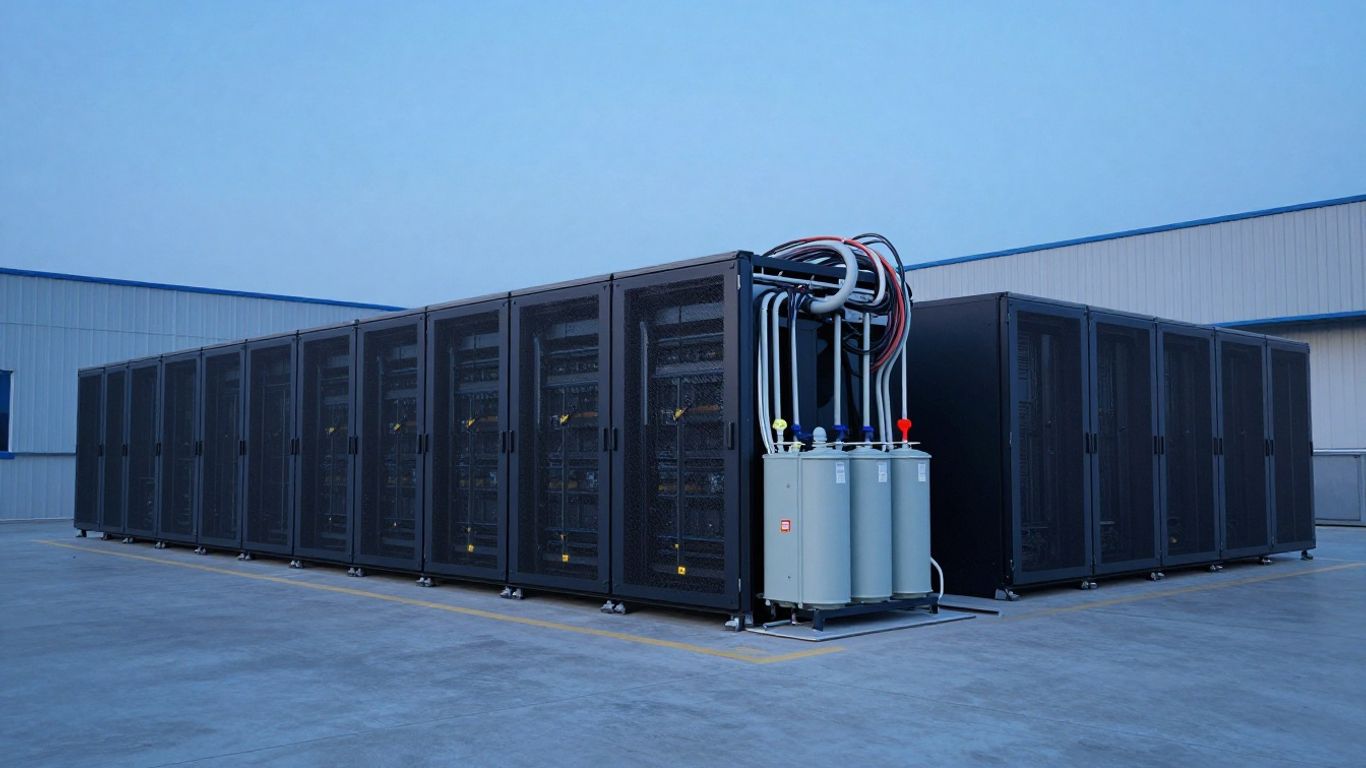
On-site generators, batteries, solar arrays, and other distributed energy resources can give a facility more than one source of electrical support. Their value depends on how they are sized, connected, fueled, maintained, and controlled. Generation may provide sustained energy, while storage can respond rapidly to changes and bridge transitions. The combination should be matched to the facility’s load shape and the duration of disturbances it must withstand.
How power electronics regulate voltage and frequency
Power electronic converters can adjust the flow of active and reactive power, helping a microgrid respond faster than a mechanical generator alone. Grid-following and grid-forming functions serve different purposes, so the selected equipment must match the intended operating modes. Controls also need accurate measurements and carefully coordinated limits. Fast response is useful only when it remains stable and does not conflict with UPS or protection behavior.
Coordinating utility power, backup systems, and critical loads
A microgrid controller can coordinate the utility connection with local resources and facility loads. It may prioritize critical buses, schedule generation, manage battery state of charge, and direct noncritical demand during constrained conditions. The electrical architecture should make those priorities explicit rather than leaving them to ad hoc operator action. This is why the microgrid controller is central to discussions of continuity, resource management, and islanding.
Separating sensitive data center equipment from external disturbances
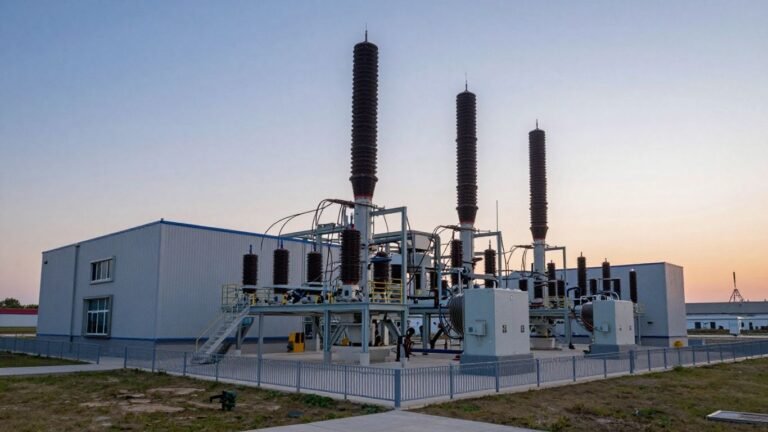
A point of common coupling, switchgear, transformers, and power converters can be arranged to limit how disturbances travel between the utility and the protected facility network. Physical separation does not remove every risk, but it can reduce exposure when paired with appropriate controls and protection. Operators should examine both directions of influence: utility events affecting the data center and data center load changes affecting the wider connection. The power quality research on converter-based decoupling offers relevant technical context for sensitive loads.
How microgrids control voltage problems
Voltage management begins with understanding where disturbances occur and how they move through the facility. A microgrid may use inverters, generator excitation systems, transformers, capacitors, filters, and protection settings as parts of one coordinated plan. These elements must work across grid-connected, transition, and islanded conditions. Poorly coordinated equipment can create new transients even when each component performs correctly on its own.
Using inverters and automatic voltage regulation
Inverters can modify their output in response to measured voltage conditions, while generator regulators adjust excitation to support the electrical system. The response must account for feeder impedance, fault levels, operating mode, and nearby equipment. Setpoints that are appropriate in parallel with the utility may need adjustment during islanded operation. Commissioning should verify actual behavior rather than relying only on nominal equipment ratings.
Managing reactive power and power factor
Reactive power supports voltage across electrical networks but does not perform the same work as active power. Poor power factor can increase current, losses, and voltage drop, particularly across long feeders or heavily loaded transformers. Capacitors, inverter controls, synchronous equipment, and generator settings may all contribute to correction. The right approach depends on the site’s harmonics, load profile, protection scheme, and utility requirements.
Reducing voltage sags during load changes
Large cooling motors, compressors, pumps, and computing loads can create sudden demand changes. A battery or inverter can respond quickly, while generators may provide sustained support after their mechanical response catches up. Sequencing loads and using controlled starts can reduce the size of the disturbance in the first place. Operators should test the largest realistic transitions, not just steady-state operation.
Filtering harmonics and electrical noise
Modern power supplies and converters can introduce harmonic currents and high-frequency noise. If these effects are not managed, they may increase heating, interfere with measurements, and affect sensitive controls. Filters, appropriate transformer selection, grounding, shielding, and converter settings can help, but they must be assessed together. Measurements at multiple points in the distribution system are more informative than a single reading at the service entrance.
Protecting UPS systems and sensitive IT equipment
UPS systems are a vital layer, but they are not a substitute for coordinated microgrid design. Repeated transfers, distorted waveforms, or poorly timed generator transitions can place avoidable stress on UPS components. Protection settings should distinguish a temporary disturbance from a sustained fault while preserving selectivity. The outcome should be verified with power-quality monitoring and tests that include realistic IT and cooling loads.
How microgrids stabilize frequency
Frequency control is fundamentally a real-time balancing task. Data center demand can change quickly, while generators and renewable resources have different ramp rates and control characteristics. A microgrid gives the operator more local resources to coordinate, but it also introduces more control interactions. Stable performance comes from clear operating modes, adequate measurement, and response priorities agreed before an event occurs.
Balancing generation and data center demand in real time
The controller must continually compare available generation with facility demand and reserve enough capacity for expected changes. It may adjust generator output, charge or discharge storage, or limit selected noncritical loads. Forecasts help with planning, but instantaneous measurements govern immediate response. Maintaining a reserve margin is especially important when a large computing or cooling load can start with little warning.
Using battery energy storage for fast frequency response
Batteries can change output rapidly and help bridge the interval before slower generation responds. Their contribution is limited by power rating, state of charge, thermal conditions, and available energy duration. A battery reserved entirely for emergencies may not be dispatched in normal conditions, while one used for daily optimization may need careful reserve management. The operating strategy should state how much capacity remains available for frequency support.
Coordinating generators with inverter-based resources
Generators contribute mechanical power and, depending on design, physical inertia and voltage support. Inverter-based resources respond through programmed controls and measured electrical conditions. Coordination prevents one resource from chasing another, producing oscillations or unnecessary trips. The large-load microgrid discussion is relevant here because changing demand and inverter-based resources place new demands on grid planning and control.
Preventing frequency excursions during grid disturbances
A disturbance can remove imported power, separate a feeder, or change the balance between local generation and demand. Fast detection, reserve power, controlled load changes, and stable inverter settings can limit the resulting frequency excursion. Protection must still operate for genuine faults, so resilience is not achieved by simply widening every threshold. The system should be selective, tested, and reviewed after significant events.
How islanding protects data centers during grid failures
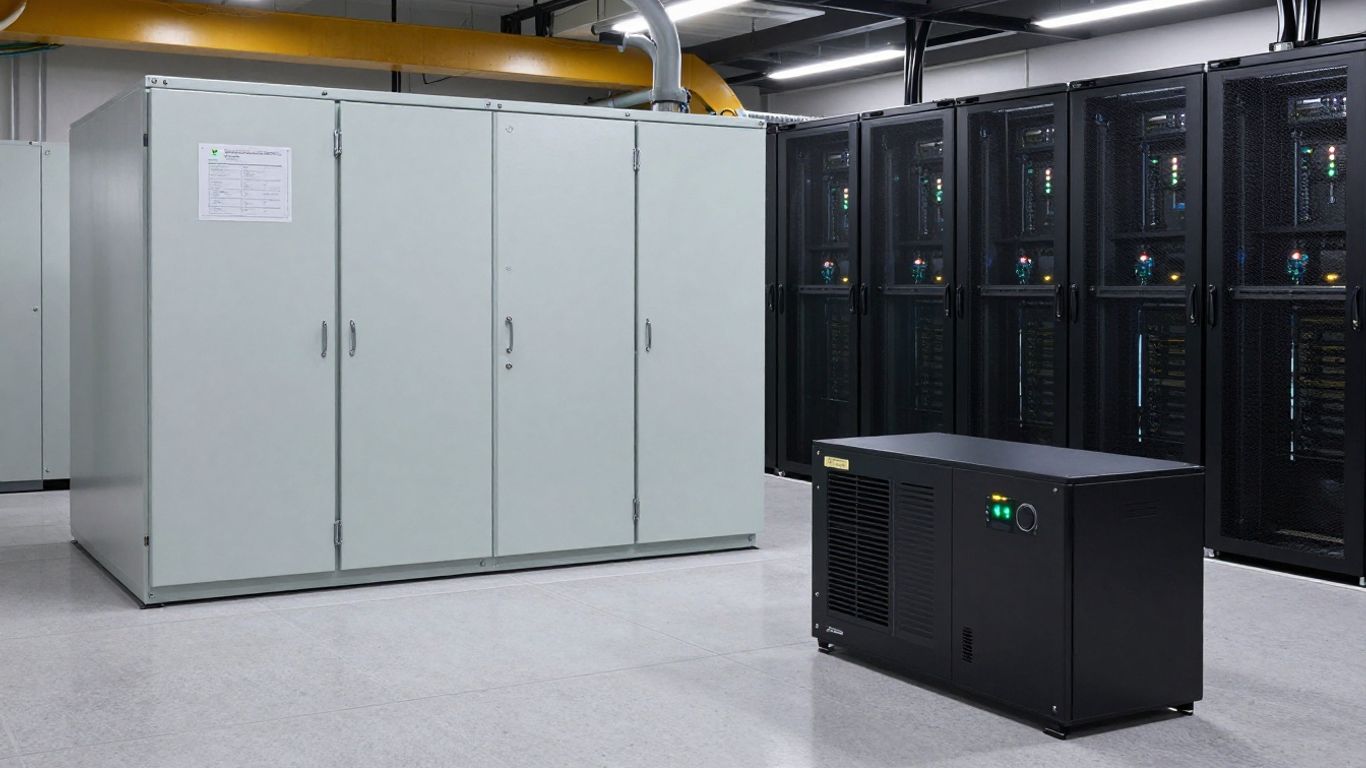
Islanding is the controlled separation of a local electrical network from the utility. It is not the same as an uncontrolled outage: the microgrid must detect the problem, open the appropriate connection, establish its own electrical reference, and balance local resources. The transition may be seamless for some loads only when the equipment and controls have been engineered together. The microgrid islanding overview explains the broader resilience concept in practical terms.
Detecting utility faults and initiating a controlled transition
Relays, meters, protective devices, and controller logic work together to identify unacceptable voltage, frequency, phase, or fault conditions. The transition sequence must avoid energizing a faulted utility line and must preserve safety for utility personnel. Detection settings should account for nuisance events as well as severe faults. Simulation and commissioning help confirm that the sequence behaves as intended under different operating conditions.
Maintaining uninterrupted power for critical loads
Critical loads should be connected to buses and UPS systems designed for continuity through the transition. Local generation and storage then support the island for as long as the available energy and fuel permit. The definition of “critical” should be operational, not merely a label: compute, networking, cooling, fire protection, and control systems may have different tolerances. The 5 MW microgrid design guide stresses the need to define critical and noncritical loads before selecting the architecture.
Managing load shedding and noncritical systems
When local capacity is limited, the microgrid should shed selected loads in a planned order rather than allowing an uncontrolled collapse. A practical priority sequence may include:
- preserving core computing and network equipment;
- maintaining the cooling and environmental systems required by those loads;
- protecting safety, fire, security, and control systems;
- delaying flexible processes, charging, and other noncritical demand.
This sequence is only a starting point and must reflect the facility’s actual dependencies. Testing should confirm that shedding one load does not accidentally remove a service required by a higher-priority load.
Resynchronizing safely when utility power returns
Returning to grid-connected operation requires the local system and utility to agree on voltage, frequency, phase angle, and protection status. The controller may first stabilize local generation, then close the connection under controlled conditions and gradually restore normal dispatch. A rushed reconnection can cause damaging transients or another trip. Recovery procedures should include operator permissions, clear interlocks, and a record of the event.
The role of microgrid controls and energy management systems
Controls turn a collection of generators, batteries, switchgear, and loads into an operating system. They collect measurements, apply rules, issue commands, and preserve the distinction between normal optimization and emergency response. Energy management also connects electrical decisions with fuel use, maintenance, tariffs, and facility operations. The microgrid controls guide covers evaluation topics such as synchronization, black start, communications, cybersecurity, and lifecycle costs.
Supervisory control of generation, storage, and facility loads
Supervisory controls can schedule resources, monitor alarms, and coordinate dispatch across several operating modes. Local device controls still matter, since a supervisory platform should not be expected to replace protective functions or equipment-level regulation. Clear command ownership prevents conflicting instructions. Operators also need a dependable manual fallback when communications or higher-level software is unavailable.
Forecasting demand, renewable output, and grid conditions
Forecasts help estimate computing demand, cooling requirements, solar production, fuel needs, and likely utility constraints. They are useful for charging decisions and maintenance planning, but they are never perfect. A sound system combines forecasts with conservative reserves and live measurements. Seasonal conditions and phased data center expansion should be included in the planning model.
Setting power quality thresholds and response priorities
Thresholds should define what counts as a warning, corrective response, transfer condition, or protective trip. They should cover voltage magnitude, frequency, harmonics, phase balance, and event duration where relevant. Priorities then determine which resource responds first and which loads may be curtailed. Documenting these choices makes testing more repeatable and post-event analysis more useful.
Integrating microgrids with UPS systems, BMS platforms, and DERMS
Integration allows electrical controls to exchange information with UPS equipment, building management systems, and distributed-energy resource platforms. Interfaces should define data quality, command authority, timing, fail-safe behavior, and cybersecurity boundaries. The microgrid should not assume that every connected system has the same clock, refresh rate, or alarm logic. A staged integration test can reveal problems before a live transition does.
Using monitoring data to identify recurring electrical problems
Trend data can reveal whether disturbances cluster around generator starts, cooling changes, battery dispatch, utility switching, or particular feeders. Event records become more valuable when timestamps are synchronized and measurements are collected at the right electrical locations. Engineers can then distinguish a one-off external fault from a recurring internal interaction. Maintenance plans should respond to patterns rather than waiting for equipment failure.
How to design and evaluate a data center microgrid
Design should begin with the facility’s actual electrical behavior and operating priorities. A microgrid is not automatically resilient because it contains several technologies; its value depends on architecture, controls, protection, maintenance, and tested procedures. The microgrid feasibility study is a useful companion for reviewing technical, financial, regulatory, and implementation questions. Mixed Nature’s editorial approach favors practical planning over one-size-fits-all promises, which is equally helpful when evaluating complex infrastructure.
Assessing site load profiles and redundancy requirements
Collect interval demand, starting currents, power factor, harmonics, seasonal variation, and the relationship between computing and cooling loads. Separate critical, essential, and interruptible demand, then map each category to feeders and controls. Redundancy targets such as N+1 or 2N should be tested against maintenance conditions as well as faults. Honest load data is the foundation of credible sizing.
Selecting generators, batteries, solar, and other resources
Resource selection should follow the duty each technology must perform. Generators may provide longer-duration energy, batteries can provide rapid response and bridging power, and solar can reduce energy drawn from the utility when conditions permit. Fuel availability, emissions requirements, space, noise, maintenance, and black-start behavior also matter. The microgrid components guide offers a broad checklist of generation, storage, inverter, and switchgear elements.
Defining voltage and frequency performance targets
Targets should specify acceptable ranges, response times, event durations, recovery behavior, and measurement locations. They should be stated for grid-connected operation, islanding, steady-state conditions, and major load transitions. Equipment ratings alone do not define a complete power-quality target. The final criteria should be agreed by electrical engineers, facilities teams, IT operators, utility representatives, and commissioning specialists.
Testing islanding, black-start, and recovery scenarios
A credible test program moves beyond visual checks and routine generator runs. It should examine utility loss, controlled separation, load shedding, generator pickup, battery limits, black start, resynchronization, communications loss, and recovery after a failed attempt. The black-start planning guide provides useful context on energizing local buses and restoring loads in stages. Test results should be documented with measured waveforms and clear acceptance criteria.
Measuring reliability, power quality, and operating costs
Evaluation should combine uptime indicators with electrical measurements and financial analysis. Useful measures include interruption frequency, voltage-event counts, frequency excursions, response time, fuel consumption, battery degradation, maintenance burden, and avoided demand costs. A project can improve resilience while increasing operating complexity, so both benefits and obligations belong in the business case. For broader financial planning, the microgrid ROI guide discusses payback, lifecycle savings, operating costs, and risk.
The links included elsewhere in this article also illustrate a practical editorial constraint: topic relevance matters. Pages about workplace wellbeing costs, police vetting checks, baby-bottle sterilizers, listening to work emails, and cookie preferences belong to different subject areas and should not be treated as evidence for electrical design. Their presence is a reminder to verify sources carefully before applying any recommendation to a live facility.
Conclusion
A well-designed microgrid protects data center operations by coordinating local generation, storage, power electronics, protection, and critical-load priorities across normal and disrupted conditions. The strongest projects begin with measured demand, define voltage and frequency targets, and prove their islanding and recovery sequences through testing rather than assumption.
Frequently Asked Questions
What is data center microgrid power quality?
It is the management of voltage, frequency, waveform quality, and continuity within a data center electrical system, using coordinated generation, storage, controls, protection, and distribution equipment.
Can a microgrid prevent every data center outage?
No. It can reduce exposure to some utility disturbances and support continued operation during defined events, but equipment failures, fuel limits, control faults, severe damage, and maintenance conditions still require separate risk planning.
How does islanding differ from ordinary backup power?
Islanding separates the facility from the utility while local resources continue serving selected loads. Ordinary backup power may start after an outage, but it does not necessarily provide the same coordinated control of generation, storage, distribution, and load priorities.
Why are batteries useful in a data center microgrid?
Batteries can respond quickly to changes in demand and frequency, bridge transitions, support voltage control, and reduce short-duration stress on generators. Their usefulness depends on power rating, energy capacity, state of charge, temperature, and operating strategy.
Do generators solve voltage and frequency problems by themselves?
Not always. Generators can provide sustained power, but their mechanical response, excitation controls, protection settings, and synchronization requirements must be coordinated with inverters, UPS systems, batteries, and facility loads.
What should be tested before a microgrid goes live?
Testing should include utility loss, islanding, load shedding, generator and battery response, black start where applicable, communications failure, resynchronization, recovery, and realistic high-load transitions. Measurements should be compared with documented acceptance criteria.
How should a facility choose its critical loads?
Start with the consequences of losing each load, then map dependencies among computing, networking, cooling, safety, fire protection, security, and control systems. Classify loads by operational priority and verify the classification through failure-mode analysis and live testing.