Microgrid Controller Comparison: Features, Costs and Capabilities
Key Takeaways
Navigating the technical landscape of modern energy systems requires a clear understanding of control mechanisms and procurement strategies to meet local grid requirements. Here are the central themes for your planning process:
- Infrastructure architecture dictates how effectively local generation and storage coordinate to maintain grid stability.
- Choosing the right system hinges on weighing upfront capital expenditure against long-term operational performance gains.
- Regulatory and communication standards act as the primary gatekeepers for seamless utility interconnection and site compliance.
- Advanced optimization features, such as predictive analytics, significantly improve the financial return on complex energy assets.
- Hardware compatibility and vendor support are crucial for mitigating risks during project commissioning and maintenance.
Foundational architecture and control logic
Centralized versus decentralized control schemes
The choice between centralized and decentralized architectures defines how your system processes information and commands. A centralized system relies on a single master unit, whereas decentralized models distribute logic across individual controllers, increasing the independence of specific energy assets within the site.
Hierarchical control layers defined
Hierarchical models organize control functions into logical tiers, allowing individual devices to manage local requirements while feeding data to higher-level supervisory elements. This structure prevents signal congestion and ensures that rapid response requirements remain isolated from data-heavy optimization routines.
Primary, secondary, and tertiary control functions
Control functions are generally sorted into three tiers: primary management of immediate transient responses, secondary adjustment for voltage and frequency, and tertiary oversight of economic dispatch. Understanding these layers helps designers build a system capable of handling both sub-cycle events and long-term energy trading goals.
Role of local controllers versus master controllers
Local controllers sit closest to the distributed energy resources, managing direct physical interaction with solar inverters or battery storage units. These devices report to master controllers, which translate project-level intents—such as energy cost reduction—into specific operational signals for the local assets, ensuring that SEL hardware provides consistent real-time coordination.
Core operational capabilities
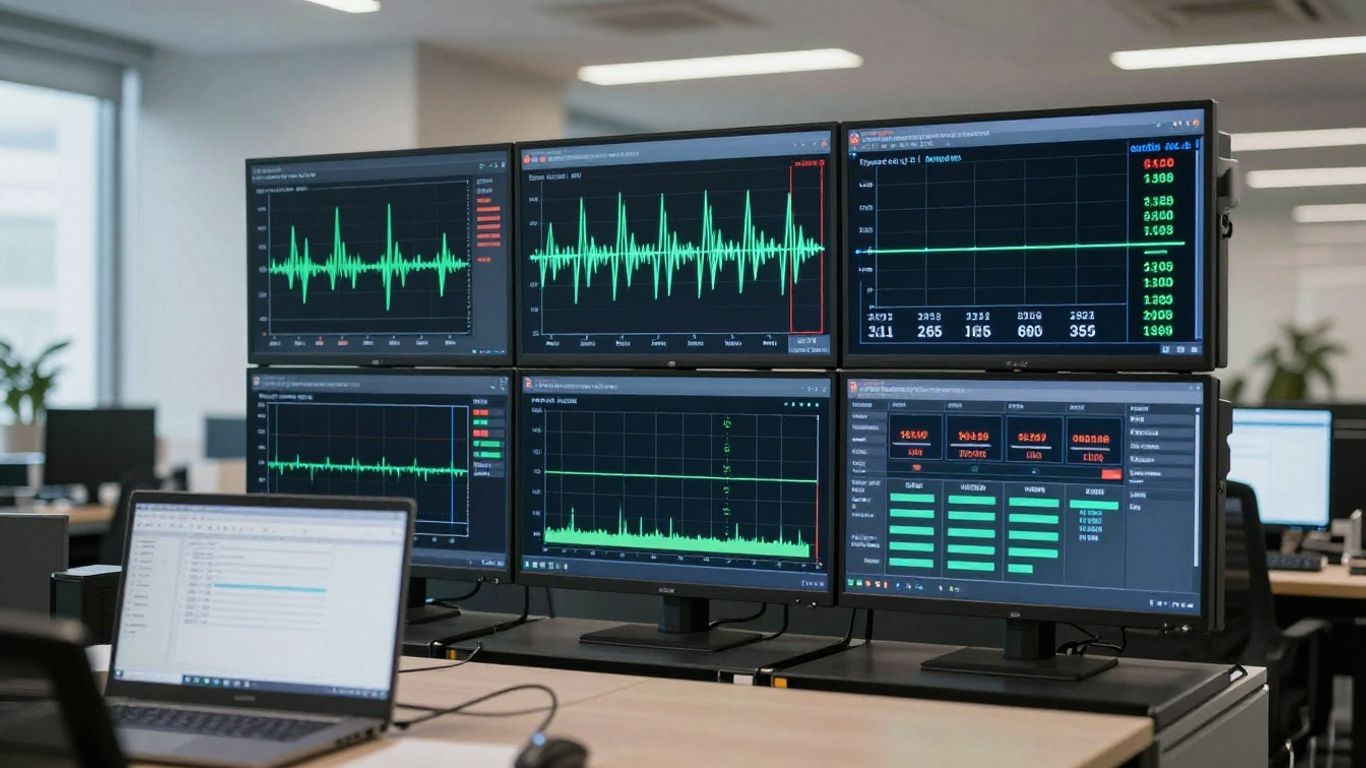
Effective controllers must manage the dynamic intersection between onsite generation and the broader grid, balancing utility demand with local production. When a system can perform this task well, it ensures seamless power continuity throughout the operation, which is critical for businesses operating in volatile energy markets.
Grid-connected synchronization and frequency regulation
Controllers maintain sync by aligning phase, voltage, and frequency at the point of common coupling. This synchronization prevents mechanical stress on local assets while facilitating stable energy exchange.
Seamless transition to islanded mode
The transition to islanding must occur without disrupting internal facility loads. This capability ensures that critical circuits remain energized during grid events, leveraging intelligent switching logic to maintain system integrity.
Blackstart capabilities for power restoration
Blackstart is the ability to restart the microgrid without support from the main grid by coordinating batteries and onsite prime movers. This process relies on robust sequencing to energize internal buses safely.
Voltage stabilization and power quality management
Power quality requires active damping and harmonic filtering to keep sensitive assets performing within design parameters. The table below outlines common site evaluation criteria for power stability:
| Feature | Importance | Operational Impact |
|---|---|---|
| Harmonic Filtering | High | Minimizes equipment wear |
| VAR Compensation | Moderate | Regulates reactive power |
| Frequency Damping | High | Prevents trip events |
Properly tuned controllers improve voltage regulation, keeping the electrical profile strictly within limits as defined by local utility standards.
Advanced optimization and economic features
Resource scheduling and predictive analytics
Predictive engines use historical usage data and meteorological forecasts to determine the most cost-effective duty cycle for batteries and generators. By anticipating spikes in demand or drops in production, these systems optimize energy allocation long before a peak occurs.
Demand-response management integration
Integrating demand-response logic allows the site to participate in utility programs, turning the microgrid into a revenue-generating asset. These signals can automatically trigger load shedding or storage dispatch to stabilize the external grid during peak hours.
Multi-objective optimization for cost and carbon reduction
Optimization algorithms often reconcile competing objectives, such as maximizing battery longevity while simultaneously minimizing carbon emissions. Modern software enables users to weight these priorities according to their internal sustainability and financial targets.
Energy arbitrage and peak-shaving logic
By leveraging SEL powerMAX logic, systems can execute energy arbitrage to take advantage of shifting electricity prices, buying low and dispatching stored energy when grid rates climb. This is one of the most effective ways to calculate microgrid ROI over the lifecycle of your system.
Integration and communication standards
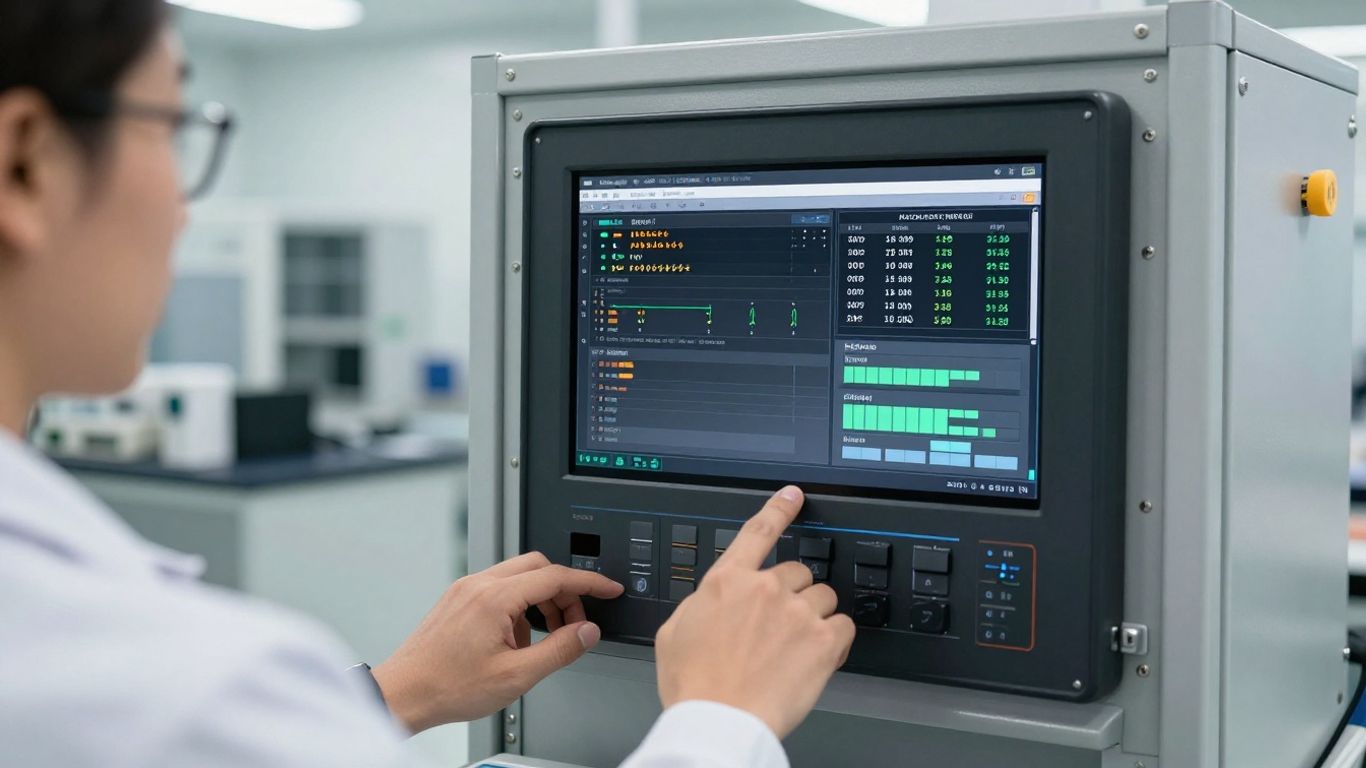
Secure, reliable communication sits at the heart of operational reliability, ensuring your systems can interpret protocols from various distributed energy participants. A robust communication backbone also allows for the remote oversight required to perform an accurate microgrid feasibility study and maintain system health.
Protocol compatibility including Modbus, DNP3, and IEC 61850
Device interoperability requires the controller to speak the languages of the industry, including legacy Modbus platforms alongside the more modern data structures provided by DNP3 and IEC 61850. Broad support for these protocols is non-negotiable for sites with mixed-vendor hardware fleets.
Cybersecurity requirements for critical infrastructure
As systems become more connected, encryption and physical access controls on communication lines become essential components of a defense-in-depth strategy. Protecting data integrity is crucial when managing public or mission-critical electrical loads.
Hardware-agnostic versus proprietary vendor ecosystems
While proprietary systems offer deep integration with vendor components, hardware-agnostic controllers provide flexibility for long-term site expansion. Selecting an open-standards approach prevents technology lock-in and simplifies the addition of new battery or storage technologies later.
Cloud-based monitoring and remote connectivity
Cloud integration brings a new dimension to site management, allowing facility managers to view energy performance and status alerts from anywhere. This remote connectivity facilitates rapid troubleshooting and reduces the frequency of site visits for routine checks.
Cost factors in microgrid controller procurement
Software licensing and ongoing maintenance fees
Software costs frequently include recurring licensing models that scale based on the number of monitored assets. These fees are easily overlooked in the design phase but contribute significantly to the total operational budget.
Upfront hardware costs versus long-term operational savings
Initial hardware investment includes controllers, sensors, and communication gateways, which vary widely depending on the desired precision and redundancy levels. Decisions here should be guided by the long-term utility bill savings expected over the equipment lifespan.
Engineering and commissioning impacts on project budgets
Engineering time often constitutes a larger budgetary item than hardware during the setup phase. Careful planning and site assessment reduce the likelihood of costly change orders during the onsite verification process.
Customization requirements versus off-the-shelf solutions
You must decide if your site will be served by standard packages or bespoke logic. Consider these procurement factors:
- The duration of the factory acceptance testing phase for custom logic.
- The availability of local technical representatives for on-site commissioning.
- Compatibility with existing building management software.
- Future scaling options for additional energy resources.
Investing in standardized, well-documented controller logic can significantly reduce commissioning friction and long-term labor costs.
Evaluating the right controller for your microgrid project
Assessing site-specific complexity and generation mix
Your site’s unique blend of generation—whether solar-heavy, diesel-heavy, or battery-anchored—demands specific logic for balancing power flows. A site with diverse assets requires a controller that excels at managing multiple operating modes simultaneously.
Scalability and future-proofing considerations
The ideal controller provides a clear pathway for integrating future technologies without requiring a complete system overhaul. Look for modular software architectures that accept firmware updates to handle new grid requirements.
Vendor support and long-term technical reliability
Reliability is verified through the longevity and responsiveness of the manufacturer’s engineering support. Ensure your chosen vendor has a history of performance that aligns with your facility’s long-term operational goals.
Regulatory compliance and utility interconnection requirements
Navigating the microgrid interconnection process requires deep attention to utility standards and data compliance. The right controller must be able to export reporting metrics in the formats specifically preferred by your local grid operator.
Conclusion
Selecting a microgrid controller is a foundational decision that impacts the operational resilience, cost-effectiveness, and ultimate success of your energy project. By carefully evaluating architectures, communication requirements, and total lifecycle costs, stakeholders can transform local energy resources into a powerful, reliable engine for sustainability, using a thorough microgrid controller comparison to align equipment choices with their specific facility goals.
Frequently Asked Questions
What are the primary operating modes of a microgrid controller?
Controllers generally switch between grid-connected, islanded, and blackstart modes to handle normal operations, power outages, and system restarts, respectively.
Why is communication protocol compatibility important?
Supporting multiple protocols allows the controller to communicate with disparate inverter and generator types, preventing the need for complex, manufacturer-specific hardware gateways.
How does predictive optimization save money?
Predictive engines optimize charging and discharging schedules based on anticipated energy prices and demand, which minimizes expensive peak-hour grid consumption.
When should I consider an off-the-shelf controller versus a custom solution?
Standard off-the-shelf solutions are ideal for common, predictable site architectures, while specialized custom solutions are best reserved for highly unique environments with non-standard generation assets.
How is commissioning risk mitigated during the procurement phase?
Risk is mitigated by performing thorough factory acceptance testing and choosing vendors with local support capabilities and proven field performance history.
Can a microgrid controller evolve as the facility expands?
Modern, modular controllers allow for the integration of new storage units or generation sources through software updates and configurable logic, supporting long-term facility growth.
What role does the controller play in cybersecurity?
Controllers act as the primary interface for remote traffic, enforcing encryption, port security, and authorized access controls to protect sensitive internal electrical data streams.