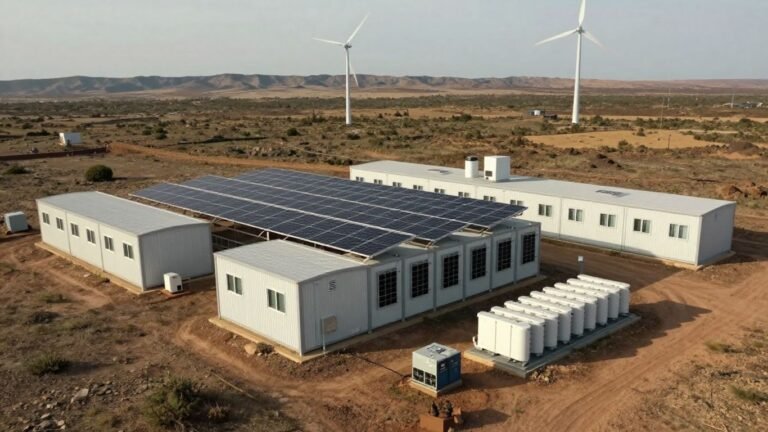
How to Calculate Microgrid ROI, Payback and Lifecycle Savings
Key Takeaways
Transitioning to a localized energy system requires a careful look at the numbers. These five points highlight the core considerations for ensuring your project remains financially viable over its lifetime:
- Accurate financial modeling begins with understanding the total cost of ownership rather than just upfront pricing.
- Revenue generation often comes from a combination of avoided utility costs and participation in grid service programs.
- Long-term savings rely on strategic asset dispatch and proactive maintenance to prevent expensive equipment failures.
- Tax incentives and government subsidies can significantly shorten the payback period for new energy projects.
- Risk management requires stress-testing your financial projections against market volatility and potential environmental impacts.
Understanding microgrid financial metrics
Financial clarity is the foundation of any sustainable energy investment. By establishing clear metrics from the start, a project team can better communicate value to stakeholders and ensure the infrastructure supports operational needs for years to come. Understanding these variables helps turn technical complexity into a readable business case.
Defining return on investment for energy projects
Determining the return on investment usually involves measuring the total financial gains against the initial investment. For distributed energy projects, this means looking past the surface to evaluate the broader value of reliability and cost stability.
Calculating the simple payback period
Simple payback represents the duration required for an investment to generate enough savings to recoup its initial capital outlay. It is often the first metric decision-makers review, providing a quick snapshot of how effectively the technology will recover costs. Using a detailed Micro Grid Payback Calculator can help you visualize these recovery timelines across various asset configurations.
Evaluating net present value and internal rate of return
Net present value adjusts future cash flows back to today’s dollar value, accounting for the time value of money. When combined with internal rate of return, these metrics allow for a much more sophisticated comparison between multiple potential sites. These calculations provide the nuance needed to compare immediate expenditures with long-term energy savings.
Identifying capital and operational costs
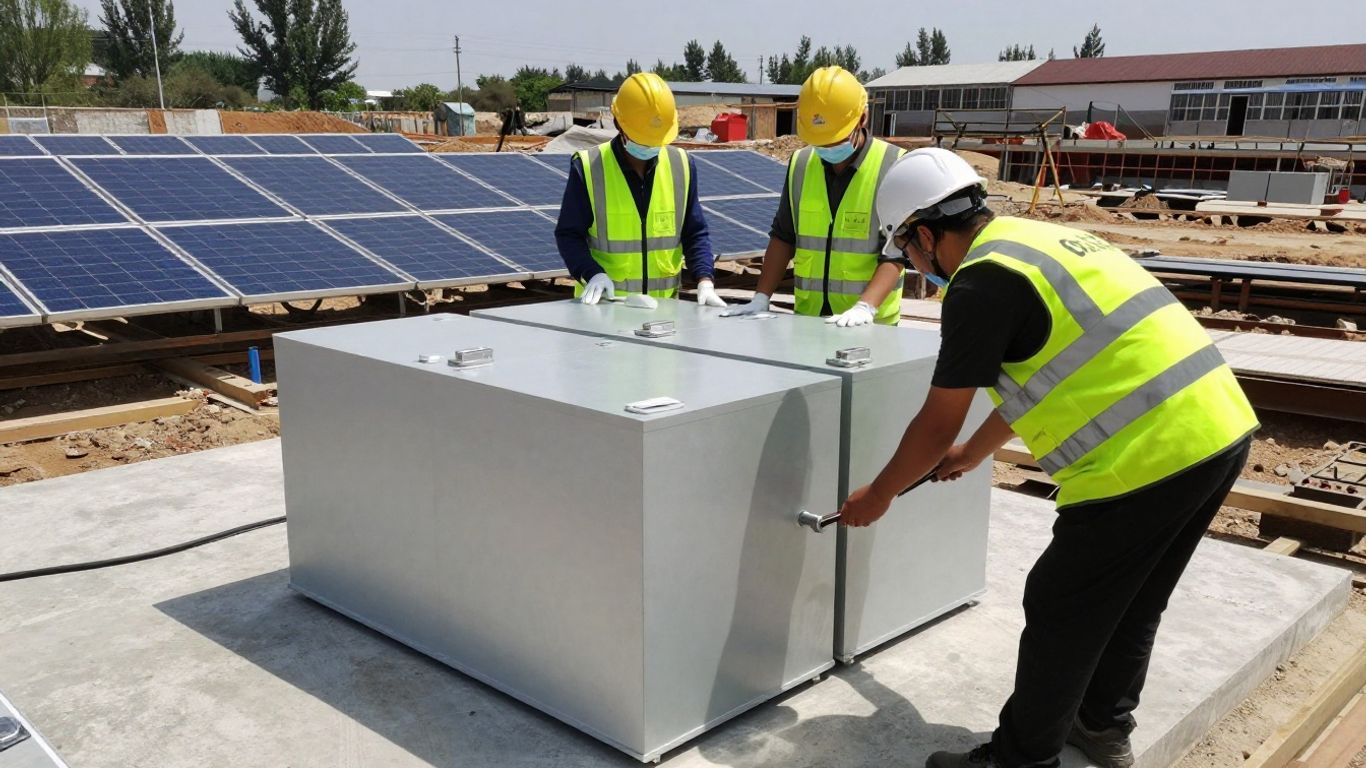
Infrastructure investments involve a wide range of costs that extend well beyond the purchase price of the equipment itself. To get a true sense of the projected cost of microgrids, teams must account for site-specific conditions and the complexities of local grid regulations. Breaking these costs into distinct categories allows for more precise budgetary control throughout the project lifecycle.
Initial equipment procurement and installation costs
Procuring the primary assets—such as solar arrays, storage systems, and advanced power electronics—represents the largest bulk of initial spending. Budgeting should cover more than the hardware, as shipping and logistics in remote areas can increase expenses significantly.
Permitting, engineering, and commissioning expenses
Expertise is a necessary cost, as designing a system requires rigorous microgrid feasibility study documentation. These expenses include everything from obtaining local environmental clearances to finalizing the electrical engineering designs required for safe interconnection.
Ongoing operations and maintenance expenditures
Operating a modern energy system requires attention to detail. Much like managing home appliance longevity, you need qualified local technicians and specialized support to keep controllers and batteries healthy. Consider these recurring costs as an essential investment in reliability.
Upgrades and component lifecycle replacements
Even robust systems eventually reach the end of their operational life or require updates. The following table outlines how typical components might be categorized for budget purposes:
| Expense Type | Frequency | Impact Level |
|---|---|---|
| Preventative Maintenance | Quarterly | Low Moderate |
| Control Software Updates | Annual | Low |
| Battery Module Replacement | 8-10 Years | High |
Planning for these cycles ensures you are not caught off guard by sudden capital requirements.
Quantifying revenue and savings streams
Generating revenue from localized power is about maximizing the utility of every kilowatt. Instead of treating energy as a sunk cost, facilities act as energetic hubs that manage their own consumption and contribution to the wider grid. Sophisticated control systems now make it possible to capture value from intermittent energy peaks.
Analyzing utility bill avoidance and peak shaving
Avoiding extreme demand charges is often the easiest win for a new system. By optimizing battery energy storage, systems can clip the top off highest usage hours, significantly lowering monthly invoices. This approach relies on smart scheduling rather than simply adding more generation assets.
Monetizing demand response and grid services
Many utilities offer incentives for users who are willing to shed load or provide capacity during a stress event. This turns your local infrastructure into a grid asset, providing steady income that complements simple bill reduction.
Evaluating tax incentives and government subsidies
Incentives can dramatically alter the economics of a build. Investigating local and federal credits for renewable assets early in the project—much like seeking government incentives when pursuing recycled Kia parts for vehicle repairs—can help stretch your investment budget much further.
Calculating the value assigned to energy resilience
Resilience is a harder, yet vital, number to pin down. It essentially measures the cost of downtime that is avoided when acting as an emergency power lifesaver. By quantifying the impact of outages on operations, you can justify infrastructure spending based on business continuity.
Utilizing a microgrid ROI calculator

Choosing the right tools determines how accurate your forecast will be. A robust ROI Calculator acts as the engine of your financial planning, pulling in complex variables to present a coherent view of the coming years. Modern software simplifies these calculations, reducing the risk of errors often found in manual bookkeeping.
Key data inputs required for accurate financial modeling
Success depends on the quality of data provided at the start. Precise measurements of current consumption patterns, peak power usage, and site-specific meteorological data are non-negotiable requirements. When you take the time to aggregate this information, the output becomes a reliable map for the project.
Comparing automated software tools versus manual spreadsheets
Manual spreadsheets often lead to disconnected silos of data, whereas purpose-built financial platform automation tools keep all variables in sync. These tools allow for instant adjustments to variables, making it easy to run "what-if" scenarios without rebuilding your model from scratch.
Benchmarking your results against industry standards
Once the numbers are generated, look to see how they align with typical performance in your sector. It is important to know if your payback period is within the standard range or if there are specific local conditions skewing the results. This feedback loop helps refine industrial energy prioritization to better meet organizational goals.
Analyzing risk and sensitivity variables
Risk management is the insurance policy for your financial projections. Because energy markets are rarely static, your model must account for forces outside of your control, including regulatory shifts and changing fuel prices. Maintaining flexibility in your architectural design helps mitigate these risks.
Hedging against volatile energy market prices
Energy rates fluctuation poses a significant threat to long-term payback estimates. Using on-site generation helps lock in costs, but you must still consider how grid-purchased electricity inputs change over time. Many developers now use automated analysis to predict financial outcomes despite market swings.
Assessing the impact of equipment performance degradation
Solar panels and batteries lose efficiency over time. It is vital to build this natural degradation into your long-term model, as a static assumption will lead to overly optimistic revenue forecasts. You must plan for the future, not just the current peak performance.
Factoring in policy changes and regulatory shifts
Regulations regarding interconnection, P2P energy trading, and net metering can shift in unexpected directions. A conservative financial plan anticipates these changes by retaining a margin of error. This cautious approach ensures that your project remains viable even if the policy landscape becomes less favorable.
Stress-testing financial projections under extreme weather scenarios
Severe weather can force a system into islanding mode for longer than expected. It is good practice to run scenarios to see how your backup energy generation survives extended outages. This testing illustrates the true cost of reliability and ensures your storage holds enough depth to cover critical functions.
Long-term lifecycle savings strategies
Managing energy assets over fifteen or twenty years requires a shift toward lifecycle thinking. This involves moving beyond initial capital costs to focus on how operational efficiency improves over the life of the hardware. The goal is to maximize the utility and longevity of your investment throughout its life.
Optimizing battery energy storage dispatch strategy
How and when you discharge your batteries matters for lifetime performance. Strategic dispatch is essential for managing electrical energy peaks effectively. By automating when the system pulls from the grid versus when it uses stored power, you can prevent unnecessary battery cycles and save significant money over the full project life.
Integrating predictive maintenance to lower long-term costs
Just as we might modernize infrastructure by retrofitting older lighting with energy-efficient LED upgrades, proactive maintenance extends the life of microgrid assets. Moving from reactive, "fix-it-when-it-breaks" strategies to sensor-driven predictive modeling prevents catastrophic failures. This approach ensures that you avoid emergency replacement costs and maintain consistent system uptime.
Balancing hardware efficiency against integration complexity
While high-spec components promise more efficient operation, they often require more advanced integration and programming. Striking a balance is key. If a system is too complex, the cost of maintenance and personnel training may wipe out the gains from higher efficiency hardware. Always weigh the theoretical performance boost against the pragmatic realities of your local workforce and daily technical operations.
Conclusion
Calculating the financial reality of a microgrid project goes far beyond a simple look at upfront costs versus immediate savings. By carefully evaluating lifecycle variables, leveraging data-driven software, and building contingencies for risk, businesses create resilient systems that pay for themselves over time. Focus on the integration of smart management tools and a rigorous commitment to maintenance to ensure your infrastructure provides value well into the future, ultimately turning your power needs into a strategic advantage.
Frequently Asked Questions
What is the typical useful life of a microgrid system?
Most modern systems are designed to operate for 20 to 25 years with regular component updates, though specific assets like batteries may require replacement sooner depending on usage patterns.
How does intermittent generation impact financial forecasting?
Because renewable sources like solar and wind vary with the weather, forecasts must be based on long-term historical meteorological data to ensure that average generation expectations remain realistic.
Can commercial entities sell excess power back to the grid?
Yes, many jurisdictions allow for net metering or participation in wholesale programs, though the specific financial feasibility depends heavily on local utility policies and current interconnection agreements.
Why do operational expenses often scale with project size?
Larger systems require more sophisticated control software, increased insurance premiums, and more complex maintenance schedules compared to smaller, off-grid deployments.
Does adding battery storage always improve the ROI?
Batteries provide the flexibility to manage peak energy usage and increase self-consumption, which typically improves ROI for grid-connected sites, provided the capital cost of the battery storage matches the value of the savings.
When is the ideal time to perform an energy audit?
An energy audit is most effective before planning begins, as it provides the baseline data necessary for sizing the system correctly and identifying the most critical loads in your facility.
What happens if I choose to ignore inflation in my financial model?
Ignoring inflation often leads to underrepresented future costs for energy and maintenance, potentially causing a project to appear more attractive initially than it will prove to be during its operational peak.