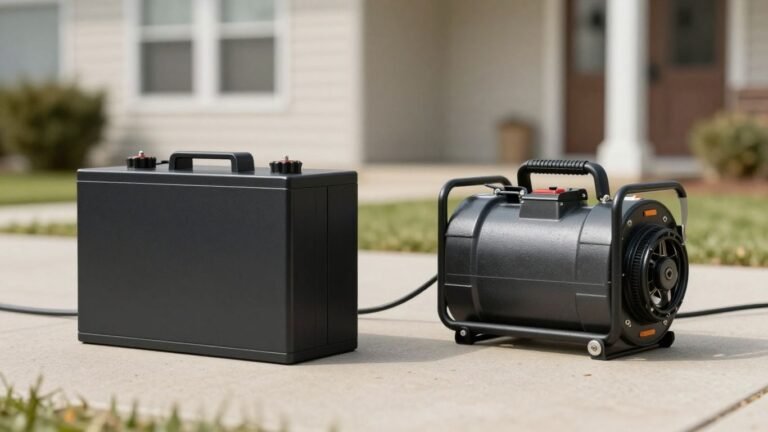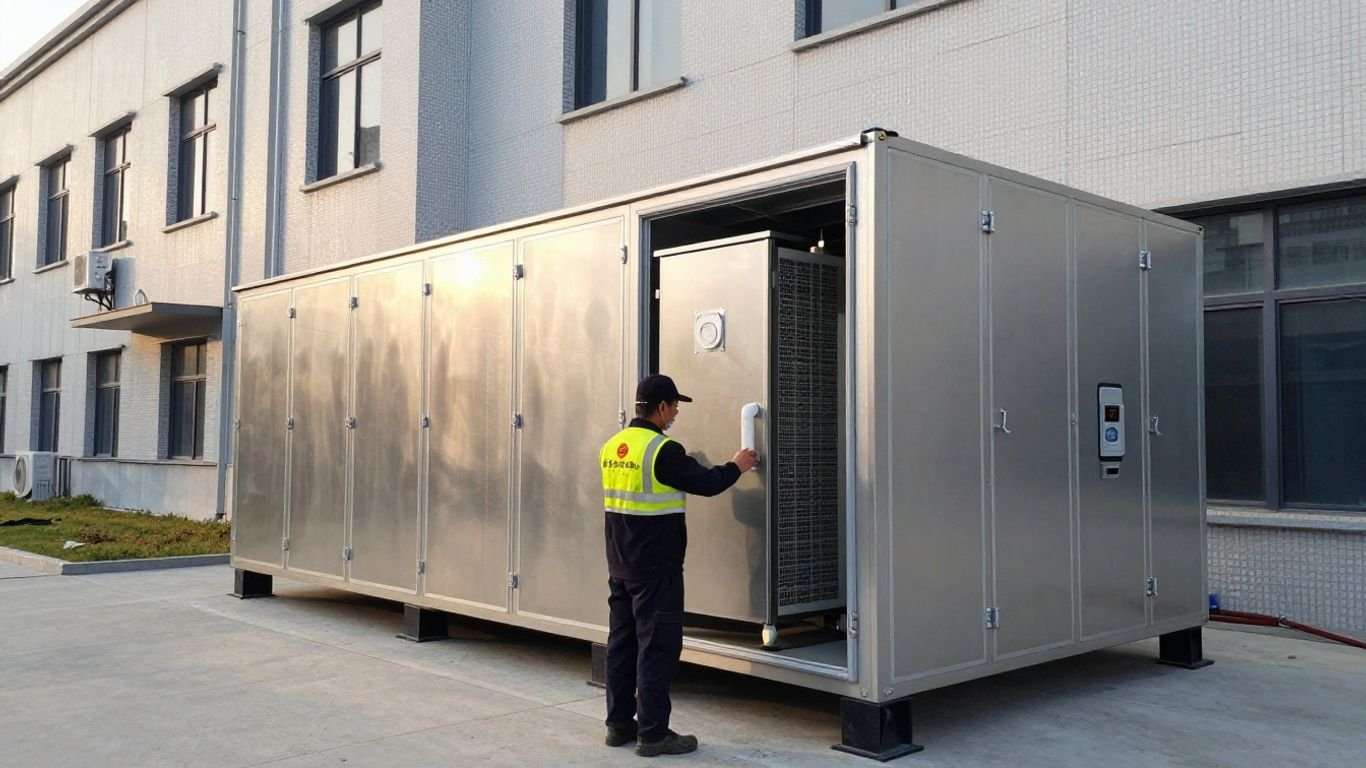
Battery Power: Taming Your Energy Peaks
Key Takeaways
Optimizing electricity consumption requires a clear strategy for managing power usage across the day, especially for large industrial and commercial facilities. This guide explores the foundational principles and practical applications of energy management.
- Understanding the distinction between energy consumption and peak power demand is essential for cost management.
- Effective peak shaving with battery storage involves deploying stored energy when facility demand spikes above defined baseline thresholds.
- Battery systems act as a critical buffer, significantly reducing the amount of grid power drawn during high-tariff periods.
- Proper system sizing requires careful load analysis to ensure equipment can handle both typical and surge power requirements.
- Long-term reliability depends on consistent maintenance and integration with existing building energy management platforms.
Understanding the mechanics of peak demand
Electricity bills often surprise facility managers because the final cost isn’t solely based on total usage. Many commercial tariffs include demand charges that penalize businesses for high rates of consumption within narrow windows, regardless of the overall monthly energy footprint. Reducing these costs requires a fundamental shift in how power is monitored and regulated throughout the operational cycle.
What are utility demand charges?
Utility demand charges are fees levied based on the maximum amount of power, measured in kilowatts (kW), that a building consumes at any given point during the billing cycle. Unlike energy charges that tally total consumption (kWh), these fees pay for the grid’s capacity to deliver enough power to meet your building’s highest instantaneous needs. Even a short surge can trigger a high demand charge that remains fixed for the entire billing period.
Identifying your peak usage patterns
Every facility has a characteristic load profile that shows how power consumption rises and falls throughout the day or night. Determining when your equipment starts up or when multiple heavy machines cycle simultaneously is the primary step in managing electricity consumption peaks. Facilities often find that office climate control overlapping with heavy manufacturing cycles creates a predictable, albeit expensive, spike that can optimize your energy costs through better planning.
How utilities calculate your energy costs
Utilities typically monitor consumption in 15 or 30-minute intervals to find the point in the month where usage hit its absolute highest level. If your building pulls 500kW for just one 15-minute window during a sunny Tuesday afternoon, your bill will reflect a 500kW demand charge for that entire month. This structure explains the cost buildup of electricity bills, demonstrating why smooth operations are more economical than inconsistent ones.
The financial impact of unmanaged peaks
Unmanaged peaks force businesses to pay a premium for infrastructure capacity they only utilize for a fraction of the time. When companies ignore these spikes, the cumulative financial burden often erodes budget efficiency that could otherwise support industrial energy storage solutions instead. By addressing these inconsistencies, companies secure better control over their monthly recurring expenses and avoid unnecessary financial strain.
How battery storage facilitates peak shaving
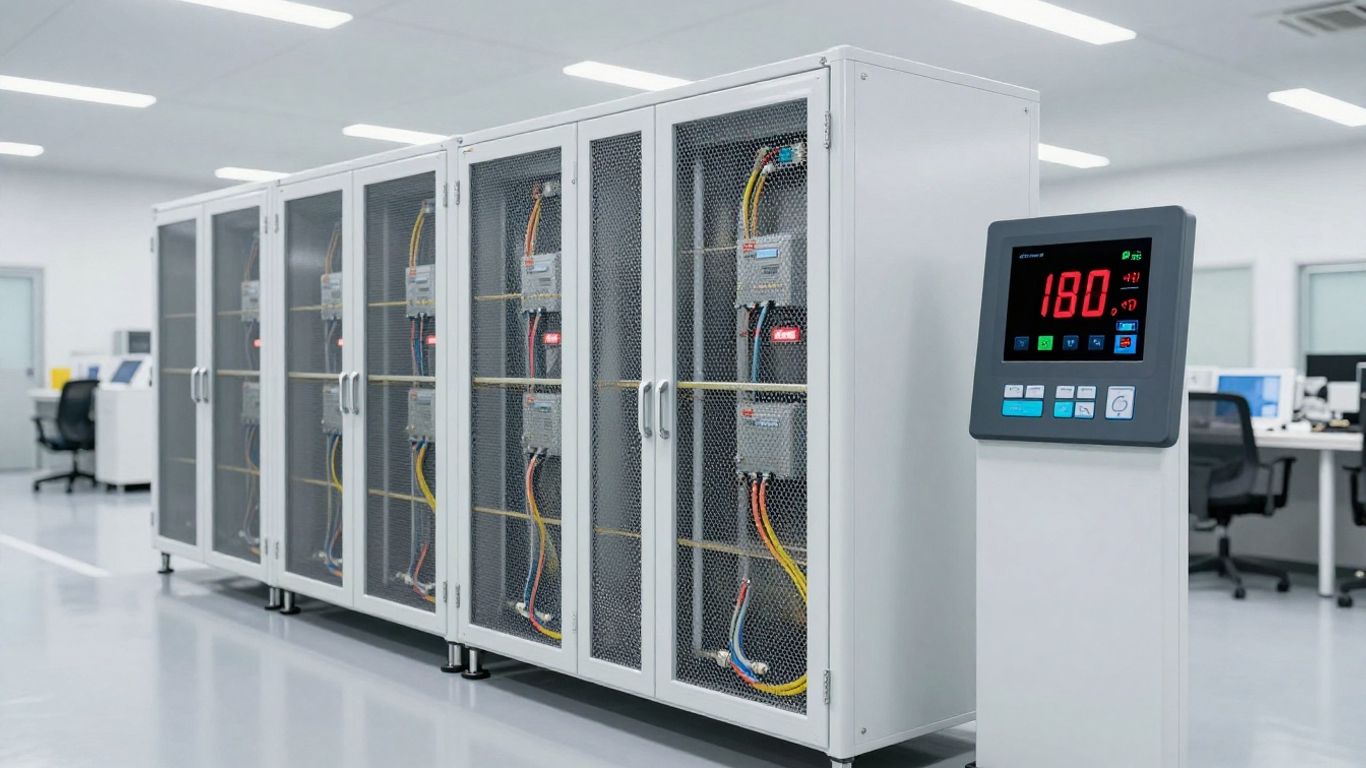
Battery systems provide an active mechanism to level out power intake by injecting power when the facility needs it most. By acting as an on-site reserve, these systems prevent the grid from seeing those massive spikes that define a typical high-demand billing record. This process essentially flattens the energy curve for the entire facility.
The basics of battery discharge cycles
Batteries function through a process of charging during low-cost or off-peak periods and discharging specifically during high-load intervals. This cycle ensures the facility draws a consistent, lower amount of power from the utility while the battery covers the excess requirement internally. Understanding this timing is crucial for maximizing the efficiency of your equipment.
Shifting loads from grid to battery power
When a surge is detected, the battery controller immediately draws energy from the storage medium instead of the grid. This allows for reducing demand charges with batteries while allowing operations to continue without interruption. It is a seamless transition between two power sources that effectively shields the facility from the most punishing tariff rates.
Real-time monitoring and load automation
Modern interfaces allow facility managers to maintain constant oversight of their energy status. These tools monitor inbound power and trigger automated load leveling sequences when conditions change. By using predictive logic, systems can anticipate surges before they hit the utility reporting interval, ensuring that the facility never crosses the line into a higher charge tier.
Reducing reliance on expensive peak grid power
By keeping the peak load below a set point, facilities avoid the highest tiers of utility pricing entirely. This capability is particularly important for sites that may face frequent service delivery outages, where intelligent energy storage systems provide the foundation for continued operation. It gives site operators a reliable method to lower utility expenditures without slowing down production or compromising building comfort.
Key components of a peak shaving system
Selecting hardware for these systems involves balancing energy density with the physical constraints of the building. Success requires matching the discharge capability of your hardware with the specific surge requirements of the site. Below are the core factors to consider when configuring a system to handle varied power needs effectively.
Selecting the right battery chemistry for cycling
Battery chemistry must support frequent, high-depth-of-discharge cycles without losing capacity. Lithium-ion technologies have become the standard for this purpose due to their efficiency and footprint. Engineers must ensure the chosen chemistry maintains health across the expected 10-year lifespan of the installation.
The role of the energy management system
Advanced software acts as the brain that directs when the battery should charge or discharge. These battery energy management systems process site data to determine exactly when the battery should respond to load fluctuations. Without highly precise software control, the system would fail to capture the peaks effectively, rendering the hardware less useful.
Inverter requirements for handling high surges
Inverters must be rated not just for the total load, but for the instantaneous surge capability needed during extreme events. The hardware must manage the conversion process rapidly and cleanly. Below is a breakdown of typical hardware requirements that facilities must analyze when planning a build.
| Component | Capacity Requirement | Purpose |
|---|---|---|
| Main Battery Rack | 100kWh minimum | Storage for load leveling |
| Smart Inverter | 50kW peak surge | DC/AC power conversion |
| Management Gateway | Industrial-grade control | Real-time sensor logic |
These components collectively work to filter the instantaneous power profile of a building. When configured correctly, the hardware prevents the grid from detecting sudden increases in power requirements, shielding the user from expensive demand-related grid penalties.
Building a scalable storage architecture
Scalability allows a business to start with a modest footprint and expand as energy needs evolve. By choosing modular components, facilities can increase their storage capacity as they add new processes or equipment. This flexibility ensures the initial investment in energy storage is highly resilient and does not become obsolete when company operations expand.
Economic benefits and return on investment
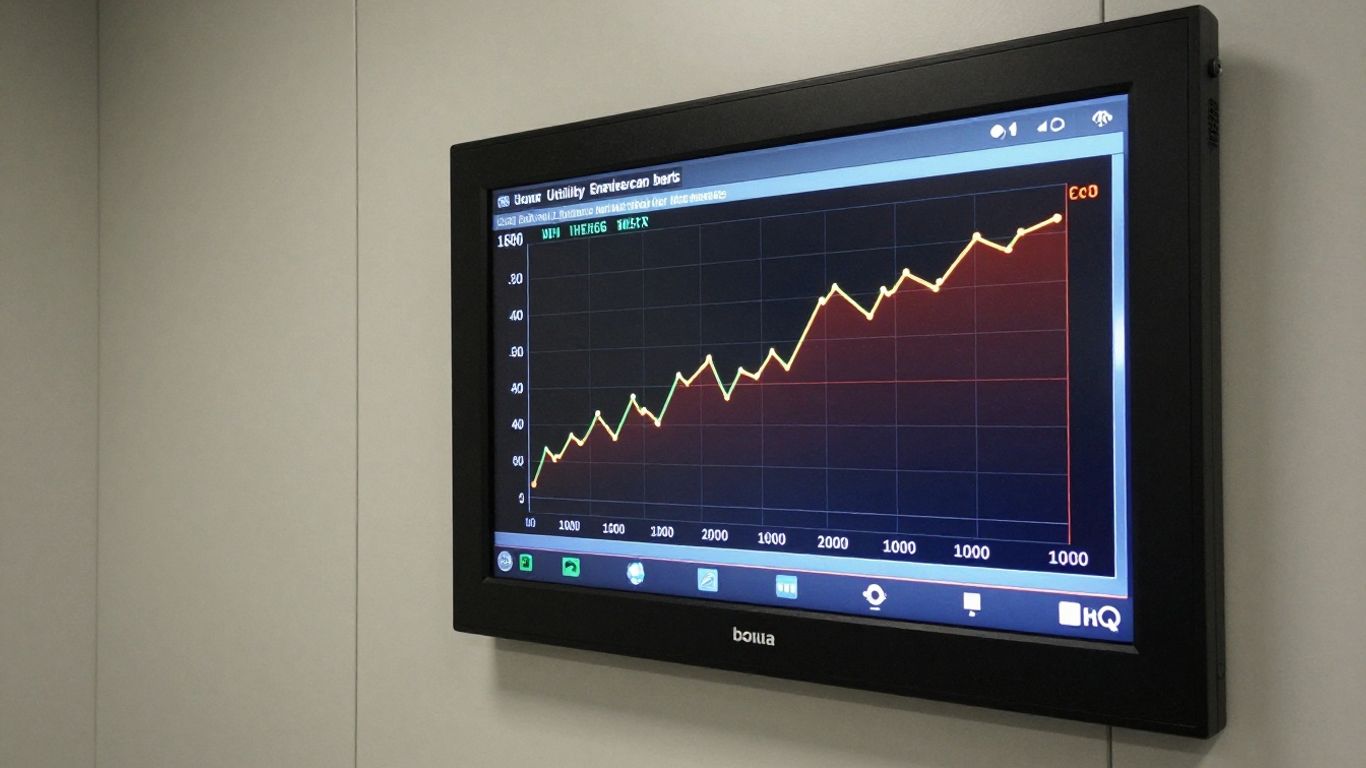
Investing in storage is a financial decision as much as a technical one. Businesses can see immediate differences in their ledger as peak penalties vanish from monthly utility statements. Over time, the cost of the system is often recovered by the elimination of these recurring charges.
Lowering monthly utility demand charge invoices
By keeping the maximum kW consumption under strict control, businesses effectively stop paying the high base rates associated with sudden load spikes. This is a recurring monthly saving that compounds significantly over the project lifecycle. When managers commercial battery power for load leveling successfully, the reduction in monthly utility overhead is one of the most visible forms of ROI for any facility project.
Improving solar self-consumption rates
Facilities with on-site solar gain an additional benefit by storing excess generation during the day for use in the evening peak. This maximizes the value of every unit of solar electricity produced, as it avoids selling power at low rates while buying grid power at high rates. It is the most robust way to manage electricity across the full daily cycle.
Evaluating hidden operational savings
Beyond invoices, systems provide secondary advantages like improved power quality and reduced wear on main switchgear. By smoothing the draw, sensitive equipment is less prone to the stress of voltage wobbles or transient spikes. These operational efficiencies reduce the maintenance headache and prolong the life of expensive facility assets.
Estimating the payback period for your investment
Calculating ROI involves factoring in the upfront hardware costs versus the average monthly savings on demand charges. Most facilities find that a well-deployed system pays for itself within five to seven years. It is important to work with utility providers to confirm current tariff structures as these vary by region and directly impact the return cycle.
Strategic implementation for businesses
Implementation requires a deliberate process that begins with understanding the current state of power usage. A sloppy approach leads to wasted capital, while a precise plan targets the most expensive parts of the utility invoice. Business leaders should follow a structured sequence to ensure the project meets their financial goals.
Conducting a comprehensive energy audit
Facilities must record power usage data for at least 12 months to map the frequency and magnitude of their peaks. This audit reveals the specific processes that cause the most significant charges, allowing teams to determine if a permanent storage solution is necessary. It provides the baseline metrics needed to size the battery appropriately, ensuring the investment is neither over-calculated nor insufficient for the peak loads.
Setting optimal power output thresholds
Once data is collected, managers must set threshold limits for when the battery should discharge. If the threshold is set too low, the battery may empty prematurely before the peak passes. If set too high, the facility might still trigger a high demand charge. Proper threshold settings depend on:
- The historical frequency of peak events during a typical month.
- The maximum discharge rate of the installed battery system.
- The utility’s specific measurement interval for demand billing.
- The critical nature of specific building processes that need priority power.
These four factors are critical for balancing the system’s performance. By adjusting these settings, facilities can maintain a high degree of control over their grid exposure and ensure the battery stays charged even during consecutive peak days.
Integration with existing building management systems
Compatibility with existing infrastructure is key to a smooth operational setup. The storage system should communicate with HVAC controls and lighting controllers to ensure the overall facility works as a single unit. This cohesion minimizes friction and allows for a truly automated response to utility price signals.
Maintenance requirements for long-term reliability
Regular inspections and firmware updates ensure the system continues to perform as designed over its lifetime. Reliability also hinges on consistent battery health monitoring to detect issues before they affect performance. A proactive maintenance schedule protects the initial investment and ensures the facility avoids unexpected downtime.
Overcoming challenges in energy storage deployment
Deploying large energy storage infrastructure is a complex undertaking involving various logistical and administrative hurdles. Success requires a team that understands not only the electrical engineering but also the local regulatory landscape. Addressing these barriers early prevents major project delays and budget overruns.
Navigating safety codes and municipal permitting
Every municipality has its own fire and safety regulations regarding battery placement and fire suppression. Engaging with local authorities during the design phase is standard practice. Navigating these requirements demands a clear understanding of the site-specific codes to ensure the installation is safe and compliant with all local ordinances.
Addressing battery performance degradation over time
It is natural for batteries to lose capacity as they undergo many charge-discharge cycles. Sophisticated management software tracks this degradation and adjusts the discharge profile to maintain performance. Choosing high-quality components from the outset ensures that the system handles years of service before significant capacity loss occurs.
Managing regulatory hurdles and utility interconnection
Interconnection agreements with the local utility can be a slow administrative process. These agreements dictate how the system is allowed to interact with the grid and whether it can feed energy back. Providing detailed technical documentation early in the planning process often accelerates the approval timeline, moving the project from theory to reality without excessive back-and-forth.
Protecting data security in connected energy systems
Modern storage systems are internet-enabled, which adds a layer of operational security risk. Protecting the communication link between your battery and the remote management portal is vital. Secure encryption and robust access control protocols should be mandatory components of any connected system to ensure that command data and facility usage patterns remain private.
Conclusion
Peak shaving represents a strategic evolution for businesses looking to gain independence from volatile utility pricing by managing electricity consumption more effectively. Through the intelligent application of battery storage, organizations can dampen the effect of high-demand charges and optimize the efficiency of their existing energy infrastructure. As long as facility managers perform the necessary load analysis and adhere to safety standards, the transition to active energy management offers a path to lower operational costs and a significantly more stable bottom line. By reclaiming control over how and when power is consumed, companies can turn their electricity bill from a source of frustration into a source of predictable operational savings.
Frequently Asked Questions
Does peak shaving require custom facility building changes?
Most systems are designed to be retrofitted into existing electrical panels, though some cases require additional space for the battery racks and inverter equipment near your main switchgear.
How long does a typical battery system last for peak shaving?
Typical industrial-grade storage systems are designed for a service life of approximately 10 to 15 years, depending on the intensity of the usage cycles and the local climate where they operate.
Can peak shaving work without a solar energy system?
Yes, peak shaving works by moving grid power use from expensive times to off-peak times, regardless of whether a facility utilizes solar or wind energy to supplement its requirements at other times.
How does the energy management system protect against power outages?
While primary systems are designed for economic load leveling, many modern installations include a backup mode that keeps the battery charged as an emergency reserve if the grid service is lost during a storm or emergency.
Is it difficult to monitor the performance of these systems?
Most modern systems include intuitive mobile and desktop portals that highlight battery state-of-charge, peak reduction metrics, and current system health, allowing for proactive oversight of your total energy impact.
Will utility providers approve a home or business peak shaving installation?
Yes, most utilities encourage peak shaving as it helps them manage load density on their infrastructure, though you must follow the formal interconnection application process to ensure compatibility and grid safety.
Do batteries make noise that would disrupt an office environment?
Most components like batteries are silent, though the cooling systems and inverters may produce a low hum that is usually contained within the enclosures designed for safe installation away from primary office areas.