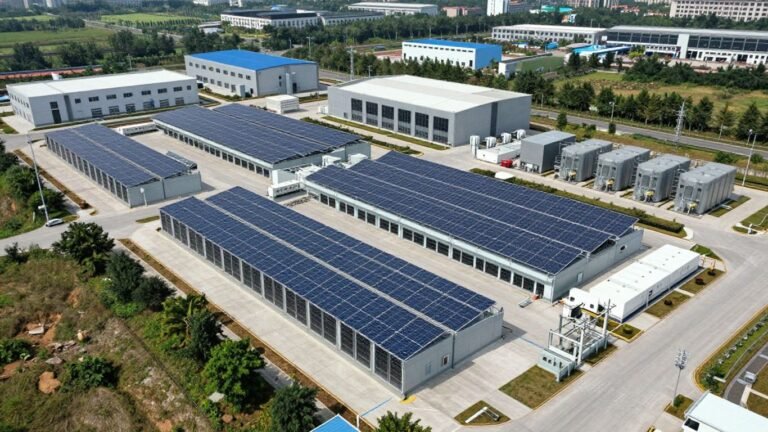
Natural Gas Microgrids for Data Centers: Benefits and Drawbacks
Key Takeaways
A natural gas microgrid for data centers can add firm on-site capacity, but it is not a universal replacement for utility power or clean energy. The right design depends on load shape, outage planning, fuel availability, permits, and long-term economics.
- Natural gas microgrids combine generation, controls, distribution equipment, and often batteries or utility power.
- They can help data centers obtain firm electricity before a full utility interconnection is available.
- Islanding capability can protect critical loads during grid interruptions, provided fuel and equipment remain available.
- Emissions, pipeline exposure, noise, maintenance, and permitting can materially affect the project.
- A fair evaluation compares gas generation with utility upgrades, batteries, renewables, diesel, and other resilient-power designs.
How a natural gas microgrid for data centers works
A microgrid creates a defined electrical boundary around a facility or campus. Inside that boundary, generators, switchgear, inverters, batteries, controls, and loads work together while the system remains connected to the utility when conditions allow. The central engineering question is not simply how much generation to install, but how the resources should respond as demand, grid conditions, and operating priorities change.
A useful introduction to the subject is this guide to microgrid components, which explains how generation, storage, and controls fit together. For a data center, those parts must also coordinate with medium-voltage distribution, uninterruptible power supplies, cooling systems, protection equipment, and a carefully defined critical-load hierarchy.
Core components and power flows
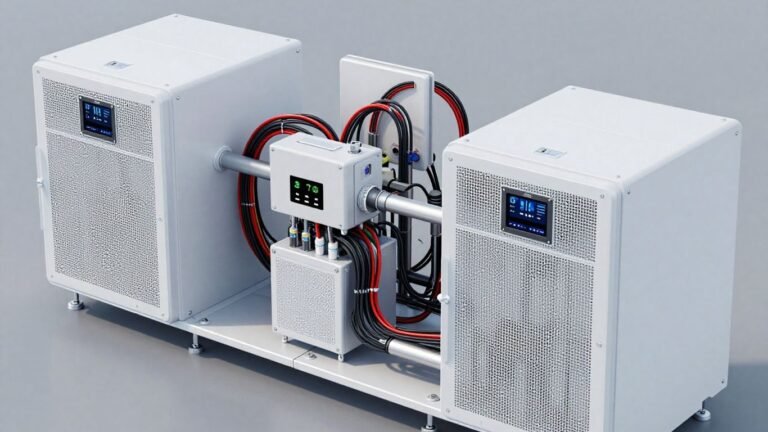
The basic power path typically begins with a utility interconnection and one or more natural gas generation units. Power flows through transformers, switchgear, protective relays, and distribution feeders before reaching mechanical and IT loads. Batteries may sit behind the meter or at selected distribution points to provide fast response, ride-through, or peak management.
A microgrid controller supervises those assets and determines when local generation should run, when batteries should charge or discharge, and which loads can be shed. The protected boundary matters because voltage and frequency protection can separate sensitive equipment from disturbances originating outside the facility.
Natural gas generators, turbines, and fuel cells
Natural gas reciprocating engines, gas turbines, and fuel cells each present a different balance of efficiency, footprint, response time, maintenance, and emissions. Engines may suit modular installations with changing load, while turbines can be attractive at larger scales or where fast starts and high power density matter. Fuel cells produce electricity electrochemically and may offer quiet operation, though fuel processing, cost, and availability require close review.
The technology choice should follow the duty cycle rather than a preference for a particular machine. VoltaGrid, for example, describes natural gas-powered microgrids as scalable, modular systems that can provide short-term bridge power during construction or expansion and long-term bridge power for phased growth or permanent on-site power. Those are documented use cases, not a guarantee that every site will receive the same performance.
Microgrid controls and load management
Controls coordinate generation, storage, utility imports, and load priorities. They also support transitions between operating modes, manage synchronization, and provide operators with alarms and historical data. At a data center, the controls must respect the narrow electrical tolerances of IT equipment while coordinating with UPS systems and cooling controls.
Load management begins with a practical classification of equipment. Critical IT loads may require continuous service, while some cooling, administrative, or construction loads can be staged or curtailed. The controller’s settings should be tested under real operating conditions, including generator trips, sudden load changes, and loss of communications.
Grid-connected and islanded operating modes
In grid-connected operation, the utility supplies some or all of the demand while the microgrid supplements it, manages peaks, or remains ready for an outage. In islanded operation, a point of common coupling opens and local resources establish the electrical balance. The transition can be automatic, but the result depends on protection settings, available spinning capacity, battery response, and the sequence of load pickup.
Islanded operation is therefore a system behavior, not a label on a generator. Commissioning should demonstrate synchronization, intentional islanding, black start where required, load shedding, resynchronization, and recovery from a component failure.
Why data centers are adopting natural gas microgrids
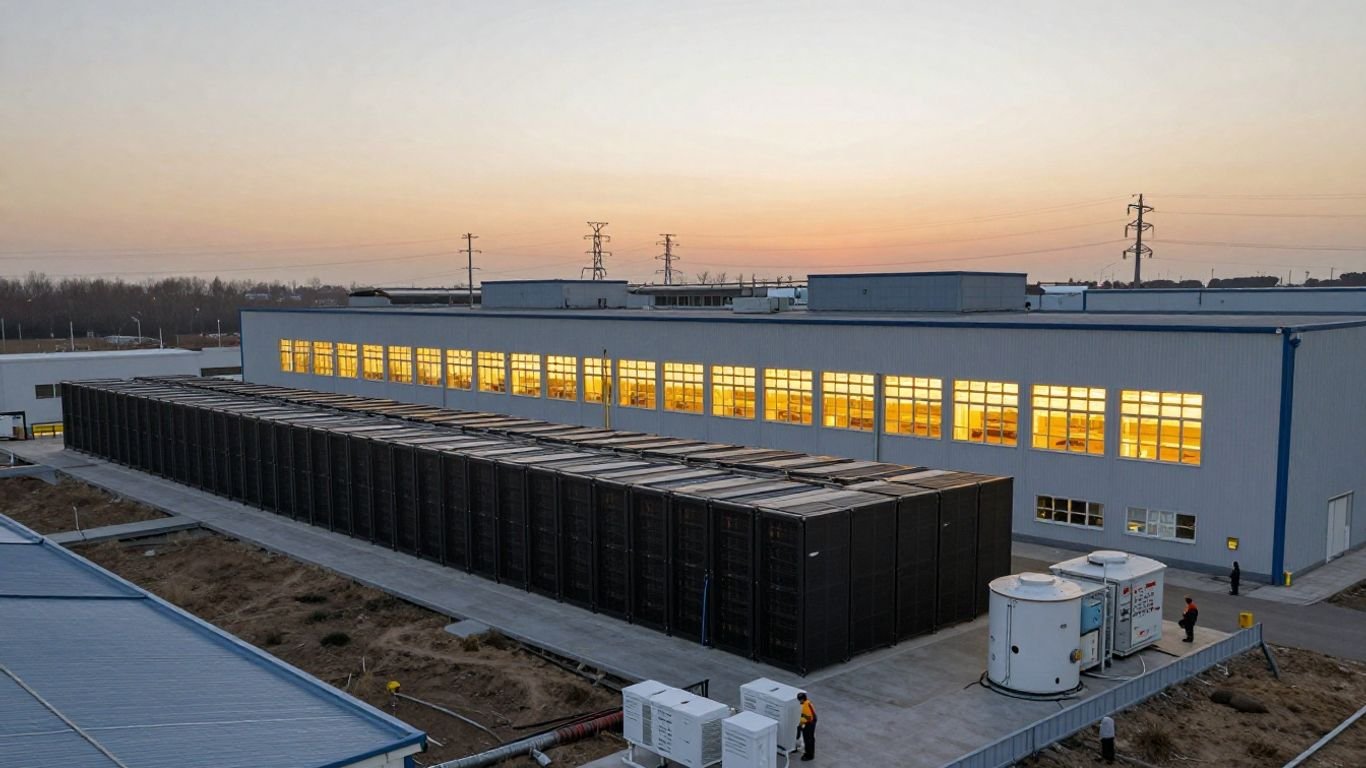
Demand for data-center capacity is colliding with long utility interconnection queues, transmission constraints, and difficult construction schedules. Local generation can give a campus another path to firm electricity while utility work continues. It can also remain useful after interconnection by serving supplemental capacity, mechanical loads, or outage duties.
The approach is especially visible in projects with large, fluctuating computing loads. Still, speed should not be confused with simplicity: fuel infrastructure, air permits, electrical studies, and community review can all affect the schedule.
Faster access to firm power
A gas microgrid may be deployed before a planned substation or transmission upgrade is complete. This can help a facility bring buildings online in phases instead of waiting for the entire campus to receive its final utility allocation. VoltaGrid describes its offering as a rapid, reliable short-term bridge for data centers needing immediate power support during construction or expansion.
The value is greatest when the temporary system has a credible path to reuse. A developer should ask whether units can be relocated, retained as supplemental generation, or integrated into the permanent electrical architecture rather than treated as disposable schedule insurance.
Improved resilience during grid outages
A data center’s utility connection can fail because of storms, equipment faults, wildfire risk, or upstream capacity problems. A microgrid that can safely island gives operators another source of electricity, although resilience still depends on fuel delivery, maintenance, spare parts, controls, and the ability to reject noncritical demand.
A resilient design usually begins with explicit outage assumptions: how often interruptions may occur, how long they may last, and which loads must remain online. Batteries can cover the transition while generators start, but they do not remove the need to plan for extended operation.
Support for high-density computing loads
AI and other intensive workloads can create high, rapidly changing demand. Local generation can add capacity near the load and reduce the amount of power that must travel through already constrained distribution infrastructure. The system must nevertheless account for harmonics, step changes, cooling demand, and the difference between average and peak consumption.
The AI data center microgrid guide is useful background on how local generation, storage, and energy management can be coordinated around intensive computing. In practice, site-specific measurements matter more than a generic workload profile.
Reduced dependence on constrained utility infrastructure
On-site generation can reduce reliance on a single utility delivery path, particularly during a campus buildout. It may also allow the owner to sequence electrical investments, use utility power for a portion of the load, and reserve local generation for peaks or emergencies.
That does not make the site independent by default. A gas plant still depends on pipeline pressure, compressor stations, control systems, and maintenance access, while the utility may remain essential for balancing and redundancy.
Key benefits for data center operators
The strongest case for a natural gas microgrid is usually a combination of reliability, schedule, and operating flexibility. A system can be valuable even when it does not run at full output every hour, because its availability may protect revenue-producing equipment during an outage or bridge a utility delay. The benefits should therefore be measured across normal operation, planned transitions, and rare but costly disruptions.
Financial results vary widely with gas prices, tariffs, utilization, and equipment ownership. Operators should evaluate those variables together rather than treating fuel cost or nameplate capacity as the whole business case.
Power quality and uptime advantages
Local generation and power electronics can help manage voltage and frequency disturbances before they reach sensitive IT equipment. The benefit depends on coordination with UPS systems, protection devices, grounding, and controls. A generator that starts reliably but produces unstable power is not an adequate data-center solution.
The goal is a tested electrical response with clear ride-through times and failure sequences. Operators should verify performance during load steps, generator trips, utility disturbances, and maintenance conditions.
Potentially lower energy costs
A microgrid may reduce demand charges, avoid some peak utility purchases, or provide electricity when utility service is especially expensive. Those savings must be weighed against gas consumption, fixed service charges, emissions-control costs, staffing, maintenance, and capital recovery.
Some owners may prefer a service model rather than owning every asset. Microgrid-as-a-Service describes an approach based on reduced upfront capital expenditure and more predictable operating expenses, though the commercial terms and risk allocation must be reviewed for each project.
Scalability for phased campus expansion
Modular generation can match the sequence in which buildings, racks, and cooling systems are commissioned. A developer can add capacity as measured demand grows instead of installing the entire final plant on day one. That flexibility is useful when workload forecasts remain uncertain.
The expansion plan should preserve space, interconnection capacity, fuel access, and protection margins for later stages. Temporary units can be helpful, but only if their controls and voltage characteristics are compatible with the eventual campus design.
Combined heat and power opportunities
Where a facility has a steady thermal demand, engine or turbine waste heat may support hot-water production, absorption cooling, or other useful processes. Combined heat and power can improve total fuel utilization, but data centers do not automatically have a suitable heat sink. Cooling loads, seasonal conditions, and redundancy requirements must be modeled.
A CHP system also adds heat exchangers, pumps, controls, and maintenance obligations. Its economics are strongest when useful heat is available for many operating hours and when the thermal equipment can be bypassed without threatening critical electrical service.
Black-start and backup generation capabilities
Some microgrids are designed to start without utility power, energize selected buses, and restore loads in a planned sequence. Black-start capability can be valuable after a broad outage, but it requires more than a generator nameplate: fuel valves, batteries, controls, protection, auxiliary power, and operating procedures all have to work.
Backup capacity is best treated as a layered design. A data center may combine UPS ride-through, batteries, generators, utility feeds, and load shedding so that one failed component does not immediately become a site-wide event.
Drawbacks and technical limitations
Natural gas microgrids solve some power constraints by adding infrastructure of their own. Their risks are different from utility-only risks, not absent. Before approving a project, owners should examine fuel security, emissions, community response, maintenance logistics, and the possibility that future policy or technology changes reduce the value of combustion assets.
A sober assessment can still support the project. It simply makes the operating assumptions visible and gives decision-makers a basis for comparing alternatives.
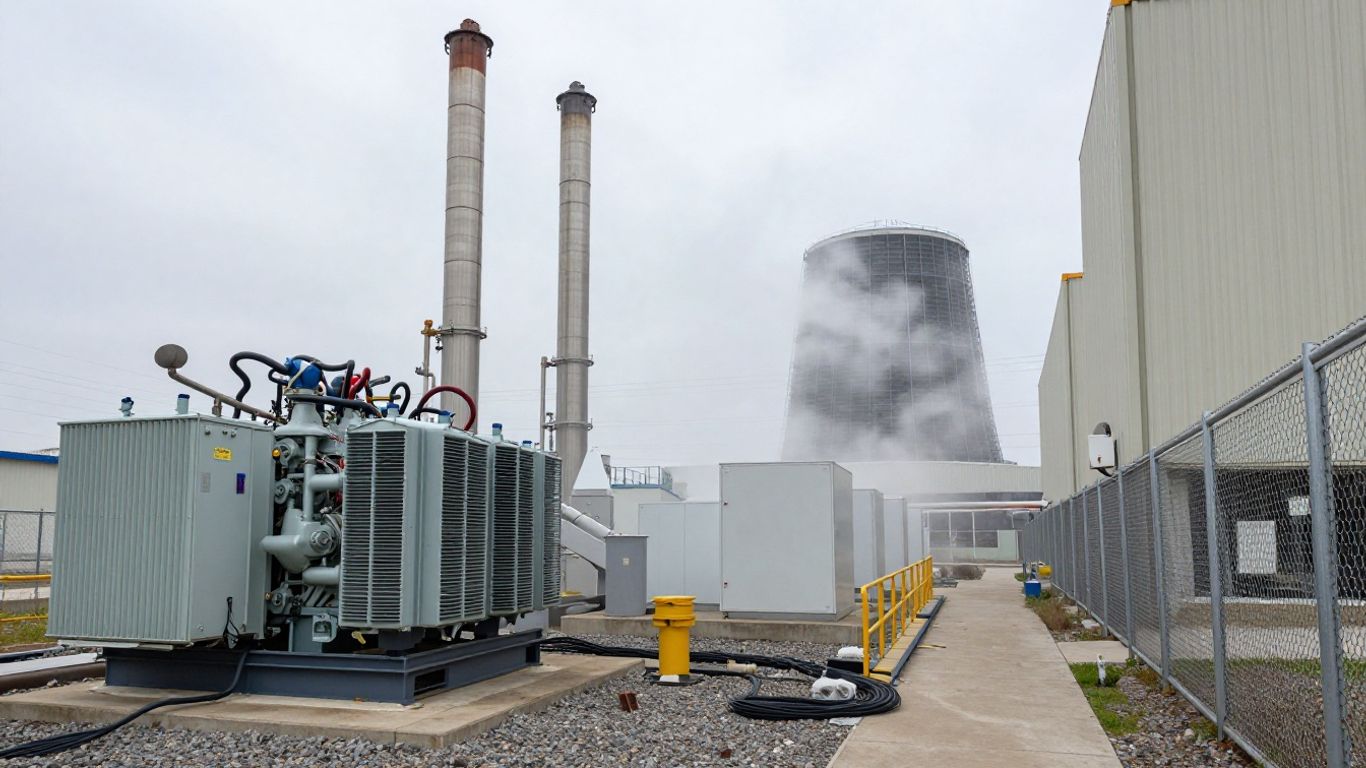
Natural gas supply and pipeline vulnerability
A generator cannot produce power if gas pressure falls below operating requirements or the delivery system is interrupted. Cold-weather demand, upstream failures, compressor problems, physical damage, and contractual curtailment can all affect supply. On-site storage of natural gas is generally limited compared with liquid-fuel storage, so extended-outage planning needs particular care.
Owners may need dual pipeline feeds, firm transportation contracts, fuel-switching capability, or a separate backup source. Each option adds cost and operational complexity, but ignoring the issue simply transfers the risk to an untested assumption.
Emissions and local air-quality concerns
Combustion equipment emits greenhouse gases and criteria pollutants, including nitrogen oxides and carbon monoxide. The quantity depends on technology, fuel quality, runtime, controls, and operating conditions. Even when emissions are lower than those from older generation, they can remain significant near populated communities.
Permits may restrict hours, startup events, fuel use, or maintenance testing. These limits can affect the availability model, especially if the owner expects the microgrid to operate as both a daily energy resource and an emergency plant.
Fuel price volatility and operating costs
Natural gas prices can change with weather, regional constraints, storage levels, and market conditions. A project that looks inexpensive under one price curve may perform differently under another. Fixed charges, transport costs, emissions compliance, overhaul reserves, and labor also belong in the model.
Operators should test low-, base-, and high-price cases, along with different generator utilization rates. The result may show that gas is most valuable as firm capacity or outage insurance rather than as the cheapest source for every kilowatt-hour.
Noise, space, and maintenance requirements
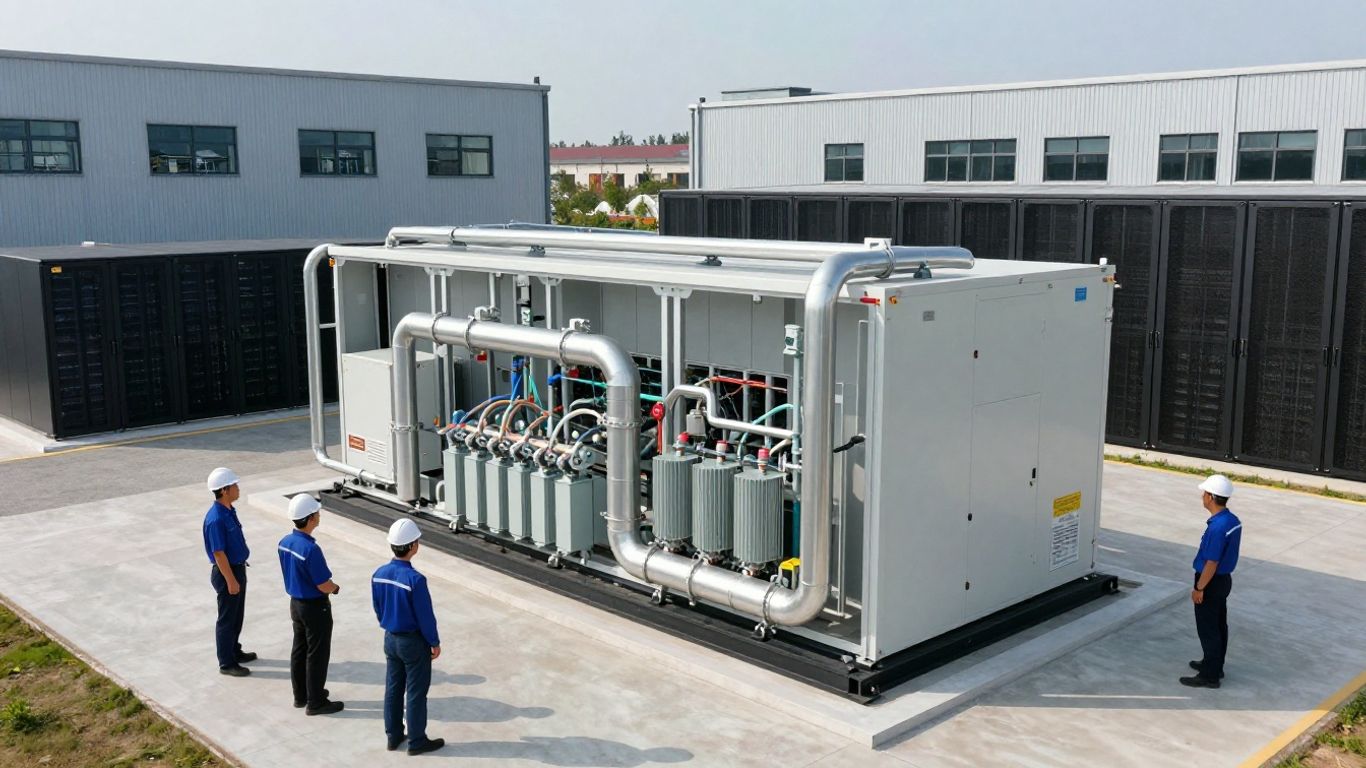
Engines, turbines, transformers, cooling equipment, exhaust systems, and fuel infrastructure require physical room and create sound. Acoustic enclosures can reduce noise but increase footprint and may affect heat rejection. Equipment also needs scheduled service, inspections, spare parts, and safe access during operation.
Maintenance planning should include both routine work and major overhauls. A site that has no room to isolate a unit or bring in replacement equipment may have less practical redundancy than its single-line diagram suggests.
Risks of stranded assets during energy transitions
A gas plant may operate for decades, while electricity markets, emissions rules, and corporate sustainability requirements change much faster. New renewable generation, storage, demand flexibility, or hydrogen infrastructure could alter the plant’s future role. Conversely, grid delays may make local gas generation valuable for years before those alternatives mature.
The most adaptable designs preserve options. Modular equipment, efficient controls, space for batteries, and a clear retirement or conversion plan can reduce the chance that a project becomes difficult to use or expensive to replace.
Environmental, regulatory, and permitting considerations
Environmental review should begin during feasibility, not after equipment has been selected. The project may require air, construction, stormwater, noise, fuel, electrical, and utility approvals, with requirements varying by jurisdiction. A schedule that ignores permitting can erase the time advantage of on-site generation.
The analysis should also include upstream fuel impacts and local conditions. A lower-carbon claim based only on combustion efficiency is incomplete if methane leakage, backup runtime, and construction impacts are excluded.
Greenhouse gas and criteria pollutant emissions
Greenhouse gas accounting should cover fuel consumed during normal generation, testing, startup, and emergencies. Criteria pollutants require a separate local-air analysis because health impacts depend on pollutant type, stack design, operating hours, and nearby receptors.
Owners should establish an emissions baseline before comparing gas with utility power, batteries, renewable generation, or diesel. The cleanest operational strategy may be one that limits generator runtime and uses local generation primarily for reliability and constrained periods.
Air permits and emissions control systems
Air permits can define allowable equipment, fuel, annual hours, emission rates, monitoring, reporting, and control technology. Selective catalytic reduction, oxidation catalysts, low-emission combustion, and other systems may be required depending on the installation and jurisdiction.
Permit conditions need to be reflected in the dispatch model. If a plant cannot run whenever the owner expects, its dependable capacity and financial value may be lower than its rated output.
Methane leakage across the fuel supply chain
Natural gas climate accounting does not end at the facility fence line. Methane can escape during production, processing, transmission, storage, and distribution. Because methane is a potent greenhouse gas, leakage rates can change the comparison between gas generation and other power sources.
A credible assessment should state its leakage assumptions and use consistent boundaries across alternatives. It should also distinguish measured or contracted information from broad industry averages.
Renewable natural gas and hydrogen blending options
Renewable natural gas and hydrogen may be considered as future fuel pathways, but availability, composition, certification, blending limits, storage, safety, and equipment compatibility must be verified. A fuel label alone does not establish lower lifecycle emissions or guaranteed supply.
Designers should ask manufacturers and suppliers for documented operating limits. Any conversion or blending plan should preserve safe combustion, emissions compliance, warranty coverage, and dependable performance during an outage.
Local opposition and environmental justice concerns
Communities may raise concerns about noise, air emissions, traffic, water use, visual impact, and the cumulative burden of industrial facilities. Those concerns can affect permits and schedules even when the electrical rationale is strong. Meaningful engagement should begin before the design is effectively fixed.
A fair process explains expected runtime, monitoring, emergency procedures, and alternatives. It should also consider who lives near the equipment and whether the project adds pollution to an area already carrying disproportionate environmental burdens.
Designing and sizing the microgrid
Sizing starts with measured electrical behavior, not a simple multiplication of rack count by an assumed power density. Engineers need interval load data, projected expansion, cooling demand, startup sequences, fault-current information, and the difference between critical, noncritical, and ride-through loads. The 5 MW microgrid design guide offers a useful framework for treating architecture, controls, protection, and operations as one integrated design problem.
A good design also tests abnormal conditions. The system should be modeled when a generator is unavailable, a battery is depleted, the utility is lost, fuel delivery is curtailed, or a major load starts unexpectedly.
Matching generation capacity to critical and noncritical loads
The first step is to define which loads must remain online and which can be delayed or disconnected. IT equipment, UPS systems, cooling, fire protection, and selected controls may belong to different priority tiers. Generation can then be sized around the required service level rather than the entire connected load.
This approach can reduce unnecessary capital cost while preserving operational resilience. It also gives the controller clear instructions during islanding instead of leaving load shedding to an improvised response.
Planning for redundancy and N+1 or 2N architectures
N+1 means the system can meet its required duty with one unit unavailable; 2N generally provides two independent capacity paths. Neither label proves resilience without examining fuel, switchgear, controls, distribution routes, maintenance states, and common-mode failures.
Redundancy should be tested against realistic events, including a unit trip during peak load and planned maintenance on one electrical path. The right architecture may differ between IT loads, cooling loads, and temporary construction loads.
Integrating batteries, renewables, and utility power
Batteries can respond faster than thermal generators, while solar can reduce fuel use when production aligns with demand. Utility power may remain the most economical source during ordinary conditions. A hybrid system can assign each resource a role instead of asking one technology to do everything.
The operating strategy should define charging limits, reserve state of charge, inverter behavior, renewable curtailment, and generator minimum loading. These details determine whether a hybrid design is genuinely flexible or merely a collection of disconnected assets.
Managing ramp rates and data center power quality
Large computing loads can change quickly, and generators have limits on how fast they can respond. Batteries or other power electronics can bridge the gap while engines or turbines ramp. Harmonics, voltage regulation, frequency response, and short-circuit strength also need to be checked at every relevant operating point.
Commissioning should use realistic load-bank tests and, where possible, representative IT and cooling behavior. A design that works at steady state may still fail during a rapid transition.
Preparing for fuel interruptions and extended outages
Outage planning should extend beyond the first few hours. The team needs fuel contracts, pipeline communication, emergency access, maintenance staffing, spare parts, black-start procedures, and a plan for orderly load reduction if generation or fuel becomes constrained.
The operating plan can be organized around several practical questions:
- Which loads are shed first, and who authorizes that action?
- How many hours of generation can the available fuel support?
- What happens if one generator or the control system fails?
- How will fuel, equipment, and personnel reach the site during a regional emergency?
These answers turn a nominal backup concept into an executable response. They should be rehearsed, documented, and updated as the campus expands.
Evaluating project economics and alternatives
The economics of a natural gas microgrid depend on more than the cost of generators. The model should include electrical infrastructure, fuel service, emissions controls, interconnection work, controls, land, financing, maintenance, replacement cycles, and the value of avoided outages. It should also show what happens if the utility connection arrives earlier or later than expected.
A microgrid feasibility study can organize technical, financial, and regulatory inputs before a final architecture is chosen. That discipline helps prevent a favorable result from resting on one optimistic tariff, utilization rate, or fuel-price forecast.
Capital costs, fuel costs, and total cost of ownership
Capital costs include generation, transformers, switchgear, distribution, controls, civil work, sound attenuation, fuel infrastructure, and emissions equipment. Operating costs include fuel, maintenance, labor, testing, permits, insurance, and eventual overhauls. Replacement timing matters because engines, batteries, inverters, and controls do not share the same useful life.
A total-cost model should show annual cash flows and sensitivity ranges. It should also separate the cost of capacity kept available for resilience from the cost of energy produced during normal operation.
Comparing natural gas microgrids with diesel backup systems
Diesel systems are familiar and can store fuel on-site for a defined period, while natural gas systems may support longer operation without liquid-fuel deliveries when the pipeline remains available. Gas generation can introduce different emissions, permitting, and fuel-security questions. Neither technology is automatically superior.
The comparison should use the same reliability target, runtime, maintenance standard, and emissions boundary. It should also account for whether generators are backup-only or expected to operate regularly.
Comparing gas generation with utility, solar, and battery solutions
Utility upgrades may provide lower-cost energy but require time, approvals, and regional infrastructure. Solar can reduce purchases and emissions during daylight but varies with weather and does not by itself provide firm overnight capacity. Batteries respond quickly and can shift energy, yet their duration and replacement cost may limit their role in a long outage.
A mixed portfolio often performs better than a single resource. The decision should reflect land availability, interconnection timing, load shape, operating constraints, and the owner’s tolerance for fuel and policy risk.
Estimating payback under different load and tariff scenarios
Payback calculations should vary utilization, peak demand, energy prices, gas prices, outage frequency, and the date of utility interconnection. They should include downside cases in which the microgrid runs less often than expected or fuel costs rise. Resilience value can be modeled separately rather than hidden inside an optimistic energy-savings estimate.
The microgrid ROI and payback guide provides a starting point for considering capital, operating costs, bill avoidance, grid services, and resilience value. A project can have a long energy-only payback yet remain reasonable if avoiding one severe outage has substantial business value.
Metrics for reliability, emissions, and operational performance
Financial measures should sit beside technical and environmental measures. Useful metrics include availability, forced-outage rate, islanding success, minutes of critical-load interruption, fuel use per kilowatt-hour, emissions per kilowatt-hour, maintenance hours, and the percentage of load served by each resource.
A balanced scorecard might look like this:
| Metric area | Example measure | Why it matters |
|---|---|---|
| Reliability | Critical-load availability | Shows whether the design protects the service that matters most |
| Fuel security | Hours of firm fuel supply | Tests performance during an extended outage |
| Economics | Total cost per delivered kilowatt-hour | Compares generation and utility strategies fairly |
| Environment | Greenhouse gas and criteria pollutant emissions | Connects operation with permit and sustainability goals |
| Operations | Successful transitions and forced outages | Reveals whether the system works outside normal conditions |
These measures should be tracked after commissioning, not only forecast during development. Actual data can guide dispatch changes, maintenance intervals, future capacity additions, and decisions about when the microgrid should run.
Conclusion
A natural gas microgrid for data centers can provide firm capacity, schedule flexibility, and a second path to resilience when utility infrastructure is constrained. It also brings real obligations: fuel security, emissions controls, permitting, maintenance, community engagement, and careful lifecycle modeling. The strongest projects treat gas generation as one part of a tested power architecture, then compare it honestly with utility expansion, batteries, renewables, diesel, and hybrid designs.
Frequently Asked Questions
What is a natural gas microgrid for data centers?
It is a localized electrical system that uses natural gas generation, controls, distribution equipment, and sometimes batteries or renewables to serve a data center while operating with or without the utility grid.
Can a natural gas microgrid replace the utility connection?
It can supply some or all facility demand in certain designs, but many projects retain utility service for balancing, redundancy, normal operation, or future expansion.
How does a gas microgrid improve data center resilience?
If properly designed, it can isolate from a utility outage and use local generation and storage to keep designated critical loads operating. Fuel, maintenance, controls, and distribution reliability remain essential.
Are natural gas microgrids cleaner than diesel generators?
They may have different emissions profiles, but the answer depends on equipment, runtime, fuel supply, methane leakage, controls, and the comparison boundary. Local permitting requirements still apply.
What happens if the natural gas supply is interrupted?
The facility may need dual feeds, firm transportation, fuel-switching capability, stored backup fuel, batteries, load shedding, or another generation source to maintain service during an interruption.
How are microgrids sized for data centers?
Engineers classify critical and noncritical loads, study interval demand and expansion plans, define outage requirements, and model generation, storage, protection, and controls under normal and abnormal conditions.
What alternatives should be compared with gas generation?
A fair study may compare utility upgrades, diesel backup, solar, batteries, fuel cells, renewable natural gas, hydrogen options, and hybrid portfolios using consistent reliability, emissions, cost, and operating assumptions.