Keep the Water Flowing: Backup Power for Your Well Pump
Losing power when you rely on a well can be a real pain. Suddenly, there’s no water for drinking, cooking, or even flushing the toilet, and that’s a problem. It’s not just about comfort; it’s about having basic necessities. Luckily, there are ways to make sure your well pump keeps working, even when the grid is down. This guide will walk you through the options for backup power for your well pump.
Key Takeaways
- Understand your well pump’s specific voltage and wattage, especially the difference between running and starting power needs, as pumps require a significant surge to begin operation.
- Explore various backup power solutions, including generators, battery systems, and solar integration, to keep your well pump operational during outages.
- Consider manual alternatives like hand pumps or gravity-fed systems as reliable, electricity-free options for accessing water when power is unavailable.
- Properly size your backup system by calculating surge wattage, determining battery capacity for desired run time, and matching generator output to your pump’s demand.
- Prioritize safety by using transfer switches for proper integration and always testing your backup power system before an emergency strikes.
Understanding Your Well Pump’s Power Needs
When the power grid takes a break, your well pump stops working. This means no water for drinking, cooking, or flushing. It’s a situation that can quickly turn from inconvenient to serious, especially during extended outages. Figuring out how to power a well pump without electricity is key to staying prepared. The first step is understanding exactly what your pump needs.
Identifying Pump Voltage and Wattage
Most residential well pumps run on either 120V or 240V. You can usually find this information on a label attached to the pump motor itself. If you can’t find it there, check your electrical panel. Look for a double-pole breaker (it’s wider than a standard one) labeled "Well" or "Pump." The amperage rating on the breaker is also important. If you only see Volts and Amps, you can calculate the wattage: Watts = Volts × Amps. For example, a pump running at 240V and drawing 10 amps uses 2,400 watts.
The Critical Difference: Running vs. Starting Watts
This is where many people get tripped up. A pump doesn’t just need power to run; it needs a much bigger jolt to start. This initial surge, often called starting watts or surge watts, can be two to three times higher than the steady running watts. A pump that uses 1,000 watts to run might need 3,000 watts just to get going. If your backup power source can’t handle that initial spike, the pump simply won’t turn on, leaving you without water. This is a common reason why a generator for well pump setups might seem undersized if you only consider running watts.
Here’s a general idea of what different pump sizes might need:
| Pump Size | Estimated Running Watts | Estimated Starting Watts |
|---|---|---|
| 1/2 HP | 800 – 1,000 | 2,500 – 3,000 |
| 3/4 HP | 1,200 – 1,500 | 3,500 – 4,500 |
| 1 HP | 1,500 – 2,000 | 5,000 – 6,000 |
Factors Affecting Pump Power Consumption
Several things influence how much power your pump uses. The depth of your well is a big one; lifting water from further down takes more energy. The type of pump (submersible vs. jet pump) also plays a role. Older pumps tend to be less efficient and use more electricity than newer models. Even how often your pump runs matters. If you have a small pressure tank, the pump will cycle on and off more frequently, increasing overall power usage over time. Considering these factors helps you get a clearer picture of your well pump power outage solution needs.
When planning for a well pump power outage solution, always err on the side of caution. It’s better to have a backup system that’s slightly oversized than one that’s too small to handle the pump’s starting surge. This initial surge is the most demanding part of the pump’s operation and the most common point of failure for backup power systems.
Exploring Backup Power Solutions
When the power grid decides to take a break, keeping your water flowing is a top priority. For those of us with private wells, this means our pump needs a reliable power source when the lights go out. Thankfully, there are several ways to tackle this, from generators to battery systems.
Generator Options for Well Pumps
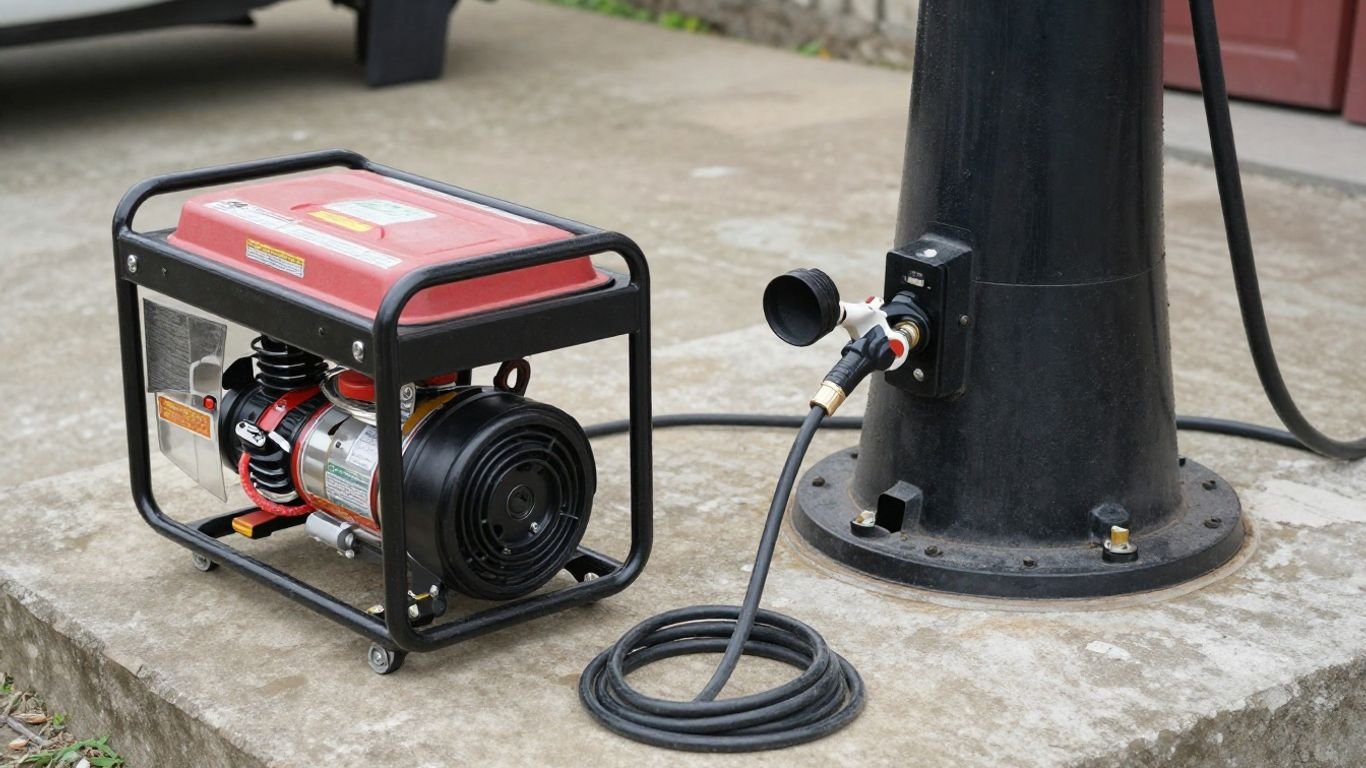
Generators are a common choice for backup power. They create electricity on demand, which is great for keeping things running. You’ll want to consider the type of generator and its output. Some are portable, while others are whole-house standby units. For a well pump, you need to pay close attention to the surge wattage. Pumps, especially at 120V or 240V, need a big jolt of power to start up, often much more than they use once running. A generator that can’t handle this startup surge won’t be able to get your pump going.
- Gasoline Generators: These are widely available and relatively affordable. You’ll need to store fuel and maintain the generator, though. Fuel can degrade over time, so using a stabilizer and rotating your stock is a good idea.
- Propane Generators: Propane stores longer than gasoline and burns cleaner. You’ll need a propane tank, of course.
- Dual-Fuel Generators: These offer flexibility, running on either gasoline or propane.
When sizing a generator, make sure its running wattage can handle your pump and any other essential items, and its surge wattage can handle the pump’s startup demand. A generator that’s too small just won’t cut it.
Battery Backup Systems for Continuous Flow
Battery backup systems, often called portable power stations or home battery backups, offer a different approach. These systems store energy and can provide it directly to your pump. They are often quieter and produce no exhaust fumes, making them a cleaner option. The key here is the battery’s capacity (measured in watt-hours) and the inverter’s ability to handle the pump’s surge. Some systems, like those from Jackery, are designed with well pumps in mind and can be expanded with extra batteries for longer runtimes. Integrating solar panels with these systems can allow for continuous recharging, significantly extending backup power beyond a single battery charge, offering greater energy independence during outages. This type of system can be a game-changer for keeping water on during extended outages.
- Capacity (Watt-hours): How much energy the battery can store. This determines how long it can run your pump.
- Inverter Output (Watts): The maximum power the system can deliver at any moment, critical for pump startup.
- Expandability: Can you add more batteries if you need longer backup times?
Realistic runtime calculations should consider average load and potential energy losses. Don’t forget that converting DC power from the battery to AC power for your pump uses some energy, typically around 10-15%.
Solar Power Integration for Sustainable Energy
Solar power can be integrated with battery backup systems to create a more sustainable and long-term solution. Solar panels capture sunlight and convert it into electricity, which can then charge your battery bank. This means that even during long power outages, as long as the sun is shining, your battery can be replenished. This approach reduces reliance on fossil fuels and can provide a virtually endless water supply, provided there’s enough sunlight. The ability to recharge during the day is a huge advantage for extended emergencies. It turns your backup system from a finite resource into a renewable one.
Manual Alternatives for Water Access
Sometimes, the most reliable way to get water when the power’s out is to ditch the electricity altogether. We’re talking about manual pumps here, the old-school method that’s seen us through tough times for ages. It’s a solid plan for emergency power for water well situations because it doesn’t rely on anything that can fail when the grid goes down.
The Reliability of Hand Pumps
Think of a hand pump as your ultimate backup. It’s installed right alongside your electric pump, and when the power cuts out, you just head to the wellhead and start pumping by hand. This is the fail-safe for water access. It might take some effort, especially if your well is deep, but you’re guaranteed water. It’s a great way to maintain water independence, whether you’re living off-grid or just want that extra layer of security. For a dependable manual pump option, check out the Simple Pump.
Understanding Shallow vs. Deep Well Hand Pumps
Not all hand pumps are created equal, and knowing the difference is key. You’ve got two main types:
- Shallow Well Pumps: These work on suction and can only pull water from about 25 feet down. They’re simpler but only good for certain well depths.
- Deep Well Pumps: These use a cylinder that sits down in the well to push water up. They can reach much deeper, sometimes up to 300 feet, making them suitable for most wells.
When you’re looking at installing one, make sure there’s enough room in your well casing for both the electric pump’s wires and the manual pump’s pipes. It’s a bit of a mechanical job, but totally doable.
Gravity-Fed Systems for Passive Water Pressure
Another clever way to get water without a pump running is a gravity-fed system. This involves storing water in a large tank placed at a higher elevation than your house. When the power is on, your electric well pump fills this tank. Then, when the power goes out, gravity does the work, pushing the water down to your faucets. It’s a passive system that provides water pressure without needing any electricity. You’ll need a good elevation difference, though; think about 40 to 60 feet of height for decent shower pressure. This setup is a more involved project but offers a very reliable long-term solution for water access. You can also use a large holding tank at ground level and a small, efficient 120V transfer pump to move water into your house when needed, which is easier to power with a small generator or power station. This "two-stage" approach is often quite efficient for backup power needs.
Having a backup hand pump or a gravity-fed system means you’re not completely at the mercy of the power grid for your water. It’s about being prepared and having options when things go wrong. Testing these systems before an emergency is a smart move, just to make sure everything is in working order.
Sizing Your Backup Power System
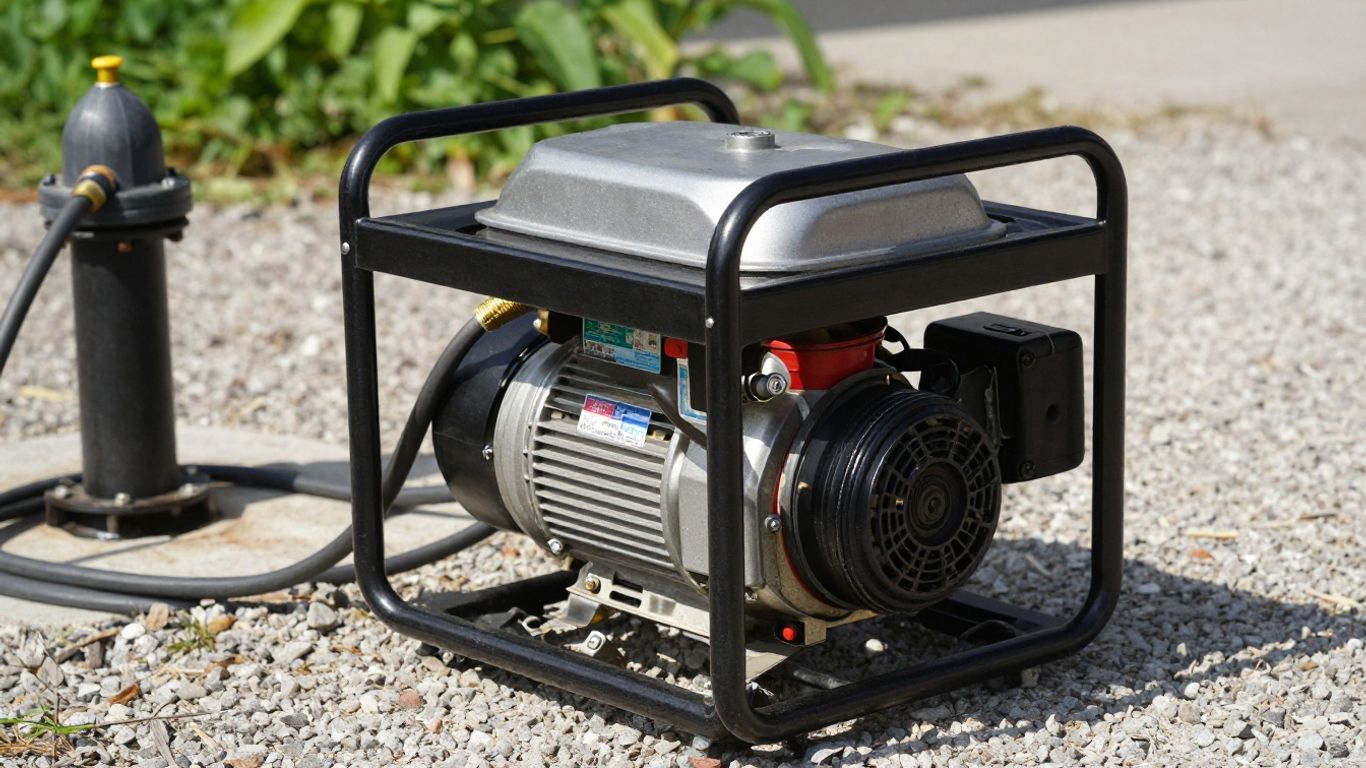
Alright, so you know your pump needs backup, but how much juice does it actually need? This is where things get a little math-y, but don’t worry, we’ll break it down. Getting this right means you won’t be left high and dry when the power goes out.
Calculating Surge Wattage Requirements
This is probably the most important part. Your well pump doesn’t just need power to run; it needs a big jolt to start. Think of it like starting a car – it takes more energy to get the engine turning over than it does to keep it idling. This initial burst is called surge wattage, or starting watts. It can be two to four times higher than the pump’s normal running wattage. If your backup system can’t handle this surge, the pump just won’t kick on, no matter how much power you have stored.
Here’s a general idea of what different pump sizes might need:
- 1/2 HP Pump: Runs around 800-1,000 watts, but needs 2,500-3,000 watts to start.
- 3/4 HP Pump: Runs around 1,200-1,500 watts, but needs 3,500-4,500 watts to start.
- 1 HP Pump: Runs around 1,500-2,000 watts, but needs 5,000-6,000 watts to start.
Always size your backup power source based on the starting (surge) wattage of your pump, not just the running wattage. You can usually find this info on your pump’s data plate or in its manual. If you can’t find it, err on the side of caution and estimate high.
Determining Battery Capacity for Extended Outages
Once you’ve figured out the surge, you need to think about how long you need water. Are we talking a few hours, a day, or several days? This determines your battery capacity, measured in watt-hours (Wh).
Here’s a simple way to think about it:
- Find your pump’s running wattage. (Let’s say it’s 1,000 watts).
- Estimate how many hours per day your pump will run. This depends on your water usage. For basic needs, maybe 1-2 hours a day is enough.
- Multiply running watts by daily hours. (1,000W x 2 hours = 2,000 Wh per day).
- Multiply by the number of days you want backup. (2,000 Wh/day x 3 days = 6,000 Wh total).
- Factor in battery efficiency and depth of discharge. Modern LiFePO4 batteries can safely use about 80-90% of their capacity. Older lead-acid types are more like 50%. Also, there are some energy losses when converting DC power from the battery to AC power for the pump (around 15%). So, you’ll need a larger battery than your calculated daily need. A good rule of thumb is to add about 20-30% extra for safety.
So, for our example needing 6,000 Wh for 3 days, you’d look for a battery system with at least 7,200 Wh (6,000 Wh x 1.2 safety factor).
Matching Generator Output to Pump Demand
If you’re going with a generator, you need to make sure its continuous wattage output is higher than your pump’s running watts, and its peak or surge wattage rating can handle that initial startup jolt. For a typical 1 HP pump, a generator in the 2,500 to 5,500 watt range is often suitable, but always check the specific requirements of your pump. Remember, 240V pumps often need more power than 120V ones. It’s better to have a bit more generator power than you think you need; it won’t have to work as hard, and it’ll last longer. You’ll also want to consider how much noise the generator makes and where you’ll be able to safely run it due to exhaust fumes. If you’re looking for a generator, checking out options for well pump generators can give you a good starting point.
When sizing your system, don’t forget about inverter efficiency. Converting battery power to the type your pump uses isn’t 100% perfect. You lose some energy in the process, so you need to account for that loss when calculating your battery size. Aiming for a bit more capacity than your bare minimum calculation is always a smart move.
Safe Installation and Integration
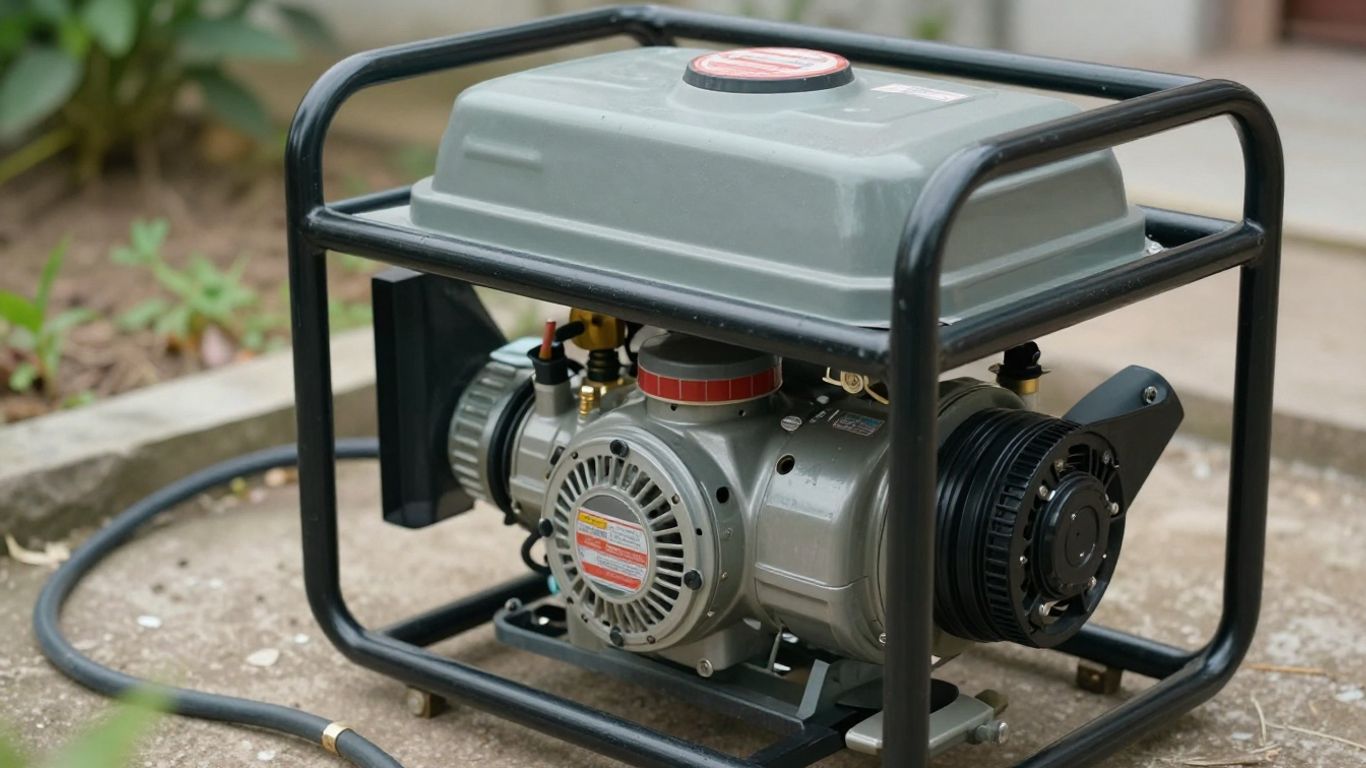
Getting your backup power system hooked up right is super important. It’s not just about making sure the lights stay on; it’s about safety for you, your family, and even your neighbors. Messing up the electrical connections can cause some serious problems, from frying your pump to creating a fire hazard.
The Importance of Transfer Switches
This is probably the most critical piece of equipment for connecting a generator to your well pump. A transfer switch acts like a gatekeeper, making sure power only comes from one source at a time – either the utility grid or your generator. This prevents dangerous backfeeding, which can shock utility workers or damage your equipment. There are manual and automatic versions, but either way, it’s a must-have for safe generator use with your well pump. Think of it as the official handshake between your backup power and your home’s electrical system.
Professional Electrical Connections
Look, I know DIY is tempting, especially when you’re trying to save a buck. But when it comes to connecting a generator or battery backup to your well pump, it’s really best to call in a pro. Electricians know all the ins and outs of voltage, wiring, and local codes. They can make sure everything is sized correctly, especially when dealing with those big surge watts your pump needs when it first kicks on. They’ll also handle the grounding, which is no joke when it comes to electrical safety. Getting this wrong can be costly and dangerous.
Testing Your Backup Power System
Once everything is installed, you can’t just forget about it. You need to test it. Seriously, don’t skip this step. It’s like buying a fire extinguisher and never checking if it’s charged. You want to know for sure that when the power goes out, your backup system will actually kick in and keep that water flowing.
Here’s a basic rundown of what testing usually involves:
- Simulate an Outage: The safest way is to turn off your main breaker to simulate a power loss.
- Engage Backup Power: Start your generator or switch your battery system on.
- Check Pump Operation: Listen for your well pump to start and run. Check your faucets to confirm water pressure.
- Monitor Performance: Keep an eye on the system for a short period to ensure it’s stable.
- Return to Grid Power: Safely switch back to your normal utility power once you’re done testing.
Regularly testing your private well water is also a good idea, especially after a major weather event. You want to make sure that even if your pump is running, the water it’s delivering is safe to drink. Contaminants can sometimes find their way into wells during floods or other disruptions.
Remember, a well pump often needs a significant amount of power for a few seconds when it starts up – sometimes much more than it uses when it’s just running. This is called surge wattage, and your backup system, whether it’s a generator or a battery setup with an inverter, needs to be able to handle that initial jolt. For 120V/240V pumps, this surge can be substantial, so proper sizing is key. If you’re looking at generators, make sure the ‘peak’ or ‘surge’ output rating is well above your pump’s starting watts. For battery systems, the inverter’s surge capacity is what matters most. Don’t guess on this; check your pump’s specifications or consult with a professional to calculate surge wattage requirements.
Preparing for Extended Emergencies
When the power grid goes down for an extended period, your well pump becomes a top priority. It’s not just about having water to drink; it’s about maintaining hygiene, sanitation, and overall livability for your family. Thinking beyond the immediate need for a glass of water is key to weathering a long-term outage.
Beyond Drinking: Water for Hygiene and Sanitation
Sure, you need water to drink, but that’s just the start. Think about flushing toilets, washing hands, doing dishes, and maybe even a quick sponge bath. A typical household can easily use 50 to 100 gallons a day, even when trying to conserve. When you’re planning your backup power, consider how long you can realistically keep that water flowing. A generator or battery system that can only run the pump for an hour or two won’t cut it for days on end. You need a system sized for sustained use. This means looking at your pump’s actual running wattage and ensuring your backup power source can handle that load consistently.
Integrating Water Storage Solutions
One smart way to manage water during an outage is to store it. You can use a large holding tank that your main well pump fills when power is available. Then, during an outage, a smaller, more efficient 120V transfer pump can move water from the storage tank into your home. This "two-stage" approach means you only use your big, power-hungry pump when you have plenty of electricity. A small pressure tank, common in most well systems, offers a small buffer, but it depletes quickly. For longer-term storage, consider atmospheric tanks that can hold hundreds of gallons. These systems can be filled when grid power is on, providing a reserve for when it’s not. This is a great way to manage water needs and reduce the strain on your backup power system during an emergency. You can find helpful tips on water storage and purification in guides like this one on surviving power outages.
Considering Water Purification Methods
Even if you have the power to pump water, the emergency itself might have contaminated your well. Floods, earthquakes, or other disasters can compromise water quality. That’s why having a secondary method of water purification is non-negotiable. Keep a good quality water filter or purification tablets on hand. This way, even if the water coming from your well isn’t perfectly clean, you can make it safe to drink. It’s a simple step that adds a huge layer of security to your water supply. Remember, a reliable backup power system for your well pump is about more than just convenience; it’s about maintaining a safe and sanitary living environment for your family when the grid fails.
Don’t Get Left High and Dry
Look, nobody likes dealing with power outages, but when you live on a well, it’s more than just an inconvenience – it’s a real problem. Running out of water means no flushing toilets, no washing hands, and generally a pretty miserable time. Whether you decide on a generator, a battery backup system, or even a good old-fashioned hand pump, having a plan is key. It’s not about being paranoid; it’s about being ready. Taking a little time now to set up some backup power for your well pump means you can keep your water flowing, no matter what the grid decides to do. Seriously, don’t wait until the next big storm hits and you’re stuck without.
Frequently Asked Questions
Why is backup power for my well pump so important?
When the power goes out, your well pump stops working. This means no water for drinking, cooking, flushing toilets, or basic hygiene. Having backup power ensures you have a continuous water supply, which is crucial for safety and comfort, especially during long outages caused by storms or other emergencies.
What’s the difference between running watts and starting watts for a well pump?
Well pumps need a lot of power to start up, much more than they need to keep running. Think of it like a car: it needs extra gas to get the engine going. The ‘starting watts’ are the big burst of energy needed to get the pump spinning, while ‘running watts’ is the steady amount of power it uses once it’s working. Your backup power system must be able to handle that initial surge.
What are the main types of backup power solutions for well pumps?
There are a few main options. You can use a generator (like a gas or dual-fuel one), a battery backup system that stores power, or even solar power to charge batteries. Sometimes, a manual hand pump is used as a simple, electricity-free backup.
How do I figure out what size backup power system I need?
First, find out your pump’s voltage (usually 120V or 240V) and its starting wattage. You’ll need to calculate the highest surge wattage your pump requires. Then, consider how long you might need backup power and what other essential items (like a fridge) you want to run. This helps determine if you need a generator, a battery system, or both.
Is a manual hand pump a good backup option?
Yes, a manual hand pump is a very reliable backup because it doesn’t need electricity at all. It’s a great fail-safe for getting water when the power is out. There are different types for shallow and deep wells, but they do require physical effort to operate.
What is a transfer switch, and why is it important?
A transfer switch is a safety device that safely connects your backup power source (like a generator or battery system) to your home’s electrical panel. It prevents dangerous feedback into the main power lines and ensures your backup power only runs when the main power is off. It’s essential for safe installation.