Mining Microgrid Solutions for Reliable Remote Power
Key Takeaways
Remote mines need power systems designed around distance, changing loads, and difficult logistics. A well-planned microgrid can combine dependable generation, renewables, storage, and controls without losing sight of operational reality.
- Start with measured load data and realistic growth assumptions.
- Combine dispatchable generation with solar, wind, and battery storage where conditions allow.
- Use intelligent controls to coordinate supply, demand, reserves, and power quality.
- Design redundancy around the mining processes that cannot afford interruption.
- Treat maintenance, fuel logistics, cybersecurity, and training as part of the power system.
Understanding mining microgrid solutions
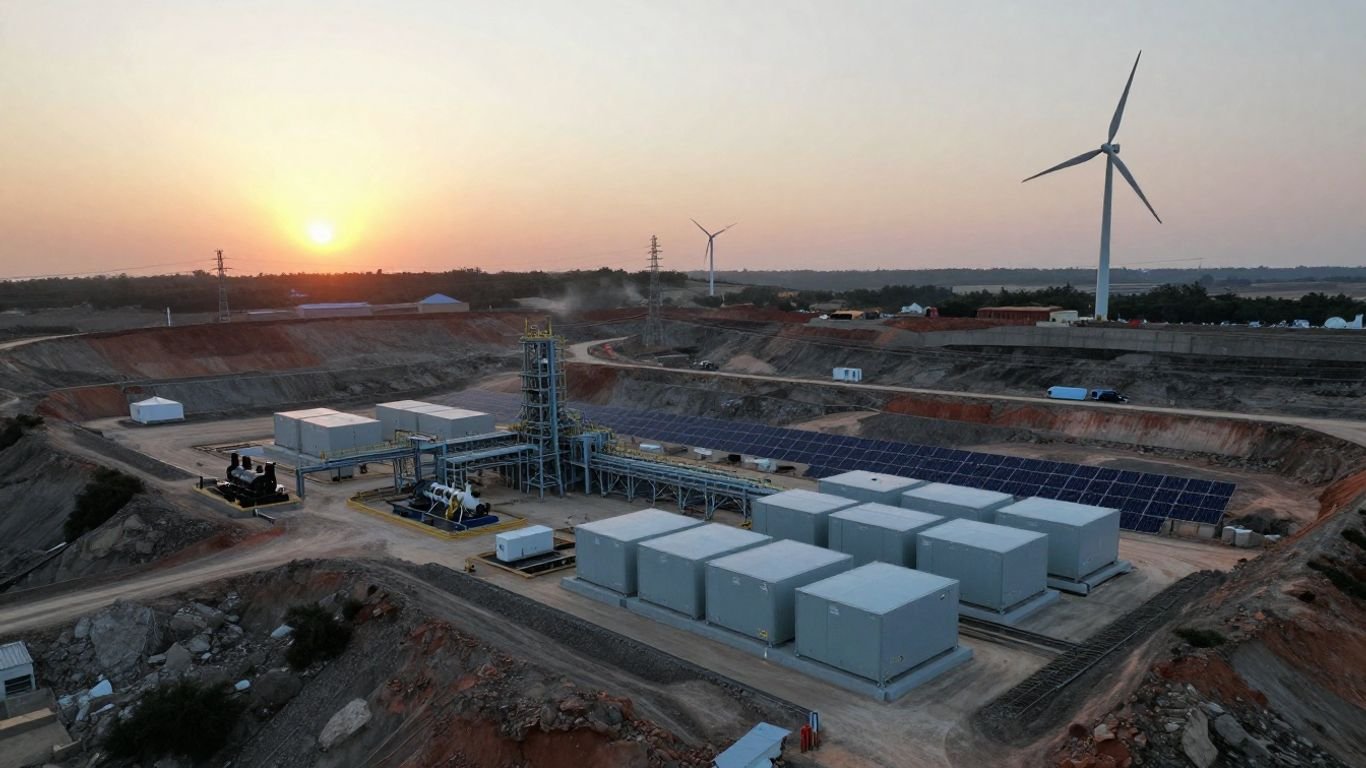
Mining microgrid solutions bring local generation, storage, distribution equipment, and controls into one coordinated power system. They may support a mine connected to a utility network or operate independently in a remote location. The right design is not simply a collection of generators and batteries; it is an operating strategy built around the mine’s production schedule, risks, and resources.
Why remote mines need a different power strategy
A remote mine often has long supply routes, limited grid capacity, and little tolerance for an extended outage. Fuel may need to travel considerable distances, while spare parts and specialist technicians can take time to arrive. These conditions make power planning inseparable from production planning.
The system also has to accommodate a mine that changes over time. Construction loads, extraction equipment, processing plants, camps, and water systems may all grow or shift. A useful starting point is this guide to remote construction microgrids, which illustrates why modular generation and storage matter when power must be delivered far from established infrastructure.
Core components of a mining microgrid
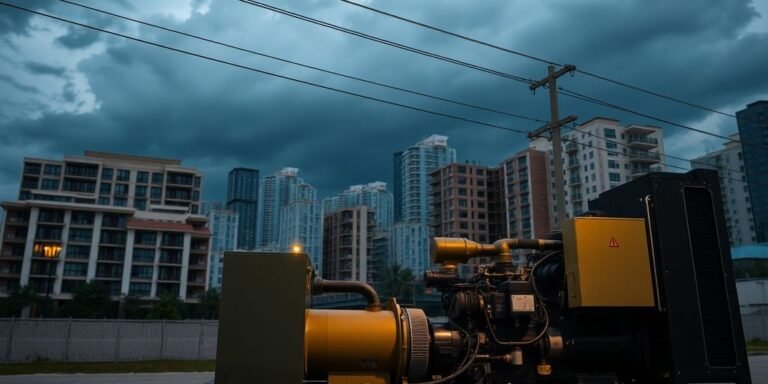
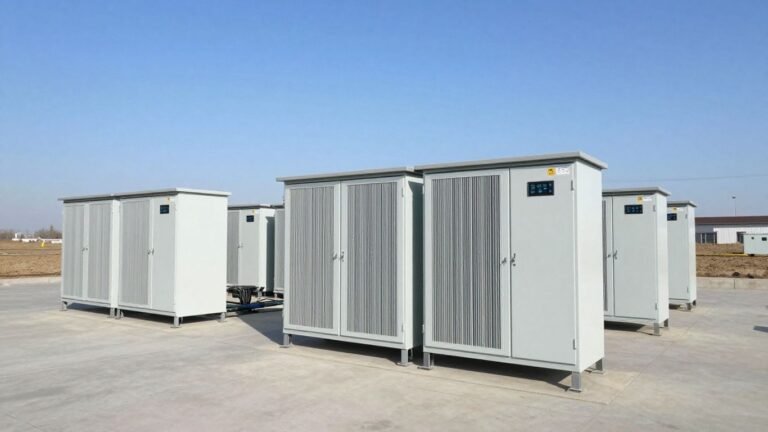
Most mining microgrids include dispatchable generators, renewable generation, battery energy storage, switchgear, transformers, protection equipment, and a supervisory control layer. The balance varies by site. Diesel or natural gas generation may provide firm capacity, while solar and wind reduce fuel use when weather and land conditions are favorable.
Distribution design matters just as much as generation. Medium-voltage feeders, local transformers, motor controls, and appropriately separated critical loads determine how safely power reaches crushers, pumps, workshops, camps, and communications systems. Storage can provide fast support, but it does not remove the need to size the electrical network for real operating conditions.
How microgrids improve reliability and resilience
A microgrid improves resilience by allowing the site to coordinate several sources rather than depending on one supply path. If a generator trips or a utility connection fails, controls can shed lower-priority loads, start reserve equipment, or use stored energy while the system stabilizes.
Reliability is also shaped by recovery time. A design with black-start capability, clear islanding procedures, and accessible maintenance points may restore essential services more predictably than a system that only specifies additional nameplate capacity. The goal is planned continuity under stress, not simply a larger generator room.
Grid-connected versus off-grid mining applications
A grid-connected mine can use the microgrid to manage outages, peak demand, renewable generation, and local power quality. An off-grid mine has a broader responsibility: it must provide the full energy balance, maintain reserves, and account for fuel delivery over the life of the operation.
The operating modes should be defined early. Engineers need to know when the system will import power, export power, island, black-start, or run with selected loads disconnected. A wider discussion of off-grid energy planning is useful for understanding how generation choices depend on remoteness, local resources, and the consequences of losing supply.
Assessing a mine’s energy requirements
A credible design begins with the mine rather than with a preferred technology. Engineers should measure demand across shifts, seasons, production rates, and operating states before selecting generators or storage. The assessment should also include future expansion, temporary construction loads, and the electrical behavior of large motors.
Mapping current and future electrical loads
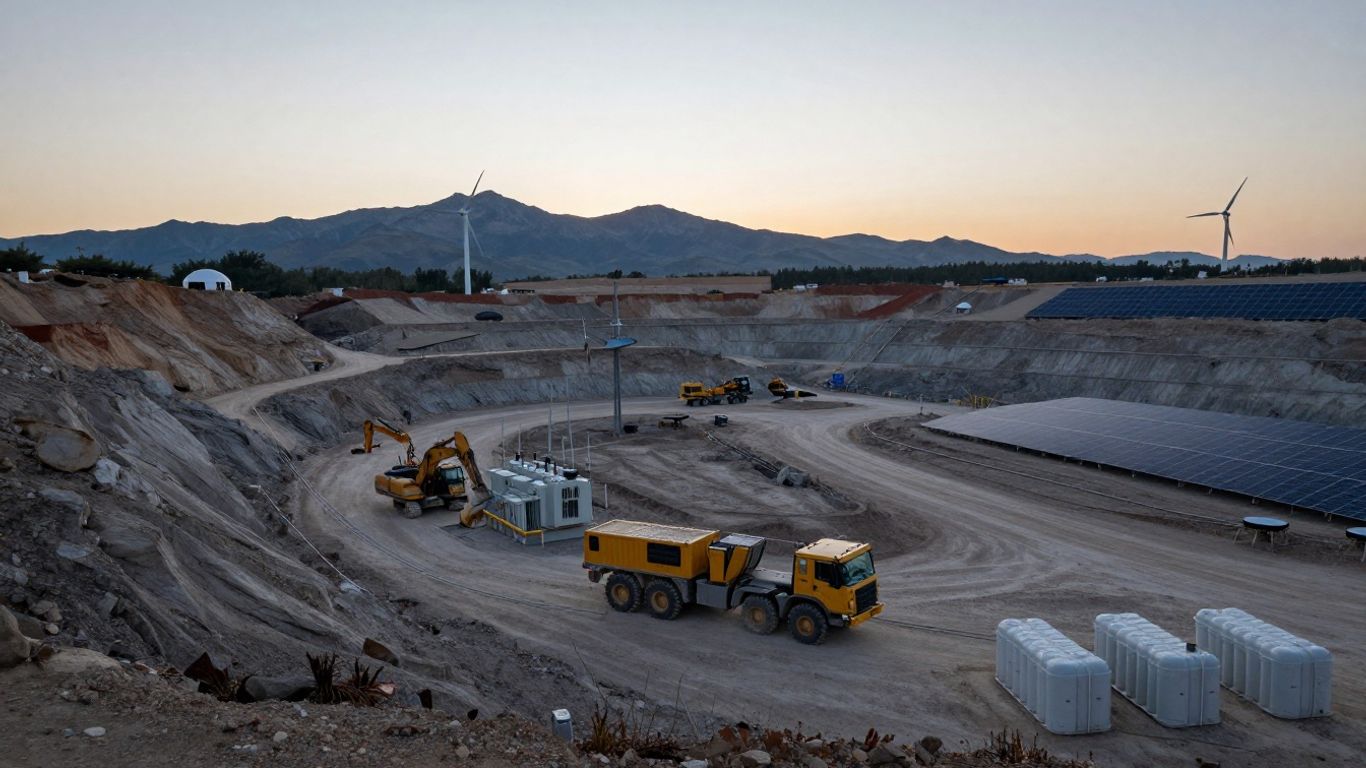
Load mapping should identify both average energy consumption and short-duration peaks. A mine may have a manageable daily average but still require substantial starting current when a conveyor, mill, pump, or compressor comes online.
The forecast should separate existing equipment from planned additions. It should also show which loads can be delayed, reduced, or stopped during an upset. Good load data prevents two common errors: paying for capacity that sits idle or creating a system that cannot support the next phase of production.
Accounting for drilling, crushing, hauling, and processing demand
Mining equipment does not consume power evenly. Drilling may create concentrated daytime demand, crushing and milling can run for long periods, and dewatering may continue regardless of the production shift. Electric haulage or expanded processing can change the profile again.
A useful model follows each major process from startup through normal operation and shutdown. It should record motor ratings, duty cycles, starting methods, harmonics, and expected simultaneous operation. This process-level view is more informative than a single annual consumption figure.
Evaluating site conditions and available energy resources
Solar irradiation, wind patterns, temperature, dust, altitude, flood risk, and available land all affect the generation mix. So do road access, fuel storage, water availability, and the distance between generation assets and loads.
Site surveys should include geotechnical, environmental, and communications constraints. They should also test assumptions about renewable output during the periods when the mine is most vulnerable. A resource that looks attractive on paper may need substantial foundations, cleaning, transmission, or backup capacity in practice.
Identifying power quality and backup requirements
Sensitive drives, automation systems, communications equipment, and laboratory systems may respond poorly to voltage dips, frequency variation, or harmonics. The assessment should define acceptable limits and identify the loads that require uninterrupted or near-uninterrupted service.
Backup requirements should be expressed in operating terms. For example, the site may need enough energy to complete a controlled shutdown, keep ventilation and pumping active, or maintain a communications link until generation is restored. Those requirements guide storage duration, reserve capacity, protection settings, and restoration procedures.
Designing the generation mix
Generation should be selected as a portfolio, with each source assigned a clear role. Dispatchable assets provide firmness and reserve, renewables reduce fuel consumption when available, and batteries respond quickly to changes in demand or supply. The most economical mix depends on fuel costs, weather, equipment utilization, and the value of uninterrupted production.
Integrating diesel and natural gas generation
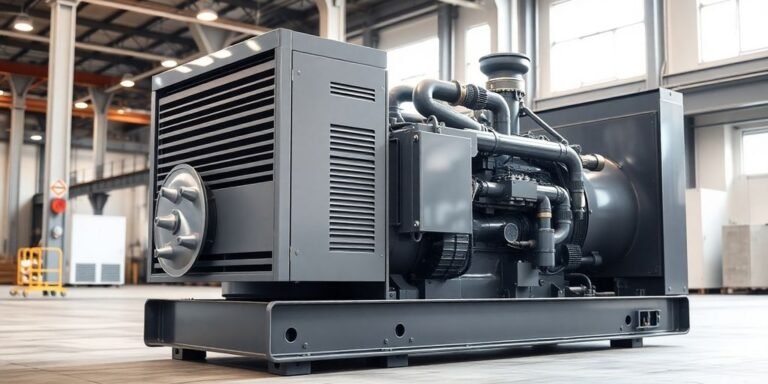
Diesel generators remain useful where fuel logistics are established and fast-start capacity is needed. Natural gas can be attractive where a dependable gas supply exists, but the availability and transport method must be assessed rather than assumed.
Generators should be sized for efficient operating ranges, not only for the highest imaginable load. Too many lightly loaded units can increase maintenance and fuel consumption. Sequencing several appropriately sized units may provide better flexibility, provided the controls and protection system can coordinate them safely.
Adding solar and wind power in remote locations
Solar is often straightforward to deploy, but dust, snow, heat, and cleaning requirements can affect output. Wind can complement solar in some locations, although turbulence, access, foundations, and weather exposure need careful study.
Renewables should be evaluated against the mine’s load profile. Their value rises when storage and controls can absorb excess production and reduce unnecessary generator operation. They should not be treated as guaranteed capacity unless the design includes suitable firming resources.
Using battery energy storage to balance supply and demand
Battery storage can respond in milliseconds, smooth renewable fluctuations, support generator loading, and reduce short peaks. It can also help maintain power while a generator starts or while operators isolate a fault.
The storage model must include usable energy, power rating, temperature limits, degradation, fire protection, and replacement planning. A battery selected only by its energy capacity may not provide enough instantaneous power for a motor start or a sudden load step.
The following comparison helps clarify the roles of common assets:
| Asset | Main operating role | Key design question | Typical limitation |
|---|---|---|---|
| Diesel generation | Firm and backup power | How will fuel be delivered and stored? | Fuel cost, emissions, and maintenance |
| Natural gas generation | Dispatchable lower-carbon thermal power where supply exists | Is the gas connection dependable? | Infrastructure and supply dependence |
| Solar generation | Daytime renewable energy | How will dust, heat, and variability be managed? | Output changes with weather and daylight |
| Wind generation | Renewable energy in suitable wind regimes | Can the site support access and foundations? | Resource variability and exposed equipment |
| Battery storage | Fast balancing, reserve, and ride-through | What power and duration are required? | Degradation and finite stored energy |
This portfolio approach keeps the design grounded in operating roles. It also makes it easier to compare a fuel-saving project with a resilience project, since the benefits of each asset can be measured against a specific need.
Planning redundancy for critical mining operations
Redundancy should follow consequence, not habit. Ventilation, dewatering, emergency systems, communications, and process equipment may need different levels of backup, while noncritical loads can often be curtailed during a disruption.
Designers may use multiple generators, divided feeders, independent control paths, or reserve batteries. The arrangement should be tested against realistic failures, including a generator outage during a production peak and a feeder fault during poor weather. Redundancy only helps when equipment is available, correctly protected, and maintained.
Managing power with intelligent controls
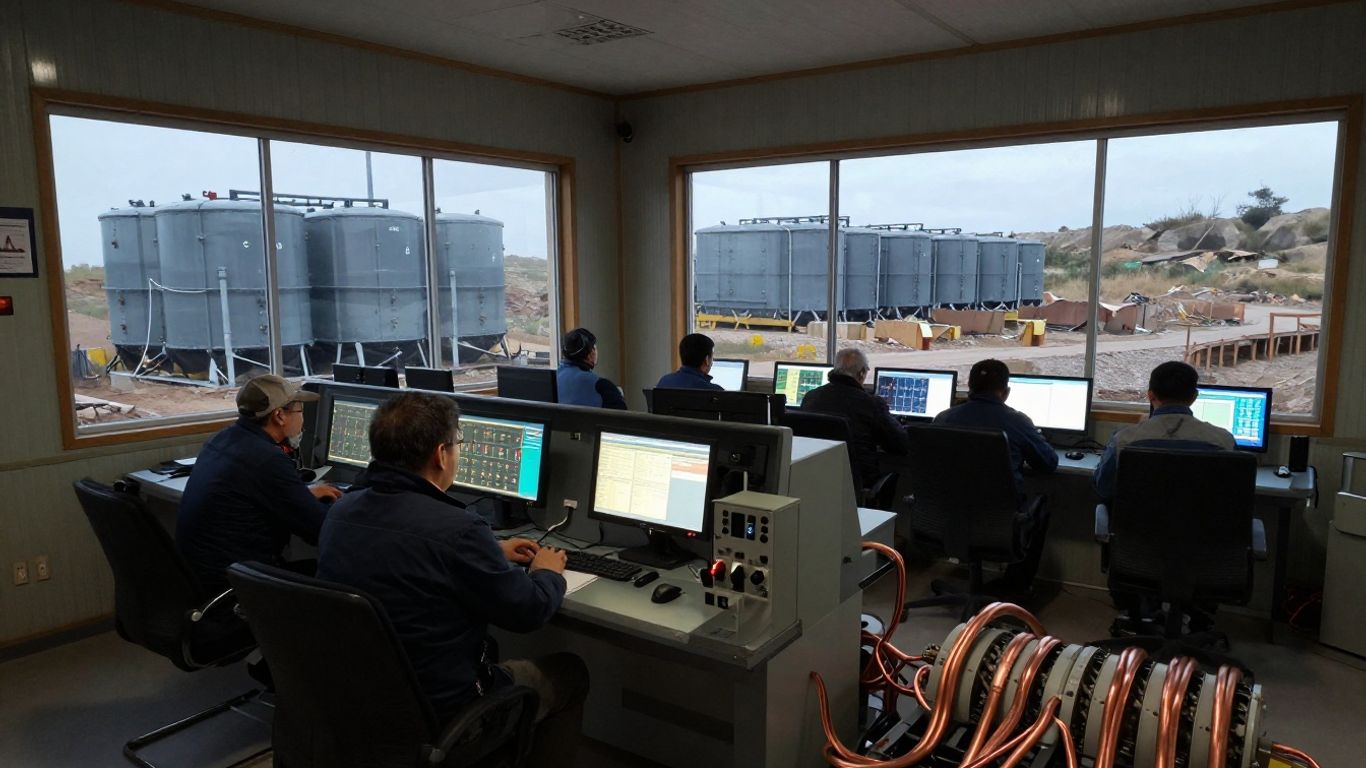
Controls turn separate assets into a coordinated microgrid. They monitor electrical conditions, dispatch generation, manage storage, and apply the mine’s load priorities during normal and abnormal operation. Their value depends on accurate settings, dependable communications, and operating procedures that site teams understand.
Microgrid controllers and automated dispatch
A controller can coordinate generator commitment, battery charging and discharging, renewable curtailment, and load shedding according to defined rules. It may also manage transitions between grid-connected and islanded operation where the system has been designed for both modes.
Automation should have clear boundaries. Operators need visibility into why a decision was made, while protection systems must remain independent enough to respond safely to faults. A useful reference for coordinated controls in sensitive facilities is this overview of microgrid power quality, even though mining loads have their own operating characteristics.
Forecasting renewable generation and mine loads
Forecasting combines weather information with production schedules, equipment status, and historical demand. It does not need to be perfect to be useful. Even a reasonable forecast can help decide whether to charge storage, start another generator, or preserve reserve for a likely load increase.
Forecasts should be updated as conditions change. A storm, a delayed blast, an unplanned conveyor shutdown, or a change in ore hardness can alter demand quickly. Operators should be able to override automatic decisions without creating an unstable transition.
Managing peak demand and spinning reserves
Peak management is more than reducing the highest meter reading. It may involve shifting flexible loads, dispatching batteries, sequencing motors, and keeping enough generation online to respond to a sudden loss of supply.
Spinning reserve has a cost because some equipment must be ready before it is needed. Storage can provide rapid response, but its state of charge must be protected for the events that matter most. The reserve strategy should specify response time, duration, and the conditions that trigger additional capacity.
Protecting sensitive equipment from voltage and frequency issues
Power electronics, variable-speed drives, sensors, and automation networks can be affected by unstable voltage or frequency. Protection begins with a clean electrical design, appropriate fault studies, filtering where needed, and carefully coordinated controls.
The control system should detect abnormal conditions early and respond in stages. It may stabilize the network with storage, reduce flexible demand, or isolate a troubled feeder before a wider failure develops. Those actions should be verified through testing rather than assumed from a software configuration.
Implementing mining microgrid solutions
Implementation is a project in its own right, especially when the mine is already operating. Construction schedules, procurement lead times, temporary power, permitting, and commissioning can all affect production. Early coordination reduces the chance that a technically sound system becomes difficult to install or operate.
Conducting feasibility studies and site surveys
A feasibility study should compare several operating scenarios, not just several technologies. It should examine fuel prices, renewable availability, outage consequences, expansion plans, maintenance access, and the cost of distribution upgrades.
Site surveys then turn those assumptions into physical constraints. Teams should confirm equipment locations, cable routes, foundations, clearances, grounding, fire access, communications, and environmental requirements. For complex assets, a structured knowledge exercise such as Three Weeks to Technology Clarity offers a useful reminder to map systems, ownership, and dependencies before making changes.
Choosing modular and scalable system designs
Modular systems can be installed in stages as the mine develops. They may also simplify transport, replacement, and future expansion, particularly when equipment must pass through limited-access roads or seasonal routes.
Scalability should be defined in electrical and physical terms. A design may need spare switchgear positions, reserved land, additional communications capacity, or a control architecture that can accept new generation without a complete replacement. “Expandable” should describe a documented path, not just an intention.
Connecting temporary, construction, and permanent power assets
Temporary generators and construction loads often arrive before the permanent plant. Their connection must be planned so that temporary arrangements do not compromise protection, grounding, arc-flash safety, or the later commissioning sequence.
A staged plan can preserve power while sections of the permanent system are energized. It should identify isolation points, switching authority, testing windows, and responsibilities for every transition. This is especially important when construction teams and operations teams work under different procedures.
Coordinating engineering, procurement, and commissioning
The project team should keep the electrical design, civil works, controls, fuel systems, and operations plan aligned. Long-lead components need early decisions, while equipment interfaces should be documented before delivery.
Commissioning should proceed from component tests to subsystem tests and then full operating scenarios. Black starts, generator trips, islanding, load shedding, communications loss, and emergency shutdowns all deserve practical tests. The final handover should include settings, drawings, spares, training records, and a clear list of outstanding risks.
Improving cost and sustainability performance
A mine’s energy strategy should be evaluated over its operating life, not only by initial purchase price. Fuel, transport, maintenance, downtime, emissions, replacement cycles, and financing can all change the result. The best option is the one that performs acceptably across the conditions the mine is likely to face.
Comparing fuel savings with capital investment
Fuel savings are meaningful only when they are tied to a realistic dispatch model. The model should show renewable curtailment, battery losses, generator efficiency, fuel delivery costs, maintenance intervals, and expected production changes.
Capital investment should be compared with avoided operating costs and avoided interruption costs. Sensitivity testing is useful because fuel prices, equipment availability, and renewable output rarely follow one fixed forecast. A phased deployment may reduce risk when the long-term load is uncertain.
Reducing emissions and fuel transportation requirements
Using local renewable energy can reduce the amount of fuel burned and transported, although construction, maintenance, and replacement impacts also belong in the assessment. Storage may further reduce inefficient low-load generator operation.
The practical benefit is often logistical as well as environmental. Fewer fuel deliveries can reduce road exposure, storage requirements, spill risk, and dependence on weather-sensitive routes. These gains should be measured against the added equipment and maintenance responsibilities.
Measuring operational efficiency with energy KPIs
Energy KPIs give operators a way to see whether the system is performing as designed. They should connect electrical performance with production, not exist as isolated dashboard numbers.
Useful measures include:
- Fuel consumed per unit of production.
- Renewable energy used rather than curtailed.
- Battery availability and state-of-charge performance.
- Generator loading, starts, and operating hours.
- Unplanned outage duration and critical-load uptime.
These measures become more valuable when reviewed alongside maintenance events and production changes. A rising fuel rate may reflect equipment degradation, a different ore profile, or a control setting rather than a failure of the overall concept.
Evaluating incentives, carbon goals, and compliance needs
Regulatory requirements may affect emissions, noise, fuel storage, interconnection, land use, and reporting. Incentives can improve the economics of renewables or storage, but they should not be treated as certain until eligibility and timing are confirmed.
Carbon goals also need operational definitions. A mine may target lower diesel use, fewer transport emissions, improved renewable utilization, or a specific emissions intensity. Clear boundaries and consistent measurement prevent sustainability claims from drifting away from actual site performance.
Operating and maintaining a remote mining microgrid
The operating phase determines whether a design remains reliable after the project team leaves. Remote conditions make maintenance access, spares, communications, and staff capability especially important. A strong operating model is practical enough for daily use and disciplined enough for unusual events.
Establishing preventive maintenance programs
Maintenance should follow manufacturer requirements, site conditions, and the consequences of failure. Dust, vibration, heat, cold, humidity, and corrosive environments may shorten service intervals or require additional inspection.
The program should cover generators, batteries, inverters, switchgear, transformers, protection relays, communications, fuel systems, and cooling equipment. Critical spares should be selected from failure history and lead times, not from a generic warehouse list.
Monitoring equipment performance from a central location
Remote monitoring can help specialists review alarms, trends, temperatures, fuel use, battery condition, and power quality without traveling to the site for every question. It does not replace local safety checks or hands-on inspection.
Data should be organized around decisions. Operators need to know which alarm requires immediate action, which trend indicates gradual deterioration, and which readings can wait for the next maintenance window. Access rules and data retention should also be documented; even unrelated operational references such as a privacy policy demonstrate why information handling needs explicit boundaries.
Preparing for extreme weather and supply disruptions
The operating plan should address heat waves, freezing conditions, storms, flooding, wildfire smoke, dust events, and blocked roads where relevant. Equipment protection may include enclosure design, drainage, heating, cooling, cleaning, and elevated installation.
Supply resilience requires more than extra fuel. Teams should identify alternate routes, substitute parts, local contractors, communication fallbacks, and minimum operating modes. A tabletop exercise can reveal dependencies that normal operating procedures conceal.
Training site teams and securing control systems
Site teams need practical training in normal dispatch, manual operation, safe isolation, emergency shutdown, black start, and communication with remote support. Drills should be repeated after major system changes and staff turnover.
Cybersecurity belongs in the same conversation. Use role-based access, strong authentication, network segmentation, backups, patching procedures, and tested recovery plans. Even basic field work benefits from clear installation practices, much like choosing appropriate wire connectors for a safe electrical connection; small interface decisions can affect the reliability of the whole system.
A final implementation consideration is governance. Procurement, contracts, local permitting, and workforce arrangements can shape the project as much as engineering, and any cross-border business process—such as Dubai Konnect—belongs in its proper legal and administrative review rather than being left to the commissioning phase.
Conclusion
Mining microgrid solutions work best when they are designed as complete operating systems: measured loads, purposeful generation, responsive storage, intelligent controls, resilient distribution, and a maintenance plan that fits the site. Remote power is never only an equipment question. It is a long-term decision about production continuity, logistics, safety, cost, and environmental performance.
Frequently Asked Questions
What is a mining microgrid?
A mining microgrid is a coordinated local power system that may combine generators, renewable sources, battery storage, distribution equipment, and controls to serve mining loads.
Can a mine use a microgrid without a utility connection?
Yes. An off-grid microgrid can provide the mine’s power independently, but it must include enough dispatchable generation, reserves, storage, and controls for the expected operating conditions.
Which energy sources are commonly combined in a mining microgrid?
Diesel, natural gas, solar, wind, and battery storage may be combined. The appropriate mix depends on resource availability, load shape, fuel logistics, and reliability requirements.
How does battery storage help a remote mine?
Batteries can respond quickly to load changes, support renewable integration, provide short-duration backup, reduce generator cycling, and help manage peaks.
What loads should receive priority during an outage?
Priority usually goes to systems needed for safety, environmental protection, communications, controlled shutdown, ventilation, dewatering, and the orderly preservation of critical equipment.
How are mining microgrids maintained in remote locations?
Maintenance combines scheduled inspections, condition monitoring, local operator training, planned spare parts, remote specialist support, and procedures suited to weather and access constraints.
What should be measured after a microgrid is commissioned?
Operators should track fuel use, production-linked energy intensity, renewable utilization, battery availability, generator performance, power quality, outages, and maintenance-related downtime.