Microgrids for Cold Storage and Refrigerated Warehouses
Key Takeaways
A cold storage microgrid can keep refrigeration running when utility power is unavailable, while also helping a warehouse manage energy costs during normal operation.
- Refrigeration is a continuous, high-impact electrical load, so outage planning must begin with inventory and temperature requirements.
- A practical system may combine grid connection, solar generation, battery storage, backup generation, switchgear, and controls.
- Load classification and accurate operating data are more useful than simple rules of thumb when sizing the system.
- Intelligent controls can coordinate refrigeration equipment, thermal storage, and on-site energy resources without losing sight of product quality.
- Safety, commissioning, cybersecurity, maintenance, and future expansion belong in the initial project plan.
Why cold storage facilities need resilient power
Refrigerated warehouses cannot treat electricity as a convenience. Power supports compressors, evaporators, pumps, controls, lighting, doors, monitoring systems, and the broader movement of goods through the facility. A cold storage microgrid gives operators another way to keep essential equipment operating when the utility supply is interrupted. It can also provide useful energy management on ordinary days.
The right design depends on the facility rather than on a standard equipment package. Product type, room temperature, building envelope, weather exposure, utility tariffs, and outage history all shape the business case. Mixed Nature approaches this subject with the same practical respect for individual needs that readers expect from any careful technical guide: start with the real conditions, then choose the system.
How outages threaten inventory, safety, and revenue
When refrigeration stops, product temperature begins to move away from its safe range. The speed of that change depends on stored product, room volume, insulation, door activity, ambient conditions, and the amount of thermal mass already in the space. A brief interruption may be manageable, while a long outage during hot weather can create a serious loss.
The consequences extend beyond spoiled inventory. Operators may face emergency labor, expedited transport, insurance questions, customer claims, sanitation work, and missed shipping windows. A resilient power plan should therefore define which loads must remain available, how long they must run, and who has authority to change operating modes.
The energy intensity of refrigeration systems
Refrigeration is often the largest continuous electrical demand in a cold storage facility. Compressors remove heat from storage spaces, condensers reject it, evaporators distribute cooling, and pumps and fans move refrigerant or air. Each component has its own duty cycle, efficiency curve, maintenance needs, and response to changing product loads.
The system may consume more energy during product receiving, pull-down, door openings, cleaning, or hot outdoor conditions. Ageing compressors, fouled heat exchangers, poor seals, and incorrect control settings can raise consumption without making the building meaningfully colder. A microgrid project is a useful opportunity to measure these conditions rather than assuming the nameplate ratings tell the whole story.
Peak demand challenges in refrigerated warehouses
Utility bills may reflect both total energy use and the facility’s highest demand during a billing period. A warehouse can have moderate monthly consumption yet incur a substantial demand charge because compressors, air-handling equipment, chargers, and other large loads operate at the same time.
Battery dispatch, staggered starts, pre-cooling, and carefully timed defrost can reduce the coincidence of those loads. The savings depend on the tariff and on the facility’s ability to shift demand without affecting product quality. A baseline built from interval data is essential before promising a particular reduction.
When a cold storage microgrid provides the greatest value
Resilient power tends to be most valuable where an outage could quickly affect high-value or regulated inventory, where utility restoration is uncertain, or where the facility serves a time-sensitive supply chain. Sites exposed to wildfire shutoffs, hurricanes, ice storms, flooding, or weak distribution infrastructure may also place a higher value on islanded operation.
The case can be stronger when the warehouse is expanding and a utility interconnection would delay construction. A documented cold storage microgrid case study describes an off-grid project at an almond storage facility; it should be read as one project’s example, not as a guarantee for every warehouse. The same discipline applies to any proposal: compare the cost of resilience with the cost and probability of disruption.
What a cold storage microgrid includes
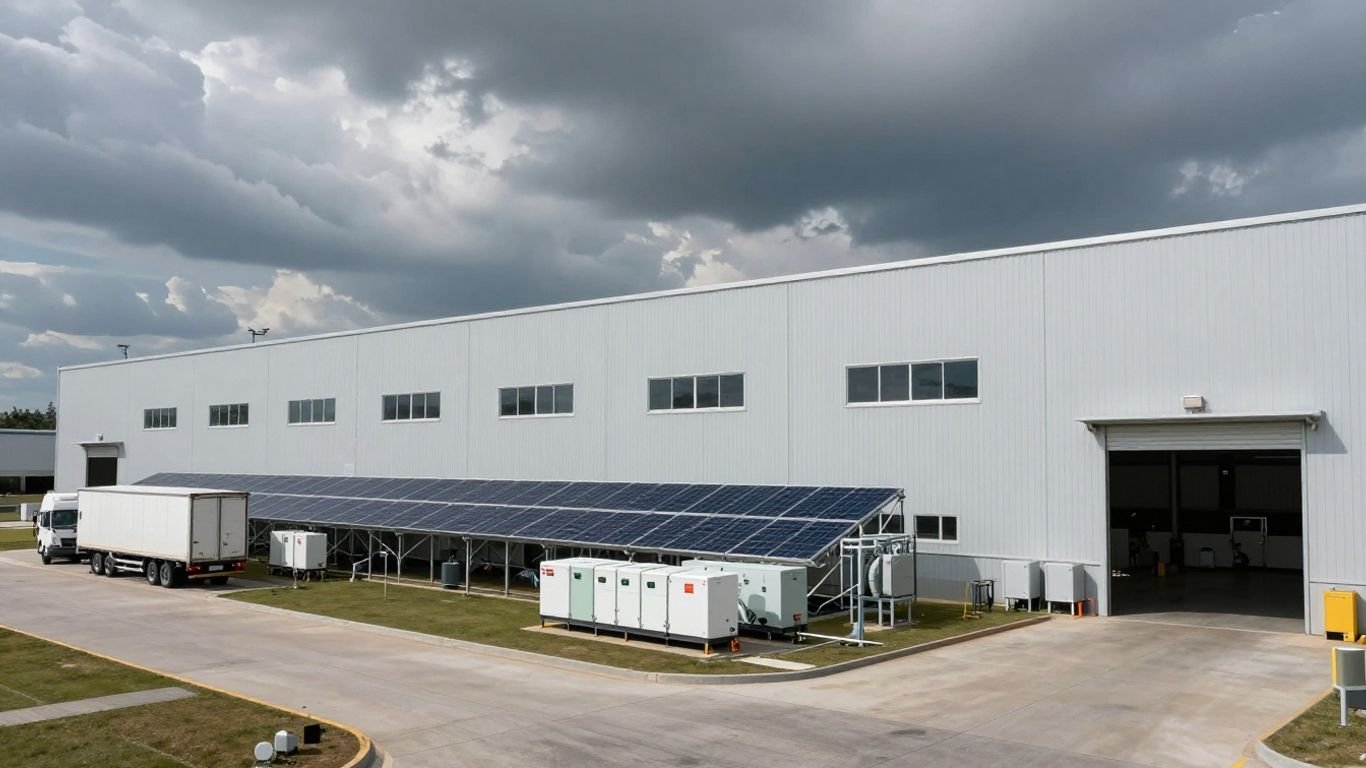
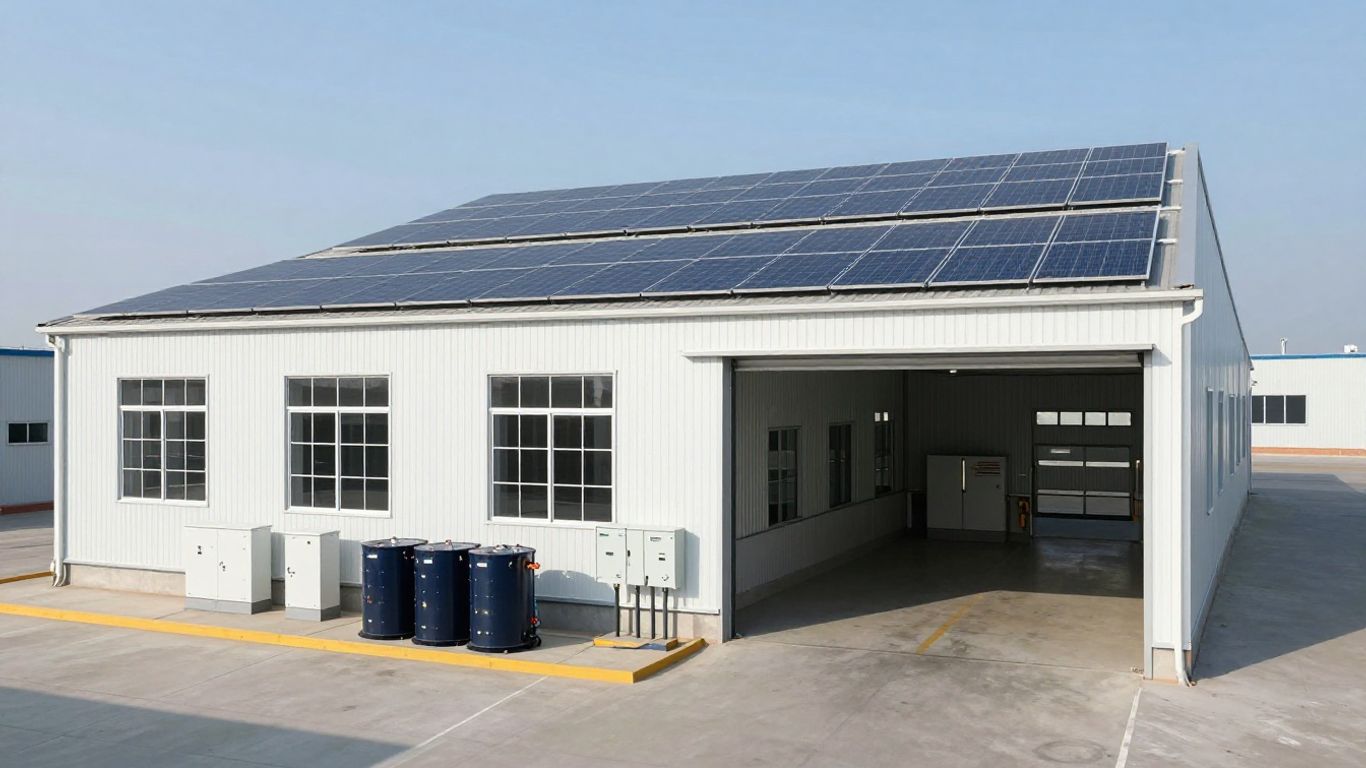
A cold storage microgrid is an integrated electrical system, not simply a generator beside a freezer. It may connect to the utility, local generation, batteries, distribution equipment, and control software so that the site can move between grid-connected and islanded operation. The architecture should follow the facility’s critical loads and operating objectives.
There is no single correct mix of resources. Solar can reduce daytime purchases, batteries can respond quickly, and generators or other firm resources can support longer events. The controls and protection scheme determine whether these elements work together safely.
Grid interconnection and backup operating modes
The point of interconnection defines how power enters and leaves the site. Engineers need to understand the utility’s requirements for protection, export, metering, fault current, anti-islanding, and reconnection. The microgrid may operate in parallel with the utility, disconnect during a disturbance, and reconnect only after the required checks are complete.
Islanded operation requires a clear sequence. Critical feeders must be identified, nonessential loads may need to drop, and the system must maintain voltage and frequency as resources change. A useful microgrid architecture guide treats feeders, distributed energy resources, storage, protection, interconnection, and safety as parts of one design rather than isolated purchases.
Solar panels and other distributed energy resources
Solar photovoltaic arrays can supply energy during suitable daylight conditions and reduce the amount purchased from the utility. Their output varies with weather and time of day, so solar alone usually cannot define the full outage strategy for a refrigerated warehouse. Inverters, batteries, and firm generation may be needed to balance that variability.
Other distributed resources can include fuel cells or dispatchable generators, subject to fuel availability, emissions requirements, permitting, and maintenance access. The choice should reflect the outage objective: short ride-through, several hours of support, extended islanding, or a combination of operating modes.
Battery energy storage for ride-through and peak shaving
Battery energy storage can respond rapidly when utility power changes or when a large refrigeration load starts. It may bridge the time before another resource comes online, reduce a site’s peak demand, or shift solar energy into later hours. Its useful capacity is affected by reserve settings, temperature, power limits, degradation, and the manufacturer’s operating range.
Sizing should distinguish power from energy. A battery may have enough stored energy for a long period but not enough instantaneous power for compressor starts. Conversely, a high-power battery may provide excellent transition support but limited duration. Those are different design jobs and should be evaluated separately.
Backup generators and low-carbon fuel options
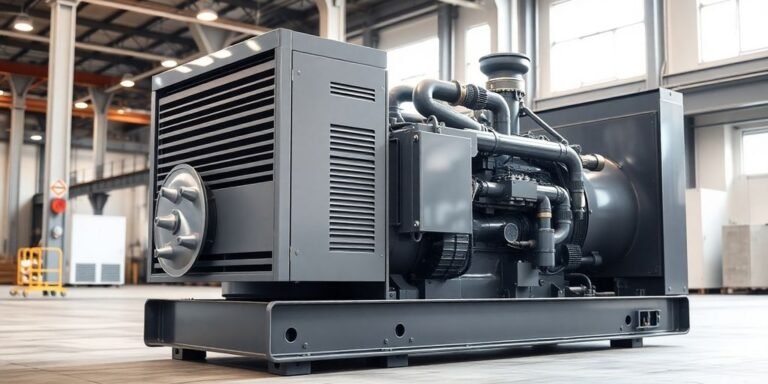
Generators can provide firm power when an outage lasts longer than the battery’s planned contribution. Their selection involves fuel storage, delivery reliability, emissions, noise, starting time, maintenance, and the ability to run efficiently at the expected load. A generator that is oversized for ordinary operation may perform poorly at light load.
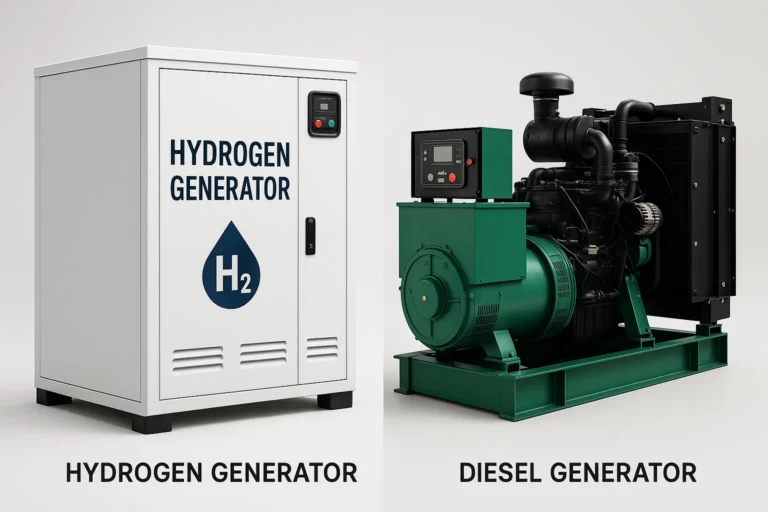
Lower-carbon options may be considered where local rules, fuel supply, and project goals support them. They still require careful engineering and emergency procedures. The system should not rely on an assumed fuel pathway without confirming that the fuel can be stored or delivered during the same conditions that threaten the utility connection.
Microgrid controllers and critical-load panels
A controller coordinates measurements, operating modes, generation, storage, and load priorities. It may receive information from meters, refrigeration controls, switchgear, and alarms, then follow a defined sequence during normal operation or an outage. A critical-load panel or dedicated feeder arrangement makes those priorities physically actionable.
Control logic should be understandable to operators. It needs clear limits, manual overrides, alarm handling, and a safe response when communications fail. A practical microgrid controller guide explains why real-time power management, energy planning, and continuity for critical loads must be considered together.
How to design and size the system
Design begins with observation. An engineer should understand how the warehouse actually operates across seasons, shifts, product cycles, cleaning periods, and abnormal events. Nameplate data remains useful, but it should be checked against interval metering, start-up behavior, maintenance records, and refrigeration performance.
A sound design also states what “backup” means. Is the goal to maintain every operation, protect only the cold rooms, preserve controls until a generator starts, or operate independently for a defined number of days? Those answers determine equipment size, redundancy, fuel planning, and cost.
Mapping refrigeration and facility loads
Create a load map that follows power from the service entrance to each major feeder and piece of equipment. Include compressors, condenser fans, evaporator fans, pumps, heaters, defrost equipment, controls, lighting, dock systems, material-handling equipment, offices, chargers, and life-safety systems. Record both rated capacity and measured demand where possible.
The map should show when each load operates, not merely how large it is. A compressor that cycles for part of an hour has a different energy profile from one that runs continuously. Door activity and receiving schedules can also create short periods of unusually high demand.
Separating critical, flexible, and noncritical equipment
Load classification turns a broad resilience goal into an operating plan. Critical loads support temperature protection, monitoring, safety, and the minimum staffing or communications needed to manage an outage. Flexible loads can be delayed or modulated. Noncritical loads can be shed until the utility connection returns.
A useful classification workshop includes refrigeration operators, facility engineers, safety staff, finance, and warehouse leadership. Together they can identify which loads are truly essential and which merely feel familiar because they run during normal operations.
Calculating backup duration and battery capacity
Battery capacity should be calculated from the energy required over the planned support period, with allowances for conversion losses, reserve state of charge, temperature, degradation, and the portion of the load that can be controlled. The calculation should use realistic duty cycles rather than assuming every compressor runs at full output continuously.
The resulting model can compare several strategies: battery-only support for short disturbances, battery plus generator for extended events, or a staged restart that restores refrigeration first and other loads later. The goal is not simply a large battery; it is a credible sequence that matches the warehouse’s risk tolerance.
Accounting for compressor starting loads and expansion
Motors can draw considerably more power during starting than while running. Several compressors starting together may challenge inverters, generators, transformers, and switchgear even when the steady-state load appears acceptable. Starting sequences, soft starters, variable-frequency drives, and staged loading should be considered early.
Expansion deserves similar attention. A warehouse may add freezers, blast rooms, chargers, conveyors, or additional compressors years after the first microgrid is installed. Reserve capacity, spare switchgear positions, conduit routes, and controller points can make later growth less disruptive.
Planning around utility interconnection limits
The utility interconnection study may limit export, impose protection requirements, or require upgrades that affect both schedule and budget. A project that intends to remain behind the meter still needs a clear operating boundary and a plan for safe isolation.
Interconnection timing can become a central development issue. Guidance on commercial behind-the-meter microgrids is useful when comparing resilience, peak management, on-site generation, storage, and the practical limits of a facility’s utility connection. The final design must still be reviewed against the local utility’s rules.
Managing refrigeration loads with intelligent controls
Refrigeration controls should protect product before pursuing secondary savings. That means understanding temperature limits, alarm thresholds, defrost requirements, compressor operating envelopes, and the time available before a room’s conditions become unacceptable. Energy resources should serve that operating reality, not force the warehouse into an unfamiliar sequence.
The control system can create value in both grid-connected and islanded modes. It may shift flexible work, maintain reserves, and coordinate assets while giving operators a clear view of what is happening. For Mixed Nature readers, the broader lesson is familiar: practical care starts with understanding the specific texture of the problem rather than applying one universal routine.

Maintaining temperature during an outage
Cold rooms have thermal inertia, but it should not be treated as unlimited backup. Door openings, product loading, insulation quality, ambient temperature, and evaporator conditions all affect how quickly temperatures move. Operators should know the allowable hold time for each room and the actions that preserve it.
An outage sequence might keep monitoring and controls alive immediately, restore the most sensitive rooms first, and delay less urgent loads. Door discipline, receiving changes, and communication with warehouse staff can matter as much as the electrical equipment during a prolonged event.
Coordinating compressors, evaporators, and defrost cycles
Refrigeration equipment cannot be controlled as a collection of unrelated motors. Compressors, condenser fans, evaporators, pumps, and defrost heaters influence one another, and an aggressive reduction in one area can create a problem elsewhere. Controls should respect minimum run times, pressure limits, oil return, anti-short-cycle settings, and manufacturer requirements.
Defrost deserves special attention because its electrical demand can coincide with other peaks. Scheduling it away from critical transition periods may reduce stress on the microgrid, but the schedule must continue to protect coils and product. Any change should be tested under realistic conditions.
Using thermal storage as a flexible energy asset
Thermal storage can take the form of additional product mass, chilled fluid, phase-change material, or a deliberate pre-cooling strategy, depending on the refrigeration design. The principle is to produce or preserve cooling when energy is available, then reduce compressor operation during a high-price or constrained period.
Thermal flexibility has boundaries. Excessive pre-cooling can waste energy, increase moisture or frost issues, or create uneven conditions. Operators need temperature data at useful locations, not just a single reading that masks variation across a large room.
Reducing demand without compromising product quality
Demand reduction works best when it uses flexible processes rather than simply switching off essential refrigeration. Scheduling charging, adjusting noncritical ventilation, coordinating dock activity, and avoiding simultaneous starts can lower peaks while keeping cold rooms within their approved ranges.
Controls should include guardrails, escalation paths, and an easy way to return to a conservative mode. Product protection comes first; the financial benefit is worthwhile only when the operating envelope remains intact.
Monitoring performance with real-time data and alarms
Real-time metering can show whether the microgrid is meeting its design assumptions. Useful points include utility demand, feeder loads, battery state of charge, generator status, solar output, room temperatures, suction and discharge conditions, door activity, and alarm history. Trends often reveal a developing fault before it becomes an outage.
Alarm design matters as much as data collection. Too many low-value alerts cause fatigue, while too few can leave operators without a timely warning. Each alarm should have an owner, a response, and a record of what happened afterward.
A short training video can help non-specialist stakeholders understand islanding and load prioritization, but it should supplement site-specific procedures rather than replace them. The warehouse’s own operating manual remains the authority during a real event.
Evaluating the financial and operational benefits
A microgrid business case should include more than the avoided cost of electricity. It should consider inventory exposure, emergency response, lost throughput, customer commitments, labor disruption, demand charges, fuel, maintenance, replacement cycles, incentives, and the value of emissions reductions where those reductions support a stated business objective.
The analysis is strongest when it compares several operating cases: normal grid-connected operation, a short interruption, a long interruption, an equipment failure, and a period of high utility demand. Mixed Nature’s editorial perspective favors a transparent comparison over a single headline figure, especially when the result will guide a major capital decision.
Avoiding spoilage and protecting business continuity
Avoided spoilage is difficult to value precisely because it depends on the event that does not happen. Start with inventory by room or product class, contractual obligations, replacement lead times, disposal costs, and the likely duration of a utility interruption. Include the secondary costs of cleaning, inspection, rework, and customer service.
Continuity can also protect relationships. A warehouse that keeps receiving, storing, and shipping safely during a disruption may preserve service levels even when other parts of the supply chain are under strain. Those benefits should be described as risk reduction, not guaranteed financial returns.
Reducing demand charges and energy costs
During normal operation, batteries and controllable refrigeration loads may reduce a facility’s highest demand intervals. Solar can reduce purchases when it is producing, while controls can shift flexible loads away from expensive periods. The actual result depends on tariff structure, weather, battery dispatch, equipment efficiency, and the ability to maintain reserve energy for outages.
A twelve-month utility review is a reasonable starting point. It should be paired with interval data and a dispatch model so that savings estimates reflect the facility’s real peaks rather than an idealized schedule.
Comparing resilience value with project investment
Capital cost is only one part of the comparison. Include engineering, interconnection, construction, controls integration, commissioning, training, fuel infrastructure, software, insurance, inspections, battery augmentation, generator maintenance, and eventual replacement. A staged project may have a different financial profile from a fully built system installed at once.
The resilience value can be tested with scenarios rather than guesswork. Vary outage frequency, outage duration, inventory value, demand-charge savings, energy prices, and equipment life. This reveals which assumptions control the result and where better site data would improve the decision.
Revenue opportunities from demand response and grid services
Some facilities may be able to participate in demand response or other grid programs, provided the utility or market rules permit it. That participation can create revenue or bill credits, but it may also impose availability requirements, response times, measurement rules, and limits on battery dispatch.
Those programs should never consume the reserve needed for refrigeration resilience without an explicit operating policy. A warehouse can participate only within the boundaries set by product protection, safety, and contractual commitments.
Measuring payback, reliability, and emissions reductions
Payback is easy to communicate but incomplete. Net present value, internal rate of return, lifecycle cost, expected outage performance, maintenance burden, and emissions should be reviewed together. Battery degradation and fuel consumption can materially change the long-term picture.
Reliability metrics should be defined before commissioning. Examples include critical-load availability, successful transitions to islanded operation, temperature excursions, unplanned generator starts, alarm response time, and the number of hours supported during an event. Emissions estimates should state the electricity mix, fuel assumptions, and system boundary.
Implementing a microgrid at a refrigerated warehouse
Implementation crosses several disciplines: electrical engineering, refrigeration, controls, construction, utility coordination, safety, finance, and warehouse operations. A design that looks excellent on a single-line diagram can still fail if it interrupts shipping, conflicts with refrigerant equipment, or gives operators no workable way to manage an alarm.
The project should be treated as an operating change, not only an equipment installation. Early involvement from people who run the warehouse often uncovers constraints that drawings and utility bills cannot show.
Auditing the existing electrical and refrigeration systems
The audit should document service capacity, transformers, switchgear, feeders, protection settings, generator provisions, refrigeration controls, compressor condition, room temperatures, and historical alarms. Measure demand across representative seasons and include unusual periods such as product pull-down or peak receiving.
It is also worth checking the physical route for new conductors, ventilation, fuel systems, battery enclosures, and communications. An audit that ignores space, access, and maintenance clearances can create expensive redesign later.
Choosing between retrofit and new-construction approaches
New construction allows the microgrid architecture to be planned with the warehouse layout, electrical distribution, refrigeration plant, and controls from the beginning. A retrofit may be faster in some respects but must work around existing switchgear, limited space, live operations, and equipment that was not designed for coordinated control.
The choice should compare schedule, outage risk during construction, future expansion, interconnection timing, and the condition of existing assets. A modular approach can allow the battery, solar, or generation capacity to grow in stages when the site’s needs are uncertain.
Selecting equipment vendors and integration partners
Vendor selection should focus on interface responsibility as much as individual equipment ratings. Ask who owns the sequence of operations, who validates communications, who supplies protection studies, and who supports the system after handover. Refrigeration and microgrid controls need a shared test plan.
The required pages include several unrelated commercial topics, so they are not useful technical authorities for this project; however, the portable and room diffusers guide, digital marketing agency guide, demand generation consultant guide, outdoor furniture guide, and HVAC SEO guide illustrate why source relevance matters when evaluating information. For a real warehouse, select partners with demonstrated electrical, refrigeration, controls, and safety competence.
Designing commissioning, testing, and transition procedures
Commissioning should test normal operation, loss of utility power, islanding, black start where applicable, load shedding, battery reserve, generator starting, reconnection, communications failure, and alarm handling. Testing should be planned around product protection and conducted in a way that does not expose inventory to avoidable risk.
A transition procedure should identify who authorizes each step and what conditions must be met before moving on. The microgrid black-start process is a useful conceptual reference for staged restoration, but the installed system needs its own approved sequence and site-specific settings.
Training operators and maintaining the system
Operators need practical training on modes, alarms, manual controls, temperature decisions, emergency contacts, and safe boundaries. They should know what the system does automatically and what still requires human action. Training is stronger when it includes drills rather than a one-time presentation.
Maintenance should cover batteries, inverters, generators, switchgear, protective relays, meters, sensors, communications, and refrigeration equipment. Keep records of tests, firmware changes, alarm investigations, and failed transitions so the system improves with use.
Safety, compliance, and long-term performance
A resilient power system adds equipment, energy pathways, and operating modes to an already complex facility. That can improve continuity, but it also introduces new hazards and new responsibilities. Safety must be designed into the electrical architecture, physical layout, control logic, procedures, and maintenance plan.
Compliance requirements vary by jurisdiction and project configuration. They may involve electrical codes, fire protection, hazardous materials, refrigerants, air quality, noise, utility rules, worker training, and environmental permits. A qualified local design team should confirm the requirements before procurement.
Meeting electrical, fire, and refrigerant requirements
The project may require updated one-line diagrams, short-circuit and coordination studies, grounding and bonding reviews, arc-flash analysis, fire detection, emergency access, and equipment clearances. Battery and generator installations can trigger additional fire and ventilation considerations.
Refrigerant safety remains separate but connected. Electrical work around refrigeration machinery must respect leak detection, ventilation, emergency shutdown, and hazardous-area requirements where they apply. Coordination between electrical and refrigeration professionals should happen before construction begins.
Protecting batteries, generators, and control equipment
Batteries need appropriate enclosures, thermal monitoring, protection, ventilation or cooling, emergency response procedures, and separation from vulnerable areas. Generators require fuel management, exhaust planning, maintenance access, and protection from flooding or other site hazards.
Control equipment should be located and protected so that a single environmental event does not disable every operating mode. Redundant sensing and communications may be justified for especially critical loads, but redundancy should be tested rather than assumed.
Maintaining cybersecurity for connected energy systems
Connected meters, controllers, gateways, and remote-service tools expand the system’s attack surface. Use access controls, strong authentication, network segmentation, logging, patch procedures, secure vendor access, and a recovery plan. Keep a current inventory of devices and software versions.
Cybersecurity is also an operational issue. Staff should know how to recognize suspicious behavior, isolate a compromised connection, and continue safe local operation if remote communications are unavailable. The control system should fail in a predictable way.
Preparing for extreme weather and changing regulations
Site planning should consider heat, cold, wildfire smoke, flooding, wind, ice, water availability, and fuel delivery conditions. Place critical equipment above likely flood levels where appropriate, protect outdoor components, and plan access for maintenance crews during regional emergencies.
Regulations and utility programs can change over the life of the microgrid. Maintain a compliance register and revisit assumptions when the facility expands, adds refrigerants, changes operating hours, or modifies its generation and storage assets.
Expanding the microgrid as storage capacity grows
Expansion is easier when the initial design reserves space, structural capacity, interconnection options, communications points, and controller flexibility. Battery additions may require new studies, updated fire plans, revised protection settings, and a review of the operating reserve.
Growth should be based on measured performance. If the first phase shows that demand peaks come from a different source than expected, the next investment may belong in controls, refrigeration efficiency, or distribution upgrades rather than in more battery capacity. Mixed Nature’s third mention here is simple and practical: durable systems, like durable routines, improve when they are reviewed honestly over time.
Conclusion
A cold storage microgrid is most valuable when it is designed around real refrigeration behavior, clear load priorities, safe operating sequences, and a credible financial case. Solar, batteries, firm generation, controls, and utility coordination can work together to protect inventory and manage energy, but only when the electrical and warehouse systems are planned as one operating environment.
Frequently Asked Questions
What is a cold storage microgrid?
It is a coordinated local energy system that can combine utility power, on-site generation, energy storage, distribution equipment, and controls to support refrigerated-facility loads in grid-connected or islanded operation.
Can a microgrid keep a refrigerated warehouse running during a blackout?
It can support selected or critical loads during an outage if it has been correctly sized, commissioned, maintained, and supplied with sufficient stored energy or fuel. The duration and level of operation depend on the design.
How long should backup power last at a cold storage facility?
There is no universal duration. The target should reflect inventory sensitivity, room thermal performance, utility restoration history, emergency access, fuel availability, and the time required to transfer or protect goods.
Is solar power alone enough for refrigerated warehouse backup?
Usually, solar alone cannot guarantee continuous operation because its output changes with weather and daylight. Battery storage, load controls, and a firm backup resource may be needed for reliable outage support.
What loads should be classified as critical?
Critical loads commonly include refrigeration controls, selected compressors and evaporators, temperature monitoring, safety systems, communications, and equipment needed to manage the facility. The final list must come from a site-specific risk assessment.
Can batteries reduce a warehouse’s electricity bill?
They may reduce demand charges, shift energy use, and absorb some on-site solar output. Savings depend on the utility tariff, dispatch strategy, battery size, operating reserve, equipment efficiency, and actual facility load patterns.
What maintenance does a cold storage microgrid require?
Maintenance can include inspections and testing for batteries, inverters, generators, switchgear, protective devices, meters, sensors, communications, and refrigeration controls. Operators should also rehearse outage procedures and review alarms and performance records.