How Microgrids Can Power AI Data Centers
Key Takeaways
An AI data center microgrid can do more than serve as emergency backup. It can coordinate on-site generation, storage, grid connection, and flexible computing demand as one energy strategy.
- AI workloads can create large, fast-changing electricity demands.
- A microgrid combines generation, storage, controls, and carefully defined loads.
- Islanding capability can help a facility continue operating during grid failures.
- The right energy mix depends on reliability, emissions, fuel, site, and cost requirements.
- Early planning, utility coordination, and ongoing monitoring shape long-term performance.
Why AI data centers need a new power strategy
Artificial intelligence is changing the electrical profile of many data centers. Training and inference can place substantial demands on dense computing equipment, while the facility still needs cooling, networking, lighting, and other systems to operate continuously. A conventional utility connection may not provide enough capacity quickly enough for every planned expansion. An AI data center microgrid offers a way to plan local resources alongside the grid rather than treating the grid as the only source of power.
How AI workloads change electricity demand
AI computing is not always a smooth, predictable load. Model training can create concentrated periods of high demand, and the balance between computing and cooling can shift as equipment changes. The result is a facility that must be designed for both its average energy use and its fastest meaningful changes in power consumption.
These variations make forecasting especially useful. Operators need load profiles that distinguish steady baseload requirements from flexible processes, planned training runs, and future capacity. Broader discussions of AI energy consumption also show why the electricity question extends beyond individual servers to the complete data center system.
Why power density and load growth create grid constraints
High-density racks can concentrate more electrical demand in less physical space. That affects switchgear, transformers, conductors, cooling infrastructure, and the utility equipment serving the site. If multiple facilities grow in the same region, generation and transmission capacity can become a shared constraint.
A microgrid does not remove the need for utility planning, but it can provide additional local capacity or help stage an expansion. The design should account for the first operating phase, the expected computing buildout, and the possibility that equipment will be replaced with higher-density systems sooner than planned.
The role of uptime, power quality, and resilience
An outage can interrupt computation, cooling sequences, networking, and storage operations at once. Even a brief disturbance may require controlled shutdowns or a lengthy restart, depending on the equipment and workload. Resilience therefore includes more than having fuel on site: it also involves clean transitions, stable power, maintenance procedures, and tested operating modes.
Power quality deserves equal attention. Voltage disturbances, frequency variation, and harmonics can affect sensitive equipment even when the utility connection remains technically available. A well-designed system treats uptime and power quality as connected engineering requirements.
How an AI data center microgrid differs from a traditional backup system
Traditional backup systems are often built around emergency generation that starts after the primary supply fails. A microgrid is broader: it may operate while connected to the utility, coordinate several energy resources, manage selected loads, and disconnect when conditions require islanded operation. That makes it an operating platform rather than a generator waiting for an outage.
The distinction matters financially as well as technically. Storage may reduce peaks, local generation may support expansion, and flexible loads may respond to grid conditions. These everyday functions can help justify infrastructure that also protects critical computing during an emergency.
What an AI data center microgrid includes
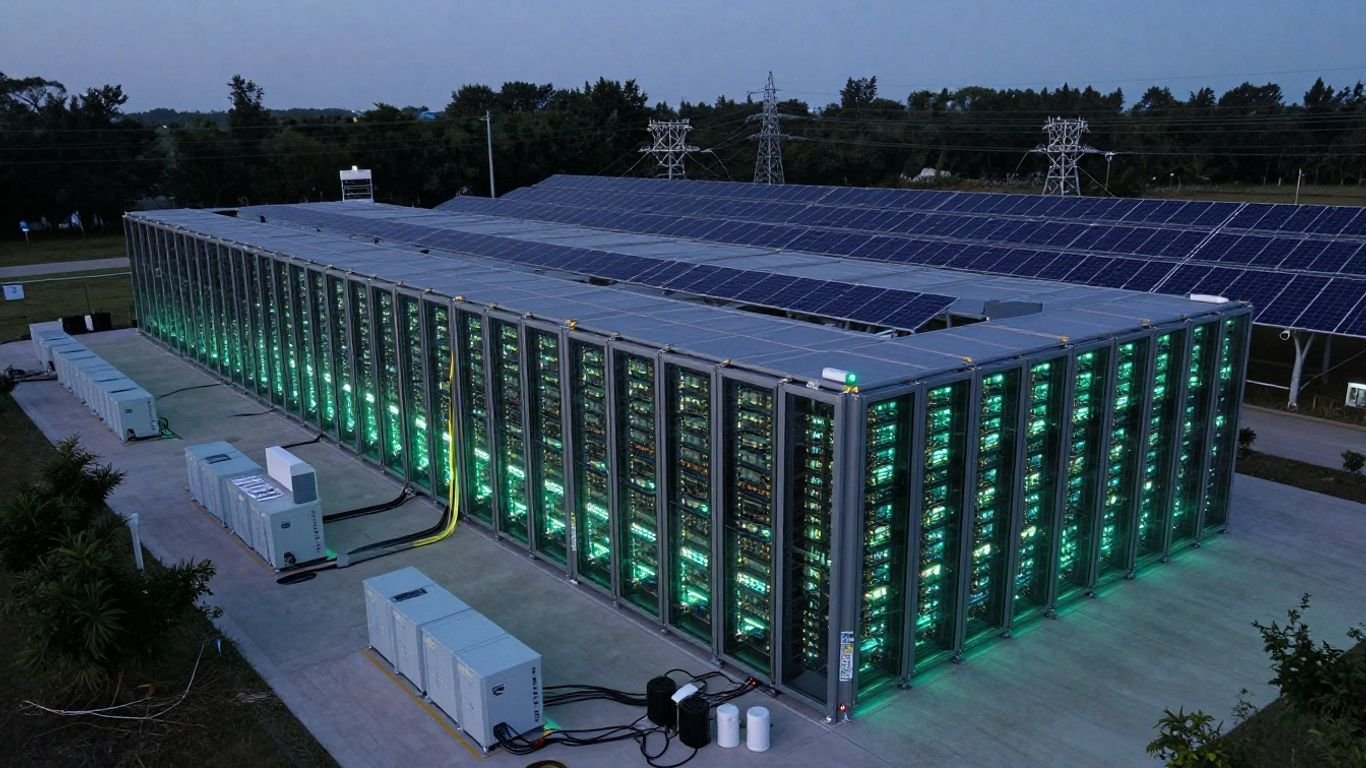
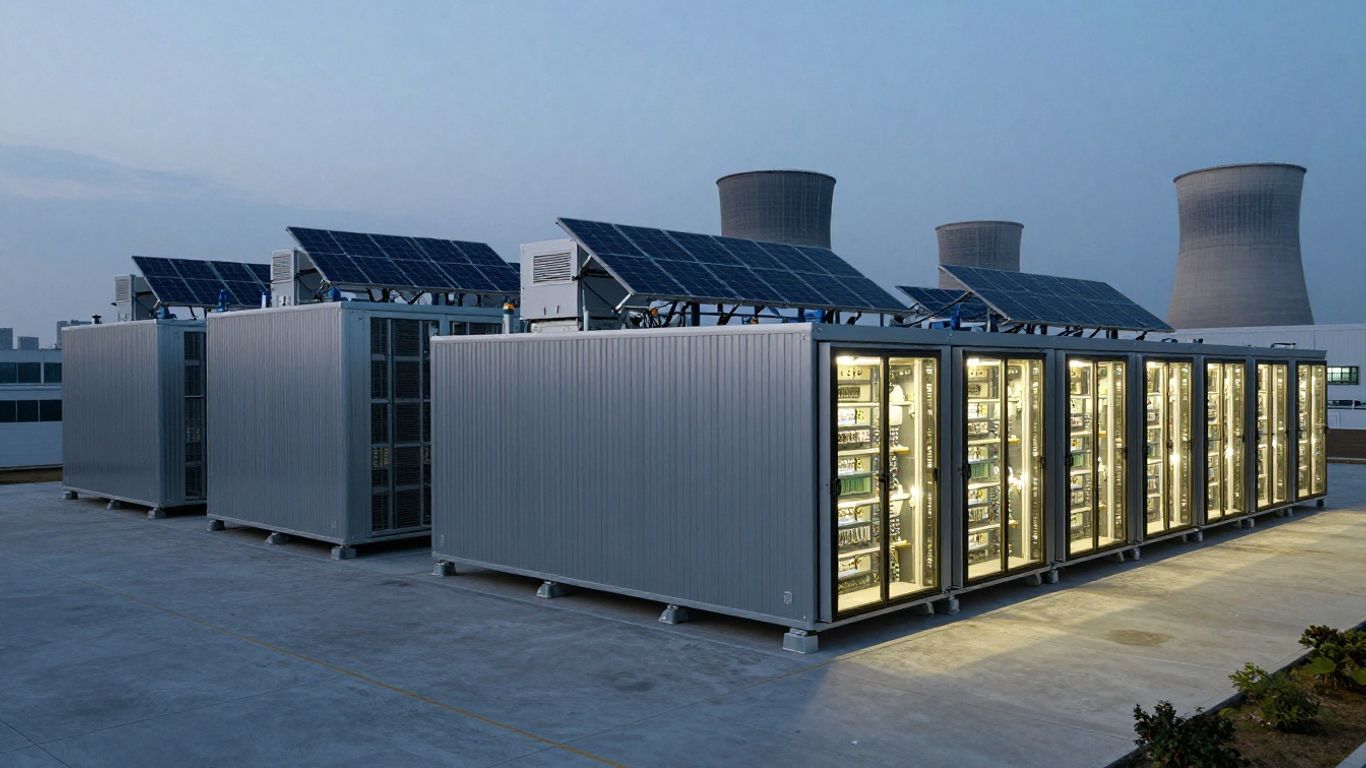
The physical design of a microgrid depends on site conditions, utility rules, and the data center’s load profile. Most systems combine some form of generation with storage, controls, protection equipment, and defined electrical boundaries. The goal is not to install every possible technology, but to create a coordinated system with clear priorities.
On-site generation options for continuous power
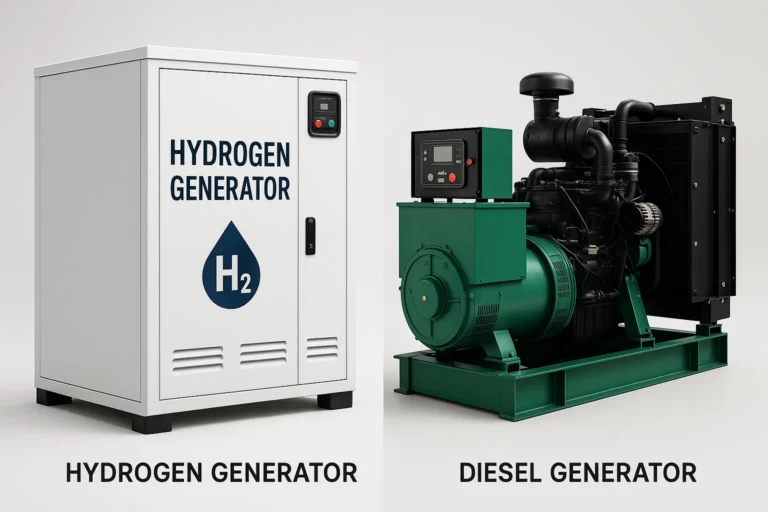
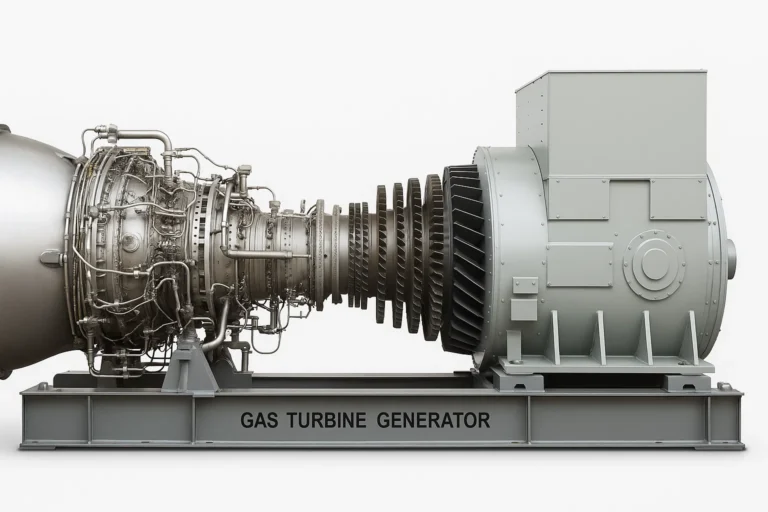
On-site generation can include natural gas engines, turbines, fuel cells, solar, wind, or other resources suitable for the location. Firm resources are generally needed when the facility must operate through long periods with limited renewable output. Renewable generation can still reduce grid purchases and emissions when paired with adequate firm capacity or storage.
The choice also depends on permitting, fuel delivery, noise, emissions limits, water use, and available land. A modular approach can allow capacity to grow with the computing campus, but only if the electrical and control architecture are planned from the beginning.
Battery energy storage for peak demand and backup
Batteries can respond quickly when demand rises or a generator changes operating state. They may support peak reduction, ride through short disturbances, and provide energy during the transition to islanded operation. Their usefulness depends on power rating, energy duration, temperature management, degradation, and the number of cycles expected each year.
Storage is not automatically a substitute for long-duration generation. A short-duration battery may cover a transfer event, while a longer outage may require generators, renewable overbuild, fuel cells, or another source that can continue for many hours.
Microgrid controllers and intelligent energy management
A controller coordinates generation, batteries, loads, protection devices, and the utility connection. It can monitor conditions, issue dispatch commands, and help maintain the balance between supply and demand. The microgrid controller is especially relevant when several resources must respond in a defined sequence.
Controls should be selected with cybersecurity, communications, interoperability, and failure modes in mind. A controller that optimizes energy costs but cannot maintain safe local operation during a communications failure is not sufficient for a critical facility.
Critical loads, noncritical loads, and islanding capabilities
Not every electrical load has the same priority. Computing, networking, cooling, fire protection, and control systems may be critical, while some administrative or discretionary systems can be curtailed. Clear load groups help the microgrid decide what must remain energized when local supply is limited.
A practical design usually defines:
- Critical loads that must remain online during an outage.
- Loads that can be reduced or delayed during a constrained period.
- Circuits that support safe shutdown and restart procedures.
- Electrical boundaries for separation from the utility grid.
This classification turns resilience from a general aspiration into an operating sequence. It also helps engineers size generation and storage around actual priorities rather than the facility’s entire connected load.
How microgrids support data center reliability
Reliability comes from the interaction of equipment, controls, procedures, and people. A generator can fail, a battery can be unavailable, or a protection setting can create an unexpected trip. Microgrid design therefore needs layered protection and regular validation, not just a list of installed assets.
Maintaining operations during grid outages
When the utility supply fails, the system must detect the event, isolate safely, and support the loads assigned to continue operating. Batteries may bridge the first seconds, while generators or other firm resources take over for a longer interval. The transition must be coordinated with UPS equipment, cooling controls, and the data center’s own power distribution.
Islanded operation can be planned for a short interruption or an extended outage. The expected duration affects fuel storage, maintenance access, staffing, spare parts, and the amount of computing that can remain online.
Managing voltage, frequency, and power quality
A microgrid must keep voltage and frequency within acceptable limits as loads change and resources connect or disconnect. Inverter controls, generator governors, protection systems, and power conditioning equipment all contribute to that task. The design should be tested against large step changes, motor starts, cooling transitions, and loss of individual resources.
Power quality monitoring can reveal recurring disturbances before they become outages. It also gives operators evidence that the system is performing within the limits required by sensitive information technology equipment.
Coordinating generators, batteries, and renewable sources
The energy resources need a dispatch strategy that reflects both reliability and cost. Batteries may respond first to a rapid change, generators may provide sustained output, and solar or wind may reduce the amount of fuel needed when conditions allow. The controller should also preserve enough reserve for an unexpected event.
A useful operating plan specifies which resource starts first, how reserves are maintained, and what happens when one resource is unavailable. This avoids relying on optimistic assumptions about perfect forecasts or simultaneous equipment availability.
Testing black-start and islanding performance
Black-start testing examines whether the facility can restore power without relying on an already energized utility connection. Islanding tests examine whether the microgrid can separate, stabilize, serve its priority loads, and reconnect without creating unsafe transients. Both tests should reflect real operating conditions rather than a simplified demonstration.
Testing should include communications failures, generator start delays, battery unavailability, unusual load conditions, and restart sequences. Results belong in a maintenance program, with corrective actions tracked until they are closed.
Choosing the right energy mix
There is no universal generation package for an AI data center. A location with reliable gas infrastructure faces different choices from a site with abundant solar, limited water, or severe winter weather. The most useful comparison weighs firm capacity, ramping behavior, emissions, permitting, fuel security, land, and lifecycle cost together.
Comparing natural gas, renewable, nuclear, and fuel cell generation
Natural gas generation can provide dispatchable power where fuel infrastructure and permits support it. Renewable resources can reduce purchased electricity and operational emissions but vary with weather and time of day. Nuclear generation can offer firm output where it is legally, technically, and commercially available, while fuel cells may provide local generation with their own fuel and maintenance considerations.
The comparison should remain site-specific. Technology labels alone do not answer whether a resource can meet the facility’s ramping needs, outage duration, emissions requirements, and expansion schedule.
Using solar and wind without compromising firm capacity
Solar and wind can contribute meaningful energy, but their output is weather-dependent. Storage, grid supply, firm generation, or a combination of these resources may be needed when renewable output falls during a high-load period. The design should model seasonal conditions rather than using annual renewable energy totals alone.
Renewables can also be paired with flexible computing schedules where workload timing allows it. That possibility should be treated as an operational option, not as a substitute for the capacity required by workloads that cannot be delayed.
Evaluating battery duration and replacement needs
Battery sizing begins with the event the battery is expected to cover. A system intended for peak reduction may need high power for short periods, while one intended to support an outage transition needs a different duration and reserve policy. Degradation, augmentation, thermal conditions, warranty limits, and eventual replacement all affect the business case.
The financial model should show how performance changes over time. A lower initial price may not remain attractive if the system requires frequent augmentation or cannot provide the needed capacity late in its service life.
Planning for fuel availability and extreme weather
Extreme heat, cold, storms, flooding, wildfire, and supply interruptions can affect both the utility and local resources. Fuel contracts, on-site storage, access roads, cooling systems, and equipment enclosures should be reviewed against the site’s credible hazards. Redundancy is only useful when the redundant assets can operate under the same conditions.
A resilience plan should identify which assumptions are most fragile and what operational response follows when one fails. That approach is more practical than assigning a single generic reliability label to the entire microgrid.
Connecting microgrids to the electric grid
A grid-connected microgrid must satisfy utility requirements while protecting the facility and the wider network. Interconnection affects the schedule, protection design, controls, metering, and operating permissions. It should be considered during site selection, not after the generation equipment has been chosen.
Reducing interconnection delays for new data centers
A project can lose months if it waits to study utility capacity until late in development. Early conversations can clarify available service, upgrade needs, export restrictions, fault-current limits, and expected study milestones. A staged design may allow an initial capacity to operate while later phases proceed through separate approvals.
The data center backup power discussion is a useful starting point for thinking about storage, renewables, and behind-the-meter operation together. It also reinforces that local power planning is tied to the facility’s growth strategy.
Managing large and flexible AI computing loads
Some AI workloads can be scheduled, paused, or shifted, while others have strict latency or completion requirements. Separating flexible and inflexible demand gives operators more choices during a grid constraint or local generation shortfall. Those choices must be coordinated with service-level commitments and thermal limits.
Load flexibility can also reduce the size of some equipment, but it should never be counted as firm capacity unless the operating agreement and control system can reliably deliver it.
Participating in demand response and grid services
A microgrid may be able to reduce imports, charge during favorable periods, or provide other services subject to local market rules. Participation requires accurate metering, approved controls, clear dispatch authority, and enough reserve to protect the data center first.
The value of these services should be modeled conservatively. Revenues can change with tariffs, market rules, availability requirements, and the facility’s own need for energy and reserve.
Addressing utility requirements and interconnection studies
Utilities commonly review protection coordination, grounding, fault contribution, anti-islanding behavior, power quality, synchronization, and export controls. The study process may require detailed models and repeated revisions as equipment changes. Keeping the electrical design, controls narrative, and utility application aligned reduces avoidable rework.
A clear responsibility matrix helps as well. It should identify who owns studies, settings, commissioning tests, telemetry, maintenance, and decisions during abnormal grid conditions.
Designing a cost-effective microgrid
Cost-effectiveness is broader than the purchase price of generators and batteries. A sound evaluation includes engineering, permitting, construction, fuel, maintenance, replacement, utility charges, financing, and the value of avoided interruption. It should also account for expansion so that today’s economical design does not become tomorrow’s bottleneck.
Estimating capital costs, operating costs, and energy savings
Early estimates should separate installed equipment from site work, interconnection upgrades, controls, commissioning, and contingency. Operating costs then add fuel, service agreements, labor, software, insurance, testing, and eventual replacement. Energy savings may come from peak reduction, improved dispatch, reduced imports, or avoided utility upgrades.
A lifecycle model is more useful than a simple payback calculation. A practical microgrid ROI analysis can help organize payback, lifecycle savings, utility bill avoidance, and sensitivity to changing assumptions.
Measuring the value of resilience and avoided downtime
The cost of downtime varies by workload, customer commitment, recovery time, data loss risk, and the number of systems affected. A resilience model should estimate several outage scenarios instead of assigning one universal value to an hour offline. It should also include the cost of controlled shutdown and restart.
This is where the cost of inaction deserves attention. Just as a business may assess the broader financial effects of an overlooked operational risk in a workplace mental health cost guide, a data center can examine lost productivity, contractual exposure, and recovery expense rather than focusing only on equipment cost.
Balancing sustainability targets with reliability requirements
Sustainability goals can influence technology selection, fuel choices, renewable procurement, water use, and operating schedules. Reliability requirements may call for firm generation, reserve capacity, and equipment redundancy that add emissions or cost. The design conversation should make those trade-offs visible instead of treating one objective as automatically superior.
A credible plan states how emissions will be measured, what boundary is being used, and which reliability conditions cannot be compromised. It can then identify where cleaner resources fit without overstating their ability to serve every operating condition.
Evaluating power purchase agreements and third-party ownership
A power purchase agreement or third-party ownership model can reduce upfront capital and transfer some operating responsibilities. The contract still needs to define availability, fuel or energy pricing, performance guarantees, maintenance windows, replacement obligations, dispatch rights, and what happens if the facility expands.
Ownership structure changes risk allocation, not the underlying engineering requirements. A detailed comparison should test both owned and contracted scenarios under different energy prices, outage assumptions, and financing costs.
Implementing an AI data center microgrid
Implementation works best as a sequence of decisions rather than a single equipment purchase. The team must connect utility planning, data center architecture, controls, safety, construction, and operations from the start. A phased process also creates opportunities to test assumptions before the full computing buildout arrives.
Assessing site conditions, load profiles, and expansion plans
Begin with the site’s utility service, fuel access, land, drainage, noise limits, emissions rules, climate hazards, and construction logistics. Build load profiles for current operations, peak conditions, planned AI deployments, cooling changes, and future phases. Include both electrical demand and the timing of major transitions.
The site plan should reserve space for switchgear, generation, storage, fuel systems, maintenance access, and future capacity. Under-sizing the electrical yard can be as limiting as under-sizing the generation itself.
Defining performance, emissions, and reliability requirements
Requirements should be measurable. Examples include maximum transfer time, islanding duration, black-start sequence, acceptable voltage and frequency ranges, emissions limits, renewable energy targets, and availability during maintenance. Each requirement needs an owner and a method of verification.
It is also useful to distinguish design targets from guarantees. A model may predict performance under defined conditions, while commissioning tests demonstrate what the installed system actually does.
Integrating the microgrid with data center infrastructure
Integration includes UPS systems, medium- and low-voltage distribution, cooling plants, building controls, fire protection, network architecture, and the data center’s operating procedures. Electrical protection must be coordinated across utility, microgrid, and facility boundaries. The control system should expose enough information for operators without creating unnecessary access to critical networks.
The same discipline applies to information quality. Automated systems can be helpful, but an AI estimate may need human review when it goes beyond structured inputs, as illustrated by this analysis of AI home pricing. Microgrid decisions likewise need validated measurements, transparent assumptions, and engineering judgment.
Monitoring performance and optimizing operations over time
After commissioning, operators should track energy flows, power quality, equipment availability, fuel use, battery condition, emissions, alarms, and maintenance outcomes. Trends can reveal whether the original dispatch strategy still fits the workload. Changes in computing hardware, tariffs, weather, or utility rules may justify a revised operating plan.
Optimization should remain bounded by reliability requirements. Data can improve dispatch and forecasting, but the system needs clear fallback modes when sensors, communications, or forecasts are wrong. For teams managing complex information, AI search optimization offers a broader reminder that accessibility and retrieval matter; in a microgrid, trustworthy data and dependable telemetry matter just as much.
Operational dashboards can also help compare planned and actual performance. Like data-driven layout analysis in AI casino design, the value comes from connecting many observations to a practical decision, though a microgrid must add formal safety controls and engineering validation.
Conclusion
An AI data center microgrid brings local generation, batteries, controls, flexible demand, and utility coordination into one operating plan. Its value depends on choosing the right resources for the site, defining critical loads clearly, testing islanded operation, and evaluating resilience over the full lifecycle. With careful planning, a microgrid can support data center growth while making reliability, cost, and sustainability decisions more deliberate.
Frequently Asked Questions
What is an AI data center microgrid?
An AI data center microgrid is a localized electrical system that coordinates generation, storage, controls, and selected data center loads. It can operate while connected to the utility and may disconnect to serve priority loads during a disruption.
Why do AI data centers need more power planning?
AI workloads can require high-density computing and may create rapid changes in electricity demand. Those demands affect the utility connection, cooling systems, distribution equipment, and the amount of local capacity needed for expansion.
Can a microgrid replace the utility connection?
Usually, a microgrid works alongside the utility rather than replacing it. The utility can provide energy and backup capacity, while local resources support reliability, peak management, or additional capacity.
What energy sources can a data center microgrid use?
Possible resources include natural gas generation, solar, wind, batteries, fuel cells, and other site-appropriate technologies. The best combination depends on firm capacity, emissions, fuel access, permitting, weather, and cost.
How long can a microgrid power a data center during an outage?
The duration depends on generation capacity, fuel availability, battery size, renewable conditions, and which loads remain energized. A design should state its intended outage duration and test that scenario.
Are batteries enough for long data center outages?
Batteries can provide rapid response, short-duration backup, and transition support, but they may not cover a long outage by themselves. Extended operation commonly requires a sustained energy source or a carefully managed reduction in loads.
What should operators test before relying on a microgrid?
They should test utility separation, synchronization, black start, generator and battery coordination, priority-load operation, communications failures, protection behavior, and restart procedures. Tests should use realistic operating conditions and lead to documented corrective actions.