Fuel Cell Microgrids for Data Centers: Are They Worth It?
Key Takeaways
A fuel cell microgrid for data centers can provide on-site generation, grid independence, and a steadier path to expansion, but it is not automatically the lowest-cost option. Its value depends on local fuel access, load shape, permitting, financing, and the reliability standard the facility must meet.
- Fuel cells can supply continuous on-site power while reducing exposure to grid outages and interconnection delays.
- Batteries, solar generation, utility power, and conventional generators can complement rather than replace the fuel cell.
- Natural gas and hydrogen involve different trade-offs in availability, emissions, storage, and operating cost.
- A credible financial model must include capital, fuel, maintenance, replacement, incentives, and outage risk.
- The right decision begins with site-specific load data and a clearly defined resilience target.
What a fuel cell microgrid for data centers is and how it works
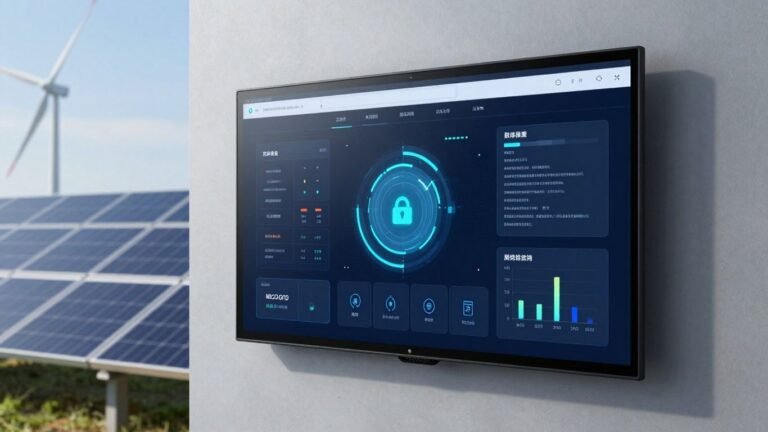
A fuel cell microgrid is a local electrical system that combines on-site generation, controls, distribution equipment, and often energy storage. It can remain connected to the utility during normal operation, then separate from the grid when conditions require. For operators, the attraction is not simply producing electricity; it is coordinating several resources around sensitive, continuous loads.
A useful overview of data center microgrid components can help frame the architecture before fuel-cell technology is considered. The practical design question is how each component behaves during ordinary operation, a transition event, and a prolonged outage.
Core components of the microgrid
The main building blocks are the fuel cell modules, fuel-handling equipment, switchgear, transformers, protection systems, a microgrid controller, and the electrical distribution network serving the data hall. Batteries may provide short-duration support, while solar or other generation can reduce fuel consumption when conditions allow. The utility connection remains valuable for importing energy, exporting where permitted, and providing another layer of operational flexibility.
Controls tie these pieces together. They monitor load, frequency, voltage, state of charge, fuel availability, and utility conditions, then determine which resources should run. A properly engineered system also distinguishes critical IT loads from cooling, lighting, offices, and other loads that may be managed differently during an emergency.
How fuel cells generate electricity
A fuel cell produces electricity through an electrochemical reaction rather than combustion in a reciprocating engine. The precise process depends on the fuel cell chemistry, but the basic arrangement uses a fuel source, an electrolyte, and an oxidant to create an electrical current. Heat and, in some designs, water are also produced.
Because the conversion is electrochemical, fuel cells can operate with relatively few moving parts. That does not make them maintenance-free, and it does not remove the need for fuel processing, cooling, power conditioning, and protection equipment. The overall performance must be judged at the system level, not from the cell stack alone.
The role of batteries, renewable power, and the utility grid
Batteries are particularly useful when the site needs an immediate bridge during a transition or when computing demand changes quickly. Solar power can offset some purchased electricity, although its output varies and its footprint may be substantial. The utility grid can supply economical power when available, even if the microgrid is designed to limit dependence on it.
The strongest designs assign each resource a clear job. A battery may handle milliseconds and minutes, fuel cells may cover sustained generation, and the grid may support normal operations or recharge storage. This layered approach is also described in microgrid energy architecture guidance, which treats generation, storage, and control as parts of one coordinated system.
How the system operates during grid outages
When the utility becomes unstable or fails, protective equipment detects the event and the microgrid controller manages the transition to islanded operation. Batteries or other fast-acting equipment may stabilize the system while fuel-cell generation ramps or assumes the sustained load. Automatic load prioritization can preserve power for the most essential equipment if available generation is temporarily constrained.
The details matter. Transfer time, fault clearing, black-start capability, redundancy, and fuel duration should be tested against the facility’s actual operating procedures. A microgrid is only as resilient as the weakest dependency in that chain, including switchgear, controls, cooling, communications, and fuel delivery.
Why data center power demands are changing
AI and high-density computing are increasing both the average power requirement and the difficulty of predicting short-term demand. Large facilities may need substantial new capacity while also managing faster changes in load. That combination makes power availability a site-development issue, not merely an electrical-operations concern.
The broader discussion of AI data center power needs shows why generation, storage, and grid connections increasingly have to be planned together. A fuel cell microgrid may help, but only if its ramping behavior and power-quality equipment match the computing load.
Why data centers are considering fuel cell microgrids
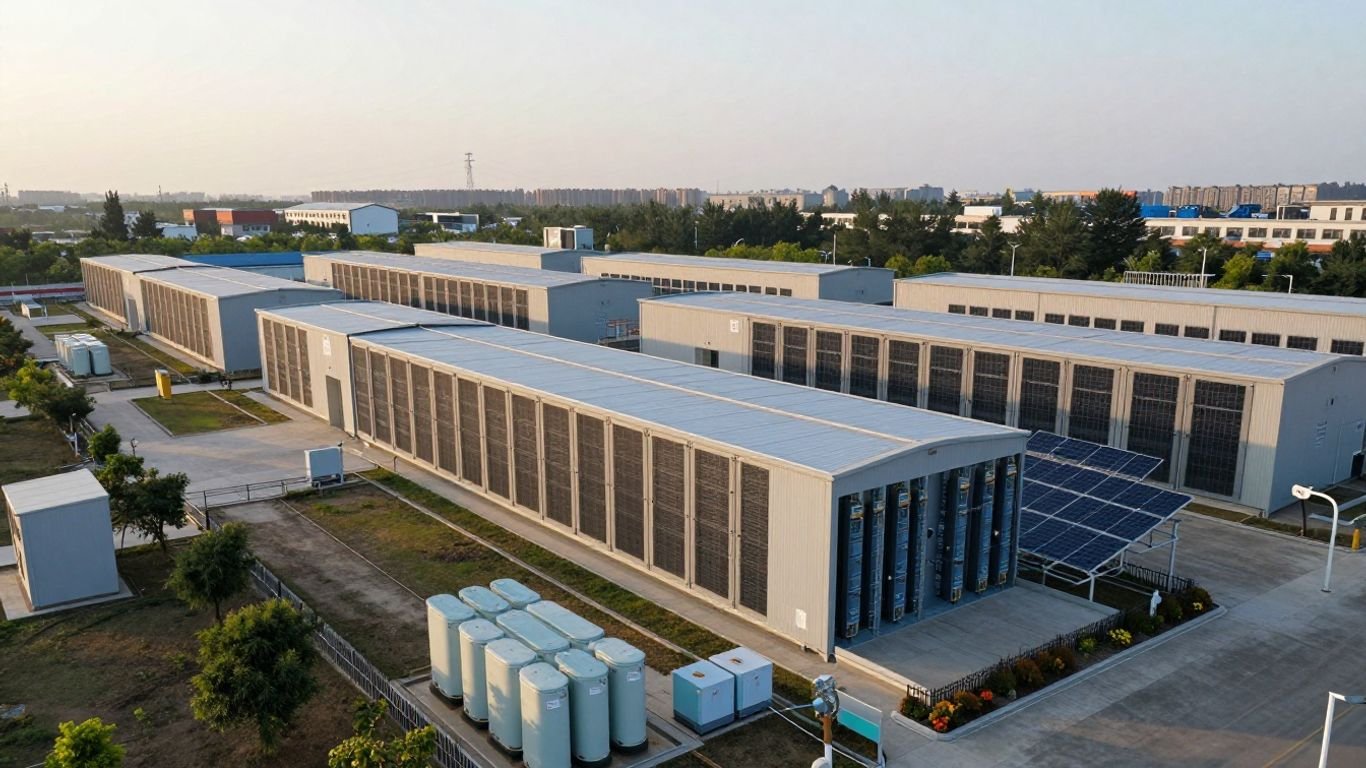
The case for a fuel cell microgrid for data centers usually begins with a constraint: the utility cannot deliver the required capacity on the desired schedule, or the cost of an outage is too high. On-site generation can address both concerns, although it introduces its own infrastructure and operating responsibilities. The decision is therefore about the full risk profile rather than a single efficiency number.
Operators are also balancing expansion with environmental expectations. A system that supports phased construction, reduces generator runtime, or uses lower-carbon fuel may fit a broader strategy, but those benefits need to be measured rather than assumed.
Improving uptime and energy resilience
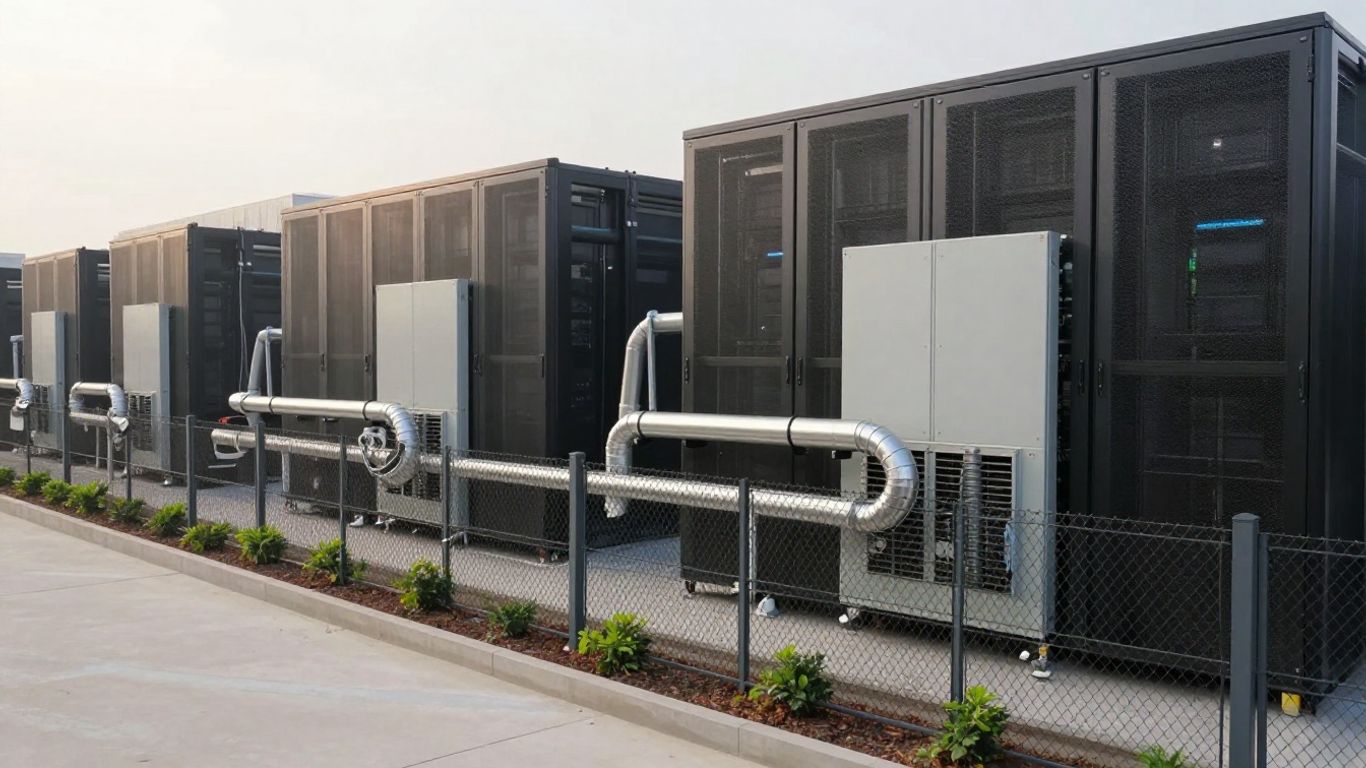
A local generation system can reduce the facility’s exposure to utility interruptions, voltage disturbances, and regional capacity shortages. It may also allow planned maintenance or grid events to be handled without interrupting critical loads. Resilience improves most when the design includes redundancy and regular testing rather than relying on a single large asset.
Power quality deserves equal attention. Sensitive computing equipment can respond poorly to voltage sags, swells, and frequency deviations, so inverters, protection, and controls must be designed as carefully as the generation source. Resilience is a chain of electrical and operational decisions, not a fuel choice alone.
Supporting AI and high-density computing loads
High-density racks can concentrate substantial demand in a small physical area, placing pressure on transformers, busways, cooling systems, and upstream generation. Fuel cells can add firm on-site capacity, while batteries and power electronics help manage rapid changes. The system should be modeled using measured or defensible load profiles rather than a simple average demand figure.
That distinction is central to planning. A facility with a flat, predictable load may need a different configuration from one with sharp changes caused by accelerated computing. Capacity, ramp rate, harmonics, and cooling requirements all belong in the same study.
Reducing dependence on diesel backup generators
Diesel generators remain familiar because fuel can be stored on site and the technology is widely understood. A fuel cell system may reduce routine generator testing, local exhaust, and noise, but it does not automatically eliminate the need for backup equipment. Some operators may retain diesel for extended emergencies or unusual operating conditions.
The comparison should include the full lifecycle. Fuel storage, emissions controls, maintenance logistics, runtime limits, testing schedules, and community requirements can change the result from one site to another. Hydrogen fuel cells may offer a different emissions profile, but hydrogen storage and delivery are practical concerns.
Managing grid constraints and interconnection delays
A utility interconnection can involve studies, upgrades, equipment procurement, and uncertain timelines. On-site generation may allow a campus to begin operating or expanding before every planned grid upgrade is complete, subject to local rules and technical approvals. It can also reduce the amount of power imported during constrained periods.
This is one reason a natural gas microgrid for data centers can be attractive in locations with pipeline access and limited utility capacity. The benefits must be weighed against gas infrastructure, emissions rules, and the possibility that future policy or fuel prices will alter the economics.
Meeting corporate sustainability targets
Fuel cells can support sustainability goals when their fuel pathway, efficiency, heat use, and operating profile are carefully documented. Natural gas systems may reduce some local pollutants compared with combustion-based generation, while hydrogen systems can have a different carbon outcome depending on how the hydrogen is produced and transported.
A credible claim needs boundaries. Account for upstream fuel emissions, construction, replacement parts, grid electricity, backup runtime, and useful heat where applicable. “On-site” does not mean “zero carbon,” and a lower-emission design still needs transparent measurement.
Comparing fuel cell technologies for data centers
Fuel cell technologies are not interchangeable. They differ in the fuels they accept, their operating temperatures, their startup characteristics, their electrical efficiency, and the balance-of-plant equipment they require. The right comparison begins with the site’s operating pattern, not with a preferred technology label.
The system should also be compared with a hybrid design. A fuel cell may provide the sustained output while batteries handle fast transitions, or a conventional generator may remain as a contingency resource. What matters is how the complete architecture performs under normal and abnormal conditions.
Natural gas and hydrogen fuel cell systems
Natural gas is often easier to source in areas with established pipeline infrastructure, though dependence on that network creates a security and continuity consideration. Hydrogen can be stored and delivered in different ways, but high-pressure equipment, liquefaction, trailers, or on-site production may affect space, cost, and permitting.
The carbon result depends on the fuel’s origin and the accounting method used. Hydrogen is not automatically clean, and natural gas is not automatically unacceptable. A sound evaluation asks how much fuel is needed, how long it can be secured, and what emissions are associated with the complete supply chain.
Solid oxide, proton exchange membrane, and other fuel cell types
Solid oxide fuel cells operate at high temperatures and can be suited to steady operation, with heat integration as a possible design consideration. Proton exchange membrane systems generally operate at lower temperatures and can respond differently to changing loads, particularly when paired with appropriate power electronics. Other chemistries may offer different balances of durability, fuel flexibility, and response.
Technology selection should account for the data center’s duty cycle. A continuously loaded facility may value efficiency and long service life, while a standby-oriented application may place more weight on startup, storage, and cycling behavior. Vendor guarantees should be read alongside independent engineering assumptions.
Efficiency, operating temperature, and response time
Efficiency is meaningful only when measured at the expected operating point and after auxiliary loads are included. Parasitic loads for fuel processing, cooling, pumps, controls, and power conversion can materially change net output. Operating temperature also affects siting, heat rejection, materials, and potential combined heat and power applications.
Response time is equally important for computing loads. Batteries and power electronics can often respond quickly, while fuel cells may be better suited to sustained generation. A hybrid system can divide those duties, but the transition controls must be tested under realistic step changes and faults.
Fuel availability and storage requirements
Fuel planning should cover ordinary consumption, emergency duration, delivery interruptions, and restart procedures. Pipeline gas may be continuous but vulnerable to upstream disruptions or curtailment. Hydrogen may be stored on site, delivered periodically, or generated locally, with each option bringing different equipment and safety requirements.
The site assessment should map truck access, setbacks, storage volume, fire protection, ventilation, and replenishment schedules. These details can determine whether a technically attractive system fits the property at all.
Emissions profiles and regulatory considerations
Permitting authorities may evaluate air emissions, water discharge, noise, hazardous materials, pressure systems, and electrical interconnection. Fuel cells can have low local combustion emissions, but the result varies by chemistry and fuel-processing method. Regulators and stakeholders may also ask for lifecycle carbon information rather than a stack-only calculation.
Environmental review should begin early. Waiting until equipment selection is complete can expose a project to redesign, schedule delays, or operating limits that were avoidable with earlier coordination.
Evaluating the economics of a fuel cell microgrid
The economics of a fuel cell microgrid depend on more than the price of generated electricity. A project may create value by avoiding a delayed utility upgrade, reducing demand charges, limiting outage losses, or supporting expansion on an existing site. It may also carry significant capital and replacement costs that are easy to understate in an early proposal.
A practical model compares the proposed system with several alternatives, including utility-only service, batteries plus generators, and a larger conventional backup plant. Microgrid cost drivers provide useful context, while a microgrid ROI analysis helps frame payback, lifecycle savings, and financial risk.
Upfront capital costs and infrastructure requirements
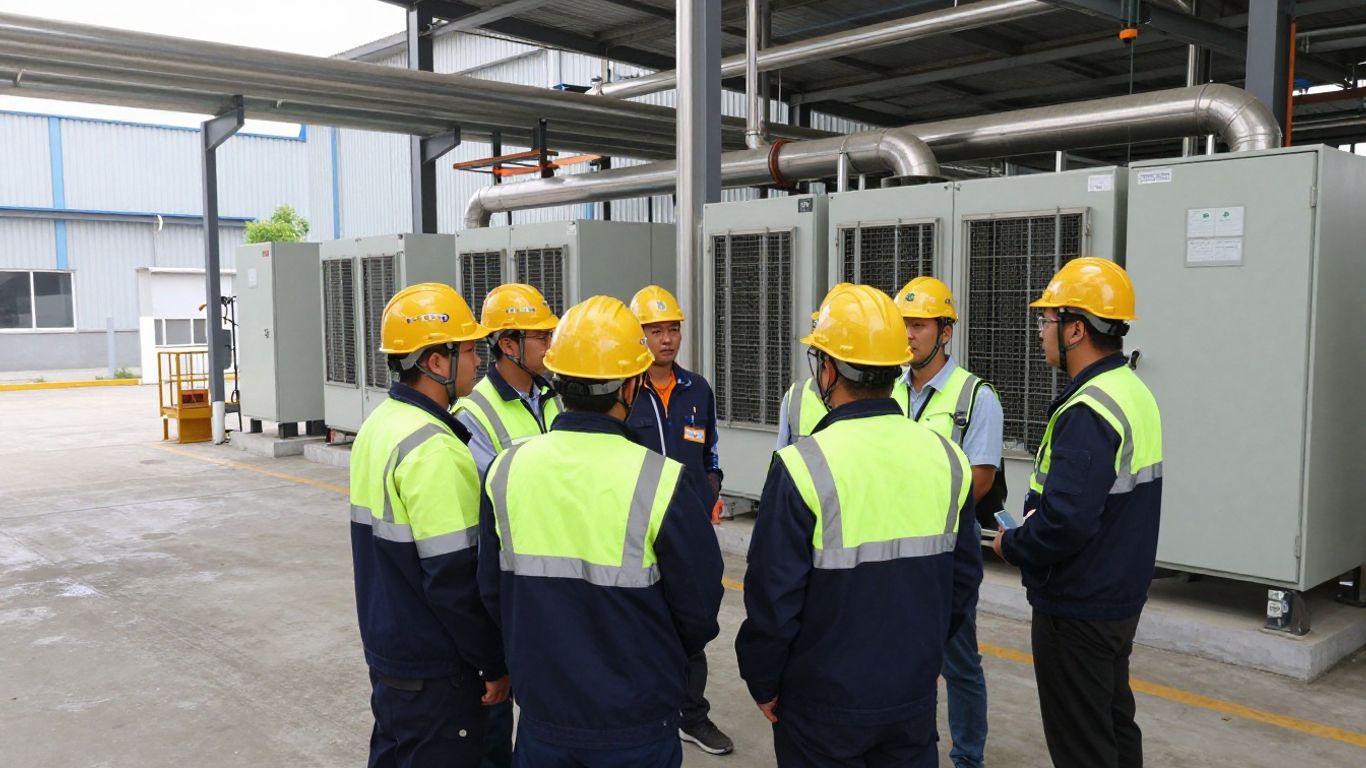
Capital costs may include stacks or modules, fuel processing, storage, switchgear, transformers, foundations, thermal systems, controls, engineering, construction, interconnection work, and permitting. Site preparation can be especially significant when the facility has limited space or must remain operational during construction.
The proposal should separate generation-only costs from the complete microgrid cost. It should also show which upgrades are required regardless of technology, such as distribution changes, fire protection, or new cooling capacity. That separation makes competing designs easier to compare.
Fuel, maintenance, and replacement expenses
Fuel is usually the largest recurring cost, but maintenance and stack replacement can materially affect total ownership cost. Service agreements may cover inspections, parts, labor, and performance guarantees, yet exclusions and response times deserve close review. A cheaper contract may provide less protection when a critical component fails.
Model several fuel-price cases and include degradation over time. Net output can change as equipment ages, and a system that meets the initial load may need augmentation as the campus grows. Replacement timing should be treated as a planned financial event, not an unexpected failure.
Electricity savings and demand charge management
A microgrid can reduce purchased electricity during expensive periods, smooth peaks, and provide power when utility service is constrained. Those savings depend on tariffs, operating schedules, export rules, fuel costs, and whether the facility can actually shift or shed any noncritical load. The value of outage avoidance may exceed ordinary bill savings for a high-consequence operation.
A simple operating checklist can keep the model grounded:
- Establish the site’s hourly load and peak demand profile.
- Map utility tariffs, demand charges, and interconnection limits.
- Test fuel-price, outage-duration, and equipment-availability scenarios.
- Assign a financial value to avoided downtime and delayed expansion.
This approach prevents a project from looking attractive solely because it uses an optimistic electricity price or an understated outage cost. It also shows which assumptions deserve further measurement before approval.
Incentives, tax credits, and financing models
Incentives may include tax credits, grants, clean-energy programs, utility payments, or local economic-development support. Eligibility can depend on fuel type, emissions performance, domestic content, prevailing-wage rules, project ownership, and the date construction begins. These conditions change, so the model should cite the applicable program rather than assume a benefit.
Financing can also reshape the decision. A power purchase agreement, energy-as-a-service arrangement, lease, or shared-savings structure may reduce upfront capital while increasing long-term payments. The contract must define availability, fuel-cost treatment, maintenance responsibility, renewal terms, and ownership of environmental attributes.
Estimating payback periods and total cost of ownership
Payback is easy to communicate but incomplete. Net present value, internal rate of return, avoided outage costs, residual value, replacement timing, and sensitivity to fuel and tariff changes provide a more useful picture. A project with a longer payback may still be sensible if it protects expansion capacity or avoids a major reliability exposure.
Use a feasibility study before making a final commitment. A detailed microgrid feasibility process can connect technical data, regulatory requirements, operating modes, and the financial pro forma. The result should make uncertainty visible instead of hiding it inside a single headline number.
Fuel cell microgrids versus conventional backup power
Conventional backup power is usually designed to respond to an outage. A microgrid can operate every day, managing power flows, reducing peaks, and coordinating multiple resources before an outage occurs. That broader role may create more value, but it also adds controls, interfaces, and operating decisions.
There is no universal winner. The best design depends on outage duration, required transition time, available space, fuel security, noise limits, emissions rules, and the cost of lost computing capacity.
Comparing fuel cells with diesel generators
Diesel generators offer established technology, straightforward stored-fuel concepts, and strong performance for extended outages when properly maintained. Fuel cells may run more quietly and produce less local combustion pollution, depending on the system and fuel. They may also be used as primary on-site generation rather than remaining idle until an emergency.
The comparison should include startup and transfer behavior, black-start arrangements, fuel quality, maintenance intervals, emissions permitting, and cold-weather performance. A design that combines technologies can provide fast response from one resource and long-duration output from another.
When batteries can meet reliability requirements
Batteries may be sufficient when the required ride-through period is short, the load can be reduced, or utility restoration is expected quickly. They offer rapid response and can support power quality without on-site fuel combustion. Their limitations include energy duration, degradation, thermal management, fire protection, and replacement cost.
Battery sizing must reflect both power and energy. A system that can deliver the required megawatts for a few minutes may not cover a multi-hour outage. Conversely, oversizing for a rare event can create a large cost with little everyday value.
Combining fuel cells with solar and energy storage
Hybrid systems can assign different tasks to different assets. Solar may reduce daytime fuel use, batteries may manage fast changes and transitions, and fuel cells may cover sustained demand. The utility can remain connected for normal operations while the controller optimizes cost and resilience.
The combination is not automatically simpler. Interconnection studies, protection settings, control logic, forecasting, and maintenance coordination all become more involved. Modeling should test cloudy periods, battery state of charge, fuel interruptions, and simultaneous equipment outages.
Differences in emissions, noise, and footprint
Diesel equipment generally brings exhaust, sound, vibration, and fuel-storage considerations. Fuel cells may have a smaller local emissions profile and lower noise, but their balance-of-plant equipment, fuel storage, cooling, and safety clearances still require space. Solar and batteries add their own land, access, and fire-protection needs.
Community acceptance can influence the schedule as much as engineering. Early communication about noise, visible equipment, deliveries, emissions, and emergency procedures can reduce later conflict.
Reliability trade-offs across competing designs
Reliability is not a single percentage. It includes component redundancy, maintenance access, common-mode failure exposure, fuel continuity, controls resilience, spare parts, and the ability to operate through unusual events. A large centralized unit may be efficient but create a single point of failure; many smaller units may improve maintenance flexibility while adding interfaces.
The design should be tested in normal, transition, islanded, restart, and degraded modes. A protected electrical boundary is useful only when the equipment and controls can maintain power quality inside it during real disturbances.
Key challenges and risks to address
Fuel cells can address important data center constraints, but they do not remove project risk. Fuel supply, permitting, equipment availability, water, heat, cybersecurity, and operator capability all need explicit treatment. A strong business case includes these issues from the first site-screening exercise.
Risk is also dynamic. A system designed around today’s fuel price, utility tariff, or computing density may look different five or ten years later. Contracts and expansion plans should preserve options where possible.
Hydrogen supply, natural gas dependence, and fuel security
Every fuel pathway has a dependency. Natural gas systems rely on pipeline capacity and pressure, while hydrogen systems rely on production, delivery, storage, and safe handling. On-site storage can improve duration but consumes space and adds inspection and protection requirements.
The resilience plan should identify alternate supply arrangements, minimum inventory, delivery lead times, and procedures for contaminated or unavailable fuel. Emergency generation is only dependable when its energy source is dependable too.
Permitting, codes, and utility interconnection
Permits may cover air quality, building and fire safety, hazardous materials, pressure vessels, water, noise, and electrical work. Utility requirements can include protection studies, relay settings, export controls, power-quality limits, and coordination during islanding. These processes often involve different authorities and schedules.
Early engagement reduces surprises. The electrical one-line, operating modes, fuel system, and emergency procedures should be reviewed as an integrated package rather than submitted as disconnected documents.
Equipment degradation and maintenance demands
Fuel-cell stacks, inverters, compressors, pumps, heat exchangers, and controls all age differently. Performance warranties should define output, efficiency, degradation rate, availability, response, and remedies. Maintenance planning should include safe isolation, spare components, technician access, and the effect of servicing one module on the remaining system.
Staggered maintenance can preserve capacity when the plant is modular, but that benefit depends on the actual design. Operators should request maintenance histories, reference sites, and clear service-level commitments before selecting a supplier.
Water use, heat management, and site constraints
Cooling and fuel processing can create water and heat-management requirements that are easy to overlook. Waste heat may be useful for nearby loads, but only if there is a stable thermal demand and suitable distribution equipment. Otherwise, heat rejection can increase both footprint and parasitic consumption.
The site plan should account for setbacks, delivery routes, cranes, ventilation, drainage, fire access, electrical clearances, and future expansion. A system that fits on paper may conflict with cooling yards, substations, or construction staging in practice.
Measuring real-world carbon reductions
Carbon accounting should compare the complete proposed system with the realistic alternative. Include grid electricity, fuel production and transport, construction, replacement, backup operation, refrigerants where relevant, and exported energy. If renewable power or low-carbon hydrogen is assumed, document its availability and certification.
Track actual fuel use, net electricity output, runtime, grid imports, outages, and maintenance events after commissioning. Measurement turns a sustainability promise into an operational result that can be audited and improved.
How to decide whether a fuel cell microgrid is worth it
The decision should begin with the problem the project must solve. If the central issue is delayed grid capacity, the value may come from speed and expansion. If it is outage exposure, the value may come from islanding and fuel security. If it is energy cost, tariff structure and operating hours will matter more than the technology’s name.
A structured assessment keeps the conversation practical. It should combine measured electrical data, site constraints, vendor evidence, regulatory input, and a financial model that includes uncertainty.
Defining uptime, capacity, and power quality requirements
Start by defining which loads are critical, how much power they need, how quickly they change, and how long they must remain online. Specify acceptable voltage and frequency limits, transfer time, ride-through duration, redundancy, maintenance windows, and restart expectations. These requirements become the foundation for sizing generation and storage.
Avoid sizing from a single peak value. Separate steady demand, transient demand, future demand, cooling growth, and noncritical loads. Honest load data usually improves both reliability and capital discipline.
Modeling site-specific energy and resilience scenarios
Run hourly and event-based models for normal operation, peak pricing, grid outages, fuel interruptions, equipment maintenance, extreme weather, and future expansion. Test utility-connected, transition, islanded, and restart modes. The model should reveal what happens when one asset is unavailable, not only when every component performs perfectly.
This is where a 5 MW microgrid design framework can be useful as a planning reference, although every site still requires its own load data, distribution study, and operating assumptions. Scenario modeling should produce decisions, not just attractive charts.
Assessing technology readiness and vendor support
Ask vendors for verified operating data, degradation assumptions, availability definitions, response characteristics, warranty terms, and maintenance requirements. Review reference installations with similar loads and climates. The vendor’s ability to provide commissioning, training, spare parts, remote monitoring, and emergency response may matter as much as the equipment specification.
Control systems deserve particular scrutiny because they coordinate the entire plant. A microgrid controller evaluation guide can help teams compare interoperability, cybersecurity, communications, scalability, and support obligations without reducing the decision to a feature list.
Planning phased deployment and future expansion
A phased project can align capital spending with campus growth. Initial modules may serve an existing load, with space, electrical capacity, fuel infrastructure, and controls reserved for later additions. Progressive installation can also provide operational learning before the full build-out.
Phasing only works when the first stage is designed for the final architecture. Confirm expansion clearances, protection coordination, transformer capacity, control licensing, maintenance access, and future fuel requirements before construction begins.
Establishing financial and sustainability decision criteria
Set approval thresholds before reviewing vendor proposals. Financial criteria may include net present value, internal rate of return, payback, budget certainty, availability guarantees, and maximum acceptable fuel-price exposure. Sustainability criteria may include lifecycle carbon intensity, local emissions, water use, noise, waste, and transparent reporting.
The final question is not whether fuel cells are universally worthwhile. It is whether this site has a problem whose value exceeds the technology’s costs and risks, and whether the team can operate the resulting system well. That answer should remain open to a hybrid or conventional design when the evidence points elsewhere.
Conclusion
A fuel cell microgrid for data centers can be a compelling response to rising load, grid constraints, and the need for dependable power, but its value is site-specific. The strongest decisions pair realistic load modeling with careful fuel, permitting, maintenance, and lifecycle-carbon analysis. When the technology fits those conditions, it can become one layer of a resilient power strategy rather than a standalone promise.
Frequently Asked Questions
What is a fuel cell microgrid for data centers?
It is a local power system that combines fuel-cell generation with electrical controls, distribution equipment, and sometimes batteries, renewable generation, and utility service to support data center loads.
Can a fuel cell microgrid operate during a utility outage?
Yes, if it has the required islanding controls, protection, fuel supply, and equipment configuration. The transition process and duration must be engineered and tested for the specific facility.
Are fuel cell microgrids carbon-free?
Not necessarily. Emissions depend on the fuel, production pathway, system efficiency, upstream supply chain, and the boundaries used for accounting.
Are hydrogen fuel cells better than natural gas fuel cells?
Neither is universally better. Hydrogen can offer a different emissions profile, while natural gas may be easier to source in some locations. Availability, storage, cost, regulation, and lifecycle emissions determine the better fit.
Can batteries replace a fuel cell microgrid?
Batteries may meet requirements for short outages or brief ride-through periods, but longer events require more stored energy or another sustained generation source. The answer depends on duration, load, and restoration expectations.
How long does a fuel cell microgrid take to pay back?
There is no universal payback period. Results depend on capital cost, fuel prices, tariffs, demand charges, incentives, outage losses, maintenance, replacement timing, and the value of new capacity.
What should a data center study before choosing a microgrid?
It should study load profiles, critical loads, outage scenarios, utility constraints, fuel supply, permitting, site layout, power quality, equipment support, lifecycle costs, and sustainability impacts.